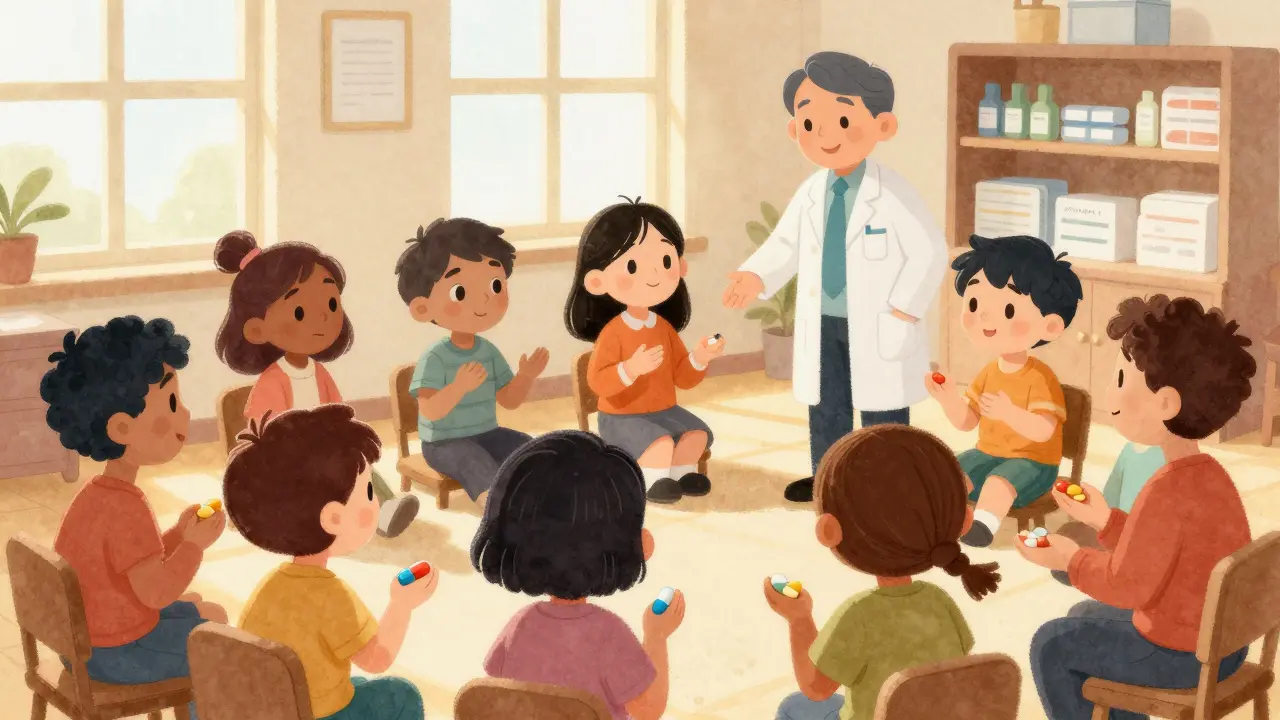
Patient Education: Know Your Meds, Avoid Mistakes, Take Control
When you take a pill, you’re not just swallowing a chemical—you’re entering a system of risks, benefits, and hidden rules. Patient education, the practice of giving people clear, actionable information about their medications and health conditions. Also known as health literacy, it’s what stops people from mixing grapefruit with statins, skipping doses because of nausea, or not knowing their warfarin dose changed because of green tea. This isn’t about memorizing drug names. It’s about knowing why your doctor chose that pill, when to call your pharmacist, and how to spot when something’s off.
Good patient education connects directly to medication safety, the system of practices and knowledge that prevents harmful errors in drug use. Think of it like a checklist you carry in your head: Did the pharmacist explain the side effects? Is this generic the same as my brand? Why does my INR keep jumping? These aren’t random questions—they’re survival tools. And they’re not just for older adults. A 30-year-old on SSRIs needs to know about sexual dysfunction. A cancer patient needs to understand financial toxicity—not just because it’s expensive, but because skipping a dose to save money can kill you faster than the disease.
Then there’s medication adherence, how consistently someone takes their drugs as prescribed. It’s the silent killer. One study found that 50% of people stop taking their meds within a year—not because they don’t care, but because they didn’t know how to handle the side effects. That’s where patient education turns from theory to action: using pill organizers, setting alarms, talking to your pharmacist about cheaper alternatives, or knowing when to ask for a different drug. And it’s not just about remembering to take it. It’s about understanding that folic acid isn’t optional with methotrexate, that PPIs aren’t just for heartburn when you’re on clopidogrel, and that a generic isn’t always interchangeable if it’s a narrow therapeutic index drug.
You’ll find real stories here—not guesses. How to read an FDA label so you know what "contraindication" really means. Why some generics fail silently and how pharmacists catch them. What to say at the pharmacy counter before you walk out with a new script. How to talk to your doctor when your mood dips after starting opioids. How to keep naloxone or epinephrine ready without letting your kids get into it. These aren’t abstract concepts. They’re daily decisions that change outcomes.
And the best part? You don’t need a medical degree. You just need to ask the right questions. The posts below give you exactly that: plain-language breakdowns of what really matters when you’re on meds. No fluff. No jargon. Just what you need to stay safe, save money, and feel in control.