
When you pick up a prescription, the tiny print on the pill bottle or the厚厚一叠说明书 might feel overwhelming. But every word there is carefully chosen by the U.S. Food and Drug Administration (FDA) to keep you safe. These aren’t just random notes-they’re legally binding instructions, backed by science and regulation. Understanding terms like contraindication, precaution, and indications can mean the difference between safe use and serious harm.
What the FDA Label Actually Does
The FDA drug label isn’t a marketing brochure. It’s the official, legally enforceable document that tells doctors and patients exactly how to use a medicine-and when not to. Every section is required by federal law under 21 CFR 201.57. This label comes from the drug manufacturer, but it’s reviewed, approved, and sometimes rewritten by the FDA. Changes don’t happen on a whim. If new safety data shows a risk, the label must be updated. Between 2015 and 2020, 97% of label updates came through a formal process called Category 2 changes. That means the FDA is actively watching these drugs long after they hit the market.The label follows a strict structure. The most important info-like indications and contraindications-shows up first, in a section called the Highlights. This is what doctors scan in a hurry. The full details come later. And since 2007, every label has been submitted in Structured Product Labeling (SPL) format, which lets computers read it. That’s why your EHR system can flag a dangerous interaction before the doctor even clicks "prescribe."
Indications and Usage: What the Drug Is Approved For
This is the first real section of the label. It answers the question: "What is this drug actually meant to treat?" The FDA doesn’t allow vague claims. It requires specificity. For example, it’s not enough to say "treats diabetes." The label for Jardiance says: "to reduce the risk of cardiovascular death in adults with type 2 diabetes and established cardiovascular disease." That’s precise. It tells you who it’s for, what it does, and under what conditions.Every indication must be backed by clinical trials-"adequate and well-controlled investigations," as the FDA puts it. No guesswork. In 2023, 87% of new drug approvals included indications tied to specific biomarkers, like genetic tests or blood markers. That’s precision medicine in action. If a drug only works in people with a certain mutation, the label says so. No off-label use is implied here. This section is the foundation. Everything else-dosage, warnings, interactions-builds on it.
Contraindication: When You Must Not Take It
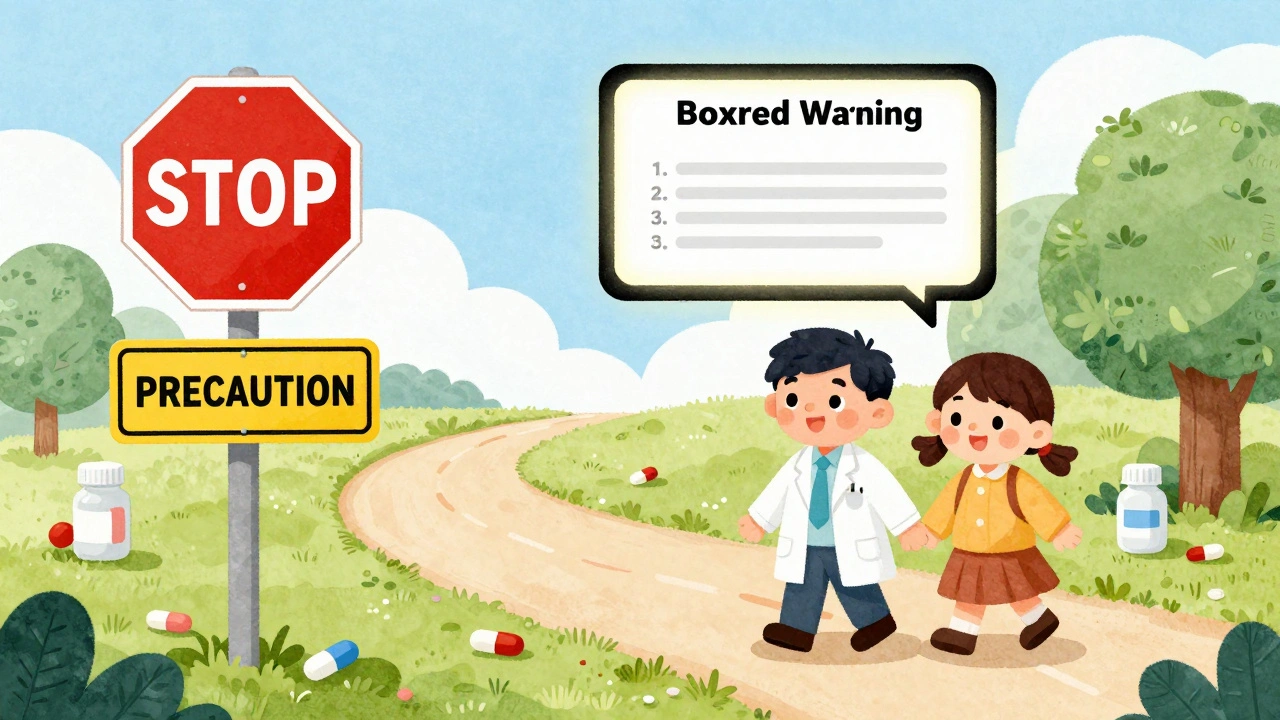
This is the red stop sign. A contraindication means the drug should not be used at all in certain situations because it could cause serious harm-or even death. The FDA requires this section to be clear, specific, and placed right after indications. No fluff. No "maybe" or "possibly."There are two types: absolute and relative. Absolute contraindications are non-negotiable. For example, Xarelto (rivaroxaban) lists "active pathological bleeding" as a contraindication. If you’re bleeding internally, you don’t take this drug. Ever. Relative contraindications are trickier. They mean the risks might outweigh the benefits, but a doctor might still use it if they’re very careful. For instance, a patient with mild kidney disease might still get a dose of a drug-but only if the dose is lowered.
The FDA insists contraindications be "concise and meaningful," not cluttered with minor risks. In 2024, every single new drug approved included this section in the Highlights. That’s because it’s life-or-death information. If you see a contraindication that matches your condition, stop. Talk to your doctor. Don’t assume it’s a suggestion.
Precautions and Warnings: What to Watch Out For
If contraindications are stop signs, precautions are yellow lights. They don’t say "don’t use," but they say: "Proceed with extreme caution. Something bad could happen." This section includes both Warnings and Precautions, merged into one under modern FDA labeling rules. It’s where the most serious safety issues are laid out.For example, Trulicity’s label warns about "risk of thyroid C-cell tumors" in animal studies-and then adds: "not for use in patients with a personal or family history of medullary thyroid carcinoma." That’s a precaution with a clear action: if you or a close relative had this rare cancer, don’t use this drug.
The FDA requires each warning to include: the risk, the evidence behind it, and what to do about it. The most serious warnings get a Boxed Warning-the black border around the text that makes you stop and read. In 2023, over 31% of new drugs had at least one Boxed Warning. These aren’t rare. They’re common. And they’re there because someone, somewhere, had a bad outcome. The FDA’s own studies show doctors find these warnings 27% faster when they’re in the standardized format. That’s why the structure matters.
Drug Interactions: What Else You’re Taking Matters
You might be taking five pills. The FDA label has to tell you if any of them clash. Drug interactions happen when one medicine changes how another works-making it stronger, weaker, or causing dangerous side effects.Take Eliquis (apixaban). Its label says: "Avoid with strong dual inhibitors of CYP3A4 and P-gp, like ketoconazole or lopinavir/ritonavir." Why? Because those drugs can spike apixaban levels in your blood, increasing bleeding risk. The FDA doesn’t just list possible interactions. They require proof-either from controlled studies or real-world reports. Between 2019 and 2023, 12.3% of medication errors involving new drugs were linked to poorly communicated interactions.
This section isn’t just about other drugs. It includes food, supplements, and even alcohol. Grapefruit juice can interfere with more than 85 medications. The label doesn’t always say "grapefruit," but it will say "avoid strong CYP3A4 inhibitors," which includes grapefruit. If you’re unsure, check the label. Or ask your pharmacist. Don’t assume it’s safe.
Dosage and Administration: How Much, When, and How
This is where the rubber meets the road. The label doesn’t just say "take one pill." It tells you: dose, frequency, route (oral, IV, injection), duration, and how to adjust for special cases.Keytruda’s label says: "200 mg every 3 weeks OR 400 mg every 6 weeks." Two options. Both approved. Why? Because studies showed both work. But it also says: "Reduce dose for Grade 3 or 4 immune-related adverse reactions." That’s critical. If you get a severe rash or liver problem, your doctor needs to know to lower the dose-not stop it entirely.
The FDA demands this section be "clear, concise, and readily usable." No jargon. No ambiguity. It must cover children, elderly, and people with kidney or liver problems. In 2023, this was the second most common section to be updated after approval-14.7% of all changes. Why? Because real-world data keeps coming in. A new study might show older patients need lower doses. The label gets updated. That’s how the system works.
Description: The Science Behind the Drug
This section isn’t for patients. It’s for doctors and scientists. It gives the chemical identity of the drug: its name, structure, molecular weight, and form. For example, Humira’s label says: "a recombinant human IgG1 monoclonal antibody. Molecular weight approximately 148 kDa." That’s not marketing. That’s science.The FDA requires this to be accurate and complete. Why? Because if a drug is a biologic-like a monoclonal antibody-its structure matters. Even tiny changes can make it behave differently. That’s why biosimilars have to prove they’re nearly identical. This section ensures everyone knows exactly what they’re dealing with. In 2023, 92% of new drugs met this requirement. The FDA checks. They don’t just trust the manufacturer.
Patient Counseling Information: What You Need to Know
This is the part that connects the doctor’s instructions to your daily life. It’s not just "take with food." It’s: "Report signs of genital yeast infections, increased thirst or urination, and symptoms of ketoacidosis immediately." That’s from Jardiance’s label. It’s specific, actionable, and in plain language.The FDA requires this section to be free of medical jargon. It’s meant to be read by patients-or given to them by their provider. Yet, only 41% of patients say they actually receive counseling based on this section. That’s a gap. The FDA knows it. In 2022, 73% of providers said this section was "critical" for adherence. But if patients aren’t getting the message, the label isn’t doing its job.
It covers storage, missed doses, side effects to watch for, and what to do in an emergency. If your label says "keep refrigerated," don’t leave it on the counter. If it says "avoid sunlight," wear a hat. These aren’t suggestions. They’re part of the drug’s safety profile.
Why This All Matters
Drug labels are not static documents. They’re living records of safety. Every update reflects a real patient outcome. Every warning, every contraindication, every dosage change came from data-sometimes from a single case, sometimes from thousands. The FDA doesn’t get this right every time, but the system is designed to learn and improve.For patients, understanding these terms means you can ask better questions. If your doctor says "this is contraindicated," don’t just nod. Ask: "Why? Is there an alternative?" If you see a precaution, ask: "What signs should I watch for? What do I do if I notice them?"
For providers, the label is a tool. But it’s only useful if you read it. Too many doctors rely on memory or shortcuts. In 2023, 43.6% of physicians said they had trouble finding key info in labels during busy clinic hours. That’s why the FDA is working on "Labeling for the Digital Age"-better search, clearer formatting, and interactive features coming by 2026.
Until then, the words on that paper are your best defense. Learn them. Use them. They’re there to protect you.
What’s the difference between a contraindication and a precaution?
A contraindication means the drug should not be used at all in certain situations because it could cause serious harm-like active bleeding with a blood thinner. A precaution means use with caution; the drug may still be used, but only if the benefits outweigh the risks, and special monitoring is needed-like using a drug in someone with mild kidney disease but reducing the dose.
Why do some drug labels have a Boxed Warning?
A Boxed Warning is the FDA’s strongest safety alert. It’s used when there’s reasonable evidence of a serious, life-threatening risk-like increased risk of heart attack, severe liver damage, or cancer. It’s placed in a black border at the top of the label so it can’t be missed. About 32% of new drugs approved since 2020 have at least one Boxed Warning.
Can I trust the drug label if my doctor prescribes something different?
Doctors sometimes prescribe drugs "off-label," meaning for a use not listed on the label. This is legal and sometimes necessary, especially for rare conditions or when standard treatments fail. But the label is still the official guide. If your doctor prescribes something different, they should explain why-and you should ask. Never assume an off-label use is safe just because your doctor ordered it.
How often are drug labels updated?
Labels are updated whenever new safety data emerges. Between 2015 and 2020, 97% of changes happened through a formal FDA review process. The most common reasons are new side effects, drug interactions, or better dosing info for special groups like seniors or those with liver disease. The FDA requires manufacturers to submit updates within 30 days of learning about serious risks.
What’s the point of the Description section if it’s all scientific jargon?
It’s not for patients-it’s for healthcare professionals and regulators. The Description confirms exactly what the drug is chemically, which matters for biosimilars, allergic reactions, and manufacturing quality. If a drug is a monoclonal antibody, the structure affects how it works. Even small changes can make it unsafe. This section ensures consistency and safety across batches and manufacturers.
Why does the FDA require Patient Counseling Information?
Because patients often don’t understand medical terms. The FDA found that clear, simple instructions improve adherence and reduce errors. For example, telling someone to "report signs of ketoacidosis" instead of just listing "metabolic acidosis" helps them recognize symptoms early. This section turns technical data into actionable steps for real people.
Next Steps: What to Do With This Information
If you’re a patient: Always read the medication guide that comes with your prescription. It’s based on the Patient Counseling Information section. Keep it. Review it. Ask questions if something isn’t clear.If you’re a caregiver or family member: Don’t assume the doctor explained everything. Look up the drug’s full label on the FDA’s Drugs@FDA website. Search by brand name. Read the contraindications and warnings. You might catch something the doctor missed.
If you’re a healthcare provider: Don’t rely on memory. Open the full label before prescribing. Use the Highlights section first. Check for updates. If you’re unsure about a drug interaction, use a reliable drug database-but always cross-check with the official FDA label.
The FDA label isn’t perfect. But it’s the most reliable, science-backed source of drug safety information you’ll ever find. Treat it like a map. If you don’t know where you’re going, read the signs.
8 Comments
Doug Hawk
Man, I never realized how much goes into those tiny labels. I just thought they were there to scare you into reading the damn thing. Turns out every word is a legal landmine. Contraindications aren't suggestions-they're red lights. I once ignored one because I thought my doc knew better. Ended up in the ER. Don't be me.
Carolyn Woodard
It's fascinating how the FDA structures these labels like a legal contract disguised as medical advice. The precision in wording-'adequate and well-controlled investigations'-it's almost poetic in its rigidity. We treat medicine like magic, but the label reminds us it's just applied biology with bureaucratic armor. I wonder if patients feel the weight of that silence between the lines.
Saket Modi
bro why do we even read this stuff? just ask the pharmacist. they got the cheat sheet. 🤷♂️
Chris Wallace
I used to skim the label like it was a Terms of Service agreement-just click 'I agree' and move on. But after my mom had that bad reaction to the blood thinner, I started reading every line. The Boxed Warning for her drug was buried under three paragraphs of jargon. I printed it out, highlighted it, taped it to the fridge. Now I make sure my whole family knows what those black borders mean. It’s not paranoia. It’s just... survival.
william tao
It is imperative to underscore that the FDA's Structured Product Labeling (SPL) format constitutes a paradigmatic advancement in pharmacovigilance infrastructure. The integration of machine-readable metadata into regulatory documentation represents a non-negotiable exigency for contemporary clinical decision support systems. Failure to adhere to this standard constitutes a systemic dereliction of duty by manufacturers and prescribers alike.
Sandi Allen
THEY’RE LYING TO US!!! THE FDA ISN’T WATCHING-THE PHARMA COMPANIES WRITE THE LABELS AND THE FDA JUST STAMPS THEM WITH A “APPROVED” LIKE A SCHOOL TEACHER CHECKING HOMEWORK!! I FOUND A DRUG THAT WASN’T UPDATED FOR 8 YEARS EVEN THOUGH 3 PEOPLE DIED FROM THE SAME SIDE EFFECT!! AND THEY STILL LET IT BE SOLD??!! IT’S A COVER-UP!! THEY DON’T WANT YOU TO KNOW HOW MANY OF THESE DRUGS ARE JUST LUCKY GUESSES!!
John Webber
they say contraindication but then doctors still give it anyway. like why even have it if they just ignore it? i had a friend take that thing for anxiety and it made him hallucinate. doc said 'oh its fine' but the label said NO. so who do you trust? the paper or the guy with the stethoscope?
Shubham Pandey
Boxed warnings are just marketing. Everyone ignores them.