
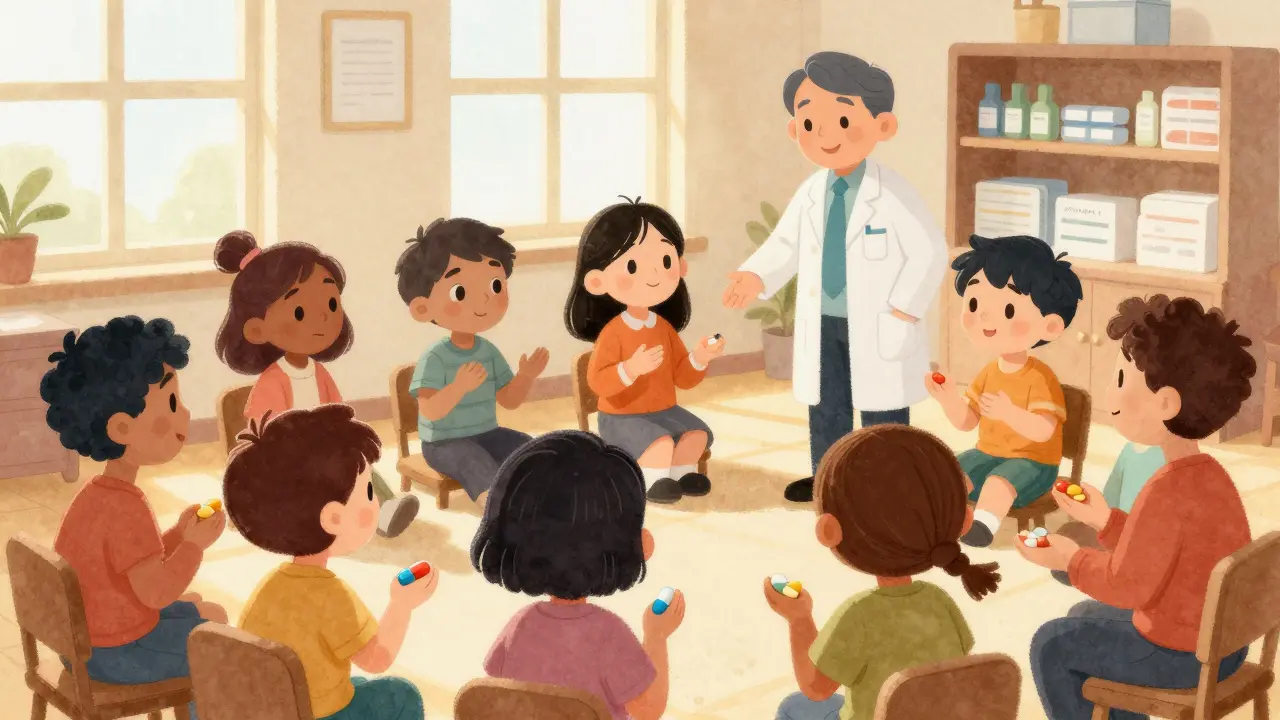
Switching from a brand-name drug to a generic can feel like rolling the dice. You’ve been taking the same pill for years-same color, same shape, same bottle. Then one day, your pharmacy hands you a different one. Same active ingredient, same dose, but the name’s changed. And suddenly, you’re wondering: Is this really the same? You might feel a knot in your stomach. Maybe you’ve heard stories online about people feeling worse after the switch. Or maybe your doctor said it’s fine, but you’re not sure you believe them.
You’re not alone. Millions of people in the U.S. switch to generics every year. In 2022, 90% of all prescriptions filled were generics. Yet, many still hesitate. Why? Because it’s not just about chemistry. It’s about trust. And that’s where patient support groups come in.
What These Groups Actually Do
Patient support groups focused on generic medications aren’t medical clinics. They’re not pharmacies. They’re not even official government programs. They’re real people-neighbors, strangers, fellow patients-talking to each other about what really happens when you switch pills.
These groups exist online and in person. You’ll find them on Facebook, Reddit, and dedicated platforms like PatientsLikeMe. You’ll also find them in community health centers, libraries, and church basements, especially in rural areas where doctors are hard to reach. The goal? To turn fear into understanding.
One woman in Ohio joined a group after her blood pressure medication changed. She felt dizzy and blamed the generic. After weeks of posting her symptoms, someone else shared the same story. Then a pharmacist from a local clinic joined the conversation and explained: it wasn’t the drug. It was the fillers-the inactive ingredients-that changed. The body needed time to adjust. Within three weeks, her dizziness faded. She didn’t need a new prescription. She just needed to know she wasn’t crazy.
Why Personal Stories Beat Brochures
The FDA says generics are bioequivalent. That means they work the same way as brand-name drugs-within a 20% margin. In plain terms: if the brand works, the generic should too. But that’s not enough for most people.
Studies show that when patients get a printed brochure explaining bioequivalence, only about 15% feel more confident. But when they hear from someone who’s been there? That number jumps to 47%.
Why? Because fear isn’t logical. It’s emotional. You don’t worry about a 20% margin. You worry about your heart, your sleep, your energy. You worry about losing control. Support groups don’t argue with science. They start with your experience.
On Facebook’s “Generic Medication Users United” group, with over 14,000 members, new posts often begin with: “I switched and felt awful. Am I imagining this?” The replies aren’t textbook definitions. They’re: “I felt the same. Took me 10 days. Then I was better.” Or: “My pharmacist checked my bloodwork. Nothing changed.” Or: “My doctor didn’t know either. We kept notes together.”
That’s the power of shared experience. It doesn’t replace medical advice. It makes medical advice stick.
How These Groups Stay Accurate
Not all groups are created equal. Some are run by patients with no medical background. That’s fine-but it’s also risky.
A 2009 study found that 34% of online discussions about generics contained misinformation. Someone might blame a generic for a migraine that’s actually caused by stress. Or confuse a side effect with a reaction to a new food. Without checks, myths spread fast.
But the best groups have safeguards. Many partner with local pharmacists or nurse practitioners who review posts weekly. The “Generic Drug Patient Alliance,” for example, requires all medical claims to be verified by a licensed professional before being pinned as an official response. Other groups use “buddy systems”-new members are paired with someone who’s been on generics for over a year. They answer questions, share logs, and help newcomers spot patterns.
One study from the University of Chicago found that when groups had professional oversight, misinformation dropped from 34% to just 8%. That’s not a small win. That’s life-changing.
Who Benefits the Most
These groups don’t help everyone equally. They’re most powerful for people managing long-term conditions: diabetes, high blood pressure, cholesterol, epilepsy, depression, and thyroid disorders. Why? Because these conditions need daily medication. A tiny change in how you feel can feel huge.
Medicare beneficiaries are the most active users. About 58% of them join support groups. Why? Because they’re often on fixed incomes. Generics save them hundreds a month. They have a strong incentive to get it right.
On the other end, commercially insured patients are the least likely to join-only 33%. Why? Because they don’t feel the financial pressure. If their insurance covers the brand-name drug, why bother? But that’s changing. As drug prices keep rising, even people with good insurance are starting to ask: “Can I save money without losing health?”
Groups are also making progress in rural and minority communities. In the rural South, African American patients were 40% more likely to trust generics after joining culturally tailored support groups. That’s not just about language. It’s about shared history, shared distrust of the system, and shared voices that finally sound like theirs.
What Doesn’t Work
Not every group helps. Some are too chaotic. Too many opinions. Too few facts. A 2019 incident in an unmoderated Facebook group led to 17 people stopping their epilepsy meds because they thought the generic was causing seizures. Turns out, their condition was worsening naturally. No one caught it. One woman ended up in the hospital.
That’s why structure matters. The best groups follow clear rules:
- Medical claims must be verified.
- Stories are shared, not treated as proof.
- Healthcare professionals join regularly.
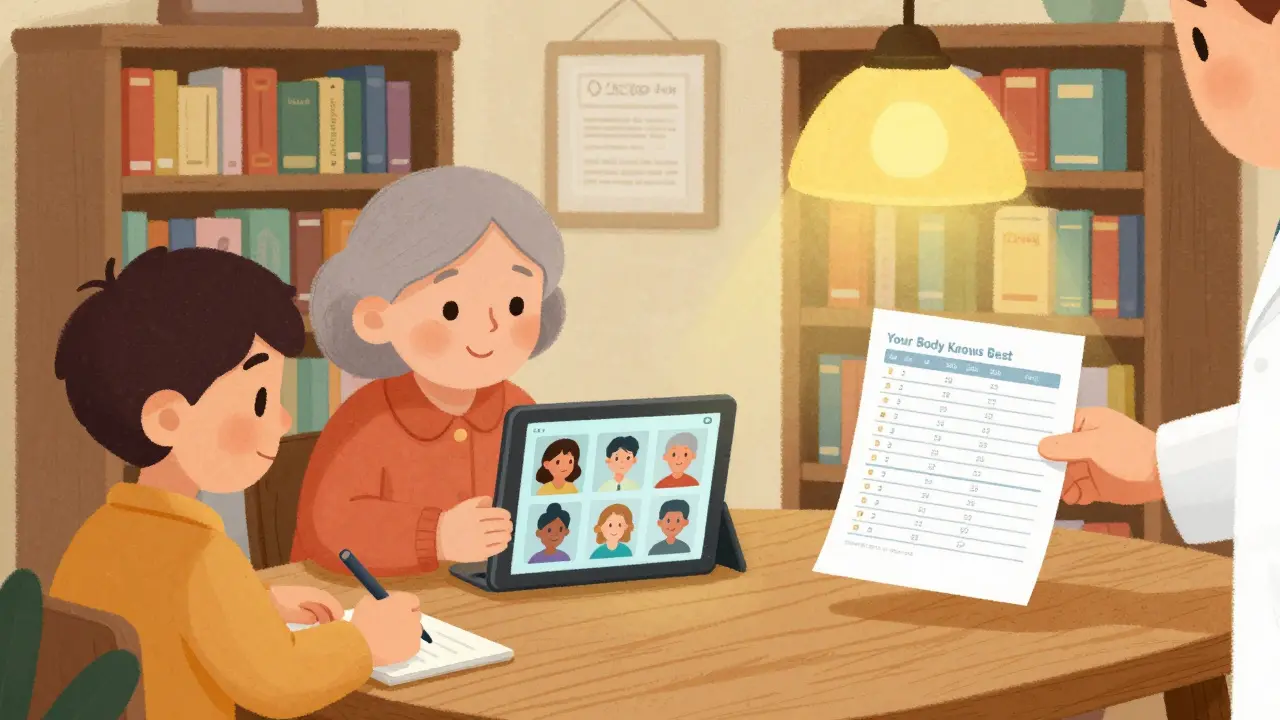
- Members are encouraged to track symptoms with simple logs.
Groups that do this see a 6.3% increase in generic use for every step up in member confidence. That’s not magic. That’s data.
How to Find a Good Group
If you’re thinking about joining one, here’s how to find a safe, useful group:
- Look for groups linked to hospitals, clinics, or pharmacies. Many health systems now refer patients to verified support groups.
- Check if a pharmacist or nurse is involved. Ask: “Who moderates this?” If the answer is “just members,” proceed with caution.
- Read the rules. Good groups have clear guidelines about medical advice, personal stories, and verification.
- Start by listening. Don’t post your story right away. See how others talk. Do they blame generics for everything? Or do they ask questions and share solutions?
- Use the Association for Accessible Medicines’ upcoming directory (launching Q2 2024). It will list verified groups by condition and location.
And if you can’t find one near you? Start one. All you need is a Facebook page, a local pharmacist willing to answer questions once a month, and three people who’ve switched to generics and want to help others.
The Bigger Picture
These groups are quietly changing the drug system. Right now, generics save patients $313 billion a year in the U.S. But if substitution rates rose from 87% to 95%, that number could jump by $4 billion more-just from better patient education.
That’s not just about money. It’s about access. It’s about people who can’t afford brand-name drugs getting the treatment they need. It’s about reducing the fear that keeps people from taking their pills.
The FDA now calls patient experience data “real-world evidence.” That means your story, your symptom log, your question-those aren’t just noise. They’re part of the science.
Doctors are listening. Nurses are listening. Even drug companies are starting to pay attention. Because when patients understand generics, they take them. And when they take them, they stay healthy. And that’s the whole point.

15 Comments
Ryan Pagan
Let me tell you something - I switched my blood pressure med to generic and thought I was gonna keel over. Sweating like a sinner in church, heart racing, felt like my brain was on a trampoline. Turns out? It was the damn fillers. Took me two weeks to adjust. No one told me that. Not my doctor, not the pharmacist. Just some dude on Reddit who said, 'Give it time, man.' He was right. Generics aren't magic. But they ain't poison either. Just gotta know what you're dealing with.
Laia Freeman
OMG YES!! I switched to generic levothyroxine and felt like a zombie for 3 weeks!! I was ready to quit meds entirely!! Then I found a group and learned it’s the fillers!! I swear my brain came back on day 17!!
Megan Brooks
It’s fascinating how emotional the transition to generics can be - not because of the chemistry, but because of the loss of familiarity. We attach meaning to the shape, the color, the brand. It’s not irrational; it’s human. We seek continuity in a world that rarely offers it. The support groups don’t fix the science - they restore the sense of agency. That’s profound.
Paul Adler
I’ve been on generics for over a decade. Never had an issue. But I’ve watched friends spiral into panic after a switch - not because of the drug, but because of the silence around it. No one talks about the psychological weight of changing a pill. That’s why these groups matter. They turn isolation into community. And community is the quietest form of medicine.
LOUIS YOUANES
Look. I’m not some conspiracy theorist. But I’ve been on the same brand-name antidepressant for 12 years. My doctor switched me to generic last year. I cried for a week. Not because I was depressed. Because I felt betrayed. Like my body didn’t trust me anymore. And now I’m back on the brand. Paying $400 a month. Worth every penny.
Andy Steenberge
There’s a difference between bioequivalence and perceived equivalence. The FDA measures AUC and Cmax. But patients measure sleep quality, mood stability, energy levels - things that don’t show up on a lab report. That’s why anecdotal evidence isn’t noise. It’s data with a heartbeat. The groups that pair stories with symptom logs - those are the ones that work. They turn fear into feedback.
rajaneesh s rajan
USA spending billions on generics but still people panic over pill color? LOL. In India, we take whatever the pharmacy gives us. If it’s white, blue, or shaped like a dinosaur - we swallow it. No group. No drama. Just survival. Maybe you need less psychology and more pills.
DHARMAN CHELLANI
Generic? More like generic excuses. If your body can’t handle a generic, maybe you’re not sick - just weak. Stop blaming fillers and start taking responsibility. Also, why are you even on meds? Just eat kale.
Sheryl Dhlamini
I joined a group after switching my seizure med. I was terrified. Then I saw someone else had the same exact tremors. We started a private log. We tracked sleep, stress, caffeine. Turned out - it wasn’t the pill. It was my cat waking me up at 3 a.m. every day. We laughed. We cried. We got help. That’s not medicine. That’s family.
Robin Keith
Let’s be real - the entire pharmaceutical-industrial complex is built on manufactured fear. Brand names? Marketing. Generics? The truth. But who profits from your anxiety? The companies that sell you the brand. The doctors who get kickbacks. The support groups? They’re just the emotional bandaids. The real problem? Capitalism. And you’re all just… distracted.
Doug Gray
IMO, the real issue isn't the fillers or the bioequivalence - it's the lack of standardization across manufacturers. Some generics have different dissolution profiles. The FDA allows 20% variance - but that’s not a feature, it’s a loophole. And patients are the lab rats. We need mandatory batch transparency. Not just ‘trust us’.
kabir das
My mom took generic statins... then she had muscle pain... then she died... I don't know if it was the pill... but I know I'll never take a generic again... NEVER... I just... I just can't...
Alex Flores Gomez
Look, I’m not saying generics are bad. But if your insurance covers the brand, why risk it? I’m not some peasant. I have a 401(k). I pay for quality. The fact that people are forming support groups to cope with a $3 difference per pill? That’s the problem. We’ve normalized poverty as a lifestyle.
paul walker
Just wanted to say - I started a group in my town. Local pharmacist comes in every Thursday. We use simple symptom logs. 12 people joined. 11 of them stayed on generics. One guy still hates it. But he’s not mad anymore. Just confused. Progress.
Kristie Horst
Oh, so now we’re romanticizing patient-led support groups like they’re some kind of grassroots revolution? How touching. Let me guess - the pharmacist who ‘reviews posts’ is also the guy who sells you kombucha at the farmer’s market? And the ‘buddy system’? That’s just a 72-year-old with a Facebook account who thinks aspirin cures cancer. Please. We don’t need anecdotes. We need regulation. And maybe, just maybe, a doctor who actually listens.