

Starting a new medication isn’t just about picking up a prescription. If that drug has serious safety risks, you’re likely dealing with a REMS-a Risk Evaluation and Mitigation Strategy mandated by the FDA. These aren’t optional paperwork. They’re legal requirements designed to prevent life-threatening side effects. Skip checking REMS, and you risk delays, denied fills, or worse-serious harm to the patient.
What Exactly Is a REMS?
REMS stands for Risk Evaluation and Mitigation Strategy. It’s a safety program the FDA requires for certain medications that carry serious risks, like birth defects, severe infections, or sudden death. The goal isn’t to block access-it’s to make sure the benefits outweigh the dangers. Without REMS, drugs like isotretinoin (for acne) or thalidomide (for cancer) might never reach patients. But because they can cause devastating harm if misused, the FDA puts strict controls in place.
There are 76 active REMS programs as of 2025. Some are simple-like handing out a Medication Guide. Others are complex, requiring doctors to get certified, patients to enroll in registries, or medications to be given only in special clinics. For example, Zyprexa Relprevv can only be administered in certified facilities where staff monitor patients for three hours after injection to catch dangerous sedation reactions. Isotretinoin (Accutane) requires both prescriber and patient registration in the iPLEDGE system to prevent pregnancy during treatment.
When Do You Need to Check REMS?
You don’t check REMS because it’s a good idea-you check it because you have to. If you’re prescribing, dispensing, or starting any new medication, ask: Is this one of the drugs that needs special controls?
High-risk categories almost always trigger REMS:
- Teratogenic drugs (can cause birth defects)-like isotretinoin, mycophenolate, thalidomide
- Drugs with high abuse potential-like extended-release opioids
- Medications linked to severe immune reactions-like certain biologics for autoimmune diseases
- Drugs with narrow therapeutic windows-like some cancer treatments
Don’t assume a drug is safe just because it’s been on the market for years. The FDA updates REMS regularly. In 2022 alone, 14 REMS programs were modified to reduce burden without lowering safety. A drug that didn’t need REMS five years ago might require it now.
Where to Find REMS Information
There are three trusted places to verify REMS requirements before prescribing or dispensing:
- The FDA REMS Public Dashboard-This is your go-to source. Launched in 2023, it’s interactive, searchable, and updated weekly. Go to fda.gov/drugs/rems and search by drug name, manufacturer, or REMS type. You’ll see if the drug has ETASU (Elements to Assure Safe Use), like prescriber certification or patient enrollment.
- The medication’s prescribing information-Every FDA-approved drug’s official prescribing label (found on DailyMed.nih.gov) includes a REMS section. Look for the heading: “REMS Program” or “Risk Evaluation and Mitigation Strategy.” It will list exactly what’s required.
- The manufacturer’s REMS website-Many drugmakers run their own REMS portals. For example, iPLEDGE (ipleDGEprogram.com) handles isotretinoin. Thalidomide’s program is managed by Celgene. These sites have enrollment forms, training modules, and FAQs.
Pharmacists are often the last line of defense. If you’re unsure, call the pharmacy that dispensed the drug. According to the Opioid Analgesic REMS FAQ, they’re required to confirm REMS compliance before filling the prescription.
What REMS Elements Could Affect You?
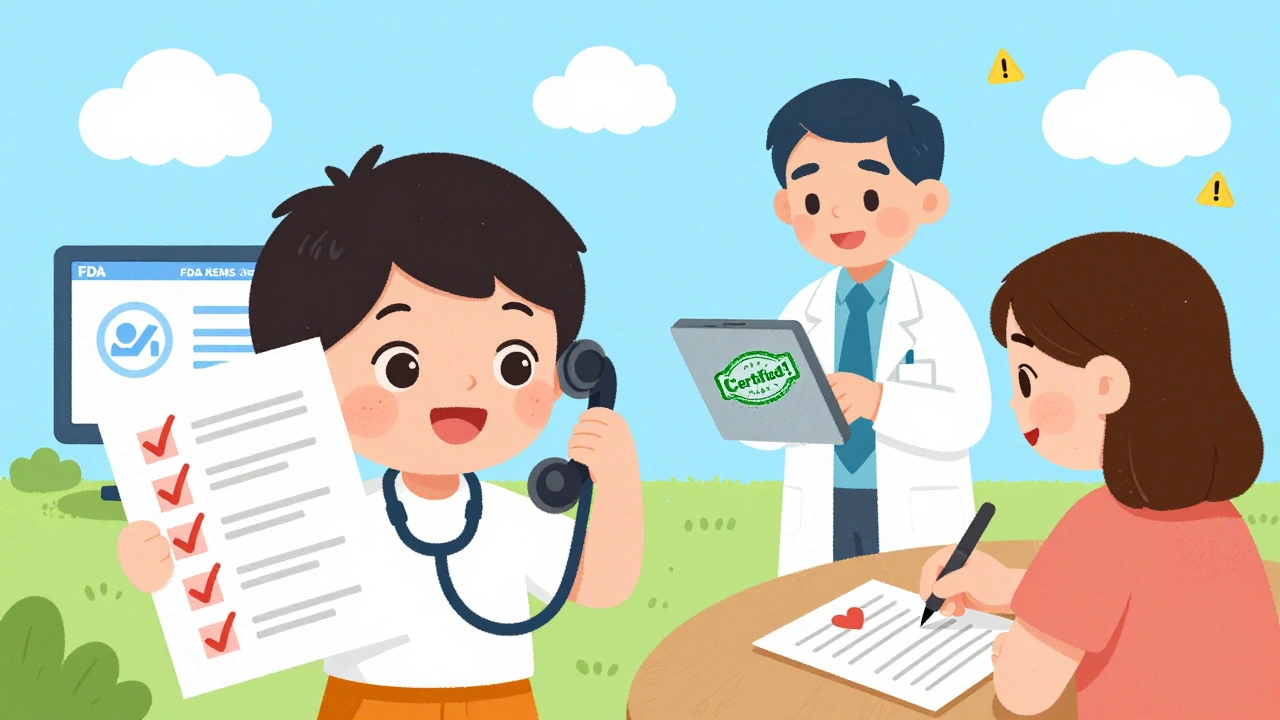
Not all REMS are the same. The FDA uses four main components, but only some require action from providers or patients:
- Medication Guides-Paper handouts given to patients at every fill. Required for nearly all REMS drugs. Patients must sign they received it.
- Communication Plans-Educational materials sent to prescribers. Usually just an email or PDF. No action needed unless you’re the provider.
- Elements to Assure Safe Use (ETASU)-The heavy lifters. These are the restrictions that actually delay care. Examples:
Prescriber Certification: Doctors must complete training and register with the REMS program before writing the script. Thalidomide and lenalidomide require this. Training takes about 65 minutes and must be renewed every 12 months.
Patient Enrollment: Patients must register in a database. For iPLEDGE, both men and women must complete monthly pregnancy tests and confirm contraceptive use. Failure to enroll = no fill.
Dispensing Restrictions: Only certified pharmacies or clinics can give out the drug. Zyprexa Relprevv must be injected in a certified facility. Some opioids can only be dispensed by pharmacies enrolled in the Opioid Analgesic REMS.
Monitoring Requirements: Blood tests, EKGs, or regular check-ins. Mycophenolate requires monthly pregnancy tests for women of childbearing age.
How to Verify REMS in 3 Steps
Here’s a simple, repeatable process every provider and pharmacist should follow:
- Check the label-Look at the prescription or medication bottle. If it says “REMS” or “Medication Guide Required,” proceed to step two.
- Search the FDA REMS Dashboard-Type in the drug name. If a REMS is active, note whether it has ETASU. If yes, you’ll need to take action.
- Confirm with the pharmacy or manufacturer-Call the pharmacy. Ask: “Does this drug require prescriber certification or patient enrollment?” If they’re unsure, direct them to the manufacturer’s REMS site. Never assume.
Don’t rely on memory. Even experienced providers get tripped up. A 2022 survey found 42% of patients on REMS drugs experienced delays averaging over six business days because someone missed a step.
Common Mistakes and How to Avoid Them
Here’s what goes wrong-and how to fix it:
- Mistake: Thinking the Medication Guide is enough. Fix: If the REMS has ETASU, the guide alone won’t cut it. You need certification, enrollment, or monitoring.
- Mistake: Using outdated REMS info. Fix: REMS change. The FDA modified 37% of them between 2015 and 2020. Always check the dashboard before prescribing.
- Mistake: Assuming the patient already knows. Fix: Patients often don’t understand REMS. One Reddit user said their pharmacy cut isotretinoin processing time from 45 minutes to 15 by using a standardized checklist. Create your own.
- Mistake: Skipping training. Fix: If prescriber certification is required, complete the training. It’s usually free and accredited. Skipping it means you can’t prescribe.
The American Society of Health-System Pharmacists recommends spending 8-12 minutes per new REMS drug to verify everything. That’s not wasted time-it’s prevention.

What Happens If You Ignore REMS?
Pharmacies will refuse to fill the prescription. No exceptions. The pharmacy’s computer system often blocks REMS drugs automatically if the prescriber isn’t certified or the patient isn’t enrolled.
Legally, you’re at risk. The FDA issued 27 warning letters to drugmakers for REMS non-compliance in 2022. Providers can face disciplinary action if a patient is harmed due to a missed REMS step.
And ethically? You’re putting someone in danger. A patient on mycophenolate who didn’t know about pregnancy risks could lose a child. A patient on opioids without proper education could overdose. REMS exists to stop those outcomes.
What’s Changing in REMS?
REMS isn’t static. The FDA is trying to make it less burdensome without sacrificing safety:
- In 2023, the FDA required all new REMS to include smartphone-friendly tools-like apps that send reminders for pregnancy tests or certification renewals.
- Eight of the top 10 pharmacy benefit managers now integrate REMS checks into e-prescribing systems. If you’re using an EHR, the system may pop up a REMS alert before you hit “send.”
- By 2026, blockchain may be used to securely track prescriber certification across multiple clinics, cutting down on duplicate paperwork.
Expect more REMS in the future. About 85-90% of new cancer drugs approved after 2025 will likely need them. The same goes for gene therapies and complex biologics.
Bottom Line: Don’t Skip the Check
REMS isn’t bureaucracy. It’s a safety net. Every step-whether it’s signing a form, completing training, or calling the pharmacy-is there to prevent a tragedy. The system isn’t perfect. It’s slow. It’s confusing. But it works.
Before you start any new medication, ask: Is this a REMS drug? Then verify. Use the FDA dashboard. Confirm with the pharmacy. Complete the training. Fill out the forms. Don’t guess. Don’t rush. And don’t assume someone else already did it.
One missed step can delay treatment for weeks. Or worse-it can cost a life. That’s why checking REMS isn’t just a procedure. It’s a responsibility.
How do I know if a medication has a REMS program?
Check the FDA’s REMS Public Dashboard at fda.gov/drugs/rems. Search by the drug’s brand or generic name. If a REMS exists, it will show up with details on requirements like prescriber certification or patient enrollment. You can also find REMS info in the medication’s official prescribing information on DailyMed.nih.gov.
Do I need to be certified to prescribe a REMS drug?
Only if the REMS includes Elements to Assure Safe Use (ETASU) that require prescriber certification. Drugs like thalidomide, lenalidomide, and certain opioids require this. You’ll need to register on the manufacturer’s REMS website, complete training (usually 45-90 minutes), and get certified before prescribing. Check the FDA REMS dashboard to confirm.
Can a pharmacist fill a REMS drug without the patient being enrolled?
No. If the REMS requires patient enrollment-like with isotretinoin (iPLEDGE) or mycophenolate-the pharmacy cannot legally dispense the medication until the patient is registered in the system and meets all requirements (e.g., pregnancy tests, contraceptive confirmation). The system will block the fill automatically.
How often do REMS requirements change?
REMS programs are reviewed regularly. Between 2015 and 2020, 37% were modified to reduce burden. The FDA updates the REMS Public Dashboard weekly, but changes can take up to 14 days to appear. Always verify requirements before prescribing-even if you’ve prescribed the drug before.
Are REMS programs only for rare diseases?
No. While 63% of drugs for rare diseases have REMS, so do many common ones. Opioids, isotretinoin, mycophenolate, and certain antipsychotics are prescribed to millions but still require REMS due to their risks. Don’t assume a widely used drug is exempt.
What should I do if my patient can’t complete REMS requirements?
If a patient can’t meet REMS requirements (e.g., can’t access certified clinics, can’t afford testing, or refuses enrollment), you may need to consider alternative treatments. REMS are mandatory for safety. If the patient can’t comply, continuing the medication isn’t an option. Work with the pharmacy or manufacturer to understand options-some REMS allow exceptions for emergencies or lack of access, but these are rare and require documentation.


15 Comments
Lawrence Armstrong
Just ran into this with a patient on isotretinoin last week. Took 3 days to get them enrolled in iPLEDGE because their last pregnancy test was 38 days out. FDA dashboard saved us. Always check it. No excuses.
Donna Anderson
omg yes!! i just had a patient cry because their opioid script got blocked and they didnt even know what remes was 😭 i printed out the FDA dashboard page for them and they were so relieved. this stuff needs to be easier
Rob Purvis
It’s critical to remember that REMS isn’t just about compliance-it’s about harm reduction. The FDA didn’t invent these programs to annoy prescribers; they were born from tragedies. Thalidomide, for instance, caused over 10,000 birth defects globally before REMS existed. Now, with iPLEDGE, zero cases in the U.S. since 2006. That’s not bureaucracy-that’s ethics in action. And yes, it’s slow. But slow is better than dead.
wendy b
Frankly, this entire system is a bureaucratic farce. Why does a 65-year-old man on opioids need to jump through hoops while a 22-year-old on Adderall gets a 90-day script with zero oversight? Double standards. And don't even get me started on the 'Medication Guide'-I've seen patients toss them in the trash before leaving the pharmacy.
sandeep sanigarapu
REMS is important. Always check. Simple. No need to overcomplicate. Patient safety first. Pharmacy must confirm. Done.
Adam Everitt
Rems... it's like the modern-day version of the Inquisition, isn't it? We've turned medical care into a labyrinth of forms and certifications, all while pretending we're saving lives. And yet, the real tragedy is that the system doesn't save lives-it saves institutions from liability. The patient? They're just a checkbox.
Ashley Skipp
People who don't check REMS are just lazy and should be fired
Nathan Fatal
REMS isn’t a burden-it’s a moral obligation. I’ve seen patients die because someone skipped the pregnancy test or didn’t certify. You don’t get to be a doctor and then treat safety like an inconvenience. The FDA doesn’t make these rules for fun. They make them because someone’s child died last year. And if you’re too busy to check, you’re not a healer-you’re a liability.
Robert Webb
I want to add something important here: many of us, especially in rural areas, don’t have access to certified clinics or even reliable internet to complete training. I had a patient with psoriatic arthritis who needed apremilast-REMS requires enrollment, but the nearest certified pharmacy was 90 miles away, and they couldn’t afford the gas. So we had to pause treatment for three weeks. REMS is necessary, but it’s not equitable. We need mobile units, telehealth certification, or at least a waiver system for underserved areas. Otherwise, we’re just replacing one kind of harm with another.
Laura Weemering
Let’s be real-this is all just corporate control disguised as safety. The pharmaceutical companies pushed for REMS because they knew the public would panic if they knew how dangerous these drugs really were. And now? They profit from the confusion. The FDA? They’re just the enforcer. The real question is: who benefits from this system? Not the patient. Not the provider. The shareholders. Always the shareholders.
Audrey Crothers
YESSSS this is so important!! 😭 I had a nurse cry in my office last month because her sister couldn’t get her mycophenolate filled-she forgot to do the monthly pregnancy test. We called the pharmacy, got the form, did it right there on my phone, and she got it that afternoon. REMS is annoying-but it saved a life. Please, please, please don’t skip it!! 💪❤️
Stacy Foster
REMS is a government conspiracy to control what drugs you can take. The FDA doesn’t care about safety-they care about power. They’re working with Big Pharma to keep you dependent on expensive, dangerous meds. That ‘Medication Guide’? It’s propaganda. The real side effects? They’re buried in the fine print. And the certification? A trap. Don’t fall for it.
Reshma Sinha
As a pharmacist in India, I can confirm REMS protocols are increasingly being adopted globally. Even here, we’re seeing similar frameworks for high-risk oncology agents. The challenge? Lack of digital infrastructure. We rely on faxed forms and handwritten logs. But the intent-patient safety-is universal. We must adapt, not resist.
Levi Cooper
Why are we letting the FDA dictate how American doctors practice medicine? This is socialism in healthcare. We don’t need government forms to know if a drug is safe. Trust your judgment. The system is broken. We need to take back control.
nikki yamashita
Thank you for writing this!! I used to skip REMS checks because I was rushed. Now I have a checklist taped to my monitor. 5 minutes saved me from a disaster last week. You’re right-it’s not bureaucracy. It’s a lifeline. 🙏