
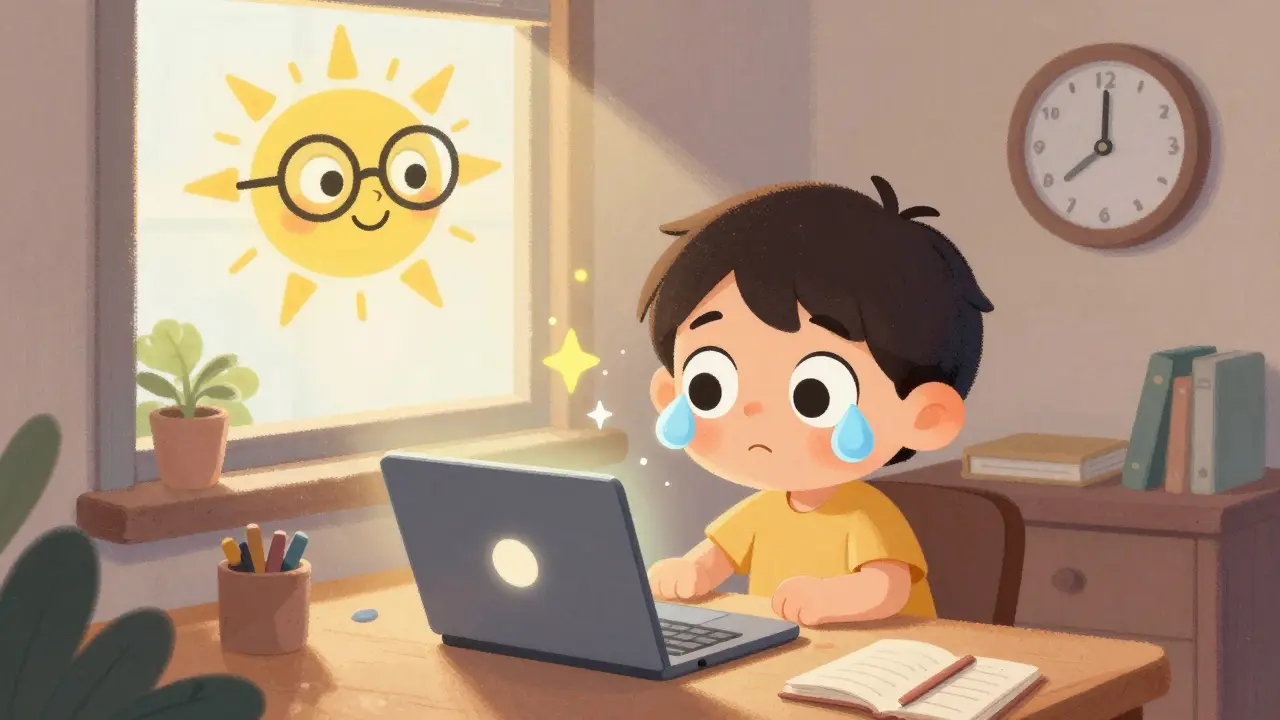
Staring at screens all day is normal now. You’re checking emails before breakfast, scrolling through your phone on the bus, working on a laptop until midnight. And your eyes? They’re tired. Dry. Aching. You’ve probably heard it’s because of blue light. But is that really the problem-or are you just blaming the wrong thing?
What Blue Light Actually Is (And What It Isn’t)
Blue light isn’t some new invention from your phone. It’s part of natural sunlight. The sun emits the full spectrum of visible light, including blue wavelengths between 415 and 455 nanometers. That’s the high-energy end of the visible spectrum-the same blue that makes the sky look blue. Your eyes evolved to handle this light during the day. The issue isn’t blue light itself. It’s how much of it you’re getting, when you’re getting it, and how long you’re exposed without breaks. Digital screens-phones, tablets, computers-emit blue light at levels far lower than daylight. But you’re staring at them for hours, often in dim rooms, with little rest. That’s the real trigger. A 2018 NIH review confirmed that blue light in the 415-455 nm range can trigger oxidative stress in eye cells under intense, prolonged exposure. But here’s the catch: the intensity from screens is about 100 times lower than what’s needed to cause this damage in lab studies. So while blue light *can* be harmful in extreme conditions, your phone isn’t frying your retina.Why Your Eyes Feel So Bad After Screen Time
If blue light isn’t the main villain, what is? It’s how you use screens. When you focus on a screen, you blink less-about 60% less than normal. That leads to dry, irritated eyes. You’re also squinting, leaning in, and holding devices too close. The American Optometric Association says viewing screens at 12 inches puts 3.7 diopters of strain on your eyes compared to 20-30 inches. That’s like constantly trying to focus on a book held against your nose. Add in glare, poor lighting, and long hours without rest, and you’ve got digital eye strain. Symptoms? Dry eyes (64.7% of users), blurred vision (52.1%), headaches (48%), and watery eyes (28.3%). These aren’t signs of permanent damage. They’re signs of fatigue. A 2021 study in Optometry and Vision Science found that people who followed the 20-20-20 rule-looking at something 20 feet away for 20 seconds every 20 minutes-reduced eye strain by over 53%. That’s not magic. That’s just giving your eyes a chance to relax.Do Blue Light Filters Actually Work?
The market for blue light products exploded. Glasses, screen protectors, apps like Night Shift and f.lux-total sales hit $3.12 billion in 2022. But do they fix the real problem? Software filters (Night Shift, f.lux) reduce blue light by 10-20%. That’s helpful at night. Harvard research shows that 6.5 hours of blue light exposure at night delays melatonin release by over 100 minutes. That’s why your sleep gets wrecked after scrolling before bed. Turning on night mode two hours before sleep boosts melatonin by 58%, according to University of Toronto data. So if you’re struggling to fall asleep, this is worth doing. Hardware filters-screen protectors and glasses-do more. Amber-tinted blue light glasses block 65-100% of blue light. But here’s the trade-off: they make everything look yellow. A 2022 University of Manchester study found they reduce visual acuity by 8.3% in color-sensitive tasks. If you’re a designer, photographer, or anyone who works with color, this is a dealbreaker. One professional photographer on DPReview summed it up: “The color shift ruins my ability to assess skin tones.” Even the most popular prescription blue light lenses, like Eyezen, claim to block 20% of blue light. Independent testing by Consumer Reports found they only block 12%. That’s not nothing-but it’s not a miracle cure.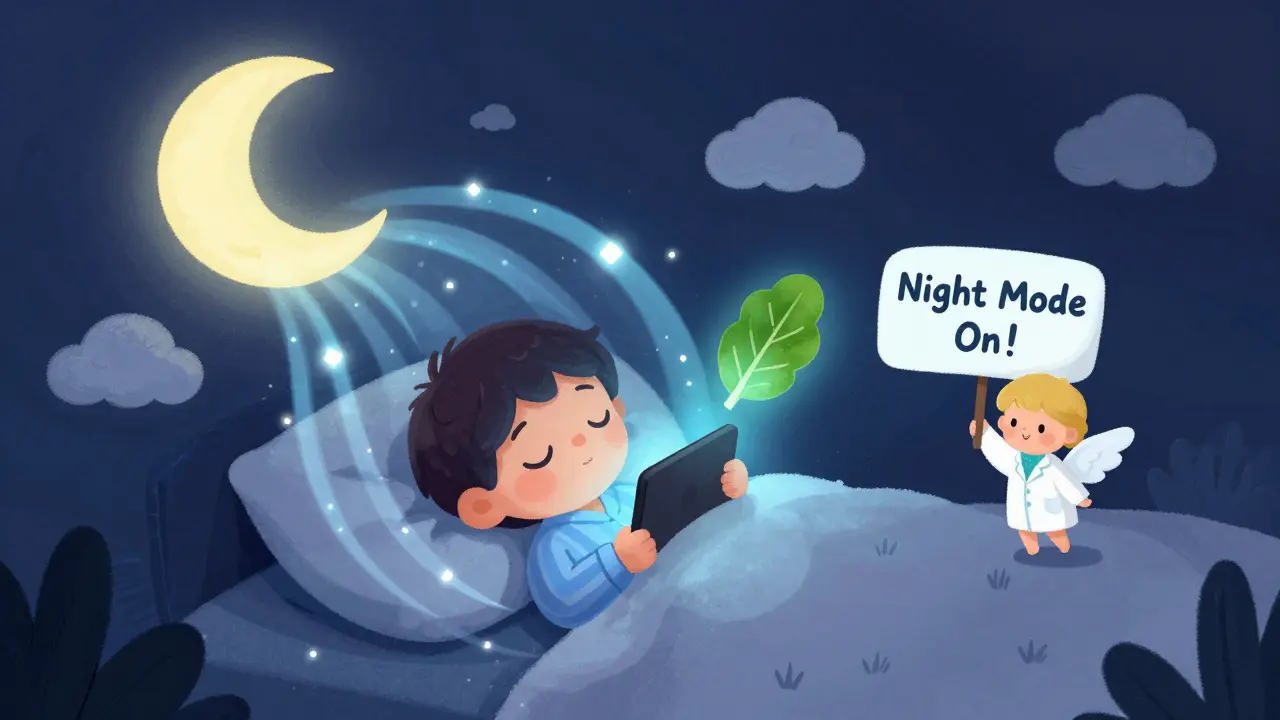
What Actually Helps: Habits Over Gadgets
Here’s the truth: the best protection isn’t a filter. It’s a habit.- Follow the 20-20-20 rule. Set a timer. Every 20 minutes, look out the window or across the room for 20 seconds. It’s simple. It’s free. It works.
- Adjust your screen brightness. Match it to the room. Too bright? Your pupils constrict. Too dim? You strain to see. Aim for 300-500 lux ambient light in your workspace. That’s like a soft lamp next to your desk.
- Keep screens at arm’s length. At least 20 inches away. Better yet, 25-30 inches. Your eyes will thank you.
- Use night mode before bed. Start it two hours before sleep. Don’t just turn it on at midnight. Your body needs the gradual shift.
- Hydrate your eyes. Use lubricating eye drops if your eyes feel gritty. Don’t wait until they’re burning.
The Sleep Connection: Why Blue Light at Night Matters More
Your eyes aren’t just for seeing. They’re part of your body’s internal clock. Special cells in your retina detect blue light and send signals to your brain’s suprachiasmatic nucleus-the master clock that controls melatonin. Exposure to blue light at night tells your brain it’s still daytime. That delays sleep, reduces deep sleep, and messes with your metabolism. A 2011 Harvard study showed blue light suppresses melatonin more than any other color. Green light? It delays melatonin by 52 minutes. Blue light? 105 minutes. This isn’t about eye damage. It’s about sleep quality. And sleep affects everything: mood, memory, immunity, even weight. If you’re tired all the time, and you’re scrolling in bed, blue light is likely part of the problem.What About Supplements? Lutein and Zeaxanthin
Your eyes have natural filters. Lutein and zeaxanthin are pigments in the macula-the part of the retina that handles sharp vision. They act like internal blue light blockers. A 2024 study in Nature Communications found that taking 10mg of lutein and 2mg of zeaxanthin daily increased macular pigment density by 0.12. That’s equivalent to wearing 25% blue light-blocking lenses-without the yellow tint. You get these from leafy greens: kale, spinach, collards. Or supplements. But they take time. You need at least 3-6 months of consistent use to see results. They’re not a quick fix. But they’re a smart long-term investment.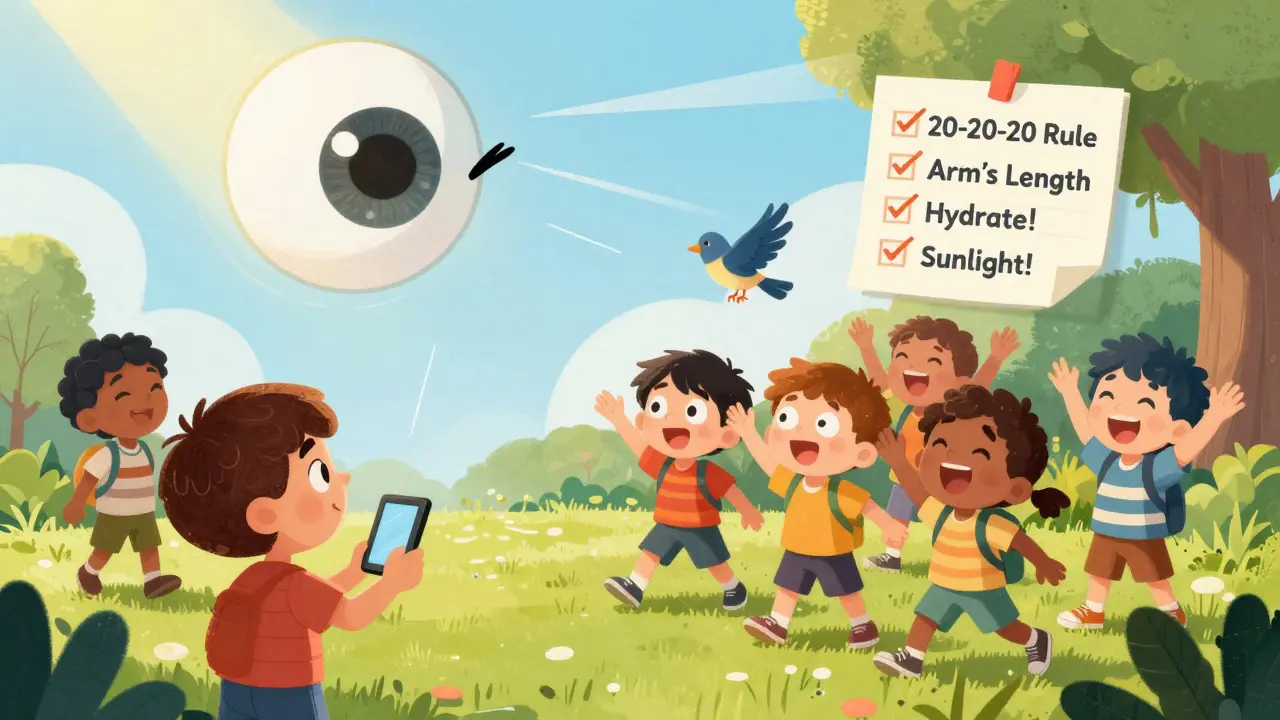
The Future: Screens That Fix Themselves
The industry is catching on. Instead of forcing you to buy glasses, companies are building better screens. Apple’s iOS 17.4 introduced adaptive color temperature. It uses your phone’s ambient light sensor to adjust blue light reduction in real time. Independent tests showed it cuts melatonin suppression by 37% compared to old Night Shift. OLED screens now reduce blue light at the hardware level-cutting 415-455 nm emissions by 30-40% without software. Samsung’s 2025 roadmap aims for 50% reduction with less than 2% color shift. That’s huge. And new tech like quantum dot lenses (still in testing) promise selective blue light filtering-blocking the harmful wavelengths while letting the rest through. No yellow tint. No distortion. This means the market for blue light glasses might shrink. IDC predicts a 18% annual drop in non-prescription blue light glasses sales from 2025 to 2028. Why? Because the problem is being solved at the source.What Should You Do Right Now?
You don’t need to buy expensive glasses. You don’t need a screen filter. You need to change how you use screens.- Start tonight: turn on night mode two hours before bed.
- Set a timer for 20-20-20. Do it every day for a week.
- Move your screen farther away. Sit back.
- Get more sunlight during the day. It helps regulate your rhythm.
- If you’re still struggling, try lutein and zeaxanthin supplements for 3 months.
When to See an Eye Doctor
Most eye strain goes away with rest and better habits. But if you have:- Blurry vision that doesn’t improve after rest
- Double vision or floating spots
- Eye pain or redness that lasts more than a few days
- Sudden sensitivity to light
Does blue light from screens cause permanent eye damage?
There’s no solid evidence that blue light from phones, tablets, or computers causes permanent damage to the retina. Lab studies show harm only at intensities far higher than what screens emit. The real issue is digital eye strain-dryness, fatigue, and discomfort-which are temporary and reversible with better habits.
Are blue light glasses worth buying?
For sleep, yes-if you use them at night. For reducing eye strain during the day, probably not. Most blue light glasses block only 10-25% of blue light, and the yellow tint can make color work harder. The 20-20-20 rule and screen positioning are more effective and free. If you’re a designer or photographer, avoid amber lenses-they mess with color accuracy.
What’s the best way to reduce blue light at night?
Use built-in night modes (Night Shift, f.lux, or Android’s Night Light) starting two hours before bed. Combine that with dimming room lights and avoiding screens for the last 30-60 minutes before sleep. This combination boosts melatonin by over 50%, helping you fall asleep faster and sleep deeper.
Can supplements like lutein help with blue light exposure?
Yes. Lutein and zeaxanthin are natural pigments in your eyes that act like internal blue light filters. Taking 10mg lutein and 2mg zeaxanthin daily for 3-6 months can increase your macular pigment density, offering protection similar to 25% blue light-blocking lenses-without color distortion. Eat spinach, kale, or take a supplement.
Why do my eyes feel worse when I work from home?
Working from home often means longer screen hours, poor lighting, and no breaks. People report 47% more eye strain during remote work periods. Your home setup might have glare from windows, a screen too close, or no proper desk chair. Fix your environment: position your screen at arm’s length, use indirect lighting, and follow the 20-20-20 rule religiously.


12 Comments
Kim Hines
Been using the 20-20-20 rule for a month now and my eyes don’t feel like sandpaper anymore. I set a timer on my smartwatch and just stare out the window. Feels weird at first but now I look forward to it.
Joanna Ebizie
Stop buying those blue light glasses already. You’re just throwing money at a problem you won’t fix until you stop staring at your phone like it’s the last piece of bread in a famine.
Cassandra Collins
They’re lying about blue light. It’s not the screen, it’s the 5G towers syncing with your retina. I saw a guy on YouTube who used a Faraday cage around his monitor and his vision cleared up in 3 days. The FDA knows. They just don’t want you to know.
Elizabeth Bauman
China’s been using quantum dot screens since 2023. We’re falling behind. Our tech companies are selling us snake oil glasses while they build better displays. Wake up, America. This isn’t about eye health-it’s about technological sovereignty.
Dylan Smith
I tried the 20-20-20 rule and it worked but I forgot to do it for three days and my head started throbbing again. I need a reminder app. Anyone know a good one
Kitty Price
My cat sits on my keyboard every time I try to take a break. She’s my 20-20-20 enforcer now 🐱
Colleen Bigelow
They say blue light doesn’t damage eyes but they also said smoking was fine for decades. Who’s really behind the ‘no harm’ narrative Big Tech or the optometry lobby? I’ve seen people go blind after 5 years of remote work. They just call it ‘age-related’.
SHAMSHEER SHAIKH
Dear friends, let us not forget that the human eye evolved under the sun, not under LED panels. The solution is not in gadgets, but in rhythm: sunlight in the morning, dim light at night, and disciplined pauses. This is not merely health-it is harmony.
Mike Smith
Thank you for this thoughtful, evidence-based breakdown. The most valuable takeaway is that prevention requires behavioral change-not consumer purchases. Small, consistent habits yield dramatic results over time. Well done.
James Rayner
I used to think my headaches were from stress. Turns out I was holding my phone 6 inches from my face for 12 hours a day. Moved it to 24 inches. No more migraines. Sometimes the fix is just… space.
Dan Padgett
Man, I used to think I was just old. Then I started eating spinach every day and taking those lutein pills. Six months later, I could read my phone without squinting. Simple stuff, but it works. Don’t overthink it.
sue spark
I started using night mode and now I sleep 2 hours longer. My boss noticed I’m not dragging myself in anymore. I didn’t even know I was sleep deprived