
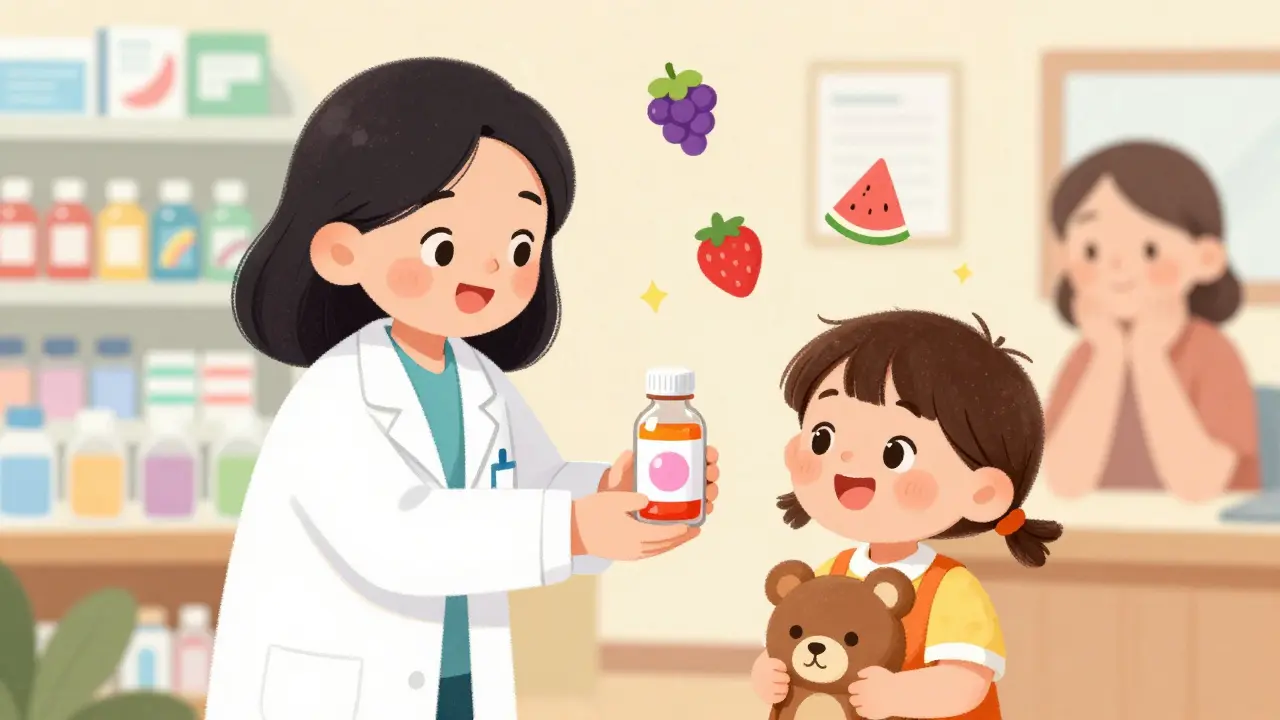
Imagine your child spitting out medicine every time you try to give it to them. You’ve tried mixing it with juice, hiding it in applesauce, even pretending it’s a magic potion. Nothing works. And each failed attempt leaves you frustrated, your child anxious, and the treatment plan falling apart. This isn’t just a parenting struggle-it’s a widespread public health issue. Flavoring services are changing that reality for thousands of families every day.
Why Taste Matters More Than You Think
It’s easy to assume that if a medicine works, kids will take it. But research shows otherwise. Studies confirm that unpleasant taste is one of the top reasons children refuse to take their medication. In fact, more than 78% of pediatric patients have trouble sticking to their treatment plan, and nearly half of those problems come down to how the medicine tastes. A child might not understand the importance of finishing an antibiotic course, but they absolutely understand that something tastes like bitter metal or burnt plastic. The consequences aren’t just inconvenient-they’re dangerous. When kids don’t take their full dose, infections don’t clear, chronic conditions worsen, and resistance develops. The FDA recognizes this clearly: palatability isn’t a nice-to-have; it’s a key factor in whether a treatment succeeds or fails.How Flavoring Services Work
Flavoring services let pharmacists add safe, food-grade flavorings directly to liquid medications. It’s not magic-it’s science. The process is simple: after a prescription is filled, the pharmacist adds a few drops of flavoring to the bottle and shakes it. No special tools. No extra steps beyond what they already do. The medication’s strength, dosage, and effectiveness stay exactly the same. The only thing that changes? The taste. The most commonly re-flavored medications include antibiotics like Amoxicillin, Augmentin, Azithromycin, Cefdinir, and Clindamycin. These are often bitter, especially when given in liquid form. That’s where flavoring makes the biggest difference. Top flavor choices? Grape, bubblegum, strawberry, watermelon, and cherry. These aren’t random picks-they’re based on real data from thousands of pediatric patients. Kids consistently pick these flavors. And when they do, compliance jumps.Real Numbers, Real Results
The impact isn’t theoretical. One study found that before flavoring, 76% of children missed doses or refused medication. After flavoring? That number dropped to 20%. Another report from the National Community Pharmacists Association showed compliance rising from 53% to over 90% when flavoring was offered. Intermountain Healthcare started offering this service in 2023. Their goal? Reduce the stress of medication time. Their result? Parents report their children now ask for their medicine. One parent said, “My son actually asks for his medicine now that it tastes like bubblegum.” That’s not a fluke. That’s the power of taste.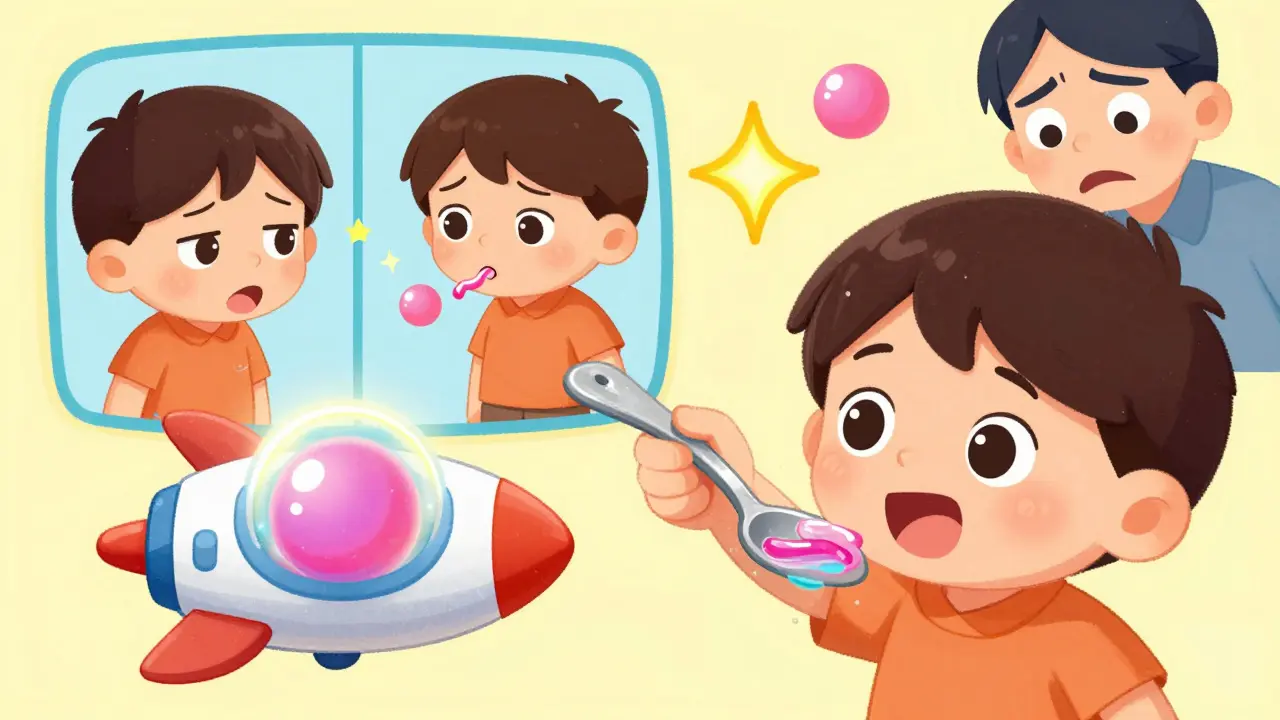
What Makes It Safe?
Parents worry: Is this safe? Does it change the medicine? Does it have sugar? The answer is yes, it’s safe-and no, it doesn’t interfere. Modern flavoring systems like FLAVORx are dye-free and sugar-free. They’re designed to be safe for kids with allergies, diabetes, or sensitivities. They don’t alter the active ingredients. They don’t affect how the body absorbs the drug. And they’re tested to ensure they don’t break down the medication’s stability. Pharmacists don’t just guess which flavor to use. They follow guidelines based on years of data. For example, some medications respond better to citrus flavors; others need something stronger like grape to mask bitterness. The system even includes warnings for combinations that might cause cloudiness or separation. It’s not just adding flavor-it’s doing it right.Why This Beats Home Tricks
Many parents try to hide medicine in juice, yogurt, or applesauce. It seems smart. But it’s risky. Mixing medicine with food can change how the body absorbs it. Some medications need to be taken on an empty stomach. Others lose potency when mixed with acidic liquids like orange juice. A study showed that over half of parents who tried these methods ended up giving the wrong dose. Flavoring services eliminate those risks. The medicine stays intact. The dose stays accurate. And the child gets a consistent, predictable experience every time.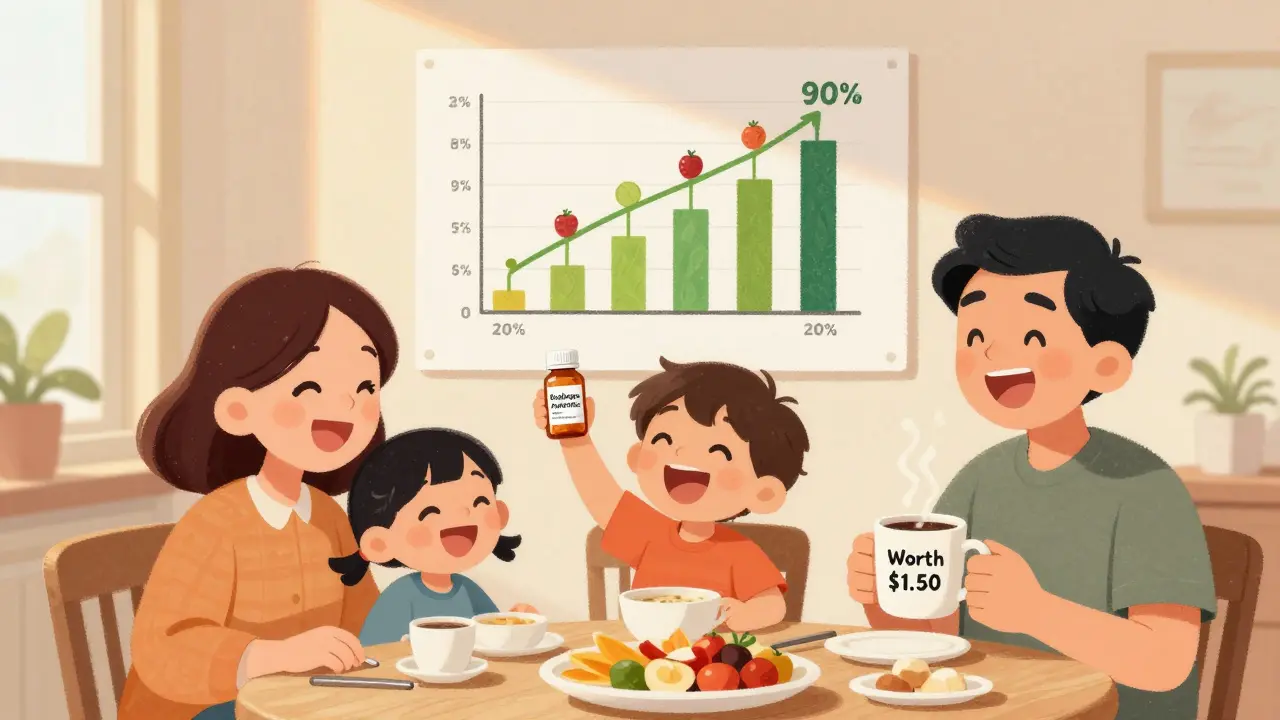
Who Offers This Service?
You’ll find flavoring services at most community pharmacies across the U.S. Chains like CVS, Walgreens, and independent pharmacies like Germantown Pharmacy in Mississippi offer it. Intermountain Healthcare now includes it in all their pharmacies. The cost? Around $1.50 per prescription. That’s less than a coffee. It’s not just available-it’s growing. Pharmacies that offer it report higher customer loyalty. Parents who discover it tell their friends. One pharmacy owner said, “We’ve seen families come back just because we flavor their kids’ medicine.”Limitations and Challenges
It’s not a cure-all. Some medications still taste bad even after flavoring. Certain chemical compounds are stubbornly bitter. And while most kids love grape or bubblegum, a few develop strong preferences. One child might refuse to take anything that isn’t strawberry-even if it’s a different medicine. Also, awareness is low. Many parents don’t know flavoring services exist until they’ve struggled for weeks. That’s why pharmacists are now training to ask proactively: “Would you like us to flavor this for your child?” And while flavoring helps with taste, it doesn’t solve every adherence issue. Kids still forget. Parents get busy. Schedules change. But taste is one barrier you can actually remove.The Bigger Picture
This isn’t just about making medicine taste better. It’s about building trust. When a child associates taking medicine with something pleasant-not a battle-they’re more likely to cooperate now and later in life. It reduces stress for families. It improves outcomes. It saves doctors from having to prescribe alternatives that might be less effective or more expensive. As healthcare shifts toward patient-centered care, services like this become essential. They’re low-cost, high-impact, and backed by solid data. And they’re available right now-at your local pharmacy.Can any liquid medication be flavored?
Most liquid medications can be flavored, but not all. Some formulations may react poorly with flavoring agents, causing cloudiness, separation, or changes in viscosity. Pharmacists use guidelines and databases to determine compatibility. If a medication isn’t suitable, they’ll let you know before adding flavor.
Does flavoring change the medicine’s effectiveness?
No. FDA-approved flavoring systems are designed to preserve the medication’s potency, dosage, and absorption. The active ingredients remain unchanged. The only difference is the taste, which helps children take the full prescribed dose.
Is there a cost for flavoring services?
Yes, but it’s minimal-usually around $1.50 per prescription. Many pharmacies include it as part of their standard service. Some even offer it for free as a way to build patient loyalty. It’s far less than the cost of missed doses, repeat visits, or hospitalizations due to non-adherence.
What flavors are available?
Most pharmacies offer 5-10 kid-friendly options, including grape, bubblegum, strawberry, watermelon, cherry, orange, and vanilla. These are based on real preferences from children. Some pharmacies let kids pick their favorite flavor, turning medication time into a small, positive ritual.
Can flavoring help with chewable or tablet medications?
No. Flavoring services are designed only for liquid medications. Chewable tablets and orally disintegrating tablets (ODTs) are already flavored during manufacturing. For those, the focus is on choosing formulations with better taste profiles from the start.
12 Comments
RacRac Rachel
This is literally life-changing for my 4-year-old. We went from daily battles to her asking for her medicine like it’s candy. Grape flavor = magic. 🍇💖 Thank you for sharing this!
Jane Ryan Ryder
Of course it works. Kids will take anything if you make it taste like a damn lollipop. Next they’ll be flavoring insulin with cotton candy. Welcome to the dystopia, folks.
Callum Duffy
An elegantly simple intervention with profound clinical implications. The fact that such a low-cost, non-invasive solution can dramatically improve adherence speaks volumes about the overlooked nuances of patient-centered care. Well-documented and thoroughly reasoned.
Richard Elric5111
One cannot help but reflect upon the epistemological rupture between biomedical efficacy and phenomenological experience. The medicine may act upon the body, but it is the taste that governs the will. Thus, the pharmacological act is not merely chemical-it is hermeneutic. We are not treating disease; we are negotiating subjectivity.
Dean Jones
Let me tell you something. I’ve been in pediatric pharmacy for 22 years. I’ve seen parents try everything-honey, chocolate syrup, hiding it in peanut butter (don’t do that, by the way). The moment we started offering flavoring, our compliance rates jumped. Not because we’re geniuses. Because we finally stopped treating kids like problems to be solved and started treating them like humans who hate bitter metal. It’s not rocket science. It’s basic empathy. And yet, most pharmacies still don’t offer it. Why? Because bureaucracy. Because profit margins. Because someone thought ‘it’s not in the protocol.’ Well, guess what? The protocol should change. It’s 2024. We have data. We have science. We have kids who are crying because their medicine tastes like regret. Let’s fix it.
Betsy Silverman
I work in a multicultural clinic and this is huge. We have families from 15+ countries here. Some kids won’t take anything that tastes ‘too sweet’-others refuse anything that isn’t fruity. Having a few flavor options helps us respect cultural preferences too. One mom from Mexico said her daughter only took medicine if it tasted like ‘tamarindo.’ We found a tamarind flavoring. She cried. So did I.
Ivan Viktor
So you’re telling me the solution to kids not taking medicine is to turn it into candy? Genius. Next up: flavored chemotherapy. Maybe we can make chemo taste like pizza and call it a day. I’m sure the cancer cells will be thrilled.
Zacharia Reda
I love how this works. But let’s be real-why does it take a pharmacy service to fix something that should’ve been standard in drug development? Why aren’t pharma companies already making kid-friendly formulations? Because they’re not incentivized. Profit > pediatric compliance. This is a band-aid on a broken system. Still, I’m glad it exists.
Jeff Card
My daughter used to scream when I even opened the medicine bottle. After we flavored her amoxicillin with bubblegum? She now hands me the cup. I didn’t believe it until I saw it. Just… thank you.
Matt Alexander
Simple. Cheap. Works. Ask your pharmacist. $1.50 is nothing compared to another doctor visit. My kid’s ear infection was gone in 5 days because we flavored it. No drama. No stress. Done.
Gretchen Rivas
We use this at our clinic. Parents are shocked it’s so easy. The key? Ask early. Don’t wait until they’ve struggled for weeks. Just say: ‘Want to pick a flavor?’ It turns a chore into a choice.
Mike Dubes
I never thought i’d be this emotional about medicine flavoring but here we are. my son used to cry every time. now he says ‘bubblegum please’ like it’s a dessert. i’m not crying. you’re crying. also i spelled 'emotional' wrong in my head like 5 times. oops.