
Nocebo Effect Risk Calculator
This tool helps you understand how your expectations might influence your experience with medications. Based on research, it calculates your personal risk of experiencing side effects due to the nocebo effect (expectation of harm) rather than the medication itself.
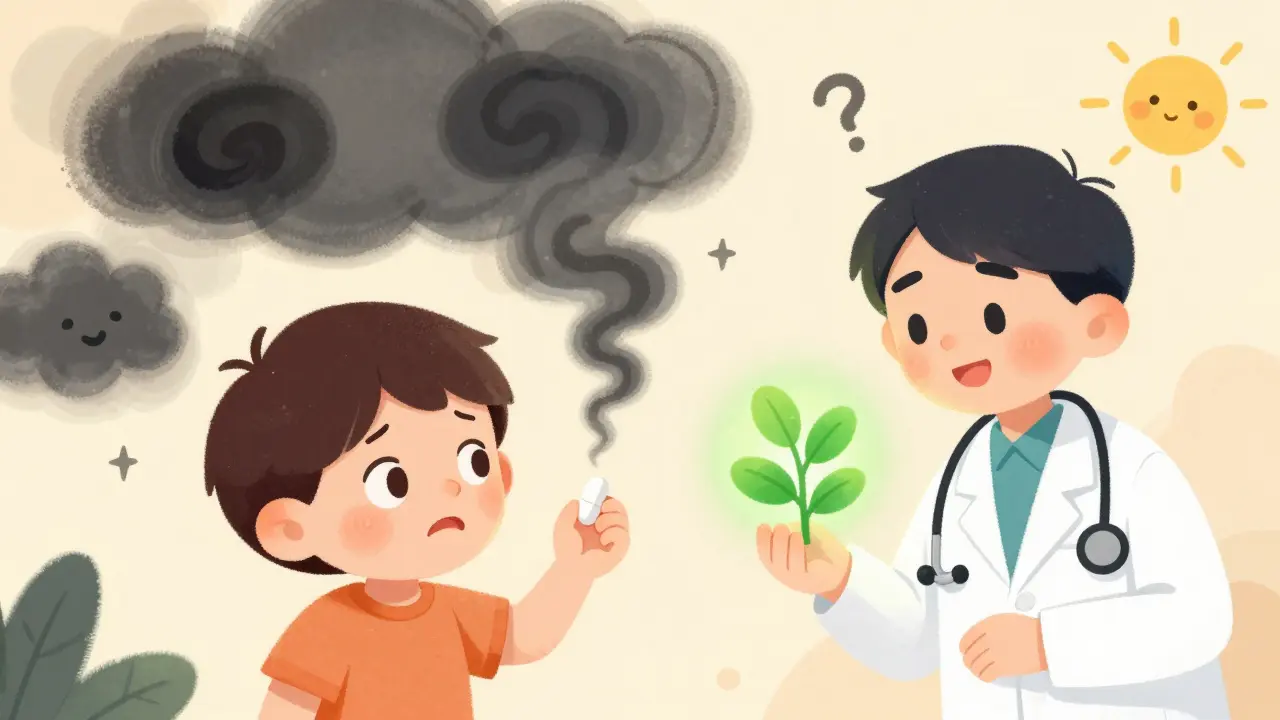
Have you ever started a new medication and suddenly felt sick-even though your doctor said it was safe? Maybe you got dizzy, had a headache, or felt nauseous. Then you found out the pill you were taking was a sugar pill. That’s not a coincidence. It’s the nocebo effect.
Most people know about the placebo effect: when you feel better because you believe a treatment will work. But far fewer know about its dark twin-the nocebo effect. This is when you feel worse because you expect to. It’s not in your head in the fake sense. It’s real. Your brain triggers actual physical symptoms based on what you’ve been told, what you’ve read, or what you fear.
What Exactly Is the Nocebo Effect?
The word comes from Latin: nocebo means "I shall harm." It’s the opposite of placebo, which means "I shall please." While a placebo can make you feel better with a fake pill, a nocebo can make you feel worse with the same thing.
In clinical trials, about 20% of people taking a sugar pill report side effects like nausea, fatigue, or headaches. Nearly 10% quit the trial altogether because they believe the medicine is harming them. And here’s the kicker: those people weren’t given any active drug. Their bodies reacted to the expectation of harm.
This isn’t rare. Studies show that 26% to 50% of side effects reported when starting a new medication may have nothing to do with the drug itself. They’re caused by fear, misinformation, or even how the doctor explained the risks.
How Your Brain Creates Real Symptoms
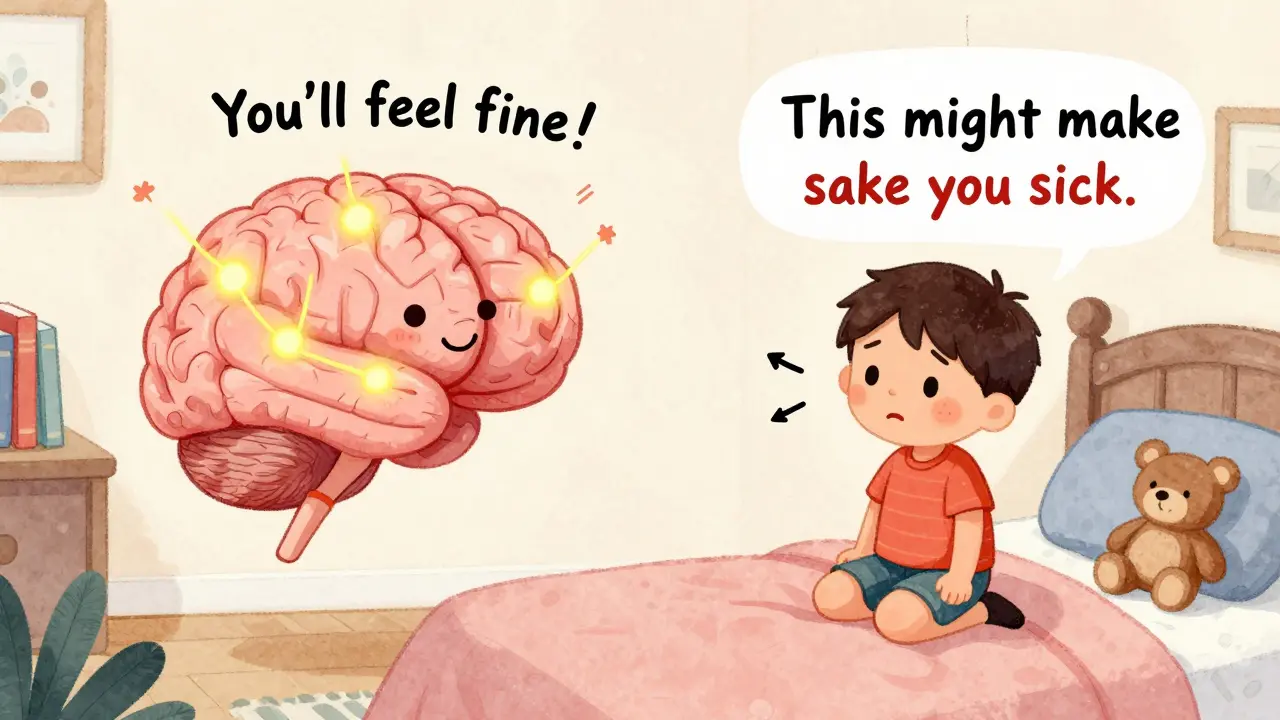
Your brain doesn’t distinguish between real danger and imagined danger. When you’re told a medication might cause dizziness, your brain starts scanning for it. A slight head rush from standing up? That’s the medication. A tired feeling after lunch? That’s the medication. Your body amplifies normal sensations and blames them on the pill.
Neuroscience confirms this. Brain scans show that negative expectations activate the same areas as real pain: the anterior cingulate cortex, the insula, and the prefrontal cortex. These regions control how you feel discomfort, process emotions, and interpret bodily signals. When you expect pain, your brain literally turns up the volume on pain signals-even if there’s no injury.
One famous study used the opioid painkiller remifentanil. Patients who were told the drug would make their pain worse after it wore off felt more pain than those who weren’t warned. In fact, the negative expectation completely canceled out the drug’s pain-relieving effect. The medicine worked perfectly-but their minds undid it.
Why Brand Changes Trigger the Nocebo Effect
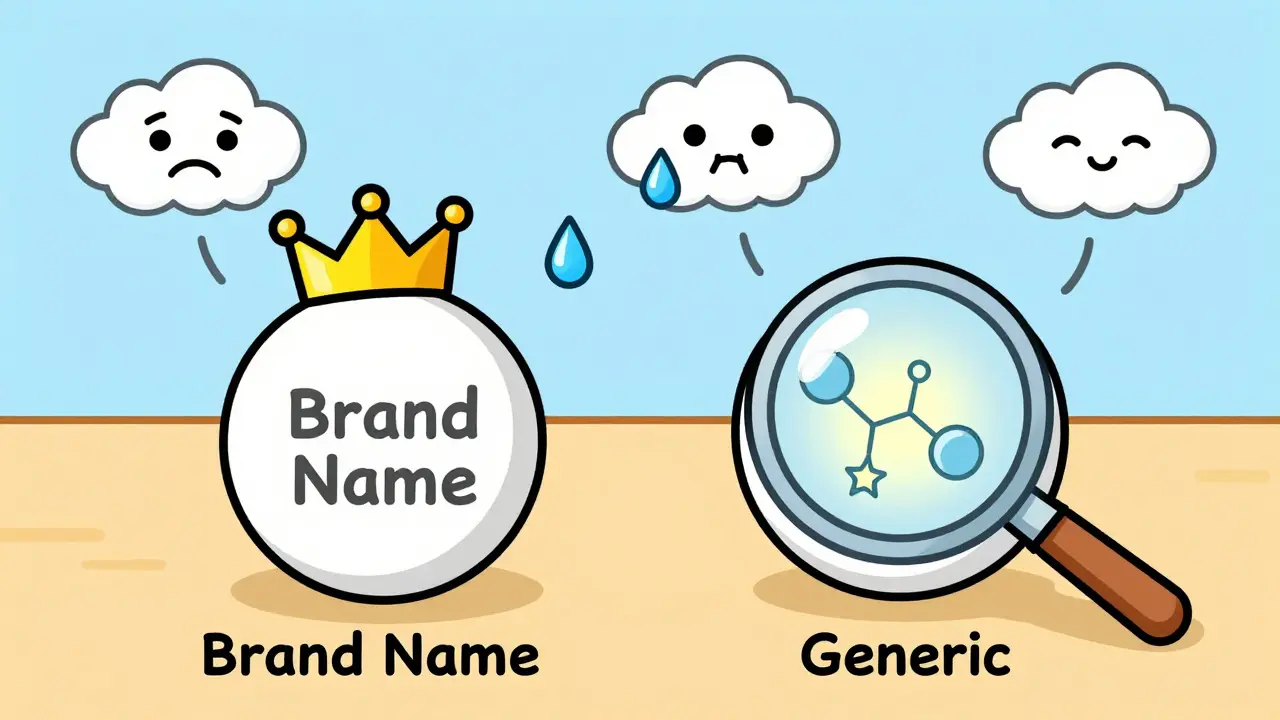
One of the clearest examples happened in New Zealand in 2017. The government switched patients from brand-name venlafaxine to a cheaper generic version. The active ingredient was identical. The dosage was the same. The manufacturing standards were unchanged.
But after media coverage warned patients about "possible differences," reports of side effects jumped sharply. People started reporting dizziness, anxiety, and nausea-even though before the switch, those reports were stable. When researchers looked closer, they found no biological change. The only thing that changed was what people believed.
Similar stories pop up everywhere. On Reddit, people write about switching from brand-name sertraline to generic and suddenly developing insomnia. When they went back to the brand name, the symptoms vanished. Again, same chemical. Same dose. But different expectations.
This is why generic drugs often get a bad reputation-even though they’re just as safe and effective. The nocebo effect makes people think generics are inferior. And that belief changes how their bodies respond.
Who’s Most at Risk?
Not everyone experiences the nocebo effect the same way. Certain people are more vulnerable:
- Women: In placebo-controlled trials, women report 23% more side effects than men-even when taking the same fake pill.
- People with anxiety or depression: They’re 1.7 times more likely to experience nocebo effects.
- Pessimistic thinkers: If you tend to expect the worst, your brain is wired to amplify negative signals.
- Those who read medication leaflets closely: The more side effects listed, the more people report them. One study found a direct link between the length of the side effect list and the number of symptoms patients claimed to feel.
It’s not about being weak-minded. It’s about how your brain processes information. If you’ve had a bad experience before, or if your doctor sounded worried when explaining risks, your brain locks in that expectation-and your body follows.
How Doctors and Pharmacies Can Reduce the Nocebo Effect
Good communication can cut nocebo effects in half. Here’s what works:
- Frame risks positively: Instead of saying, "Some people get nausea," say, "Most people don’t feel sick at all, but a few might have mild nausea for a few days."
- Give context: Explain that side effects are often temporary and unrelated to the drug’s purpose. "This headache might be your body adjusting, not a reaction to the medicine. It usually goes away in a week."
- Avoid overwhelming lists: Don’t read the entire medication leaflet aloud. Highlight the most common and serious risks, and reassure patients that most side effects are mild and short-lived.
- Use empathy: Saying, "I know this sounds scary, but I’ve seen many patients go through this without issues," builds trust and reduces fear.
Training programs in New Zealand and Europe show that just 4 to 6 hours of communication training for doctors cuts medication discontinuation by up to 22%. That means more people stay on effective treatments instead of quitting because they think they’re getting sick.
What You Can Do If You’re Worried
If you’re starting a new medication and feel anxious:
- Wait a few days. Many "side effects" fade as your body adjusts.
- Track your symptoms. Write down what you feel, when, and what else was happening (sleep, stress, diet). You might find patterns unrelated to the drug.
- Ask your doctor: "Could this be the nocebo effect?" Many don’t bring it up-but asking opens the door.
- Don’t stop the medication without talking to your provider. Sometimes, symptoms disappear on their own.
Also, try not to scroll through patient forums right after a prescription. Those stories are often extreme, unrepresentative, and emotionally charged. They feed fear, not facts.
The Bigger Picture: Why This Matters
The nocebo effect isn’t just about individual discomfort. It’s a public health issue.
Between 15% and 20% of people stop taking effective medications because they believe they’re having side effects-when the real cause might be fear. That leads to worse health outcomes, more hospital visits, and higher costs. The global generic drug market is worth over $200 billion, yet many patients avoid it due to false beliefs.
Health systems are starting to act. The UK’s NHS reduced adverse event reports by 14% after training staff in nocebo-aware communication. The European Medicines Agency and Medsafe (New Zealand) now recommend balanced risk messaging in patient leaflets. The World Health Organization has listed improving medication communication as a key goal in its 2023 Medication Without Harm initiative.
By 2030, experts predict every doctor will be trained to assess nocebo risk-just like they check for allergies or drug interactions.
Final Thought
Your body listens to your mind. What you believe about a medicine can change how it affects you. That’s not weakness. It’s biology.
The nocebo effect reminds us that healing isn’t just about chemistry. It’s about trust, communication, and hope. A pill doesn’t just contain active ingredients. It carries meaning. And meaning can heal-or harm.

12 Comments
Dominic Punch
Let me tell you something real: the nocebo effect isn’t some fringe theory. I’ve seen it in ERs. Patients come in convinced they’re having a heart attack because they read about it online. EKGs are clean. Bloodwork’s perfect. But they’re sweating, shaking, convinced they’re dying. Their brain’s running a horror movie on loop. The body believes what the mind tells it. That’s not weakness. That’s biology in action.
Doctors need to stop treating this like a joke. Training in communication isn’t optional-it’s lifesaving. A 22% drop in medication abandonment? That’s not a statistic. That’s people who didn’t have to suffer or end up in the hospital because someone took five extra seconds to phrase things right.
Also-generic drugs? They’re not inferior. They’re just cheaper. Same active ingredient. Same FDA standards. The only thing changing is the label. And yet, people swear the generic version ‘doesn’t work’-until they switch back. Then boom. Symptoms vanish. It’s not magic. It’s expectation. We’ve got to stop letting fear dictate health outcomes.
Steven Pam
Yeah this is so real. I started a new antidepressant and felt awful for three days. Headache, nausea, weird tingles. I was convinced it was the drug. Then I read this exact article. So I told myself: ‘This is your brain overreacting.’ I stopped obsessing. Took walks. Drank water. Slept more.
By day five? I felt fine. Like, *fine*. Like I hadn’t even been sick. Not because the drug ‘kicked in’-because I stopped feeding the fear. My brain just… stopped listening to the alarm bells. Mindset matters more than we admit.
Michael FItzpatrick
There’s a beautiful irony here: we live in an age of hyper-informed patients… and it’s killing us. Not the disease. Not the drug. The *information overload*. You open a medication leaflet and it reads like a horror anthology. ‘Possible side effects: death, liver failure, spontaneous weeping, existential dread.’
Meanwhile, the actual odds of liver failure? One in 500,000. But you remember the scary stuff. Your brain is wired to prioritize threat. So you scan your body for every twitch, every sigh, every burp-and label it ‘the drug.’
It’s not paranoia. It’s evolution gone rogue. We evolved to notice danger. Now we’re drowning in manufactured danger. We need better framing-not less info. Less panic. More context.
Kenzie Goode
I’m so glad someone wrote this. I’ve been on a ton of meds over the years. I used to blame everything on the pills. Then I started journaling. Wrote down: ‘What else was going on that day?’ Turns out, the ‘side effects’ always happened after a bad night’s sleep, or when I was stressed about work. Never random.
My therapist called it ‘body reading.’ We’re so disconnected from our own rhythms that we misread everything as a medical emergency. The nocebo effect isn’t fake. It’s just… misunderstood. We need compassion-not dismissal. The pain is real. The cause? Not always the pill.
Erin Pinheiro
Ive been on 17 diff meds in 5 years and 14 of them made me feel like death but like maybe its just the nocebo effect? i dont know. i just know i feel bad when i take pills. and now i think its all in my head. but what if its not? what if my body is just broken? i dont trust science anymore. i dont trust doctors. i dont trust the pharma companies. i dont trust the generic brands. i dont trust the leaflets. i dont trust the internet. i dont trust myself. i just want to feel normal.
Maranda Najar
Oh, honey. You’ve stumbled into the most profound psychological truth of modern medicine. The nocebo effect isn’t just about pills-it’s about the entire architecture of fear we’ve built around health.
Think about it: we live in a world where a single Google search can turn a mild headache into ‘brain tumor,’ a skipped heartbeat into ‘heart failure,’ and a tired afternoon into ‘chronic fatigue syndrome.’ We’ve weaponized information. We’ve turned self-care into self-sabotage.
And yet-we still cling to the myth that medicine is purely chemical. That if we just had the right molecule, we’d be fine. But we’re not machines. We’re story-driven, fear-conditioned, emotionally responsive organisms. The pill doesn’t just contain chemistry. It carries narrative. And narratives have power.
When a doctor says, ‘This might cause dizziness,’ they aren’t informing-they’re implanting. When a leaflet lists 47 side effects, they aren’t warning-they’re inviting.
We need to stop treating patients like data points and start treating them like humans who are terrified, exhausted, and desperately hoping for safety. Because sometimes, the most powerful medicine isn’t in the capsule.
It’s in the silence. The reassurance. The calm voice saying, ‘You’re not broken. This is temporary. I’m here.’
That’s the cure we forgot to prescribe.
Natanya Green
OMG YES. I switched from brand-name Zoloft to generic last year and I felt like I was dying. Panic attacks. Insomnia. Like my soul was being pulled out through my pores. I thought I was having a breakdown. I called my doctor. I cried. I almost quit.
Then I read this. I thought-wait. What if I’m just scared? What if I’m imagining this? So I told myself: ‘This is your brain being dramatic.’ And guess what? It worked. Like, literally. Two days later, I felt normal. Not because the drug changed. Because I changed how I thought about it.
So yeah. The nocebo effect is real. And it’s terrifying. And also… kind of empowering? Like, if your mind can make you feel awful with a sugar pill… maybe it can also make you feel better. Just by believing you will.
Larry Zerpa
Let’s be brutally honest: the nocebo effect is the pharmaceutical industry’s greatest ally. Why? Because it lets them profit from fear. They design leaflets to be terrifying. They overstate risks. They flood the market with 47-side-effect lists because scared patients don’t ask questions-they just pay more for the brand name.
And when patients report side effects? They don’t question the belief. They don’t investigate the psychology. They just prescribe another drug. Or a higher dose. Or a different brand. The cycle continues.
Meanwhile, the real issue-the way fear is weaponized in healthcare-is never addressed. The system doesn’t want you to understand the nocebo effect. It wants you to keep buying pills. And believing you need them.
This isn’t about biology. It’s about profit. And the ‘solution’? Training doctors to ‘communicate better’? That’s not fixing the system. That’s polishing the cage.
Sanjaykumar Rabari
The nocebo effect is fake. It's all government and pharma propaganda to make people take more drugs. They want you to think your mind is weak so you'll keep buying pills. The real side effects are hidden. They don't want you to know. This article is part of the cover-up. I've seen people get sick from generics. Real sickness. Not 'in their head'. The system is lying to you.
Lou Suito
I read the entire leaflet. Every word. 37 side effects. I counted them. 37. And I felt every single one. Within 48 hours. Not because I was anxious. Not because I was suggestible. Because the drug was toxic. And now you want me to believe it's all in my head? No. I'm not delusional. I'm observant. You're just too lazy to admit the system is broken. And also-why do you always say 'women report more side effects'? Because they're not lying. They're just not dumb enough to ignore their bodies.
Brandice Valentino
Ugh. I just read this whole thing and I’m exhausted. Like, I get it. Your brain can trick you. But also? What if I’m not ‘overreacting’? What if I’m just… sensitive? What if my body is just more… attuned? Like, maybe I’m not broken. Maybe the world is just too loud. And the pills? Maybe they’re just not right for me. Not because of fear. Because I’m different.
And also-why do we always assume the ‘solution’ is to make people *believe harder*? Like, why not ask: what if the drug is actually not right for *me*? Not because I’m weak. But because I’m unique?
Anyway. I’m gonna go lie down. My head’s kinda pounding. Probably the nocebo. Or maybe not. Who knows. I’m tired. 😴
Michael FItzpatrick
Replying to @7804: You’re not wrong. Sensitivity isn’t weakness. Some people are just more neurologically responsive-like a high-resolution screen showing every pixel. That doesn’t mean they’re imagining it. It means their nervous system is finely tuned. The problem isn’t the person. It’s the one-size-fits-all approach to medicine. We treat everyone like a spreadsheet. But biology isn’t uniform.
Maybe the real solution isn’t convincing people not to fear side effects… but designing medications with gentler profiles. Or offering multiple options instead of forcing one. Or listening instead of labeling.
It’s not about fixing the mind. It’s about fixing the system.