
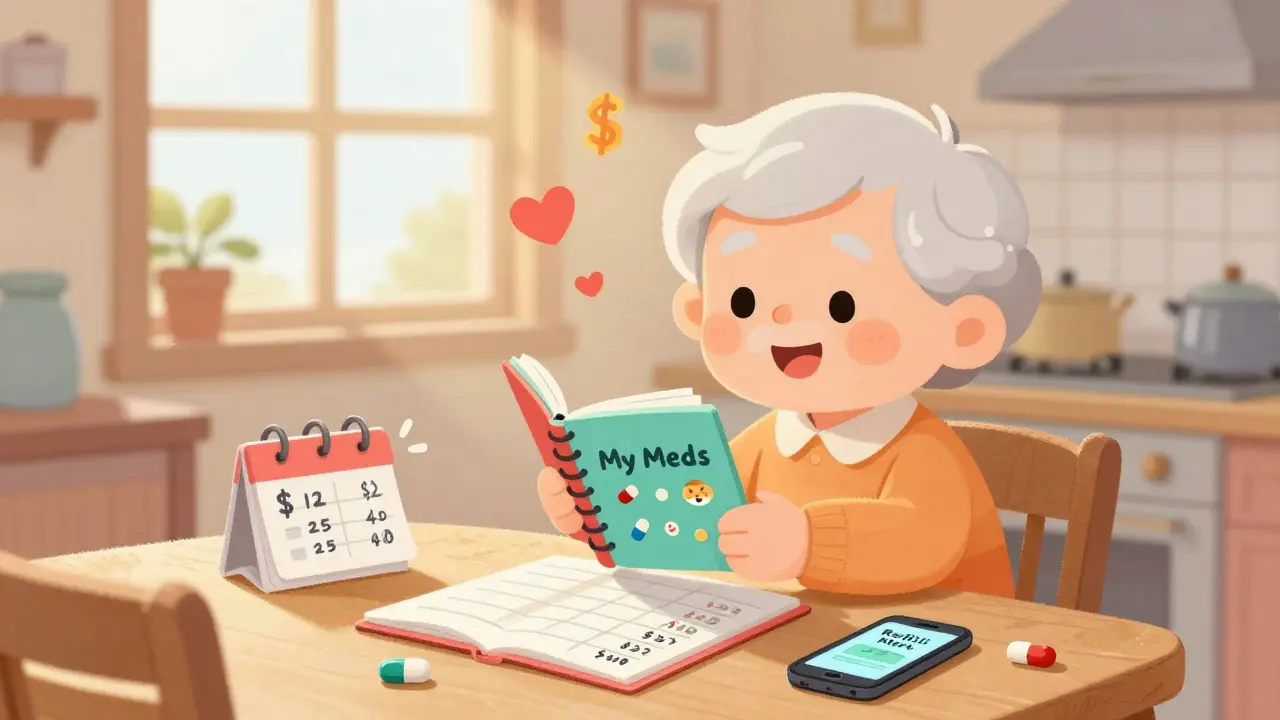
Running out of medication isn’t just inconvenient-it can be dangerous. And when you’re paying hundreds of dollars a month for prescriptions, forgetting to refill isn’t just a hassle, it’s a financial risk. Many people don’t realize they’re overspending on meds because they’re not tracking usage, prices, or refill cycles. The good news? You don’t need a hospital IT department to fix this. With the right system, you can set up medication budgeting and auto-refill alerts that save you money and keep you healthy.
Start by Tracking Every Prescription You Take
Before you can budget, you need to know what you’re spending on. Write down every medication you take regularly, even over-the-counter ones. Include the name, dosage, how often you take it, and the cost per pill or per month. Don’t guess-check your pharmacy receipt or log into your pharmacy’s app. For example, if you take metformin 500mg twice daily, and each 30-pill bottle costs $12, that’s $24 a month. Multiply that by 12 months: $288 a year. Now add your blood pressure med, your cholesterol drug, your pain reliever. Suddenly, you’re looking at $800, $1,200, or more a year just on prescriptions.Most people don’t realize how fast these costs add up. A 2023 survey by the Healthcare Financial Management Association found that U.S. households spend an average of $1,100 annually on prescription drugs. If you’re on Medicare or private insurance, you might be surprised how much you’re paying out-of-pocket after copays. Write it all down. Use a simple spreadsheet or even a notes app on your phone. This is your baseline.
Choose Your Budgeting Method
There are three ways to manage medication spending: annual budgeting, rolling forecasts, and zero-based budgeting. For most people, annual budgeting works fine. You look at last year’s total, adjust for price changes, and set a monthly limit. But if your meds change often-maybe you started a new drug or your doctor switched you to a generic-then rolling forecasts are better.Rolling forecasts mean you update your budget every three months. For example, if your insulin price jumped 15% in January, you don’t wait until next year to adjust. You update your budget in February. This is how hospitals like Mayo Clinic keep costs under control. You don’t need fancy software. Just open your spreadsheet every quarter and ask: Did I spend more or less than planned? Why?
Zero-based budgeting is overkill for most individuals. It means starting from $0 every year and justifying every single medication cost. It’s used by big hospitals with teams of pharmacists and finance staff. For you? Stick with annual or rolling. The goal isn’t perfection-it’s awareness.
Set Up Auto-Refill Alerts
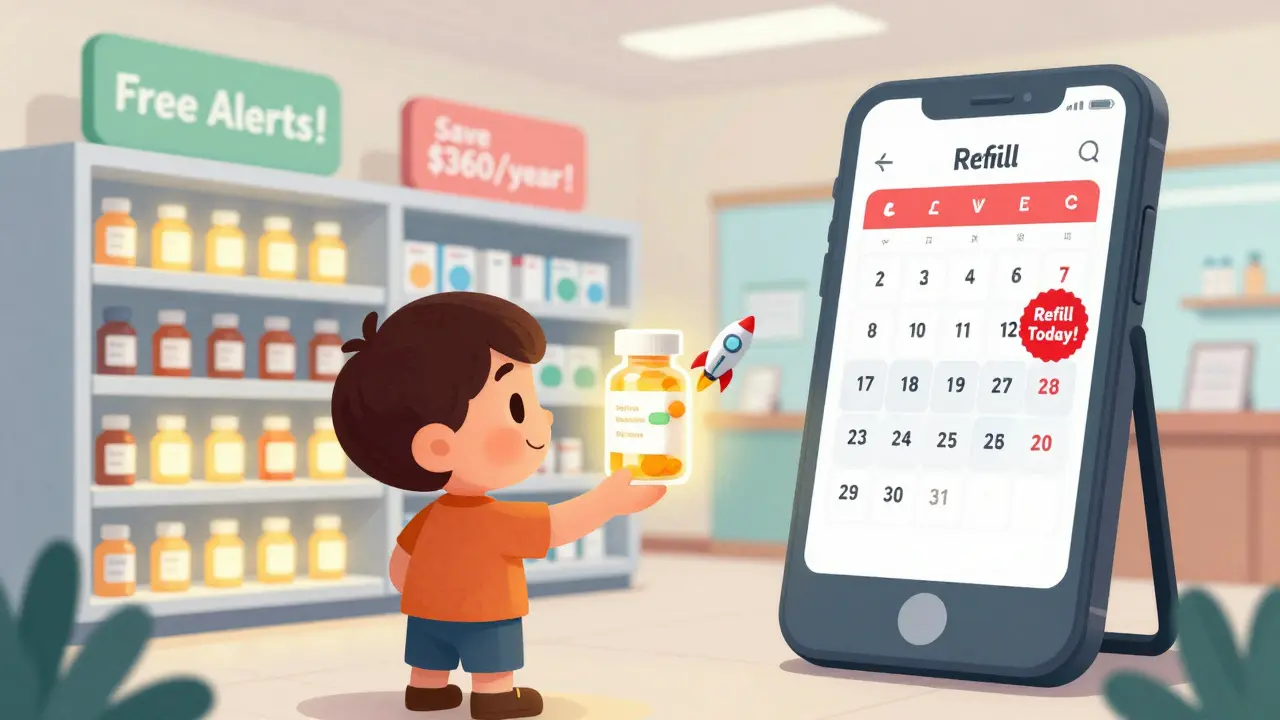
This is where most people fail. They wait until they’re out of pills to refill. That’s risky-and expensive. Some pharmacies charge extra for rush orders. Others don’t have stock, so you wait days. And if you’re on a tight budget, running out means skipping doses. That can lead to hospital visits, which cost far more than your meds.Every major pharmacy in Australia-Chemist Warehouse, TerryWhite Chemmart, Pharmacy Direct-offers auto-refill programs. Sign up. It’s free. When you set it up, tell them how many days’ supply you need. Most people choose 30-day refills. But if you take a med once a week, you might want a 90-day supply. Ask your pharmacist to set the refill trigger at 7 days left. That way, you get a text or email when you’re running low, not when you’re out.
Pro tip: Link your auto-refill to your bank account or credit card. That way, it pays automatically. No more forgetting to pay. No more delays. You’ll get your meds on time, every time. And if your insurance changes, the pharmacy will notify you before processing the refill. You’ll know ahead of time if your copay just went up.
Use Apps That Track Cost and Usage
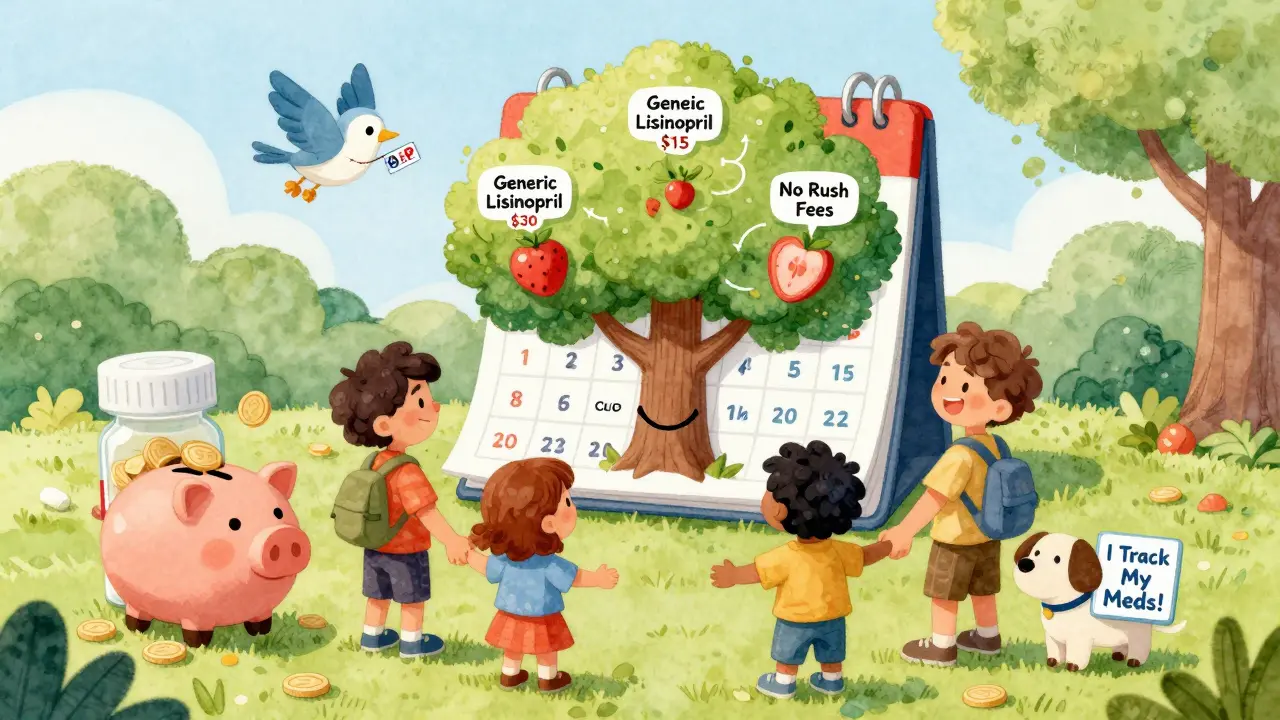
There are apps made for this. Medisafe, MyTherapy, and PillPack (now part of Amazon Pharmacy) all let you log your meds, set reminders, and track spending. Some even compare prices between pharmacies. For example, if you take lisinopril, the app might show you that Chemist Warehouse sells it for $18.50 while TerryWhite has it for $15.20. That’s $3.30 saved per month. Over a year? $39.60. That’s a free dinner out.These apps sync with your pharmacy’s system. When you refill, it updates automatically. No manual entry. Some even alert you when a generic version becomes available. For instance, if your brand-name statin goes off-patent next month, the app will tell you. You can ask your doctor to switch-and save hundreds.
Don’t just use the app to remind you to take your pills. Use it to track how much you’re spending. At the end of each month, open the app and check your total. Did you go over? Why? Did you refill early? Did you buy a new med? Adjust next month’s budget accordingly.
Watch for Price Changes and Generic Switches
Drug prices don’t stay the same. A 2022 report from Vizient showed that 78% of hospital formularies saw sudden price hikes due to supply issues or manufacturer changes. The same happens to individuals. A med that cost $20 last year might jump to $35 this year. You won’t know unless you’re watching.Set up Google Alerts for your medication names. Type in “lisinopril price change” or “metformin generic availability” and turn on notifications. You’ll get emails when news breaks. Sometimes, a new generic hits the market and slashes the price by 60%. That’s huge.
Also, ask your pharmacist every six months: “Is there a cheaper alternative?” They know about therapeutic substitutions-drugs that work the same but cost less. For example, if you’re on a brand-name antidepressant, there’s likely a generic version that’s just as effective. Your doctor can switch you. No need to suffer through high costs.
What to Do When You Can’t Afford Your Meds
If your budget is tight and your meds are too expensive, don’t skip doses. Don’t cut pills in half unless your doctor says it’s safe. Instead, talk to your pharmacist. They can help you apply for patient assistance programs. Many drugmakers offer free or discounted meds to people with low income. In Australia, the PBS (Pharmaceutical Benefits Scheme) already caps your cost at $31.10 per script (or $7.70 for concession card holders). But not everyone knows they qualify for extra help.Check out the PBS website or call 1800 500 148. You might be eligible for additional subsidies. Some charities, like Diabetes Australia or the Heart Foundation, also offer medication support programs. Don’t suffer in silence. Help exists.
Common Mistakes to Avoid
People make the same mistakes over and over:- Waiting until they’re out of pills to refill
- Not checking prices between pharmacies
- Ignoring generic alternatives
- Not updating their budget when their meds change
- Using multiple pharmacies and losing track
Stick to one pharmacy. It’s easier to track, easier to set up auto-refills, and they’ll know your history. If you need a med that’s not in stock, they can order it for you. No need to jump around.
Also, don’t assume your insurance covers everything. Read your plan. Some drugs need prior authorization. If you don’t get it, you pay full price. Ask your pharmacist to check before you fill.
How This Saves You Real Money
Let’s say you take five regular meds. One costs $40/month, two cost $25 each, one costs $18, and one is $12. That’s $120/month. $1,440 a year.With auto-refill alerts, you never miss a refill. No rush fees. No hospital trips.
With price tracking, you switch one brand-name drug to a generic and save $30/month. That’s $360 saved.
With a rolling budget, you catch a $10 price hike early and switch to a cheaper pharmacy. Another $20/month saved. $240/year.
Total savings: $600 a year. That’s not pocket change. That’s a new pair of shoes, a weekend getaway, or extra groceries. And you’re still taking your meds on time. No health risks. No stress.
This isn’t about being perfect. It’s about being in control.
Can I set up auto-refill alerts without a smartphone?
Yes. Most pharmacies offer phone-based auto-refill services. Call your pharmacy and ask to enroll. They’ll set up automatic refills and notify you by phone or mail when your prescription is ready. You can also ask them to send reminders via SMS if you have a basic phone. No app needed.
Do auto-refill alerts work with Medicare or PBS in Australia?
Yes. Auto-refill systems work with PBS and Medicare. Your pharmacy will automatically apply your concession card discount or PBS subsidy when processing your refill. You’ll only pay your capped amount. The system handles it. Just make sure your card details are up to date with the pharmacy.
What if my doctor changes my medication?
If your prescription changes, your pharmacy will usually notify you before processing the refill. But you should also update your budget and tracking system immediately. Remove the old med, add the new one with its cost. If the new med is more expensive, adjust your monthly budget. Don’t assume the refill will be the same price.
Are there free tools to track medication costs?
Yes. Google Sheets or Excel works perfectly. You can also use free apps like Medisafe or MyTherapy, which track cost and usage without charging. Avoid apps that require subscriptions unless they offer clear value. Most basic tracking features are free.
How often should I review my medication budget?
Review it every month. Check what you spent versus what you planned. Then do a deeper review every three months. Look for price changes, new prescriptions, or opportunities to switch to generics. If your health changes-like starting a new treatment-review immediately.

15 Comments
wendy parrales fong
So simple but so powerful. I never thought about tracking my meds like a budget, but it makes total sense. I’ve been skipping doses when prices go up and it’s been a mess. This feels like a game-changer.
Jeanette Jeffrey
Ugh. Everyone’s acting like this is some revolutionary hack. I’ve been doing this since 2018. The real problem? Pharmacies don’t update prices in real time. You think your app knows better? LOL. I’ve been burned too many times.
Shreyash Gupta
Bro… why are we even talking about apps? 🤔 In India, we just call the pharmacy and ask if the price changed. No tech. No alerts. Just human conversation. Maybe we’re overcomplicating this? 😅
Ellie Stretshberry
i literally just set this up last week and its already saved me like 40 bucks on my blood pressure med 🙌 i didnt even realize i was overpaying until i checked chemist warehouse
Zina Constantin
This is the kind of practical, life-saving advice that gets buried under clickbait. Thank you for writing this with clarity and care. Medication management isn’t glamorous-but it’s sacred. You’re helping people stay alive, not just save money.
Dan Alatepe
YOOOOO i just realized i’ve been paying $90/month for a generic that’s $22 elsewhere… my bank account is crying 😭😭😭 and my doctor didn’t even tell me??
Angela Spagnolo
I… I didn’t know you could do this… I’ve been terrified to even check my pharmacy bill… I thought it was just… expensive… and I was weak for complaining… thank you for normalizing this…
Sarah Holmes
This is a Band-Aid on a hemorrhage. The real issue is pharmaceutical monopolies, price gouging, and insurance loopholes. You’re telling people to ‘just use an app’ while Big Pharma rakes in billions? Pathetic. This isn’t empowerment-it’s victim-blaming.
Jay Ara
bro just use google sheets its free and works better than most apps. i track mine with color codes. green = affordable, red = panic mode. saved me 300 last year
Michael Bond
Auto-refill saved my life last winter. Didn’t miss a single dose. Simple. Done.
Kuldipsinh Rathod
i tried the app but it kept sending me notifications at 3am. turned it off. now i just write it on my fridge with a marker. works better for me
SHAKTI BHARDWAJ
you think this is hard? try being a single mom on disability and your insulin just jumped 400%. no one talks about that. apps don’t feed your kids. this post is tone-deaf.
Matthew Ingersoll
Great breakdown. I’ve been using Medisafe for 2 years. The price comparison feature is underused. Also, never trust a pharmacy’s ‘sale’-check the actual cost per pill. Most don’t even list it.
carissa projo
I used to feel so ashamed about how much I spent on meds. Like I was failing somehow. But reading this made me realize: it’s not my fault. It’s a broken system. And taking control, even in small ways, is radical self-care. You’re not just managing pills-you’re reclaiming your dignity.
josue robert figueroa salazar
Why are we still talking about this? Everyone knows you can get generics. Everyone. The fact you need a blog post to figure this out says everything about how out of touch we are.