

Every year, hundreds of thousands of patients in the U.S. and Australia are harmed because their medications don’t get properly tracked when they move from hospital to home, or from one doctor to another. These aren’t rare mistakes-they’re common, preventable, and often deadly. Medication reconciliation isn’t just a paperwork chore. It’s the single most effective way to stop errors before they happen during care transitions.
Why Medication Errors Happen During Transitions
When a patient is discharged from the hospital, they often leave with a new list of meds-some added, some stopped, some changed. But if the hospital’s list doesn’t match what the patient was really taking at home, or if the community pharmacist doesn’t get the update, things go wrong fast. Studies show that 60% of all medication errors happen during these handoffs. A patient might be sent home with two blood thinners because the hospital didn’t know they were already on one. Or they might lose their diabetes medication entirely because it wasn’t on the discharge list. These aren’t hypothetical risks. They lead to emergency visits, hospital readmissions, and sometimes death. The root cause? Information gaps. Doctors, nurses, pharmacists, and patients often work from different lists. One person has a paper note. Another relies on an outdated EHR entry. The patient says they take “the blue pill,” but no one knows if that’s metoprolol, lisinopril, or just a vitamin.What Medication Reconciliation Actually Means
Medication reconciliation isn’t just copying a list. It’s a four-step process:- Get the most accurate list possible of what the patient is actually taking at home.
- Create the list of what they should be taking during and after their hospital stay.
- Compare the two lists side by side.
- Decide what to change, stop, or keep-and make sure everyone knows.
Technology Helps-But It’s Not a Magic Fix
Hospitals spend millions on EHRs, CPOE systems, and barcode scanners hoping to cut errors. And they do-by up to 48% in acute care settings. But tech alone doesn’t solve the problem. The MARQUIS study found something surprising: when hospitals rolled out new EHR systems, medication discrepancies actually increased by 18% in the first few months. Why? Because staff didn’t know how to use the tools properly. Or worse-they used them wrong to save time. One nurse in Boston told a reporter: “I have 30 seconds to reconcile a patient’s meds before the next one comes in. The system makes me click through 12 screens. So I just copy the last list and move on.” That’s not reconciliation. That’s risk. The real win comes when you combine tech with trained people. Pharmacist-led reconciliation reduces post-discharge errors by 57%. That’s not because pharmacists are magic. It’s because they’re trained to ask the right questions: “What’s the name of that pill you take every morning?” “Do you have a pill organizer?” “Did your GP change anything last month?”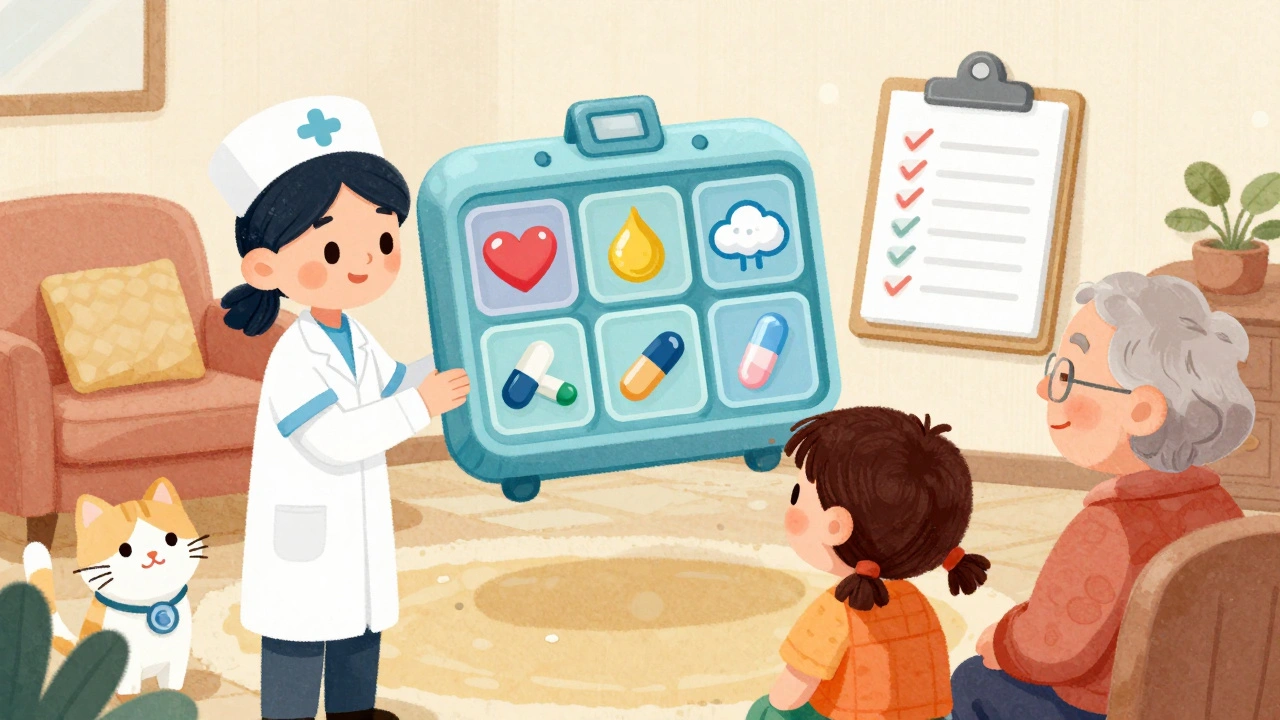
The Human Factor: Who Does What?
Too many hospitals treat reconciliation as a task for whoever has time-usually a nurse rushing between patients. That’s a recipe for failure. The best programs assign clear roles:- Pharmacists lead the reconciliation process at admission and discharge. They have the training to spot drug interactions, duplications, and inappropriate dosing.
- Nurses gather the initial list from the patient or family. They ask open-ended questions: “Tell me everything you’re taking.” Not “Are you on warfarin?”
- Doctors approve changes-but only after seeing the reconciled list, not before.
- Patients are not bystanders. They’re the most important source of truth.
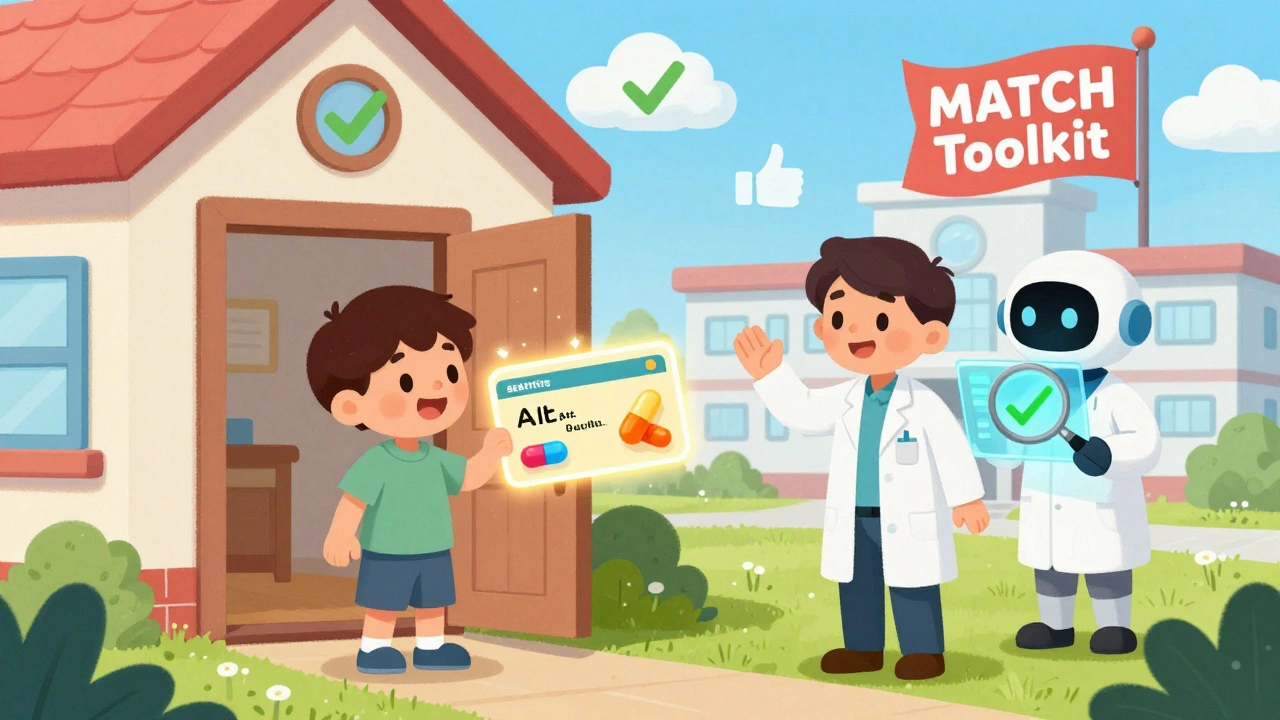
What Works: The MATCH Toolkit
The Agency for Healthcare Research and Quality (AHRQ) created the MATCH toolkit-a detailed, step-by-step guide for hospitals to fix reconciliation from the ground up. It’s not a software program. It’s a system. Organizations that used all 159 recommendations saw a 63% drop in medication errors. Those that just bought new EHR software? Only 41% improvement. The key differences? MATCH forces you to:- Train everyone-not just pharmacists, but housekeeping staff who might overhear a patient mention their meds.
- Build time into the workflow. Not 5 minutes. Not 8. At least 15-20 minutes per patient.
- Verify with two sources: the patient, and a reliable outside source (like a community pharmacy).
- Document everything in real time-not after the fact.
Why Patients Don’t Know Their Own Meds
Here’s a hard truth: 72% of patients don’t understand why their medication list matters during transitions. They think it’s just hospital bureaucracy. But when they’re actually asked to participate-when they’re handed a printed list, shown what each pill does, and told, “This is your safety net”-85% say they feel more confident. The best hospitals give patients a wallet card or a printed list with:- Drug name (generic and brand)
- Dose
- Frequency
- Reason for taking it
- Pharmacy contact info
What’s Changing in 2025
The rules are getting stricter. The 2025 National Patient Safety Goals, released in December 2024, now require hospitals to verify high-risk medications (like blood thinners, insulin, opioids) against two independent sources before discharge. No more relying on one chart or one patient memory. The WHO’s second phase of “Medication Without Harm” targets transitions specifically, with a goal to cut harm by 30% in high-risk scenarios by 2027. New AI tools are starting to help. MedWise Transition, cleared by the FDA in August 2024, analyzes medication histories across systems and flags mismatches with 41% fewer errors in pilot hospitals. But AI doesn’t replace the pharmacist. It just makes their job faster and more accurate.What to Do If You’re a Patient or Family Member
You don’t have to wait for the system to fix itself. Here’s what you can do:- Before admission: Make a list of every medication, supplement, and over-the-counter pill you take. Include doses and why you take them.
- At discharge: Ask, “Can you please give me a printed list of what I’m taking now-and what changed?”
- After discharge: Take that list to your pharmacist. Ask, “Is this right? Did anything get missed?”
- If you’re confused: Call your doctor. Don’t guess.
Final Thought: It’s Not About Technology. It’s About Trust.
The most advanced EHR in the world won’t help if the nurse doesn’t ask the right question. The best AI won’t catch a pill the patient forgot to mention because they thought it was “just aspirin.” Real safety comes from slowing down. Listening. Confirming. Double-checking. And treating the patient not as a case number, but as the person who knows their own body best. The data is clear. The tools exist. The standards are set. What’s missing is consistent, human-centered execution. That’s on all of us-providers, systems, and patients alike.What is medication reconciliation?
Medication reconciliation is the process of creating the most accurate list possible of a patient’s current medications and comparing it to new orders during transitions like admission, transfer, or discharge. The goal is to prevent errors like omissions, duplications, or incorrect dosages by identifying and resolving discrepancies.
Why are medication errors so common during discharge?
Errors happen because information is fragmented. Hospitals use one system, community pharmacies use another, and patients often don’t know their own meds. Without a formal, standardized process to compare lists, changes get lost. Studies show 60% of medication errors occur during these handoffs.
Can electronic health records (EHRs) prevent medication errors?
EHRs can reduce errors by up to 32% when used correctly, but they can also increase discrepancies by 18% during rollout if staff aren’t trained or if systems don’t talk to each other. The real benefit comes when EHRs are paired with trained pharmacists and clear workflows-not as a standalone fix.
Who should be responsible for medication reconciliation?
Pharmacists are best trained to lead the process, especially at admission and discharge. Nurses gather the initial list from the patient. Doctors approve changes only after seeing the reconciled list. But everyone-doctors, nurses, pharmacists, and even administrative staff-must understand their role. Clear roles reduce errors by 27%.
How can patients help prevent medication errors?
Patients can bring a complete, written list of all medications-including vitamins and supplements-to every appointment. At discharge, ask for a printed, updated list and verify it with your pharmacist. If something doesn’t make sense, don’t be afraid to ask, “Why was this changed?” Your input is critical.
What’s the most effective way to reduce medication errors during transitions?
The most effective approach combines pharmacist-led reconciliation, clear role definitions, time for thorough review (15-20 minutes per patient), and patient involvement. Using the AHRQ MATCH toolkit improves outcomes more than EHRs alone, cutting errors by 63% when fully implemented.


15 Comments
John Biesecker
man i wish my grandma had this when she got discharged last year 😔 she was on 7 meds and the hospital just handed her a crumpled paper with half the names smudged. now she's in a nursing home because of a blood thinner mixup. we all thought it was "just paperwork"... turns out it's life or death. 🫂
Genesis Rubi
U.S. healthcare is a joke. We spend billions on EHRs but still can't get a simple list right? Meanwhile, in Germany they hand you a laminated card with QR codes and a nurse walks you through it. We're falling behind because we're too busy chasing profits to care about patients.
Doug Hawk
the real issue isnt tech or even training its the workflow design. if you give a nurse 30 seconds to reconcile meds during a 12 hour shift with 20 patients theyre gonna cut corners. its not negligence its systemic failure. the match toolkit works because it forces time allocation and role clarity. no software fixes bad architecture.
John Morrow
Let me be blunt. The entire paradigm of medication reconciliation is predicated on an outdated assumption: that patients are reliable data sources. In reality, 72% don't understand their own regimens, and 40% are on supplements they won't disclose due to stigma or ignorance. Until we institutionalize pharmacogenomic screening and automated cross-referencing with pharmacy databases, we're just performing performative safety rituals.
Kristen Yates
I work in a small clinic. We print the list. We hand it to the patient. We say, "This is yours now. Keep it safe." No emojis. No apps. Just paper. And somehow, it works better than the fancy systems.
Saurabh Tiwari
in india we dont even have ehrs properly but still we do reconciliation by talking to family members and checking the medicine boxes at home. its low tech but human. maybe we shouldnt overcomplicate it. 🤷♂️
Michael Campbell
they're hiding the real problem. It's not the system. It's the patients. Too many are on weed, Xanax, and OTC junk they won't admit to. Then they blame the hospital when they get sick. Wake up.
Victoria Graci
imagine if we treated meds like passwords. you wouldn't just copy-paste one from last time. you'd verify, reset, confirm. but we treat people's lives like a draft doc. "eh, close enough." we need to stop treating medicine like a spreadsheet and start treating it like a sacred contract between human beings.
Saravanan Sathyanandha
The essence of reconciliation lies not in the documentation but in the dialogue. When a pharmacist asks, "What does this blue pill do for you?" and the patient replies, "It stops my heart from racing," we gain insight no EHR can capture. Human language holds data that algorithms miss. This is why empathy is the most powerful tool in clinical safety.
alaa ismail
i saw a nurse just copy the last list because she had 10 patients to get through. no one yelled. no one got fired. just another quiet failure. we need to stop pretending this is about tech. its about culture.
ruiqing Jane
This is why we need to treat every patient like they're our own parent. If your mom came home with a list of meds she didn’t understand, wouldn’t you demand better? Stop treating safety as a compliance checkbox. It’s a moral obligation.
Fern Marder
this is why i hate hospitals. they act like they care but they dont. they just want to check the box. "oh yes we did reconciliation" but no one actually talked to the patient. 🤦♀️
Carolyn Woodard
The MARQUIS study's 18% increase in discrepancies post-EHR rollout isn't a failure of technology-it's a failure of cognitive load management. When clinicians are forced into high-friction workflows under time pressure, they default to heuristics. Copy-paste becomes rational. We must design for human behavior, not idealized compliance.
Allan maniero
I've worked in three countries and seen this play out everywhere. The US overcomplicates it with tech. The UK underfunds it with staffing. India and Brazil do it with community trust. The common thread? Someone-anyone-takes the time to sit down, look the patient in the eye, and say, "Tell me what you're really taking." No software. No forms. Just presence.
Anthony Breakspear
you know what’s wild? the cheapest fix is also the most powerful: give patients a printed list + a 2-minute video on their phone explaining each med. no jargon. just "this pill stops your blood from clotting". we spend millions on AI but forget that clarity is the ultimate safety net. simple. human. effective.