
Imagine spending weeks fighting a stubborn patch of eczema, only to realize the skin in that area has become translucent, bruised easily, or developed strange stretch marks. This is the reality for many people who misuse topical steroids is a class of medications applied directly to the skin to reduce inflammation and treat dermatological conditions like psoriasis and dermatitis. While these creams are a gold standard for rapid relief, there is a thin line between clearing a flare-up and causing permanent skin damage. The good news? When you follow a specific protocol, these medications are incredibly safe and effective.
The Quick Guide to Steroid Safety
- Potency Matters: Never use a "super-potent" cream on your face or groin.
- Limit Duration: Most high-strength steroids shouldn't be used for more than 2 weeks.
- Measure Exactly: Use the Fingertip Unit (FTU) method to avoid over-applying.
- Step-Down Approach: Start strong to kill the inflammation, then switch to a milder version to maintain it.
- Moisturize First: Wait 20-30 minutes after applying a steroid before adding moisturizer.
Understanding the Potency Spectrum
Not all steroid creams are created equal. They are generally split into seven classes, ranging from Class I (super-potent) to Class VII (low-potency). Using a Class I steroid on a sensitive area like your eyelid is like using a sledgehammer to crack a nut-it's overkill and dangerous. Hydrocortisone is the most common low-potency example often found over-the-counter, while specialized prescriptions for thick skin on the palms or soles are far more aggressive.
The "vehicle"-the stuff the medicine is mixed into-also changes how the drug works. An ointment is occlusive, meaning it traps moisture and pushes the drug deeper into the skin, making it more potent. Creams are better for weeping or moist lesions, while gels and lotions are ideal for hairy areas of the body where a thick grease would just be messy.
| Vehicle Type | Potency Level | Best Use Case | Skin Type |
|---|---|---|---|
| Ointment | Highest | Dry, thickened plaques | Very Dry |
| Cream | Moderate | Moist or weeping lesions | Mixed/Inflamed |
| Lotion/Gel | Lower | Hairy areas or skin folds | Oily/Hairy |
| Foam | Variable | Scalp and large body areas | Scalp |
The Danger of Skin Thinning (Atrophy)
The biggest fear with these medications is skin atrophy, which is the medical term for skin thinning. This happens when corticosteroids inhibit the production of collagen and other essential proteins in the dermis. If you use a high-potency steroid for too long, your skin loses its structural integrity. You might notice striae (stretch marks), telangiectasia (tiny visible blood vessels), or a "cigarette paper" texture where the skin looks crinkled and fragile.
This risk is significantly higher in "flexural areas"-the creases of your elbows, behind the knees, and the groin-where skin is naturally thinner and absorption is higher. Even more concerning is application to the face. Prolonged use of strong steroids on the eyelids can actually lead to cataracts or glaucoma because the medication can be absorbed into the eye. Around the mouth, it may cause perioral dermatitis, a red, bumpy rash that looks like acne but requires a totally different treatment plan.
How to Measure Your Dose: The Fingertip Unit (FTU)
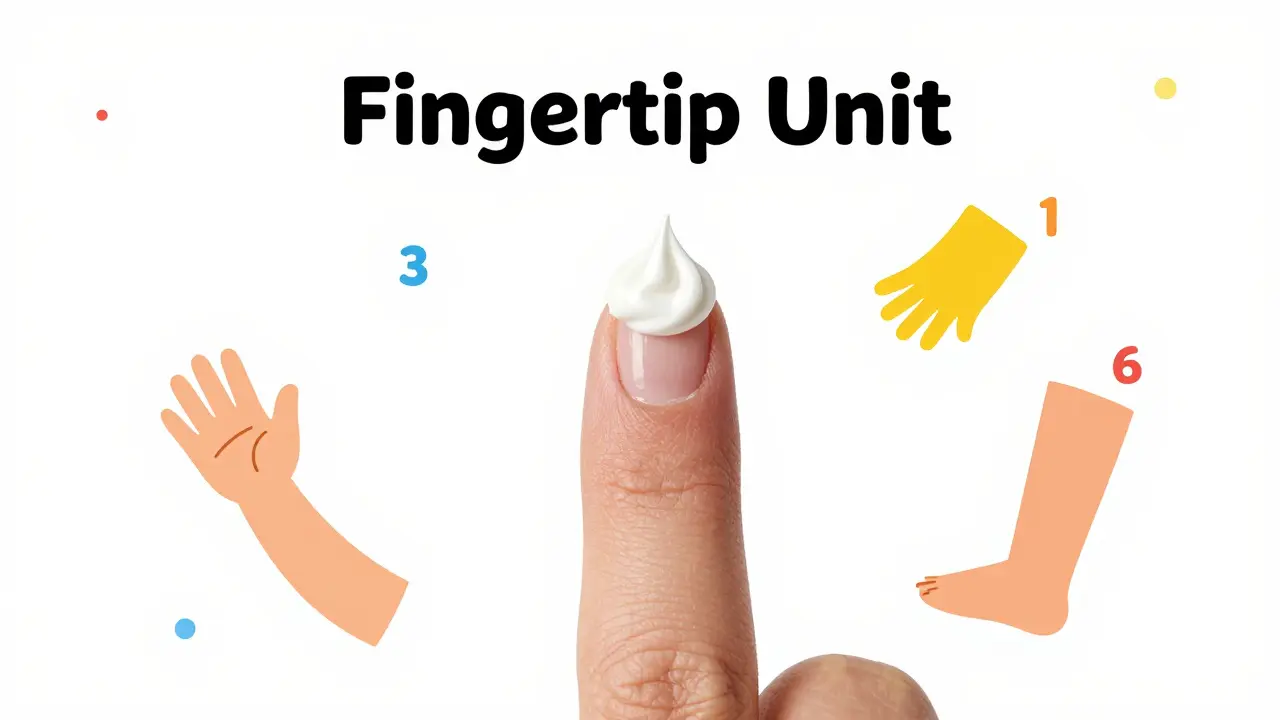
Most people either put on way too much or not nearly enough. To fix this, dermatologists use the Fingertip Unit (FTU). One FTU is the amount of cream squeezed from a standard tube from the tip of the adult index finger to the first joint. This is roughly 0.25 to 0.5 grams of medication.
If you aren't using the FTU method, you're guessing, and guessing leads to atrophy. Here is a general rule of thumb for how many FTUs you actually need for specific body parts:
- One hand (front and back): 1 FTU
- One arm: 3 FTUs
- One leg: 6 FTUs
- One foot: 2 FTUs
Rub the medication in gently until it's absorbed. If you're using a moisturizer or emollient, wait at least 20 to 30 minutes. If you apply them back-to-back, you risk diluting the steroid, which means you might use it for longer than necessary to see results, ironically increasing your risk of side effects.
Smart Application Strategies
The goal isn't to be on steroids forever; it's to put out the fire and then maintain the peace. This is called "step-down therapy." You start with a potent steroid for 1-2 weeks to rapidly bring the inflammation under control. Once the skin stops being angry and red, you step down to a lower-potency steroid or a non-steroidal alternative like calcineurin inhibitors (such as tacrolimus) to keep the condition stable.
Some people try to "trick" the system by using the cream once every few days. While this is better than daily overuse, the most effective way to avoid side effects is simply limiting the total duration. High-potency steroids should almost never be used for more than 2 to 4 weeks total. If the rash isn't clearing by then, the problem might not be inflammation-it could be a fungal infection or a different skin condition that steroids actually make worse.

Alternatives for Sensitive Areas
Because the face, armpits, and groin are so prone to thinning, many doctors now prescribe non-steroidal options. Drugs like crisaborole are becoming more common because they don't interfere with collagen production. While they can be more expensive and sometimes take longer to work than a blast of super-potent steroid, they are much safer for long-term maintenance in delicate areas.
Can I use my prescription steroid cream on a different rash?
No. This is a common mistake. A steroid that is safe for your elbow could be devastatingly strong for your face. Furthermore, if the rash is actually a fungal infection (like ringworm), applying a steroid will suppress the inflammation but actually help the fungus grow and spread, leading to a much worse infection.
What is steroid withdrawal (TSW)?
Topical Steroid Withdrawal occurs when someone uses high-potency steroids for a long time and then stops abruptly. The skin, which has become dependent on the drug to suppress inflammation, reacts with an intense "rebound" effect. This can involve severe redness, burning, and peeling. The best way to avoid this is through a gradual tapering process under a doctor's supervision.
Is it safe to use steroids every day for a month?
Generally, no. Most guidelines suggest a maximum of 2-4 weeks for any steroid, and specifically no more than 2 weeks for high-potency versions. Daily use for a month significantly increases the risk of skin thinning and systemic absorption, where the drug enters your bloodstream and can affect your adrenal glands.
Do I need to wash my hands after applying the cream?
Yes. You should wash your hands both before and after application. Washing before ensures you aren't introducing bacteria into an inflamed area. Washing after prevents you from accidentally transferring the steroid to other parts of your body-like your eyes-where the medication could cause damage.
Can I apply the steroid over a moisturizer?
It is generally better to apply the steroid directly to the skin and then wait 20-30 minutes before applying a moisturizer. Applying a steroid over a heavy layer of moisturizer can create a barrier that prevents the medication from absorbing properly or, conversely, may increase absorption in a way that increases the risk of side effects. Follow your doctor's specific layering advice.
Next Steps for Patients
If you are currently using a topical steroid and are worried about thinning, don't just stop cold turkey-especially if you've used it for months. This can trigger a withdrawal reaction. Instead, schedule a check-up to discuss a "tapering" plan. Ask your provider about the exact potency class of your medication and if a non-steroidal alternative is appropriate for your specific skin area.



Write a comment