DAPT and PPI: What You Need to Know About Drug Interactions and Heart Health
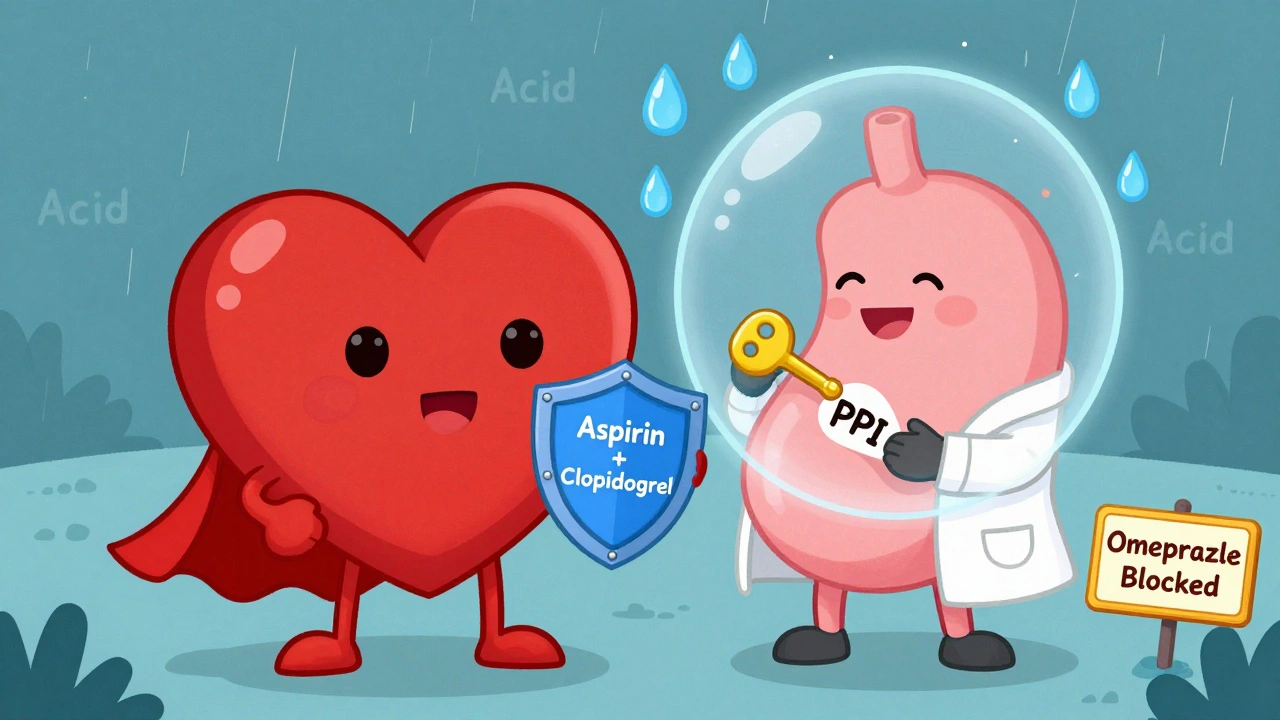
When you're recovering from a heart attack or stent placement, DAPT, dual antiplatelet therapy, which combines aspirin with another antiplatelet drug like clopidogrel or ticagrelor to prevent blood clots. Also known as dual antiplatelet therapy, it's a life-saving combo that keeps stents open and reduces the chance of another cardiac event. But many people on DAPT are also prescribed PPI, proton pump inhibitors like omeprazole or esomeprazole that reduce stomach acid to prevent ulcers. Also known as acid-reducing meds, they're common because DAPT can irritate the stomach lining. The problem? Some PPIs can interfere with how well DAPT works—especially when they block the enzyme CYP2C19 that turns clopidogrel into its active form. This isn't theoretical; studies show patients on certain PPIs have higher rates of stent clots and heart attacks.
Not all PPIs are created equal. Omeprazole and esomeprazole are the biggest culprits in this interaction. Pantoprazole and dexlansoprazole? Much lower risk. And if you're on ticagrelor or prasugrel instead of clopidogrel, the PPI issue is far less concerning. Your doctor should know this. If you're on clopidogrel and a PPI, ask if there's a safer option. It's not about avoiding stomach protection—it's about getting the right kind. The same goes for timing: taking your PPI at night and your DAPT in the morning can help reduce interference, though it's not a guaranteed fix. The real goal? Balance heart protection with stomach safety without trading one risk for another.
What you’ll find in the posts below isn’t just a list of drug facts—it’s a practical guide to real-world medication conflicts. You’ll see how DAPT and PPI fit into bigger patterns like drug metabolism, therapeutic equivalence, and pharmacist-led safety checks. There are posts on how generics can change how your meds work, how to spot when a drug isn’t doing what it should, and how to talk to your pharmacy about alternatives. This isn’t guesswork. It’s what people who’ve been through this actually need to know.