
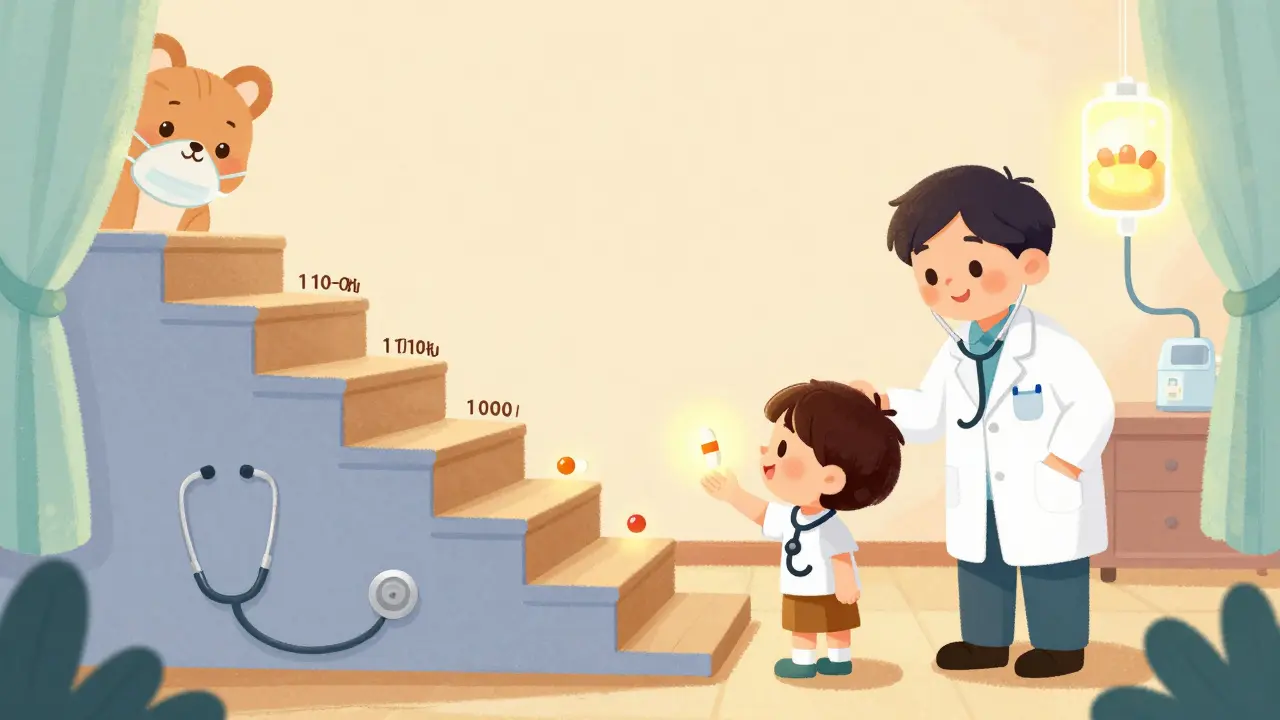
When a drug allergy strikes, it doesn’t just mean you can’t take that medication anymore-it can mean you lose access to life-saving treatments. Imagine needing chemotherapy for cancer, but your body reacts violently to the only drug that works. Or needing an antibiotic for a stubborn infection, but your history of anaphylaxis makes every dose dangerous. In these cases, quitting the drug isn’t an option. That’s where drug desensitization comes in-a medically supervised process that lets your body temporarily tolerate the very drug that once made you sick.
What Is Drug Desensitization?
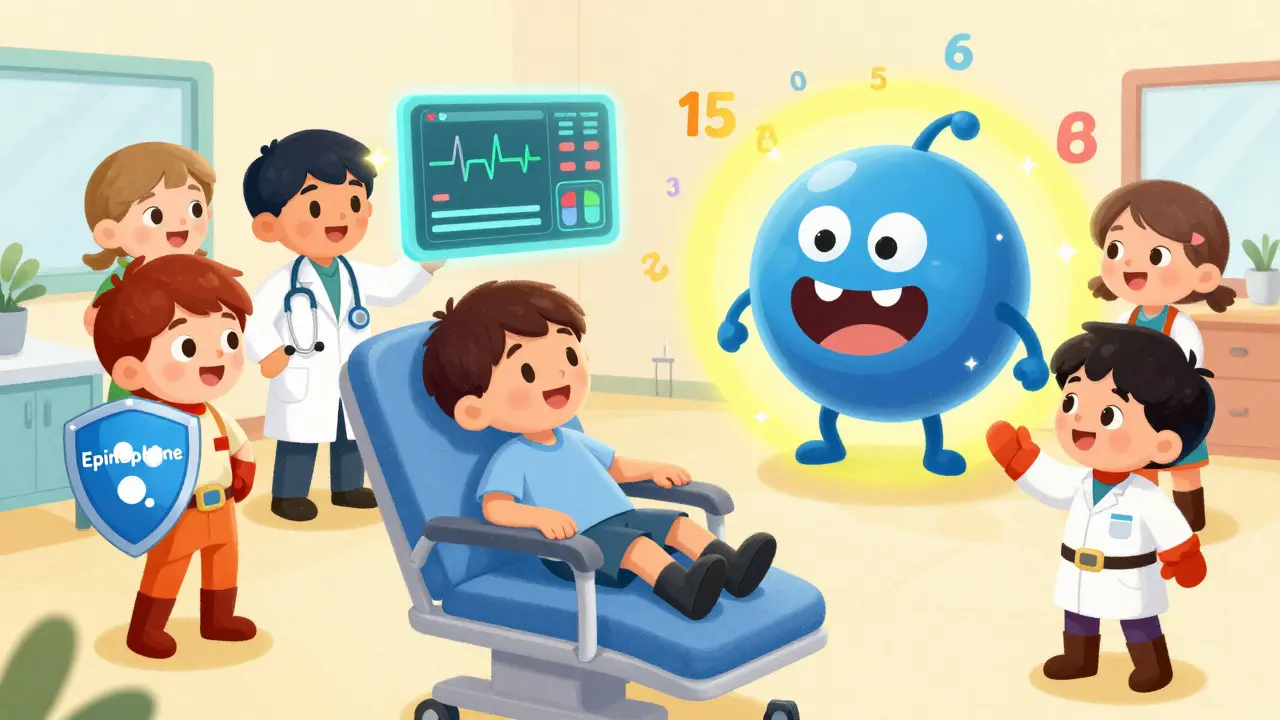
Drug desensitization isn’t a cure. It doesn’t erase your allergy. Instead, it’s a controlled way to bypass your immune system’s overreaction long enough to get the treatment you need. The process involves giving tiny, gradually increasing doses of the allergenic drug, starting at a fraction of a therapeutic dose and doubling at set intervals. Each step is closely monitored. If your body responds, the dose is paused or slowed down. If you tolerate it, you move up. This isn’t something you try at home. It’s done only in hospitals or specialized allergy clinics with full emergency equipment on hand-epinephrine, IV fluids, oxygen, and staff trained to handle anaphylaxis. The goal? To get you to the full therapeutic dose without triggering a dangerous reaction. Once you reach that dose, you keep taking it at regular intervals. As long as you stay on the drug, your tolerance holds. But if you stop for more than 48 hours, the allergy can come back.Who Needs It?
Drug desensitization isn’t for everyone. It’s reserved for situations where there’s no safe alternative. Common scenarios include:- Patients with cancer who react to chemotherapy drugs like platinum-based agents or monoclonal antibodies (e.g., rituximab, cetuximab)
- People with autoimmune diseases needing biologics like infliximab or tocilizumab
- Cystic fibrosis patients who rely on specific antibiotics and have no other options
- Individuals with severe aspirin or NSAID allergies who need these drugs for heart disease or chronic pain
- Those with confirmed IgE-mediated allergies to penicillin or other antibiotics
How It Works: The Protocol
There’s no single protocol, but most follow a step-by-step algorithm based on the drug and the severity of the original reaction. For intravenous drugs (like antibiotics or chemotherapy), the most common approach uses a 12-step process:- Start with 1/10,000th of the full therapeutic dose
- Double the dose every 15-30 minutes
- Use three concentration solutions: 1:100, 1:10, and undiluted
- Reach the full dose in about 5-6 hours
- Doses are given every 60-90 minutes
- It can take 1-3 days to complete
- Starting doses are often as low as 1-5 mg
- Hold the next dose
- Extend the time between doses
- Reduce the size of the next increase
- Stop the procedure if the reaction is severe
What Drugs Can Be Desensitized?
Not all drugs can be safely desensitized. The most common and well-studied include:- Penicillin and related antibiotics - especially for patients with anaphylaxis history
- Aspirin and NSAIDs - even though these reactions aren’t always IgE-mediated, desensitization still works
- Chemotherapy agents - cisplatin, carboplatin, paclitaxel
- Monoclonal antibodies - rituximab, cetuximab, infliximab
- Local anesthetics - lidocaine, bupivacaine
- Iron infusions - for patients with iron deficiency and prior reactions
When It’s Not Safe
Desensitization can save lives-but it’s not risk-free. Certain reactions make it too dangerous:- Stevens-Johnson syndrome - blistering skin reactions
- Toxic epidermal necrolysis - severe skin detachment
- Erythema multiforme - widespread skin lesions
- Drug-induced hepatitis or nephritis - organ damage
- Serum sickness - delayed immune response with fever, joint pain, rash
Why It Works
The science behind it is fascinating. Allergic reactions happen when your immune system sees a drug as a threat and releases histamine and other chemicals. Desensitization doesn’t change your immune system-it temporarily shuts down the signal that triggers the reaction. Think of it like turning down a fire alarm. The alarm is still there. The sensor is still sensitive. But by slowly exposing it to smoke, you prevent it from going off. The same happens with your immune cells. Gradual exposure keeps them from releasing massive amounts of histamine. Once you reach the full dose, your body stays in this suppressed state-until you stop taking the drug. This is why you must keep taking it daily. Skip a day, and the alarm resets.What Happens After?
Once you complete desensitization, you’re not “cured.” You’re on maintenance. You’ll continue taking the drug as prescribed. For cancer patients, that might mean weekly infusions for months. For someone with a heart condition on aspirin, it’s daily pills. If you need to stop the drug-for surgery, for example-you’ll need to restart the entire desensitization process if you’re off for more than 48 hours. That’s why many patients on long-term therapy receive their doses in the hospital on scheduled days, even if they’re stable.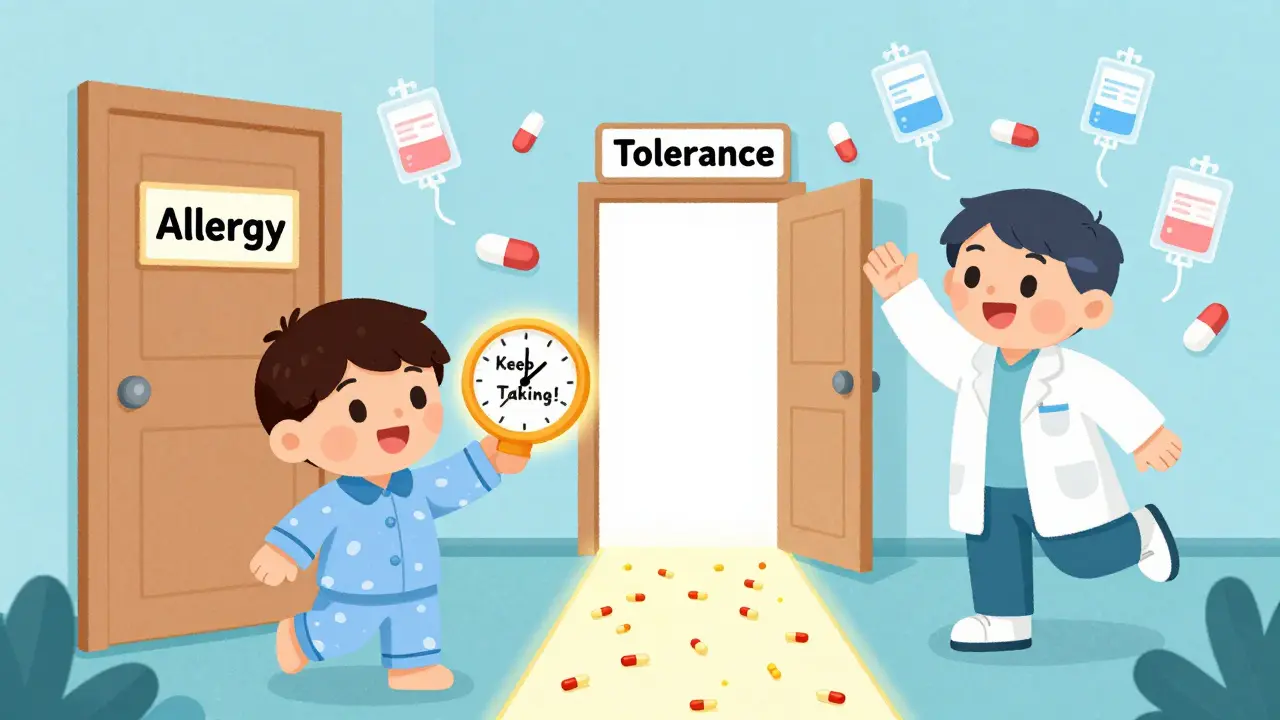
Access and Availability
This isn’t available everywhere. It requires specialized training, emergency protocols, and experienced allergists. Major centers like Brigham and Women’s Hospital in Boston and leading allergy clinics in Australia, the UK, and Germany have dedicated desensitization units. In Australia, only a handful of hospitals offer this service, mostly in capital cities. If you think you need it, ask your oncologist, rheumatologist, or infectious disease specialist. They’ll refer you to an allergy-immunology specialist. The process starts with a detailed history, skin testing (if applicable), and a written protocol tailored to your drug and reaction history.Real Impact
For one woman in Perth with ovarian cancer, desensitization meant the difference between stopping chemotherapy and living another 18 months. For a man with rheumatoid arthritis, it meant going from chronic pain to walking without a cane. These aren’t rare cases. They’re routine for teams who do this regularly. Dr. Mariana C. Castells, who leads one of the world’s leading desensitization centers, says: “Patients who are extremely allergic, who have had anaphylactic reactions to their medication, can be very safely desensitized.” And the data backs it up. Success rates are high. Mortality is low. The risk of not doing it-losing life-saving treatment-is far greater.Final Thoughts
Drug allergies don’t have to be dead ends. With the right team, the right protocol, and the right setting, you can walk right through the door your body once slammed shut. It’s not magic. It’s medicine. And it’s changing how we treat the most complex cases.Can you desensitize to any drug?
No. Desensitization works for IgE-mediated reactions and some non-IgE reactions like aspirin hypersensitivity, but it’s not safe for reactions involving skin blistering (like Stevens-Johnson syndrome), organ damage (hepatitis, nephritis), or serum sickness. Only specific drugs with established protocols are used, such as antibiotics, chemotherapy agents, aspirin, and biologics.
How long does the desensitization process take?
For IV drugs, it typically takes 5-6 hours. For oral drugs like aspirin, it can take 1-3 days. The timeline depends on the drug, the severity of the original reaction, and how well you tolerate each step. Each dose increase is spaced 15-30 minutes apart for IV, and 60-90 minutes for oral.
Is desensitization permanent?
No. The tolerance is temporary. If you stop taking the drug for more than 48 hours, your allergy can return. That’s why patients on long-term therapy-like those on chemotherapy or biologics-must keep taking the drug daily. Missing doses means restarting the entire process.
Can you do this at home?
Absolutely not. Desensitization must be done in a hospital or specialized clinic with full emergency support-epinephrine, IV access, oxygen, and trained staff. Even minor reactions can escalate quickly. Attempting this outside a controlled setting is extremely dangerous.
What if I have a reaction during the procedure?
The medical team will stop the infusion or dose and treat the reaction immediately with antihistamines, steroids, or epinephrine. Once stable, they may go back to the last tolerated dose, extend the time before the next step, or reduce the size of the next increase. The protocol is flexible and adjusted in real time based on your response.
Are there alternatives to desensitization?
Sometimes. If a similar drug exists without cross-reactivity, your doctor may switch you. But for many critical drugs-like certain chemotherapies or monoclonal antibodies-there are no alternatives. In those cases, desensitization is the only option to continue life-saving treatment.
How successful is drug desensitization?
Success rates exceed 90% when performed by experienced teams using validated protocols. Studies show patients with cancer, autoimmune diseases, and severe infections are able to complete their treatment plans without life-threatening reactions. The key is having the right expertise and equipment.

14 Comments
Lorna Brown
What fascinates me most is how this isn't about reprogramming the immune system but temporarily silencing its alarm bells. It's like convincing a hyper-vigilant guard dog that the stranger isn't a threat-not by changing the dog, but by slowly letting it smell the same scent over and over until it stops barking. The elegance of this mechanism is that it's reversible, predictable, and doesn't require drugs to suppress immunity. Just patience, precision, and a whole lot of monitoring. I wonder how many other immune responses could be managed this way-like food allergies or even autoimmune flares?
Rex Regum
Oh please. This is just medical theater. You're telling me we can 'desensitize' someone to a drug they're allergic to, but if they miss a dose by 49 hours, boom-back to square one? That's not science, that's a glitch in the system. And don't get me started on the fact that this only works for 'IgE-mediated' reactions. What about the rest of us? The ones with real, documented, life-threatening reactions that don't fit your neat little boxes? This isn't progress-it's exclusion disguised as innovation.
Kelsey Vonk
This gave me chills 😭 I have a cousin who went through this with cisplatin after her first reaction nearly killed her. She’s been on maintenance for 3 years now. Every infusion is a mini miracle. I never knew this was even a thing until she told me. It’s wild how medicine keeps surprising us. Like, we used to think allergies were permanent dead ends. Now we’re learning they’re more like… temporary glitches? 🤯 Thank you for sharing this. Needed this today.
Emma Nicolls
I had a penicillin reaction when i was 8 and now im 32 and i still cant take any antibiotic without panicking. This is the first time i heard about this and i just cried. My doc never mentioned it. Why dont more people know about this? Its like they just tell you no and walk away. This could change so many lives. Thank you for writing this. I need to talk to my oncologist. I have lupus. Maybe this is my way out.
Jimmy V
90% success rate? That’s not a miracle. That’s a well-executed protocol. Stop romanticizing it. This is medicine at its most disciplined: slow, controlled, monitored, and backed by decades of data. No hype. No shortcuts. Just math, observation, and a team that refuses to let a patient die because of a label. If you’re scared of this process, you’re scared of precision. Get over it. This isn’t magic. It’s mastery.
Tim Schulz
Oh look, another ‘medical breakthrough’ that requires a $200,000 hospital stay and a team of 7 specialists. Meanwhile, in the real world, people are being told to ‘just avoid the drug’ and told to ‘live with it.’ How poetic. We’ve turned lifesaving care into a luxury performance art. Bravo. 🎭👏
Jinesh Jain
This is really interesting. In India, many people are allergic to antibiotics but have no access to specialists. I wonder if there's a way to train community nurses to monitor low-risk cases with basic equipment. Not everyone can fly to Boston. Maybe there's a middle path?
douglas martinez
As a clinician who has overseen over 120 desensitizations, I can confirm the safety profile is excellent when protocols are followed. The key is not the drug-it’s the team. Every step must be documented, every vital sign tracked, every deviation accounted for. This is not a procedure. It is a meticulously orchestrated clinical event. Do not attempt to replicate outside a certified facility. Lives depend on it.
Sabrina Sanches
I just want to say… wow. This is beautiful. I’ve been through this twice. Once for chemo. Once for aspirin. And every time… I felt like I was being reborn. Like my body was letting me in. Like it was saying… okay. You’re safe now. I don’t know how to explain it. But it felt… sacred. I cried. I still do. Thank you for this.
Emma Deasy
It is with profound reverence-and a certain degree of theatrical awe-that I submit this observation: The human immune system, once perceived as an unyielding fortress, has been revealed to be a sentient, malleable entity, capable of being coaxed, whispered to, and gently persuaded into submission. This is not merely medicine. This is alchemy. This is poetry written in IV lines and vitals monitors. I weep for the beauty of it. I weep for the lives saved. I weep for the quiet, unsung heroes in the ICU who hold the hand of the terrified, and say: ‘Just breathe. We’ve got you.’
tamilan Nadar
Back home in Tamil Nadu, people think allergies are just ‘heat’ or ‘bad karma.’ No one knows about this. My brother had a reaction to antibiotics and they gave him steroids and sent him home. He died. If this was available there… maybe he’d still be here. I’m sharing this with my community. This needs to be translated. Into Tamil. Into Hindi. Into every language where people are being told ‘no’ instead of ‘here’s how.’
Rosemary Chude-Sokei
While the clinical efficacy of desensitization is well-documented, I must emphasize the ethical imperative: access must not be contingent on geography, income, or insurance status. The fact that this procedure is available in Boston but not in rural Alabama is not a medical issue-it is a moral failure. We have the science. We have the protocols. What we lack is equity. Let us not celebrate innovation while leaving half the population behind.
Noluthando Devour Mamabolo
As a pharmacovigilance specialist, I’m blown away by the IgE-mediated pathway modulation here. The transient anergy induction via dendritic cell tolerance mechanisms is textbook immunomodulation. The fact that you can induce a non-anaphylactic state through graded exposure without systemic immunosuppression? That’s next-level. We’re looking at a paradigm shift in hypersensitivity management-especially for biologics where cross-reactivity profiles are still being mapped. This is the future.
Leah Dobbin
How charming. So we’ve created a procedure that requires a hospital, a team, and a 6-hour commitment… just so someone can take a drug they’re allergic to. Why not just… develop a new one? Or use gene therapy? Or… I don’t know… not make people allergic in the first place? This feels less like progress and more like… a very expensive workaround for a system that refuses to innovate.