
More than half of adults over 65 struggle with sleep. It’s not just tossing and turning - it’s waking up tired, forgetting names, stumbling in the dark, or feeling foggy all day. Many turn to sleep pills because they think it’s the only way. But for seniors, those pills can be more dangerous than the insomnia itself.
Why Sleep Meds Are Riskier After 65
Your body changes as you age. Liver and kidney function slow down. That means drugs stick around longer. A pill that clears your system in 4 hours at 30 might take 12 hours at 70. That’s why even a small dose of a sleeping pill can leave you dizzy the next morning - and more likely to fall.The American Geriatrics Society has been clear since 1991: avoid benzodiazepines like diazepam (Valium) or triazolam (Halcion) in older adults. These drugs don’t just make you sleepy - they mess with balance, memory, and reaction time. A 2014 study in the BMJ found people who took long-acting benzodiazepines for more than six months had an 84% higher risk of developing Alzheimer’s. That’s not a small risk. It’s a red flag.
Z-drugs like zolpidem (Ambien) and eszopiclone (Lunesta) were marketed as safer alternatives. But the FDA issued a safety alert in 2017 after reports of seniors falling, breaking hips, or even walking in their sleep and getting hurt. Even at half the normal dose - 5mg instead of 10mg - zolpidem still raises fall risk by 30% in people over 65.
And it’s not just physical danger. One in three seniors on sleep meds reports daytime drowsiness. Nearly one in five says they’ve had memory lapses or confusion. These aren’t side effects you can ignore. They affect independence, safety, and quality of life.
What the Experts Say: First-Line Treatment Isn’t a Pill
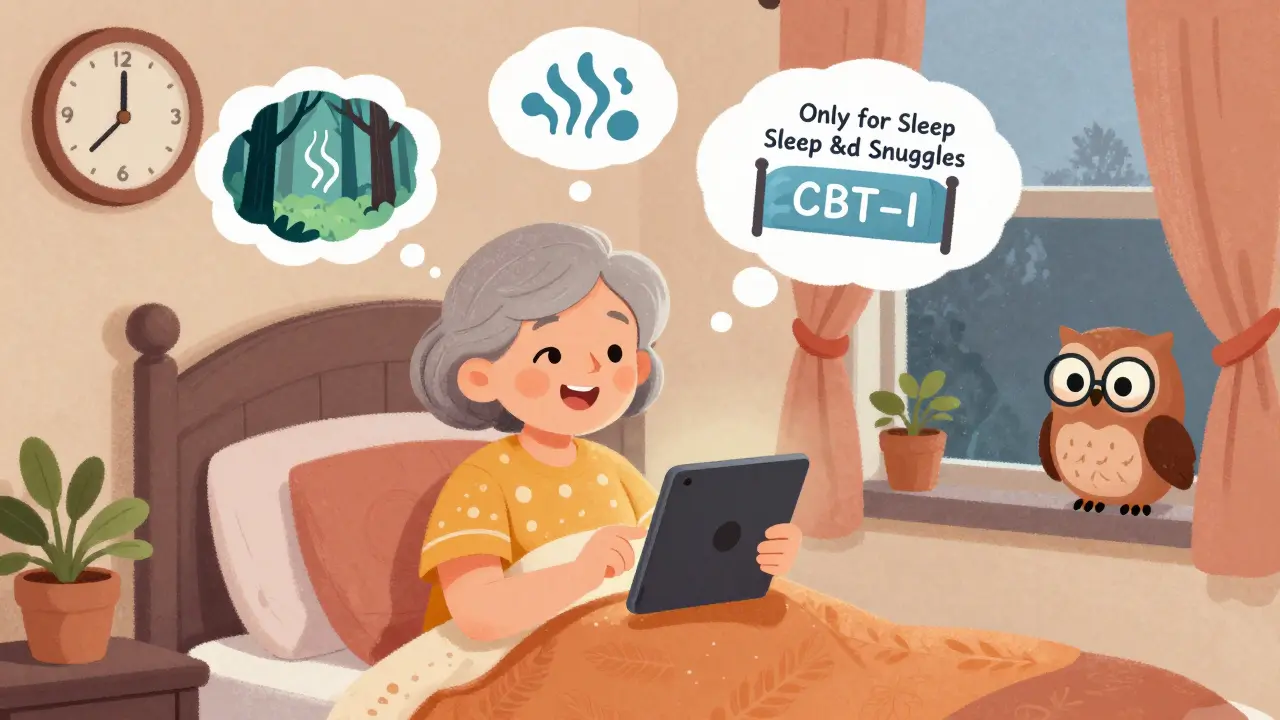
The American Academy of Sleep Medicine doesn’t just warn against sleep meds - it says they shouldn’t be the first thing you try. The gold standard? Cognitive Behavioral Therapy for Insomnia, or CBT-I.CBT-I isn’t about counting sheep. It’s a structured program, usually six to eight weekly sessions, that teaches you how to retrain your brain and body for sleep. It includes sleep restriction (limiting time in bed to match actual sleep), stimulus control (only using the bed for sleep and sex), and changing thoughts like “I’ll never sleep again” that keep you anxious.
And it works. A 2019 study in JAMA Internal Medicine showed that seniors who did CBT-I via telehealth had a 57% success rate in curing their insomnia - and 89% stuck with it. That’s better than most pills. One woman in Perth, 72, told her sleep specialist: “I stopped Lunesta after six weeks of CBT-I. I sleep better now than I have in 20 years.”
CBT-I doesn’t cost a fortune. Many Medicare Advantage plans cover it. Community health centers offer group sessions. And digital programs like Sleepio have been shown to be just as effective as in-person therapy for seniors.
When Medication Is Still Needed: Safer Options
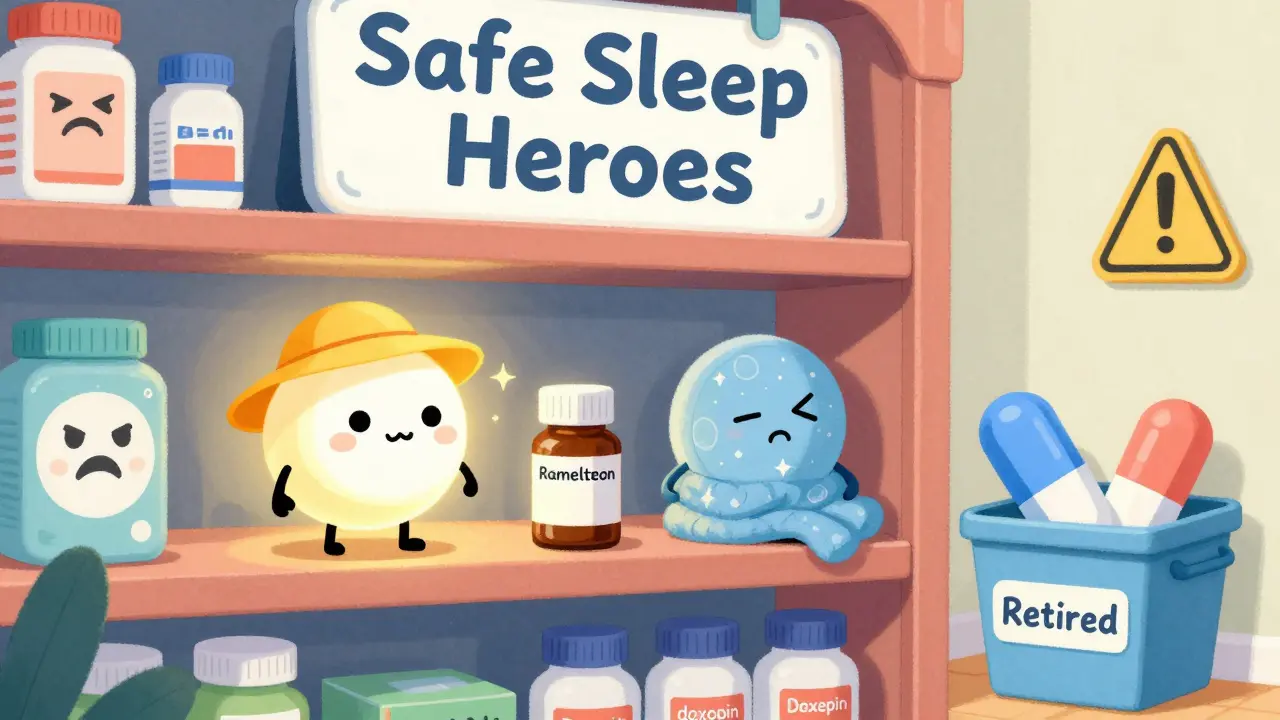
Sometimes, CBT-I isn’t enough - or you’re waiting for an appointment. In those cases, doctors should pick the safest possible option. Here’s what’s actually safer for seniors:- Low-dose doxepin (Silenor): At 3-6mg, this is an old antidepressant used in tiny amounts for sleep. It doesn’t cause next-day grogginess like other meds. A 2010 study found it improved total sleep time by almost 30 minutes with only 5% of users reporting drowsiness - same as placebo.
- Ramelteon (Rozerem): This mimics melatonin but targets receptors that regulate your sleep-wake cycle. It’s not addictive. It doesn’t cause memory issues. It reduces how long it takes to fall asleep by about 14 minutes. No rebound insomnia. No falls. Just quiet, natural sleep.
- Lemborexant (Dayvigo): A newer drug that blocks orexin, the brain chemical that keeps you awake. A 2021 JAMA study found it caused less postural instability than zolpidem in seniors. Still, it’s expensive - around $400 a month without insurance.
- Melatonin (2-5mg): Not a drug, but a supplement. It helps reset your internal clock, especially if your sleep schedule is off. Don’t take more than 5mg - higher doses don’t help and can make you groggy.
These options aren’t perfect. But compared to benzodiazepines or Z-drugs, they’re a big step forward.
The Hidden Cost: Price vs. Safety
Here’s the catch: the safest drugs are often the most expensive. Low-dose doxepin costs $400 a month without insurance. Ramelteon and lemborexant are similar. Meanwhile, generic zolpidem? $15. It’s no wonder so many seniors end up on the cheaper, riskier option.But the real cost isn’t just money. It’s the hospital bill after a fall. The nursing home stay after confusion leads to wandering. The loss of independence. A 2022 survey found 68% of seniors on sleep meds had at least one side effect. Forty-two percent felt too sleepy to drive or cook safely. Twenty-nine percent felt dizzy. Eighteen percent had memory problems.
That’s why the Centers for Medicare & Medicaid Services started the “Choosing Wisely” campaign. Since 2019, inappropriate benzodiazepine prescriptions in nursing homes have dropped 24%. That’s progress. But it’s not enough.
Deprescribing: How to Safely Stop Sleeping Pills
If you’ve been on a sleep med for months or years, quitting cold turkey can backfire. Rebound insomnia - worse than before - is common. So is anxiety and tremors.The STOPP/START criteria recommend tapering slowly: reduce your dose by 25% every 1-2 weeks. For benzodiazepines or Z-drugs, this might take 4 to 8 weeks. Work with your doctor. Don’t do it alone.
One man in his late 70s in Adelaide stopped Ambien after his pharmacist helped him cut his dose by 1mg every two weeks. He used melatonin and CBT-I techniques. After three months, he slept through the night - without pills. “I didn’t realize how foggy I’d been,” he said. “Now I feel like myself again.”
What You Can Do Today
You don’t need to wait for a doctor’s appointment to start sleeping better.- Get sunlight in the morning - even 15 minutes helps reset your clock.
- Keep your bedroom cool, dark, and quiet. No screens an hour before bed.
- Don’t nap after 3 p.m. Even a 20-minute nap can wreck nighttime sleep.
- Exercise - but not right before bed. Walking after dinner is perfect.
- Write down worries in a journal before bed. It clears your mind.
- Try a free CBT-I app like Sleepio or CBT-I Coach. They’re designed for seniors.
If you’re on a sleep med, ask your doctor: “Is this still the best option for me?” Don’t assume it’s fine because you’ve been taking it for years. Your body isn’t the same. Your risks aren’t the same.
What’s Changing in 2026
The American Geriatrics Society is updating its Beers Criteria this year. The draft recommends stopping benzodiazepines within 12 weeks of starting them in older adults. That’s new. It means doctors are being pushed to act faster.The NIH has invested $15 million in the Seniors Sleep Safety Initiative to fund non-drug treatments. Digital CBT-I platforms are now covered by more insurers. And new research shows that personalized sleep plans - based on your health, meds, and lifestyle - work better than any one-size-fits-all pill.
The future of sleep for seniors isn’t more pills. It’s smarter, safer, and more human. It’s about fixing the root cause - not just masking the symptom.
Are sleeping pills safe for seniors?
Most traditional sleep medications - especially benzodiazepines and Z-drugs like Ambien - are not considered safe for seniors as a first-line treatment. They increase the risk of falls, confusion, memory problems, and even dementia. Safer alternatives exist, but even those should be used only short-term and under medical supervision.
What is the safest sleep aid for elderly people?
Low-dose doxepin (3-6mg), ramelteon (8mg), and melatonin (2-5mg) are among the safest options. They don’t cause significant next-day drowsiness or increase fall risk. Lemborexant is newer and shows good safety data, but it’s expensive. The safest option overall is CBT-I - it’s drug-free and has lasting results.
Can seniors stop sleeping pills cold turkey?
No. Stopping abruptly, especially after long-term use, can cause rebound insomnia, anxiety, tremors, or even seizures. Always work with a doctor to taper off slowly - usually reducing the dose by 25% every 1-2 weeks over 4 to 8 weeks.
Does CBT-I really work for older adults?
Yes. Studies show 57% of seniors who complete CBT-I achieve long-term relief from insomnia. It works as well as medication - without the side effects. Many programs are now available online or through telehealth, making them easy to access.
Why do doctors still prescribe sleeping pills to seniors?
Many doctors are under time pressure and may not be aware of the latest guidelines. Others assume patients won’t stick with CBT-I. Some seniors ask for pills because they believe it’s the only solution. But awareness is growing. Programs like Choosing Wisely are reducing inappropriate prescriptions, and more providers are now trained in non-drug sleep therapies.
How can I help an elderly relative who’s on sleep meds?
Start by asking their doctor: “Is this medication still necessary?” Keep a sleep diary for a week - note when they take the pill, how they feel the next day, and any falls or confusion. Encourage non-drug strategies: morning light, no naps after 3 p.m., a cool dark room. Offer to help them find a CBT-I program. Your support can make all the difference.



15 Comments
Josh McEvoy
bro i took ambien for 3 years... woke up once making tacos at 3am 😅
Chloe Hadland
my grandma stopped her pills last year and now she’s dancing in the kitchen again. no more falls. no more confusion. just her.
Amelia Williams
i used to think sleep meds were the only way until my mom did CBT-I through a telehealth program. she’s been off everything for 14 months. sleeping like a baby. and yes, it’s free on medicaid.
Sharon Biggins
i work in geriatrics and i see this every day. doctors just hand out prescriptions because they’re rushed. no one has time to talk about sleep hygiene. but cbt-i works. it just takes patience.
John McGuirk
they want you to stop the pills because big pharma doesn’t want you sleeping naturally. melatonin is banned in the uk. they’re controlling your sleep. wake up.
Michael Camilleri
people these days think therapy is a magic pill. you don’t fix a broken brain with journaling and light. your body needs chemical help. if you’re too weak to take a pill, maybe you shouldn’t be living alone
lorraine england
i had a cousin on zolpidem for 7 years. she started falling constantly. we switched her to ramelteon and now she’s gardening again. i wish more families knew this stuff.
Darren Links
the real problem? doctors in america don’t care. they get paid for prescriptions, not for counseling. if you’re poor, you get the dangerous stuff. if you’re rich, you get lemborexant. it’s not medicine. it’s capitalism.
Kevin Waters
i’m a nurse and i’ve helped over 30 seniors taper off sleep meds. the key is slow. 25% every two weeks. pair it with melatonin and sunlight. most people are shocked how much better they feel. no drama. just results.
Kat Peterson
i mean... if you’re gonna be old, why not just do it with style? 🥀 i took doxepin for 6 months. felt like a 1950s movie star. calm. quiet. dignified. unlike my neighbor who’s on 3 different benzos and still tries to dance at bingo.
Himanshu Singh
in india, we don’t have access to these fancy drugs. we use turmeric milk, warm baths, and silence. sometimes, the oldest wisdom is the safest. your body remembers how to sleep. you just forgot to listen.
Jamie Hooper
i read this article and thought... wait, so the whole time i’ve been blaming my bad sleep on stress, it was actually the damn zolpidem? wow. i’m gonna call my doc tomorrow. thanks for the kick in the pants
Helen Leite
they’re hiding the truth. the sleep meds are linked to the 5g towers. the government wants seniors tired so they don’t protest. i’ve seen the documents. you’re being drugged to stay quiet.
Karen Conlin
I’ve been a geriatric nurse for 28 years. I’ve seen the falls. I’ve held the hands of women who woke up in the ER after breaking their hip because they thought they were going to the bathroom but were still half-asleep on Ambien. I’ve watched families cry because their dad forgot their name after a year of Valium. This isn’t hypothetical. It’s real. And the solution isn’t just ‘try melatonin.’ It’s systemic. We need doctors trained in sleep medicine. We need insurance to cover CBT-I like it’s insulin. We need to stop treating aging like a glitch to be patched with pills. My mom took 5mg of zolpidem for 11 years. She didn’t know she was slowly losing herself. When she finally stopped, after a 10-week taper, she remembered my wedding. She remembered my daughter’s first word. That’s not a miracle. That’s medicine done right. And if you’re reading this and you’re on a sleep med? Don’t panic. But don’t ignore it either. Ask your doctor: ‘Is this helping me live better-or just helping me sleep?’ And if they don’t know the answer? Find someone who does.
Izzy Hadala
The empirical data presented in this exposition substantiates the clinical consensus that pharmacological interventions for insomnia in the geriatric population carry an elevated risk-to-benefit ratio, particularly with benzodiazepinergic and Z-drug modalities. The efficacy of cognitive behavioral therapy for insomnia (CBT-I), as evidenced by randomized controlled trials published in JAMA Internal Medicine and the BMJ, demonstrates non-inferiority to pharmacotherapy with significantly reduced adverse event profiles. It is therefore ethically imperative that prescribers adhere to the updated Beers Criteria and prioritize non-pharmacological interventions as first-line therapy. Further, the socioeconomic disparity in access to safer pharmacologic agents such as lemborexant and ramelteon constitutes a public health inequity requiring policy intervention.