
Medication Side Effect Monitoring Tool
Compare platforms to find the best remote monitoring solution for detecting medication reactions before they become dangerous.
Filter Your Options
This tool helps you compare medication side effect monitoring platforms based on your needs. Select your preferences using the filters above, then click "Find My Best Match" to see recommended platforms.
Every year, hundreds of thousands of people end up in the hospital not because their condition got worse, but because of a reaction to a medication they were told to take. In the U.S. alone, adverse drug events cause 5-7% of all hospital admissions. That’s not a rare glitch-it’s a systemic risk. And for many, especially older adults on multiple prescriptions, these reactions happen slowly: a slight drop in blood pressure, a flutter in heart rhythm, a foggy mind that’s written off as aging. By the time a doctor notices, it’s often too late.
But what if you could catch those warning signs before you even feel them? That’s the promise of remote monitoring for medication side effects-tools that don’t just remind you to take your pills, but watch your body’s response to them in real time. These aren’t sci-fi fantasies. They’re here. And they’re changing how patients and doctors manage drug safety.
How These Systems Actually Work
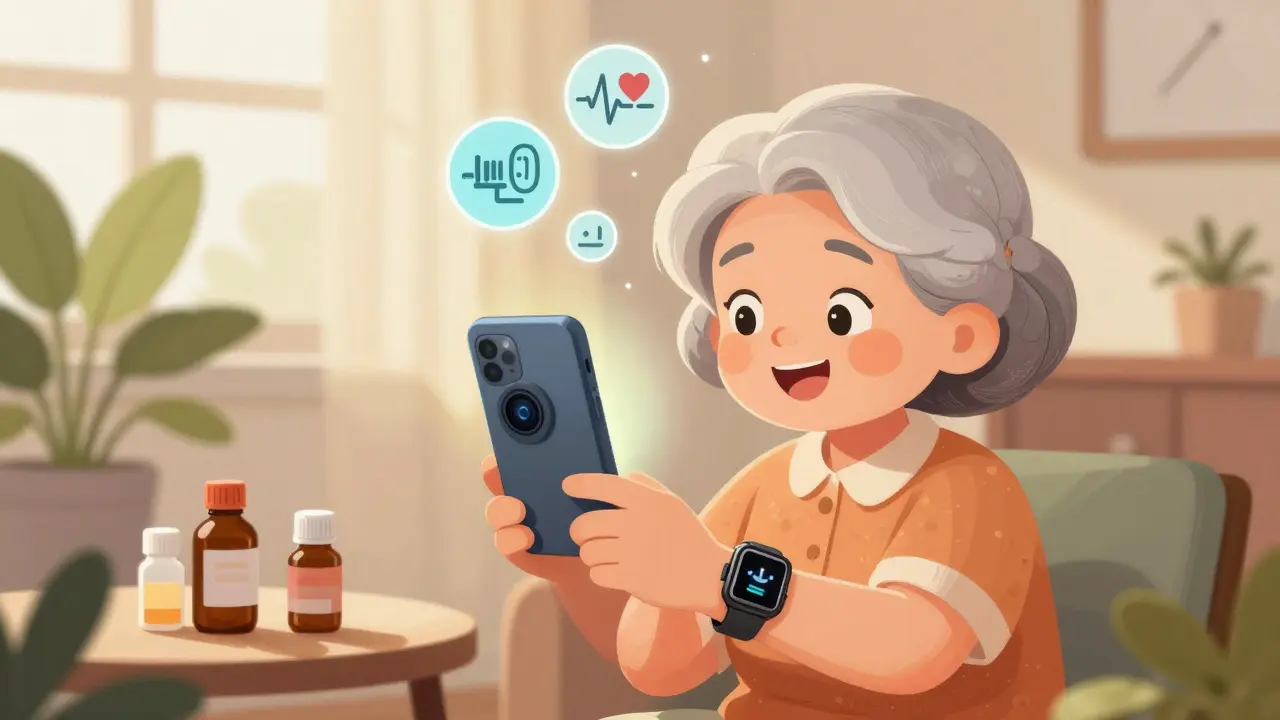
Modern medication monitoring isn’t just about alarms and pill dispensers. It’s a fusion of three things: your phone, your wearable, and artificial intelligence. The best platforms now track not just whether you took your pill, but how your body reacted to it.
Take AiCure a platform that uses your smartphone camera to verify you swallowed your medication while analyzing facial movements for signs of drowsiness, tremors, or slowed speech. In clinical trials, it spots side effects like dizziness or confusion with 96.7% accuracy. It doesn’t need you to type anything. It just watches.
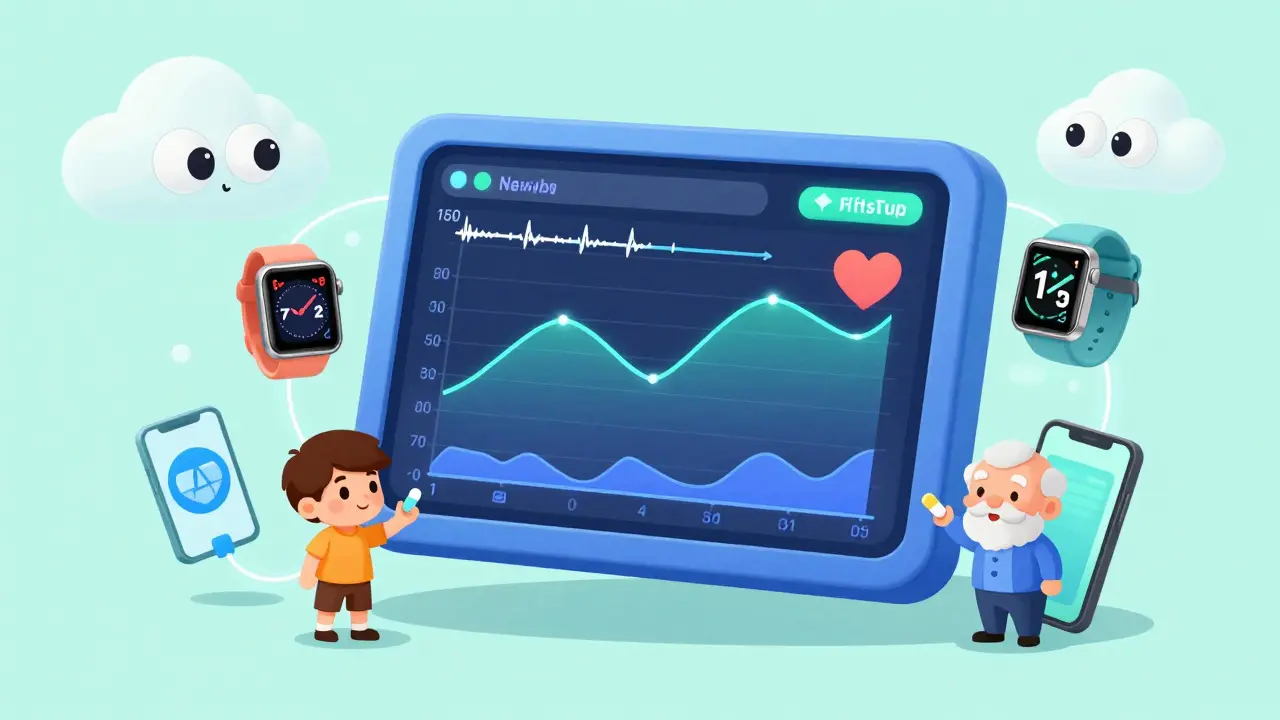
Then there’s Medisafe a medication management app that connects directly to Apple Watch, Fitbit, and over 70 other wearables. It doesn’t just log your pills-it monitors your heart rate variability (HRV). If your HRV drops more than 15% from your personal baseline for two full days, it flags a possible reaction to beta-blockers, antidepressants, or diuretics. This isn’t guesswork. The threshold was set after a year-long study with Massachusetts General Hospital.
And apps like Mango Health use natural language processing to read your symptom entries-like ‘I feel dizzy after lunch’ or ‘my legs are swollen’-and match them against the FDA’s database of over 1.5 million reported side effects. It doesn’t just say ‘this might be a side effect.’ It says, ‘This matches 89% of reports from people taking your exact combo of drugs.’
What You Can Actually Detect
These tools aren’t magic. They don’t predict every possible reaction. But they’re really good at spotting patterns tied to common high-risk drugs.
- Cardiovascular meds (like beta-blockers or warfarin): Heart rate spikes, irregular rhythms, sudden drops in blood pressure.
- Diabetes drugs (especially insulin or SGLT2 inhibitors): Unexplained fatigue, frequent urination, confusion, or low blood sugar episodes missed by standard glucose monitors.
- Psychiatric medications (SSRIs, antipsychotics): Changes in sleep patterns, reduced facial expression, slowed movement, or sudden mood shifts.
- Antibiotics and NSAIDs: Kidney function changes (tracked via weight gain and fluid retention), nausea patterns, or rashes reported through photo uploads.
One real case from a Geisinger Health patient: A 72-year-old woman started a new diuretic for heart failure. Her Apple Watch noticed her resting heart rate climbed 18% over 48 hours. Medisafe flagged it. Her doctor checked her electrolytes-she was losing potassium too fast. The dose was adjusted before she had a dangerous arrhythmia.
Comparing the Top Platforms
Not all apps are built the same. Here’s how the leading players stack up for side effect detection:
| Platform | Side Effect Detection Method | Wearable Integration | Accuracy | Cost (Annual, per patient) | Best For |
|---|---|---|---|---|---|
| AiCure | AI video analysis of facial cues and ingestion | Smartphone only | 96.7% | $249 | Clinical trials, high-risk patients |
| Medisafe | HRV, sleep, activity trends from wearables | 78+ devices (Apple Watch, Fitbit, Garmin) | 91.2% | $99 | Chronic disease management, home use |
| Mango Health | NLP analysis of symptom logs against FDA data | None | 89.3% | $79 | Patients who track symptoms manually |
| HealthArc | Adaptive algorithm across 1,850+ drug-side effect pairs | 312+ devices | 93.5% | $199+ (min. 50 patients) | Hospitals, large clinics |
| Pill Identifier & Med Scanner | Pill recognition only; no physiological tracking | None | 94.6% (pill ID only) | Free | Verifying pills, avoiding mix-ups |
The catch? The most accurate tools are also the most expensive. AiCure’s video AI is powerful, but its $249/month price tag makes it unrealistic for most families. Medisafe hits a sweet spot-solid detection, wide device support, and a cost most insurers now cover under new Medicare RTM codes.
The Big Problems: False Alarms and Bias
These systems aren’t perfect. In fact, they’re still learning.
One of the biggest complaints? alert fatigue. A 2025 AMA survey found that 68% of clinicians have turned off side effect alerts because they kept getting false positives. One user on Reddit said her app flagged her normal evening tiredness as a reaction to her antidepressant-five times in one week. She stopped trusting it.
And then there’s bias. A preliminary CMS analysis found that AI systems flagged side effects in elderly African American patients 23% less often than in white patients, even when symptoms were identical. Why? The training data was mostly from younger, white populations. The FDA now requires all new side effect algorithms to be tested across age, race, and gender groups-but many existing apps haven’t updated yet.
Another issue: distinguishing side effects from disease symptoms. If you have Parkinson’s and your pill app notices you’re moving slower, is that the drug or the disease? Most platforms still struggle with this. That’s why the best systems don’t just alert-they ask questions. ‘Did you sleep well?’ ‘Any new dizziness?’ ‘Any changes in appetite?’
Who Benefits Most?
These tools aren’t for everyone. But they’re life-changing for specific groups:
- Seniors on 5+ medications: The average 70-year-old with heart disease, diabetes, and arthritis takes six pills a day. One interaction can send them to the ER. Apps that flag drug combos (like mySeniorCareHub) reduce these risks by 40%.
- People with chronic mental health conditions: Antidepressants and antipsychotics often cause delayed side effects-weight gain, tremors, sedation. Tracking subtle changes helps doctors adjust doses before quality of life plummets.
- Caregivers: Adult children managing a parent’s meds from afar. Real-time alerts mean they don’t have to guess if Mom’s confusion is normal aging or a reaction to a new statin.
One caregiver in Perth told me her mother’s Medisafe app sent a notification: ‘Possible reaction to lisinopril. HRV down 18%. Check for swelling.’ She checked. Her mom’s ankles were swollen. They called the doctor. The dose was cut. No hospital visit.
What’s Next? The Future Is Personal
The next wave isn’t just about watching your body. It’s about understanding your genes.
Mayo Clinic’s RIGHT Study combines remote monitoring with pharmacogenomics-testing your DNA to see how you metabolize drugs. One patient, genetically slow to process a common blood thinner, had a near-fatal bleed. After testing, her dose was halved. Her side effect alerts dropped to zero.
Meanwhile, AiCure is testing ‘Digital Twins’-AI models that simulate how your body responds to drugs based on your history, habits, and biology. Early results show they can predict your personal risk of side effects with 43% more accuracy than generic models.
By 2028, Gartner predicts nearly all U.S. healthcare systems will use integrated side effect monitoring. But success won’t come from tech alone. It’ll come from pairing smart tools with human oversight. A notification is only useful if someone acts on it.
Getting Started
If you’re considering one of these tools, here’s how to do it right:
- Start with your doctor. Not all side effect monitoring is covered by insurance. Ask if your plan includes Remote Therapeutic Monitoring (RTM) codes-CMS now pays $52-$67/month for qualifying services.
- Match the tool to your needs. If you’re tech-savvy and wear a smartwatch, Medisafe is a strong pick. If you’re managing multiple meds for an elderly parent, mySeniorCareHub’s interaction checker is worth a look.
- Don’t ignore the human factor. These tools are assistants, not replacements. If the app says something’s off, call your provider. Don’t wait for a follow-up.
- Check privacy settings. Side effect data is sensitive. Make sure your app uses HIPAA-compliant encryption and doesn’t share data with insurers without consent.
Medication side effects don’t always scream. Sometimes they whisper. And for too long, we’ve relied on patients to notice those whispers-and then wait weeks to tell their doctor. Now, technology is listening. The question is: will we trust it enough to act?


14 Comments
Mike Rengifo
i've been using medisafe for 6 months and honestly it saved my mom's life. she's 78 and on 7 meds. the hrv alert caught her potassium drop before she collapsed. no drama, just facts. thank god for tech.
Sahil jassy
this is so needed. my dad in delhi takes 5 pills daily and i'm 8000 miles away. medisafe sends me alerts like 'dizziness detected' and i call his neighbor to check on him. no more guessing. god bless these apps.
Kathryn Featherstone
i work in geriatrics and i've seen too many elderly patients get hospitalized because no one noticed the subtle signs. these tools aren't perfect but they're the best thing we've had in decades. doctors need to stop dismissing them as 'gadgets'.
Aboobakar Muhammedali
i dont know why people are scared of this. its just watching. like a nurse who never sleeps. my sister has depression and the app noticed her sleep pattern changed before she even said anything. we got help in time. thank you to whoever built this
Kevin Motta Top
in india we dont have access to these tools. but i wish we did. my aunt died from a drug interaction no one saw coming. this could've saved her. why is this only for rich countries?
Alisa Silvia Bila
i get the hype but also... what if your phone dies? what if you forget to charge your watch? tech is great until it fails. we need backups. not just apps telling us we're dying every time we yawn.
Nina Stacey
i just wanna say thank you to the devs behind this. i have bipolar and the mood tracking feature helped my psychiatrist adjust my meds before i had a full episode. i used to think i was just lazy or broken but it was the drugs. now i feel seen.
also i made a typo in my symptom log once and it still got it right. that's magic.
jessica .
this is all part of the big pharma surveillance state. they want to track your every blink so they can sell you more pills. your watch is a spy. your phone is a microphone. they already know when you poop. next they'll control your thoughts. #deepstate #medsarepoison
Laura Hamill
THEY'RE WATCHING YOU. I KNOW WHAT YOU DID. THEY'RE USING YOUR HEART RATE TO PREDICT IF YOU'RE GOING TO COMPLAIN ABOUT YOUR MEDS. THEY'RE TRAINING AI TO HATE OLD PEOPLE. I SAW IT ON YOUTUBE. MY NEIGHBOR'S CAT GOT A TEXT FROM MEDISAFE. WHAT IS HAPPENING??? 🤯
Ryan van Leent
why are we paying for this when the government could just fix the system? my cousin died from a drug reaction and no one cared. now we're supposed to buy an app? this is capitalism at its worst. just give people free healthcare and stop selling fear
Kelly Mulder
this is laughable. only the uneducated rely on apps to tell them how their body feels. real medicine requires a trained physician, not a phone camera analyzing your eyelid twitch. i've read three peer-reviewed journals and i can tell you this is pseudoscience dressed in silicon.
Nicole Rutherford
you people are so naive. this tech is biased. it doesn't even recognize black people's faces properly. my uncle's app didn't flag his dizziness because the algorithm thought he was just 'relaxed'. this isn't progress. it's digital racism with a subscription fee.
Marsha Jentzsch
I JUST GOT AN ALERT THAT MY HEART RATE WAS 'ABNORMAL'... AND I WAS JUST CRYING BECAUSE MY DOG DIED. SO NOW I'M SUPPOSED TO BELIEVE THE APP KNOWS MORE ABOUT ME THAN MY OWN FEELINGS??? I'M NOT A DATA POINT. I'M A HUMAN BEING. I'M NOT OKAY. I NEED A HUG. NOT A NOTIFICATION. 😭😭😭
Vicki Belcher
this made me cry in the best way 😭❤️ my grandma uses medisafe and now she feels safe. she says the app is like having a little angel watching over her. i used to be scared to leave her alone... now i just check the app before i go to work. thank you for making the world a little kinder. 🌸✨