

What Is Nephrotic Syndrome?
Nephrotic syndrome isn’t a disease on its own-it’s a set of symptoms that tell you something’s seriously wrong with your kidneys. The main signs are heavy proteinuria, severe swelling (edema), low blood albumin, and high cholesterol. These happen because the filters in your kidneys, called glomeruli, get damaged and start leaking protein into your urine. Normally, these filters keep big proteins like albumin in your blood. When they break down, albumin escapes, and your body can’t hold onto fluid anymore. That’s why you swell up.
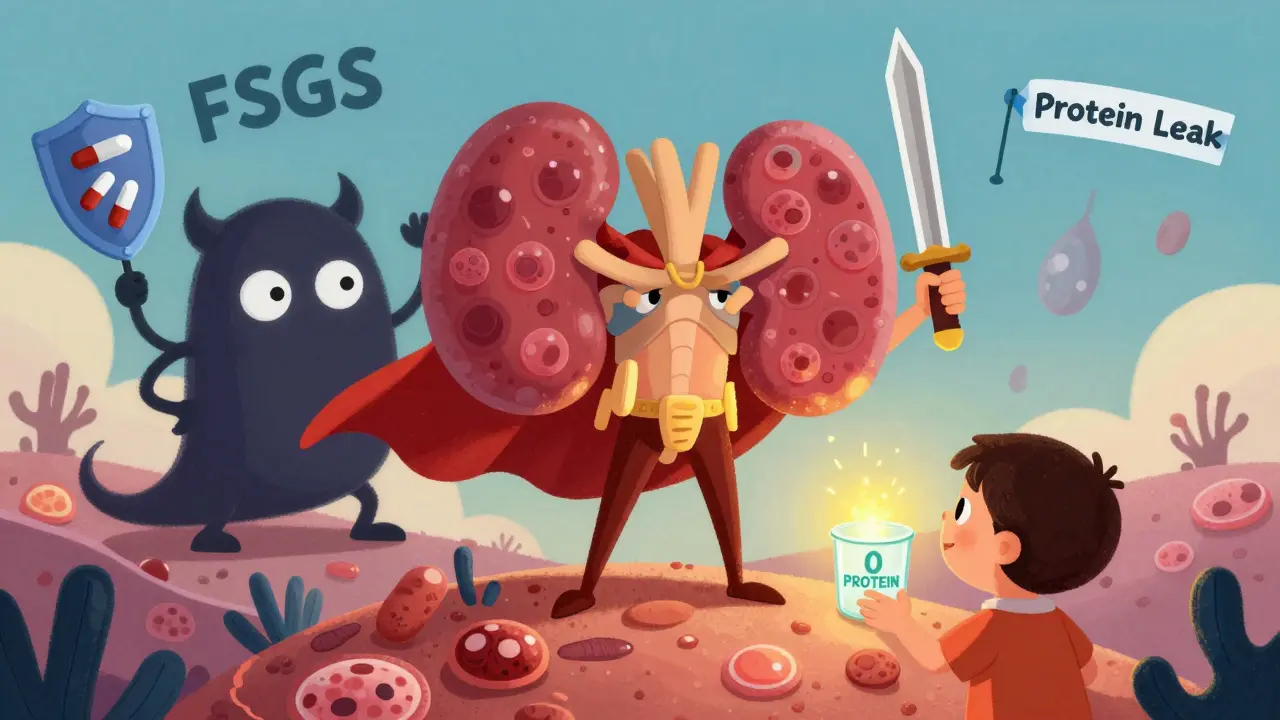
This condition hits kids and adults differently. In children, especially between ages 1 and 6, it’s most often caused by minimal change disease-a problem that responds well to steroids. In adults, the causes are more varied: focal segmental glomerulosclerosis (FSGS), membranous nephropathy, or diabetes. About 85% of childhood cases are minimal change disease, while in adults, FSGS and membranous nephropathy make up nearly 70% of cases. Diabetes is a major player too, especially in people over 65.
Why You See Swelling and Foamy Urine
The biggest red flags people notice are swelling and foamy urine. Swelling usually starts around the eyes in the morning, then spreads to the legs, ankles, and sometimes the belly or lungs. Parents often mistake this for allergies or a cold. In fact, 78% of parents in one survey said their child was misdiagnosed at first. The swelling happens because low albumin in the blood pulls fluid out of the vessels and into the tissues. It’s not just uncomfortable-it can make breathing hard if fluid builds up in the lungs.
Foamy urine is another classic sign. When large amounts of protein pour into the urine, it creates bubbles that don’t pop quickly. Many adults say this was their first clue something was wrong. One Reddit user described it as “urine that looked like a shaken soda bottle.” That’s not normal. If your urine looks like that consistently, it’s time to get tested.
Weight gain is common too. People often gain 5 to 15 pounds in just a few days-not from fat, but from fluid. Some patients report gaining 10 pounds in a week before diagnosis. That kind of rapid change is a warning sign.
How It’s Diagnosed
Doctors don’t guess. They test. The diagnosis needs three things: protein in the urine, low blood albumin, and swelling. The gold standard is a 24-hour urine collection showing more than 3.5 grams of protein in adults (or 40 mg/m²/hour in kids). Blood tests check albumin-below 3.0 g/dL is a red flag. Cholesterol is often over 300 mg/dL, sometimes hitting 500.
But here’s the catch: not everyone needs a kidney biopsy. Kids with typical symptoms and a good response to steroids usually don’t need one. Adults, though? Almost always do. If you’re over 18 and have nephrotic syndrome, your doctor will likely recommend a biopsy to find out what’s causing it. FSGS, membranous nephropathy, and lupus kidney disease all look different under the microscope-and they need different treatments.
Also, don’t ignore other tests. A urine test for red blood cells can help rule out nephritic syndrome, which looks similar but involves blood in the urine and high blood pressure. Nephrotic syndrome doesn’t usually cause high blood pressure or blood in the urine. If it does, something else is going on.
First-Line Treatment: Steroids and Beyond
For children with minimal change disease, steroids like prednisone work miracles. About 90% go into remission within 4 weeks. The dose is usually 60 mg/m² per day (up to 80 mg total) for 4 to 6 weeks, then slowly lowered over months. Most kids bounce back fine. But here’s the twist: 60-70% will have at least one relapse. Often, it’s triggered by a cold or flu. That’s why vaccines are so important-live vaccines like MMR are off-limits while on steroids.
Adults aren’t as lucky. Only 60-70% respond to steroids, and relapses are common. When steroids fail-or cause too many side effects-doctors turn to other drugs. Calcineurin inhibitors like tacrolimus or cyclosporine are next. These help suppress the immune system without the moon face and weight gain of steroids. But they come with their own risks: high blood pressure, kidney toxicity, and trembling hands.
For some adults with FSGS or membranous nephropathy, rituximab (a drug used for lymphoma) is now being used off-label. It targets immune cells that attack the kidneys. Studies show it can reduce proteinuria and help patients stay off steroids for longer.
Managing Swelling and Protecting Your Kidneys
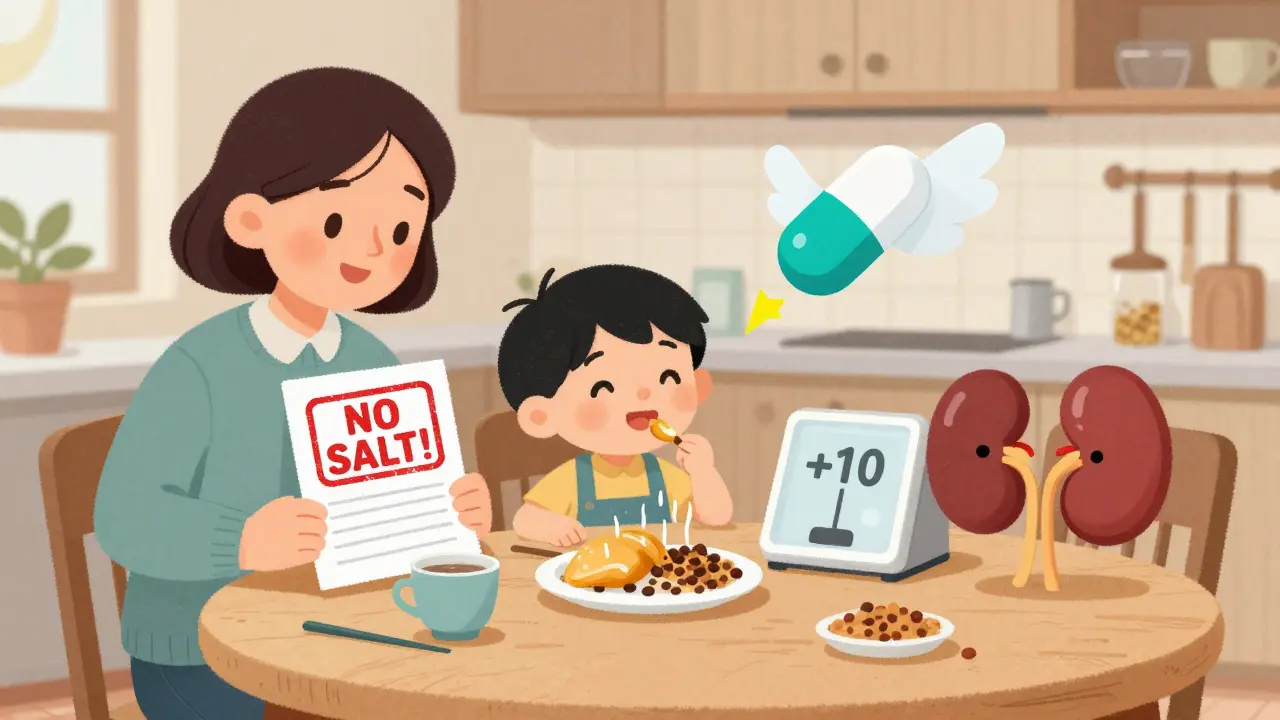
Medications aren’t the whole story. Diet and lifestyle matter just as much. Sodium is the enemy. Cutting salt to under 2,000 mg a day can reduce swelling by 30-50% in just three days. That means no processed food, no canned soups, no chips, and no soy sauce. Read labels. Even “low-sodium” products can be sneaky.
Protein intake? Don’t go overboard. Eating too much protein doesn’t help-it can make the kidneys work harder. Stick to 0.8 to 1.0 gram per kilogram of body weight. So if you weigh 70 kg, aim for 56 to 70 grams of protein a day. That’s about 3 eggs, 100 grams of chicken, and a cup of lentils. Enough to stay healthy, not too much to stress your kidneys.
Medications called ACE inhibitors or ARBs (like lisinopril or losartan) are used for almost everyone. They don’t just lower blood pressure-they directly reduce protein leakage from the kidneys. Studies show they cut proteinuria by 30-50%. The goal? Keep blood pressure under 130/80. That’s harder than it sounds, but it’s critical to slow kidney damage.
The Hidden Danger: Blood Clots
Most people don’t know this, but nephrotic syndrome makes you prone to blood clots. When albumin drops below 2.0 g/dL, your blood becomes sticky. Clots can form in your legs (deep vein thrombosis), lungs (pulmonary embolism), or even in the kidney veins themselves. About 10-40% of adults with severe nephrotic syndrome develop renal vein thrombosis.
Doctors watch for signs: sudden leg swelling, chest pain, trouble breathing. If you’re at high risk, you might need blood thinners like warfarin or low-molecular-weight heparin. This isn’t optional-it’s life-saving. Don’t ignore this part of your treatment plan.
What Happens Long-Term?
Outcomes depend almost entirely on what’s causing the syndrome. Minimal change disease has a 95% chance of keeping your kidneys working 10 years out. FSGS? Only 50-70%. If diabetes caused it, your chances drop to 40-50%. The biggest predictor of kidney failure? Persistent proteinuria. If you still have more than 1 gram of protein in your urine after treatment, your risk of ending up on dialysis jumps 4.2 times.
That’s why doctors push so hard for complete remission-not just partial. Even if you feel fine, the protein is still damaging your kidneys. That’s why weekly urine dipstick tests are part of the routine. Remission means three straight days of negative or trace protein. Relapse? Three days of 2+ or 3+ readings. Track it. Know your numbers.
New Hope on the Horizon
There’s real progress. In 2023, the FDA approved budesonide (Tarpeyo) for a related kidney disease, and it’s showing promise for some FSGS patients. In clinical trials, it cut proteinuria by up to 59%. Sparsentan, a new dual-acting drug, reduced proteinuria by nearly 50% in a 2022 study-more than double what older drugs like irbesartan could do.
Research is also getting smarter. The NEPTUNE study found three distinct molecular types of FSGS. That means one day, doctors might test your kidney tissue and say, “You have Type 2 FSGS-here’s the drug that works best for your version.” Precision medicine is coming.
Animal studies are even more exciting. Drugs that protect the podocytes-the actual filter cells in the kidney-are reducing proteinuria by 60-70% in lab models. These are still years away from humans, but they point to a future where we don’t just suppress the immune system-we repair the kidney itself.
What You Can Do Right Now
- Track your weight daily. A 2-pound gain in one day means fluid buildup.
- Use a salt substitute sparingly-many contain potassium, which can be dangerous if your kidneys are weak.
- Get all recommended vaccines-flu, pneumonia, COVID, hepatitis B. Avoid live vaccines while on steroids.
- Keep all follow-up appointments. Even if you feel fine, proteinuria can creep back.
- Ask about a 24-hour urine test if you haven’t had one. It’s the only way to know how much protein you’re losing.
Nephrotic syndrome is serious, but it’s not a death sentence. With the right treatment, most people live full lives. The key is catching it early, sticking to the plan, and not giving up when relapses happen. Your kidneys can heal-especially if you give them a chance.
Is nephrotic syndrome the same as kidney failure?
No. Nephrotic syndrome means your kidneys are leaking protein, but they’re still working. Kidney failure means they’ve lost most of their filtering ability. Many people with nephrotic syndrome never reach kidney failure, especially if they respond to treatment. But if proteinuria stays high for years, it can lead to scarring and eventual failure.
Can children outgrow nephrotic syndrome?
Yes, many do. Most children with minimal change disease go into remission with steroids and don’t need long-term treatment. By their teens, many have no symptoms and stop all medication. But relapses are common in the first few years, especially after infections. The good news: even with relapses, the long-term kidney function is usually excellent.
Why do steroids cause weight gain and moon face?
Steroids like prednisone change how your body handles sugar, fat, and fluids. They increase appetite, cause your body to store fat around the face and belly, and make you hold onto water. Moon face isn’t fat-it’s fluid and fat buildup from the drug. It usually fades after stopping treatment, but it can be hard to deal with during therapy. Diet and exercise help, but the main fix is time.
Is nephrotic syndrome hereditary?
Most cases aren’t. But there are rare genetic forms, like congenital nephrotic syndrome, caused by mutations in the NPHS1 gene. These show up in babies under 3 months old and often require kidney transplant. If a child has nephrotic syndrome before age 1, or if there’s a family history, doctors may recommend genetic testing to rule out these forms.
Can I still eat meat and dairy with nephrotic syndrome?
Yes, but in moderation. Meat and dairy are good sources of protein, but you need to control your total intake. Stick to lean cuts and low-fat dairy. Avoid processed meats like bacon or sausages-they’re loaded with salt. A dietitian can help you plan meals that give you enough protein without overloading your kidneys or spiking your sodium.
What should I do if I miss a dose of my medication?
If you miss a steroid dose, take it as soon as you remember-if it’s not close to your next dose. Never double up. For other drugs like tacrolimus or ARBs, follow your doctor’s instructions. Missing doses can trigger a relapse. Set phone alarms. Use pill organizers. Don’t risk your kidney health over a missed pill.
How often do I need to see a kidney specialist?
During active disease, you’ll likely see your nephrologist every 2 to 4 weeks. Once you’re in remission, visits may drop to every 3 to 6 months. If you’re on long-term medication like tacrolimus or rituximab, you’ll need regular blood tests to check kidney function and drug levels. Don’t skip appointments-even if you feel fine.
Can nephrotic syndrome come back after a kidney transplant?
Yes, especially with FSGS. In about 30-50% of cases, the disease returns in the new kidney. That’s why doctors use strong immunosuppressants after transplant and may give rituximab before or right after surgery. Minimal change disease rarely comes back after transplant. Your transplant team will monitor you closely for proteinuria in the first few weeks.


12 Comments
roger dalomba
So let me get this straight-your kidneys are basically a sieve that forgot it was supposed to hold onto protein? And we’re surprised when you turn into a water balloon?
Classic. I’ll take my 3.5g of protein in my urine over another ‘miracle cure’ TikTok trend any day.
Sophia Daniels
Oh honey, if your urine looks like a shaken soda bottle, you’re not ‘just dehydrated’-you’re one step away from a kidney ICU party.
I’ve seen moms ignore this for weeks thinking it’s ‘allergies’-then boom, their kid’s face is puffed like a marshmallow.
And don’t even get me started on the salt. You think you’re being ‘healthy’ eating that ‘low-sodium’ soup? Please. That stuff’s got more sodium than a Brooklyn deli sandwich.
Read labels like your life depends on it-because it does.
Also, steroids make you look like a moon bear. But hey, at least you’re not on dialysis. Priorities, people.
Nikki Brown
I can't believe people still think this is 'just a childhood thing'.
My sister had this at 42. They told her it was 'water retention from stress'.
She lost 18 pounds of fluid in 3 weeks. Her legs looked like overstuffed sausages.
And now? She's on tacrolimus, has to track every gram of protein, and can't even have a slice of pizza without checking the sodium.
And yet, people still say 'just eat less salt' like it's a lifestyle tip and not a medical emergency.
People are so ignorant. 😔
Peter sullen
It is imperative to underscore the clinical significance of the glomerular filtration barrier disruption in nephrotic syndrome, as it precipitates a cascade of pathophysiologic derangements: hypoalbuminemia, oncotic pressure dysregulation, hepatic compensatory hyperlipidemia, and a hypercoagulable state secondary to urinary loss of antithrombin III.
Moreover, the therapeutic armamentarium must be stratified according to histopathological subtype-minimal change disease (MCD) versus focal segmental glomerulosclerosis (FSGS) versus membranous nephropathy-each exhibiting distinct immunologic profiles and response kinetics to corticosteroids, calcineurin inhibitors, and emerging biologics such as rituximab.
Furthermore, dietary sodium restriction below 2,000 mg/day has been demonstrated in randomized controlled trials to reduce edema volume by 30–50% within 72 hours, thereby mitigating cardiovascular strain.
Steven Destiny
If you’re still eating processed food and thinking you’re fine, you’re not just lazy-you’re endangering your life.
That ‘low-sodium’ soup? It’s a lie. That ‘healthy’ chicken sandwich? Loaded with salt.
And if you skip your meds because you ‘feel fine’? Congrats, you’re basically signing up for dialysis.
Stop being a baby. Your kidneys don’t care how you feel. They’re working 24/7. You better be too.
Fabio Raphael
I’ve been following this for my dad-he’s 71, diabetic, just got diagnosed.
He’s scared. But honestly? The part about ACE inhibitors reducing protein leakage by 30–50%? That gave me hope.
It’s not just about meds, though. It’s about the little things: weighing daily, checking labels, not letting him have that extra slice of pizza.
I just wanted to say… thank you for writing this. It’s the first time I felt like I actually understood what’s going on.
Amy Lesleighter (Wales)
foamy pee = bad. salt = worse. steroids = moon face but better than dialysis.
just eat real food. no cans. no bags. no mystery powders.
and if you feel weirdly puffy? go get tested. dont wait.
Erwin Asilom
I appreciate the clarity of this post.
For those newly diagnosed, I urge you to establish a daily routine: weigh yourself at the same time each morning, record urine dipstick results, and maintain a food log.
Consistency-not perfection-is the cornerstone of long-term management.
Even small, disciplined actions compound into meaningful outcomes.
And please, do not discontinue medications without consulting your nephrologist. The risk of relapse is real, and predictable.
Sumler Luu
I just want to say-this is heavy stuff.
I’ve seen people with this go through hell.
But I also know how hard it is to stay on top of all this when you’re tired, scared, or just… overwhelmed.
It’s okay to ask for help. It’s okay to cry. It’s okay to not be okay.
And if someone says ‘just eat less salt’-they don’t get it.
You’re not failing. You’re fighting.
sakshi nagpal
This is such an important post. In India, many families still think kidney problems are ‘bad karma’ or ‘too expensive to treat’.
But this? This is science. This is treatable.
I’m sharing this with my cousin’s family-her son had swelling for months. No one knew why. Now they’re going to the doctor.
Thank you for making this so clear.
Sandeep Jain
i read this and cried. my bro had this when he was 5. steroids made him so fat and moody. but he’s 24 now, no meds, no probs.
just wanted to say… it gets better. really.
Brittany Fuhs
I’m not sure why we’re still using 1980s steroid protocols when we have Sparsentan now.
And if you’re not getting a biopsy after 18? You’re not being careful-you’re being negligent.
Also, ‘natural remedies’? No.
Just… no.
Stop Googling ‘nephrotic syndrome cure lemon water’ and get real.