
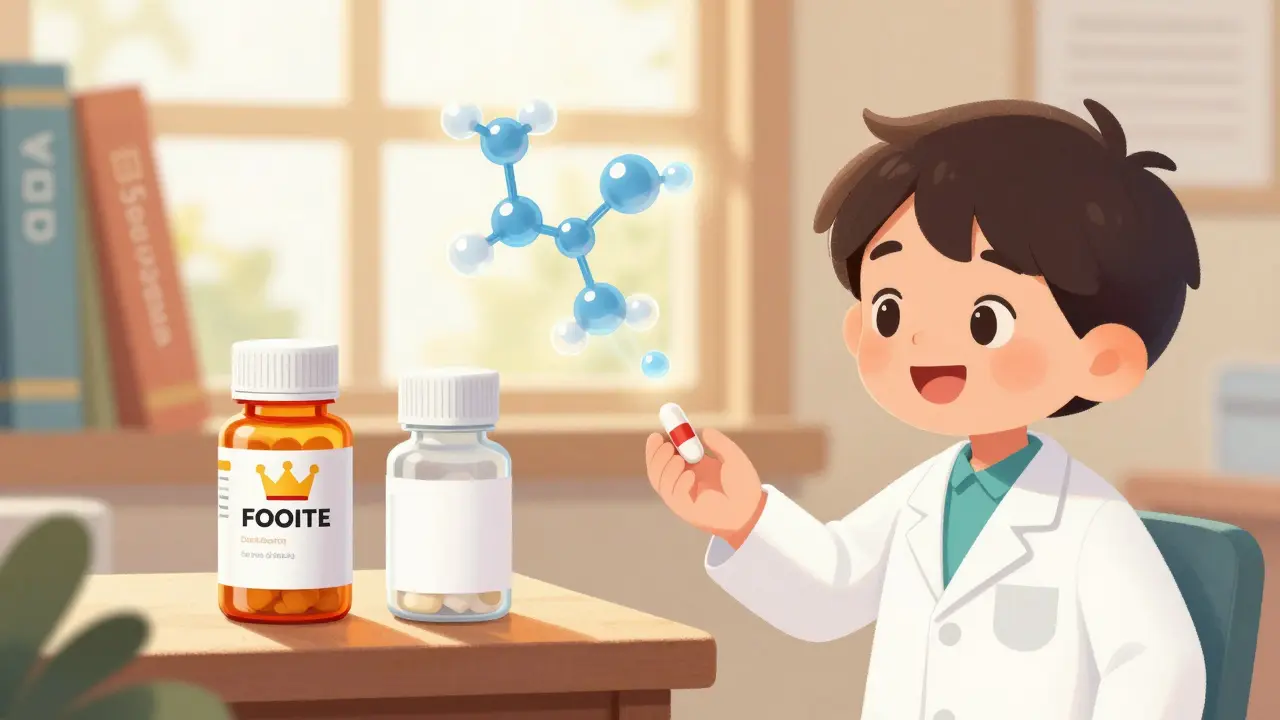
When you pick up a prescription, you might not realize that the pill in your hand could be a generic version of a brand-name drug-same active ingredients, same effect, but often a fraction of the cost. This isn’t just a convenience; it’s the result of deliberate, complex, and sometimes conflicting policies across dozens of countries. From the U.S. to India, from South Korea to the Netherlands, governments are trying to solve the same problem: how to make life-saving medicines affordable without breaking the system. The results? A patchwork of success, trade-offs, and unintended consequences.
How Generics Work: The Core Idea
Generic drugs aren’t knockoffs. They’re exact copies of branded medications once the original patent expires. The science is clear: they must meet strict bioequivalence standards-meaning they deliver the same amount of active ingredient into the bloodstream at the same rate as the brand-name version. In the U.S., the FDA requires generics to fall within 80-125% of the original drug’s absorption levels. That’s not a guess; it’s a measurable, repeatable test. But getting there isn’t just about science. It’s about policy.
The modern system started in the U.S. with the Hatch-Waxman Act of 1984. It created a fast-track approval path for generics-no need to repeat expensive clinical trials. In return, generic manufacturers agreed to respect patent timelines. This simple deal sparked a revolution. By 2025, 90.1% of all prescriptions in the U.S. were filled with generics. And yet, despite this massive adoption, the U.S. still spends more on drugs than any other country. Why? Because while generics are cheap, the branded drugs they replace are astronomically expensive.
The U.S. Model: High Penetration, High Prices
The U.S. is the world leader in generic use. More than 9 in 10 prescriptions are generic. The FDA has approved over 11,342 generic products as of late 2024. That’s more than any other country. And it’s saving money-$142 billion in Medicare spending in 2025 alone. That’s $2,643 saved per beneficiary.
But here’s the twist: U.S. drug prices are still the highest in the world. Why? Because generics only replace branded drugs after patents expire. And when a new drug hits the market, it can cost $100,000 a year. Generics don’t touch those prices. They only come in after the fact.
The system works because of competition. Once a patent expires, dozens of companies can enter the market. That drives prices down-sometimes to pennies per pill. The FDA’s Competitive Generic Therapy (CGT) program speeds this up. Drugs like Zenara Pharma’s Sertraline Hydrochloride capsules got approval in just 8 months instead of the usual 18-24. That’s because the CGT designation gives the first generic maker 180 days of exclusivity. No other company can compete during that window. It’s a clever incentive: reward speed, not just volume.
Europe: Harmonized Rules, Fragmented Prices
Across the Atlantic, the European Union has a different story. The European Medicines Agency (EMA) gives a single approval for a generic drug that’s valid in all 27 member states. Sounds efficient, right? But here’s the catch: each country sets its own price.
That means the exact same pill, made in the same factory, can cost 300% more in one country than its neighbor. Germany might pay €2 for a generic blood pressure pill. Italy pays €8. Why? Because Germany has mandatory substitution laws-pharmacists must switch you to the cheapest option unless your doctor says no. Italy doesn’t. And in countries without strong policies, doctors and patients stick with branded drugs out of habit or mistrust.
The European Commission is trying to fix this. The proposed Pharmaceutical Package, expected in late 2025, aims to create common rules for pricing and incentives for the first generic to enter the market. If it passes, it could cut generic entry times by 12-15%. But so far, the system is a maze. One approval. 27 different price tags.
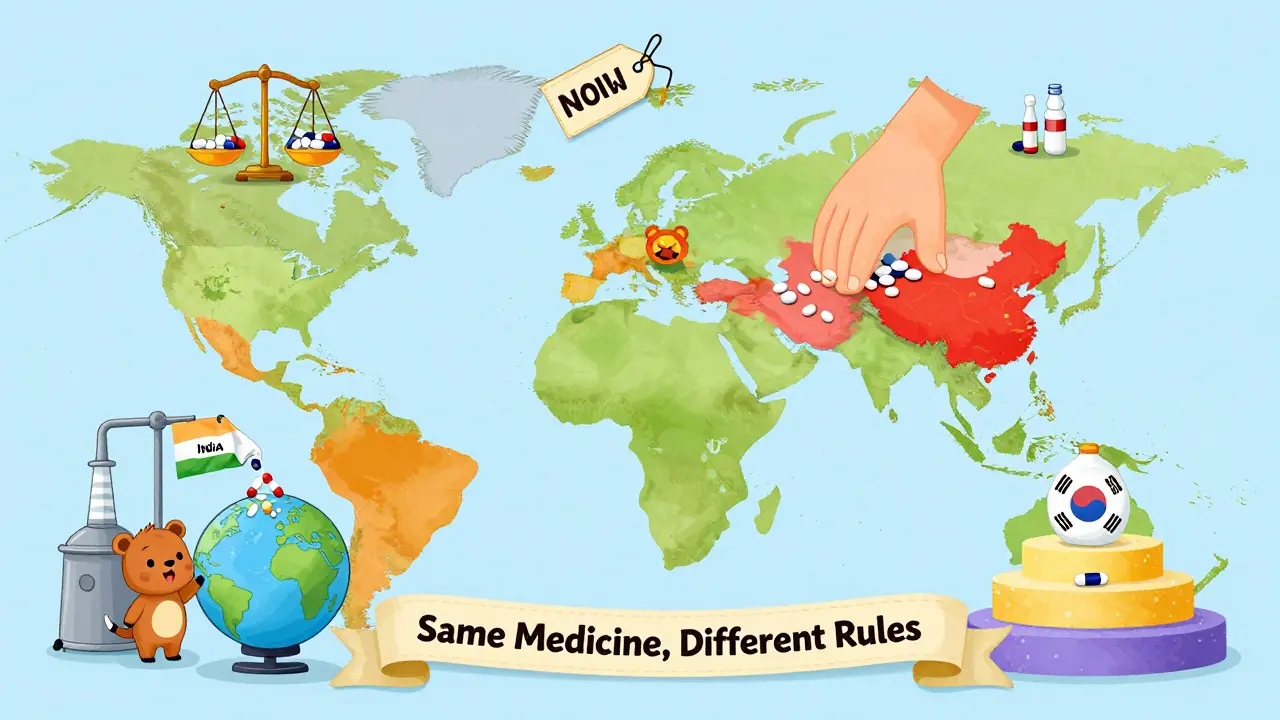
China’s Bold Gamble: Volume-Based Procurement
China’s approach is brutal in its simplicity. In 2018, the government launched Volume-Based Procurement (VBP)-a nationwide bidding system. Hospitals don’t choose which generic to use. The government picks the lowest bidder. And it demands huge volumes. If you win the bid, you supply 80% of the country’s demand for that drug.
The results? Average price cuts of 54.7%. In some cases, like certain cancer drugs, prices dropped by 93%. By 2025, VBP covered over 400 drugs. It’s saved the healthcare system billions.
But there’s a dark side. A 2025 survey by the China Generic Pharmaceutical Association found that 23% of manufacturers were selling these VBP drugs at a loss. Some were losing money on every pill. That’s not sustainable. And it’s causing shortages. In 2024, Amlodipine besylate-a common blood pressure drug-vanished from 12 provinces for six to eight weeks. Patients couldn’t get their medication because no factory wanted to make it at the price the government demanded.
India: The World’s Pharmacy
India produces 20% of the world’s generic drugs by volume. It’s the go-to supplier for low-income countries and even parts of the U.S. and Europe. How? Because of its patent laws. Section 84 of India’s Patents Act allows the government to issue compulsory licenses-forcing a company to let others make its drug if it’s too expensive or not available.
This is how India became the source for HIV meds, diabetes drugs, and cancer treatments across Africa and Southeast Asia. But there’s a cost. Many Indian manufacturers face FDA warning letters. Between 2022 and 2024, those warnings jumped 17%. The issue? Data integrity. Some labs falsified test results to pass inspections. The FDA has blocked imports from over 100 Indian plants in the last five years.
Doctors in India report another problem: inconsistent quality. For drugs like antiepileptics and anticoagulants-where tiny differences in absorption can be dangerous-some locally made generics don’t perform the same. Patients get seizures or clots because the drug didn’t work as expected. The system saves lives, but not always reliably.
South Korea: The Precision Model
South Korea took a different path. In 2020, it introduced the ‘1+3 Bioequivalence Policy.’ Only three generic versions of a drug can be approved after the patent expires. And each one must prove bioequivalence using the same data. No more flooding the market with 20 copies of the same pill.
Then came the Differential Generic Pricing System in 2021. Generics are priced in tiers:
- 53.55% of the brand price if they meet quality AND cost standards
- 45.52% if they meet one
- 38.69% if they meet neither
This isn’t just about cost. It’s about quality control. The system reduced redundant generics by 41% between 2020 and 2024. But it also cut new generic launches by 29%. Fewer companies want to enter when the market is capped and prices are tightly controlled. It’s a trade-off: fewer choices, but more reliable ones.
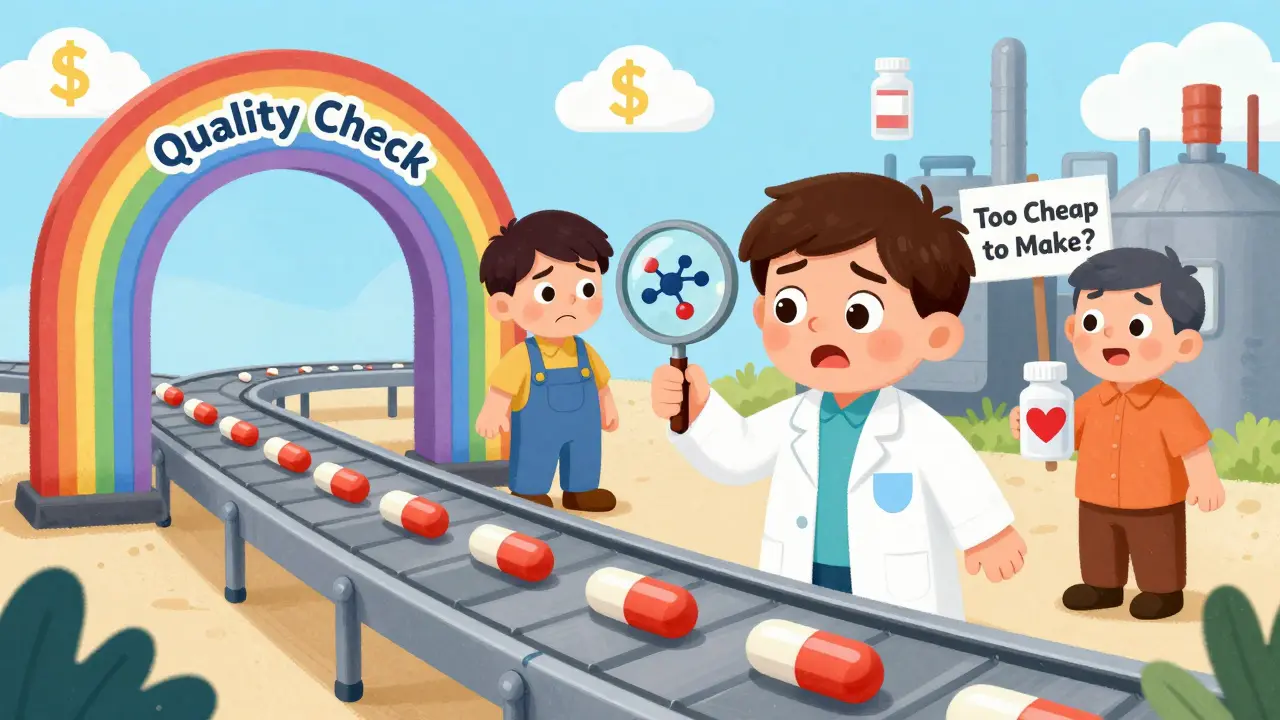
The Hidden Costs: Quality, Supply, and Innovation
Every system has a blind spot. In the U.S., Pharmacy Benefit Managers (PBMs) sometimes make generics more expensive than branded drugs through formulary tricks. Patients on Reddit reported 63% frustration with this-paying more for a generic because their insurance didn’t cover it properly.
In Europe, patients worry about quality. One survey found 44% of EU citizens believe generics are less effective, especially for heart or seizure meds. That’s not science-it’s perception. But perception drives behavior.
In China and South Korea, the pressure to cut prices so hard that manufacturers can’t profit is threatening supply chains. If a factory can’t make money, it shuts down. Or cuts corners. The FDA’s import alerts for quality issues jumped from 1,247 in 2020 to 2,183 in 2024. That’s not a coincidence.
And what about innovation? If generics are too cheap, who will invest in the next breakthrough? The DrugPatentWatch 2025 report found that aggressive price controls in China and South Korea reduced new generic launches by 22-37%. That’s not just about cost. It’s about the pipeline drying up.
The Future: What’s Next?
The next wave of patent expirations is coming. Between 2025 and 2030, drugs worth $217-236 billion in annual sales will lose exclusivity. That’s a $180-200 billion opportunity for generics-if the system can handle it.
The U.S. Inflation Reduction Act is already changing the game. Starting in 2028, Medicare will negotiate prices for 10-20 high-cost drugs each year. That could slash branded drug prices by 25-35%. That might push more patients toward generics sooner.
China’s Phase 4 VBP expansion, launching in January 2026, will add 150 more drugs to the bidding list. Prices will drop another 65% on average. Will manufacturers survive? Will shortages return? Only time will tell.
And the WHO is warning: if we keep squeezing prices without protecting quality, we risk breaking the system. The goal isn’t just cheap drugs. It’s safe, reliable, and always-available drugs.
What Works? The Common Threads
Across all these systems, three things stand out as essential:
- Clear bioequivalence standards-80-125% absorption range, verified by testing, not opinion.
- Education for doctors and pharmacists-when providers trust generics, patients trust them too. Studies show education boosts generic use by 22-35%.
- Reasonable margins-manufacturers need at least 15-20% profit to stay in business. Anything less invites shortcuts and shortages.
There’s no one-size-fits-all policy. But there are lessons. The U.S. shows what competition can do. South Korea shows what precision can do. China shows what scale can do. India shows what access can do. Europe shows what fragmentation can do.
The real question isn’t which system is best. It’s: can we build one that’s fair, reliable, and sustainable-for patients, for manufacturers, and for the future?
15 Comments
Haley Gumm
Okay but let’s be real-generics saved my life when I was uninsured. I was paying $400/month for my antidepressant until the generic hit. Suddenly? $8. Same pill. Same results. No magic, just science and policy working together. I wish more people knew this wasn’t some shady loophole-it’s literally how medicine should work.
Natanya Green
Wait-so you’re telling me the U.S. has 90% generic use… and STILL has the highest drug prices??!? That’s not a system-that’s a glitch in the matrix!!!
And don’t even get me started on PBMs. They’re the vampires of the pharmacy world-sucking out savings while pretending to help. I had a generic that cost MORE than the brand because of my insurance’s dumb formulary. I swear, someone needs to burn down a PBM office. Just saying.
Also-why does everyone act like generics are ‘lesser’? I’ve been on them for 7 years. No seizures. No side effects. Just… cheaper. And alive. 🤷♀️
Steven Pam
I love how this post breaks down global systems. It’s like comparing different video game modes-U.S. is ‘free market chaos,’ China is ‘hard mode economy,’ and South Korea is ‘precision build.’
But honestly? The real win is education. I used to think generics were ‘cheap knockoffs’ until my pharmacist sat me down and showed me the bioequivalence data. Game-changer. Now I ask for generics first. And yeah-I’ve saved over $2,000 a year. That’s a vacation. Or a new laptop. Or a damn pizza every week.
Also-props to India. They’re the unsung heroes of global health. I’ve got friends in Nigeria who owe their lives to Indian-made HIV meds. We need to stop villainizing them just because some labs cut corners. Fix the system, don’t abandon it.
Michael FItzpatrick
Let’s not romanticize any of this. The U.S. system isn’t ‘brilliant’-it’s a Rube Goldberg machine held together by duct tape and Medicare loopholes.
And China’s VBP? Brutal. But effective. If you’re a manufacturer, you either play ball and lose 90% of your margin… or you don’t play and disappear. It’s capitalism with a chainsaw. And guess what? It works. People get meds. But at what cost? When factories go dark because they can’t profit, the next shortage isn’t just inconvenient-it’s deadly.
Meanwhile, Europe? Still stuck in ‘bureaucratic tango.’ One approval. 27 price tags. Someone’s gotta fix that. And yes-education matters. But so does profit. You can’t run a global supply chain on goodwill and hope.
The real answer? A global minimum quality standard, transparent pricing, and a 20% profit floor. Not a suggestion. A rule. Because lives aren’t negotiable.
Brandice Valentino
So… like… generics? Ugh. I mean, I get it, but… have you SEEN the packaging? It’s like someone took a pill and said ‘meh’ and slapped on a sticker. And don’t even get me started on the ‘bioequivalence’ thing-sounds like a sci-fi movie where they clone drugs with a 3D printer.
Also, I think India is sus. Like, why are they always the ones supplying the world? I feel like I’m getting a pill that was made in a basement with a toaster oven. 😅
Larry Zerpa
You call the U.S. system ‘high penetration’? It’s a fraud. The FDA approves generics based on flawed bioequivalence thresholds. 80-125%? That’s a 45% variance. That’s not ‘same drug.’ That’s ‘similar enough.’
And don’t even mention the CGT exclusivity. It’s a monopoly in disguise. One company gets 180 days of zero competition? That’s not innovation-that’s corporate rent-seeking.
Meanwhile, India’s manufacturing scandals? Over 100 plants blocked? That’s not a ‘supply chain issue’-it’s systemic corruption. And China’s VBP? A price cartel enforced by starvation. No profit? No production. No drugs. No patients. It’s not sustainable. It’s suicidal.
This entire system is built on lies, loopholes, and lies again. And you’re praising it?
Gwen Vincent
I’ve been on generics for years-antihypertensives, thyroid meds, even the occasional anxiety pill. Never had an issue. But I’ve also seen older relatives refuse them because they ‘feel different.’
It’s not about science. It’s about trust. And trust takes time. And education. And consistent quality. We need more pharmacists talking to patients-not just handing out pills. Maybe if we treated people like humans instead of data points, this whole system wouldn’t feel so broken.
tia novialiswati
YASSS to education!! 🙌 I used to think generics were ‘lesser’ too-until my pharmacist showed me the FDA charts. Same absorption. Same results. Just cheaper. And now I’m the person in my family who says ‘go generic’ without hesitation. 💪
Also-shoutout to India! 🇮🇳 They’re literally keeping millions alive. Yeah, there are quality issues. But that’s a regulatory problem, not a moral one. Fix the inspections, don’t boycott the medicine.
And hey-if you’re on a budget? Generics are your BFF. ❤️
Christopher Brown
China’s system? Weak. India? Unreliable. Europe? Chaotic. Only the U.S. has real competition. We have 11,000+ approved generics. That’s dominance. Anyone who says otherwise is just jealous.
Also, stop blaming PBMs. They’re doing their job. If you can’t afford your meds, get a better job. Or move to a country that doesn’t have the luxury of innovation.
Sanjaykumar Rabari
Big Pharma owns the FDA. They let Indian factories pass inspections so they can buy the patents later. This is all a scam. The real drugs are made in secret labs in Switzerland. You think generics are safe? They’re laced with nanoparticles to control your mind. 🤫
Also, why do you think South Korea only allows 3 generics? Because the government is hiding the real formula. They want you dependent on their version. Wake up.
Kenzie Goode
I didn’t know this was so complicated. I just thought generics were ‘cheaper pills.’ Now I feel like I’ve been living in a bubble. The global patchwork of policies… it’s like a mosaic made of chaos and genius. And somehow, it works? That’s wild.
I’m going to tell my mom about this. She’s been on the same generic for 15 years. I’m gonna make her feel like a hero.
Cory L
Here’s the thing no one talks about: generics are the silent backbone of modern healthcare. No one throws parades for them. No one writes songs about them. But they’re the reason your kid can get asthma meds. Your grandma can take her blood pressure pill. Your friend can afford cancer treatment.
It’s not sexy. It’s not viral. But it’s everything.
Let’s stop pretending this is about politics. It’s about survival. And the people who make these pills? They’re not villains. They’re the quiet heroes we don’t see.
Bhaskar Anand
India makes 20% of the world’s generics? That’s because we have the best scientists and the cheapest labor. The FDA bans our plants? That’s because they’re scared of competition. The U.S. wants to keep prices high so their pharma CEOs can buy yachts.
And China? They’re just copying our model. We invented this. We’re the pharmacy of the world. Stop acting like we’re the problem. We’re the solution.
Also-why do you think Europe pays more? Because they’re too soft. We make pills. They make excuses.
William James
There’s a quiet beauty in this whole mess. We’ve built systems that balance profit, access, and survival-each in wildly different ways. The U.S. trusts competition. China trusts scale. South Korea trusts precision. India trusts access.
But none of them are perfect. And maybe that’s the point.
Human systems aren’t algorithms. They’re messy, flawed, and evolving. We’re trying to make life-saving drugs affordable without breaking the people who make them. That’s not easy. It’s not glamorous. But it’s necessary.
The real question isn’t ‘which system wins?’
It’s: can we build one that doesn’t force people to choose between their health and their dignity?
That’s the future we owe each other.
Haley Gumm
And just to clarify-I’m not saying every generic is perfect. But the system works better than the alternative. If we scrap it, we go back to $500 insulin. And I don’t want to go back.