
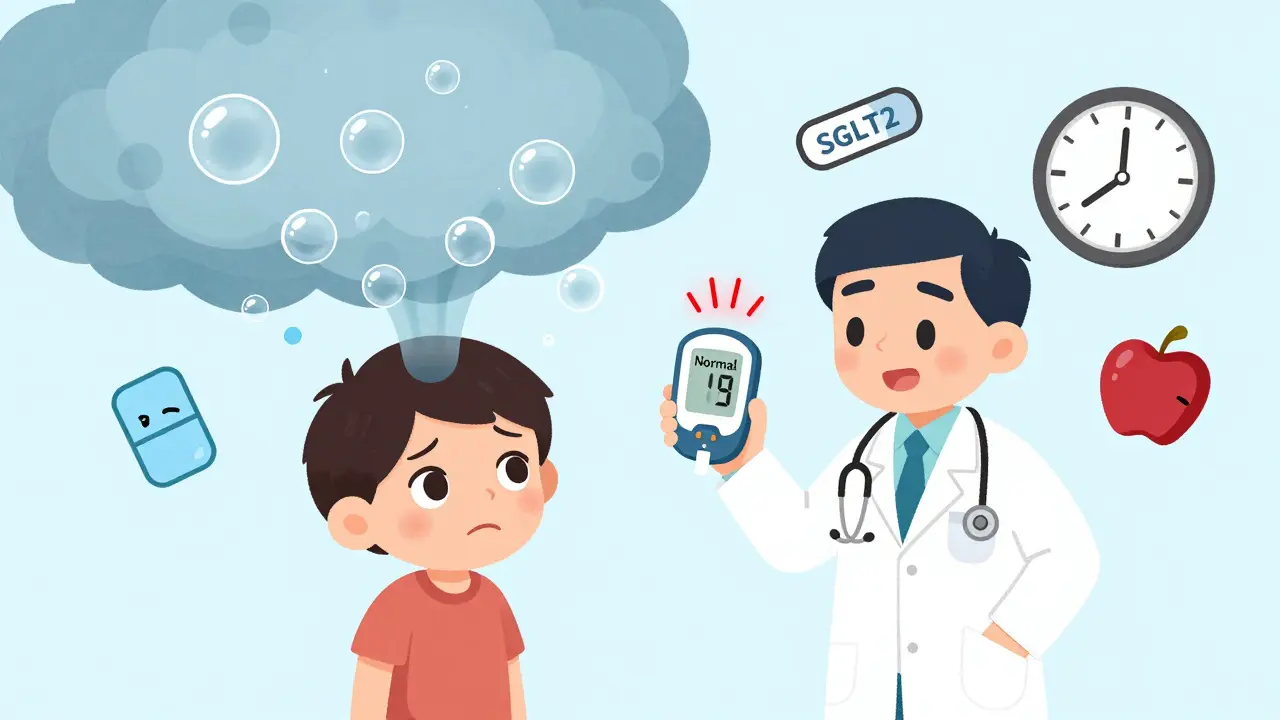
Most people think diabetic ketoacidosis (DKA) means high blood sugar. If your glucose is under 250 mg/dL, you’re probably safe - right? Wrong. A growing number of diabetic patients on SGLT2 inhibitors are developing a dangerous form of DKA called euglycemic DKA, where blood sugar stays normal or only slightly elevated, but ketones build up to life-threatening levels. This isn’t rare. It’s underdiagnosed, often missed, and sometimes fatal because doctors and patients alike assume normal glucose means no problem.
What Is Euglycemic DKA?
Euglycemic diabetic ketoacidosis (EDKA) is a metabolic emergency that looks like classic DKA - acidosis, ketones in the blood, nausea, vomiting, trouble breathing - but with blood glucose below 250 mg/dL. That’s the key difference. Traditional DKA usually hits with glucose over 300 or even 400 mg/dL. EDKA slips under the radar because it doesn’t scream "diabetes crisis." It whispers.
This condition became widely recognized after 2015, when the FDA issued a safety alert after multiple cases were reported in patients taking SGLT2 inhibitors like dapagliflozin (Farxiga), empagliflozin (Jardiance), and canagliflozin (Invokana). These drugs work by making the kidneys flush out extra sugar. Sounds good - until it backfires.
Here’s how it breaks down: SGLT2 inhibitors lower blood sugar by pushing glucose out in urine. That sounds helpful. But it also tricks the body into thinking it’s low on fuel. The pancreas responds by releasing more glucagon (a hormone that raises blood sugar) and suppressing insulin just enough to stop glucose from being used. Result? Fat breaks down rapidly into ketones. No sugar spike. No warning sign. Just rising ketones and a ticking clock.
Who’s at Risk?
EDKA doesn’t care if you have type 1 or type 2 diabetes. But certain situations make it much more likely:
- Illness - flu, infection, pneumonia
- Reduced food intake - fasting, dieting, not eating for 24+ hours
- Surgery or trauma
- Pregnancy
- Alcohol use
- Stopping insulin or reducing doses
Shockingly, about 20% of EDKA cases happen in people with type 2 diabetes who’ve never had DKA before. That’s why it’s so dangerous - no history, no awareness.
Even worse, SGLT2 inhibitors are sometimes used off-label in type 1 diabetes - even though they’re not FDA-approved for that. Around 8% of type 1 patients are on them, and in this group, DKA rates jump to 5-12%. Many of those cases are euglycemic.
Symptoms - They’re Subtle, But Deadly
EDKA doesn’t come with a flashing red light. The symptoms are vague, easy to dismiss:
- Nausea and vomiting (85% of cases)
- Abdominal pain (65%) - often mistaken for food poisoning or gallbladder issues
- Unusual tiredness or weakness (76%)
- Deep, rapid breathing (Kussmaul respirations) (62%)
- General malaise (91%)
Unlike classic DKA, the fruity-smelling breath isn’t always there. That’s because ketone levels are lower, not because the problem is less serious. In fact, the absence of this classic sign can make providers think, "This isn’t DKA." And that’s when mistakes happen.
A 2015 study in Diabetes Care tracked 13 cases across U.S. hospitals. In every single case, the patient’s glucose was below 250 mg/dL. In half of them, it was under 200 mg/dL. Each delay in diagnosis cost time - and sometimes lives.
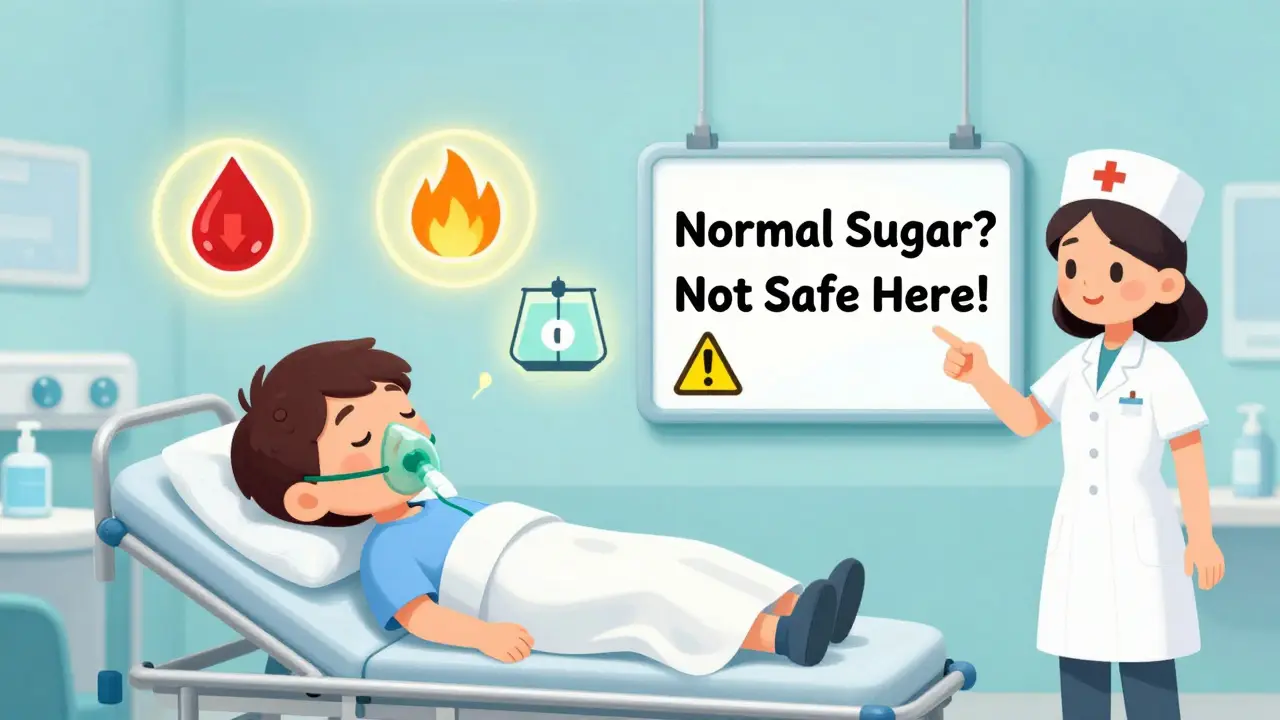
How to Diagnose It
There’s no single test. You need three things:
- Blood glucose under 250 mg/dL
- Metabolic acidosis (pH < 7.3, bicarbonate < 18 mEq/L)
- Elevated ketones - either in blood (beta-hydroxybutyrate > 3 mmol/L) or urine
Don’t rely on urine dipsticks alone. They detect acetoacetate, not beta-hydroxybutyrate - the main ketone in EDKA. Blood ketone meters are far more accurate. In emergency settings, the Cleveland Clinic now requires serum beta-hydroxybutyrate testing within 15 minutes for any diabetic on an SGLT2 inhibitor with nausea or vomiting.
Also, don’t assume high white blood cell count means infection. About 40% of EDKA patients have leukocytosis, but it’s often from dehydration, not sepsis.
Emergency Treatment - It’s Not Just Insulin and Fluids
Treating EDKA is similar to classic DKA - but with critical twists.
Step 1: Fluids - Start with 0.9% saline at 15-20 mL/kg over the first hour. Dehydration is common. But don’t overdo it. You’re not trying to lower glucose - you’re trying to restore volume and kidney function.
Step 2: Insulin - Give 0.1 units/kg/hour IV. But here’s the catch: because glucose is already low, you can’t wait to see it drop before adding sugar. In classic DKA, you hold insulin until glucose hits 250. In EDKA, you start glucose-containing fluids (like 5% dextrose) when glucose falls below 150-200 mg/dL. Otherwise, you risk severe hypoglycemia.
Step 3: Potassium - Even if serum potassium looks normal, total body potassium is usually low. About 65% of EDKA patients need potassium replacement. Check levels hourly. Don’t wait for it to drop.
Step 4: Monitor ketones - Track beta-hydroxybutyrate every 2-4 hours. Acidosis resolves as ketones fall. Don’t stop treatment just because glucose normalizes.
Many EDKA patients end up in the ICU. The key is early recognition. Waiting for glucose to rise is a deadly gamble.
Why This Keeps Happening
SGLT2 inhibitors are prescribed heavily - about 25% of new diabetes scripts in the U.S. are for these drugs. Dapagliflozin and empagliflozin alone account for 80% of that market. They’re popular because they help with weight loss, blood pressure, and heart protection.
But the risk is real. Studies show patients on SGLT2 inhibitors have a 7-fold higher risk of DKA than those on other diabetes drugs. And while overall DKA cases have dropped 32% since 2015 due to awareness, EDKA now makes up 41% of all SGLT2-related DKA cases - up from 28%. That means we’re getting better at spotting it… but it’s still slipping through.
Why? Cognitive bias. Doctors are trained to link DKA with high sugar. When glucose is normal, the brain says, "Not DKA." That’s the trap.
How to Prevent It
Prevention is simple - if you know what to do:
- Stop SGLT2 inhibitors during illness, surgery, or fasting - even if you feel fine.
- Check ketones if you’re nauseous, vomiting, or exhausted - no matter what your glucose reading is.
- Don’t skip meals. Even if you’re trying to lose weight, your body needs fuel during stress.
- If you have type 1 diabetes, avoid SGLT2 inhibitors unless closely supervised by an endocrinologist.
- Patients should carry a card or app alert that says: "I take an SGLT2 inhibitor. If I feel sick, test my ketones."
The FDA now requires all SGLT2 inhibitor packaging to include this warning: "Stop taking this medication and seek immediate medical attention if you have symptoms of ketoacidosis, even if your blood sugar is normal."
What’s Next?
Researchers are looking for early warning signs. A 2023 study found that a high ratio of acetoacetate to beta-hydroxybutyrate in the blood, measured 24 hours before symptoms appear, predicts EDKA with 87% accuracy. That could lead to home monitoring tools.
Meanwhile, a national study (NCT04987231) is testing whether combining HbA1c variability with C-peptide levels can identify high-risk patients. Early results show 82% accuracy.
One thing’s clear: SGLT2 inhibitors aren’t going away. They’re too useful. But we need to change how we think about DKA. It’s not about sugar. It’s about ketones. And if you’re on one of these drugs, your body can go into ketoacidosis - even when your glucose looks perfect.
Can you get euglycemic DKA if you have type 2 diabetes?
Yes. While SGLT2 inhibitors are approved for type 2 diabetes, about 20% of euglycemic DKA cases occur in patients with no prior history of DKA. These patients often have normal or only mildly elevated blood sugar, which delays diagnosis. The risk increases during illness, fasting, or surgery.
Should I stop my SGLT2 inhibitor if I’m sick?
Yes. If you’re sick, having surgery, fasting, or drinking alcohol, stop your SGLT2 inhibitor immediately. Contact your doctor. Do not wait for symptoms. These drugs increase ketone production when your body is under stress. Continuing them during illness can trigger euglycemic DKA.
Do I need to check ketones if my blood sugar is normal?
Absolutely. If you’re on an SGLT2 inhibitor and you feel nauseous, fatigued, or have abdominal pain - even with normal glucose - test for ketones. Blood ketone meters are best. A level above 3 mmol/L means you need emergency care. Normal sugar does not rule out ketoacidosis.
Is euglycemic DKA more dangerous than classic DKA?
It’s not necessarily more dangerous, but it’s more likely to be missed. Classic DKA is obvious - high sugar, fruity breath, confusion. Euglycemic DKA sneaks in. By the time it’s diagnosed, patients are often severely dehydrated and acidotic. Delayed treatment increases the risk of coma, organ failure, or death.
Why do SGLT2 inhibitors cause ketosis even with normal glucose?
SGLT2 inhibitors force glucose out through urine, lowering blood sugar. But this tricks the body into thinking it’s starving. Glucagon rises, insulin drops, and fat breaks down into ketones. Even though glucose is normal, your body is burning fat for fuel. That’s ketoacidosis - without the high sugar.


13 Comments
Lebogang kekana
This is wild. I’ve been on Farxiga for two years and never thought twice about it until my cousin ended up in the ICU. No high sugar, just puking and gasping for air. Docs wrote it off as food poisoning. Turned out her ketones were through the roof. If this post saves even one person, it’s worth it. Stop assuming normal glucose = safe. Your body doesn’t care what the meter says when it’s burning fat for fuel.
Justin Rodriguez
As an ER nurse, I’ve seen this too many times. The biggest red flag? Patients come in saying, 'I feel awful but my glucose is fine.' That’s the trap. We now run beta-hydroxybutyrate on every SGLT2 user with nausea, vomiting, or fatigue - regardless of glucose. It’s saved lives. Also, urine ketones? Useless here. Blood meter or bust. And yes, type 2 diabetics are getting hit hard. No history? Doesn’t matter. This isn’t your grandpa’s DKA.
Raman Kapri
Let me be clear: this is not a crisis. It is a consequence of poor patient education and overprescribing. SGLT2 inhibitors were never meant to be first-line for type 2 diabetes. They are expensive, carry significant risk, and are pushed by pharmaceutical marketing. The real issue is not euglycemic DKA - it’s the medical industry’s obsession with trendy drugs over proven lifestyle interventions. If you’re on one of these, you’re already playing Russian roulette with your metabolism.
Megan Nayak
Oh wow, another 'medical breakthrough' that’s just a fancy way to kill people slowly. So now we’re supposed to panic every time we feel a little tired? I mean, if your body’s 'tricked' into burning fat because you took a pill to pee out sugar, maybe the real problem is that you’re taking a pill to pee out sugar. Why not just... stop eating carbs? Or move? Or sleep? But no, let’s add another drug to fix the side effect of the first drug. Brilliant. I’m sure the FDA’s budget is thrilled.
Tildi Fletes
While the clinical presentation of euglycemic DKA is well-documented, the broader implications for outpatient management remain under-addressed. Primary care providers lack standardized protocols for patient education, particularly regarding ketone monitoring during intercurrent illness. Furthermore, the reliance on patient self-reporting of symptoms is inherently flawed. A structured, algorithmic approach - including mandatory ketone testing education at prescription fill - is urgently required. The current paradigm is reactive, not preventive.
Siri Elena
Wow, so now we’re supposed to panic every time we feel a little off? Maybe if you didn’t take a drug designed to make you pee out your glucose, you wouldn’t have to test for ketones like you’re in a sci-fi movie. I mean, congrats - you’ve turned diabetes into a full-time job. Next up: 'euglycemic DKA awareness month' with branded sweatbands. Sigh. I’m just here for the drama.
Pankaj Gupta
The pathophysiology described is accurate. SGLT2 inhibitors induce a state of relative insulinopenia and increased glucagon secretion, leading to lipolysis and ketogenesis, independent of hyperglycemia. This is not a flaw in the drug per se, but rather a consequence of its mechanism. The critical gap lies in clinical awareness. Physicians must be trained to recognize metabolic acidosis without hyperglycemia as a potential presentation of DKA. Education must be embedded in prescribing workflows, not left to patient recall.
Betsy Silverman
I’m a type 2 diabetic on Jardiance. I never knew this was a thing until my mom had a scare last year. We started checking ketones whenever she felt off - even if her sugar was 110. It’s become routine. I actually carry a little blood ketone meter in my purse now. It’s not scary. It’s just smart. If you’re on one of these drugs, get a meter. It’s like checking your blood pressure. You don’t wait until you’re dizzy to do it.
Ivan Viktor
So let me get this straight. You take a pill to make your body pee out sugar… and now you have to test for ketones every time you sneeze? Cool. I’ll stick with metformin. At least that one doesn’t make me feel like I’m about to die if I skip a meal. Also, why is this even a thing? Did someone just say, 'Hey, what if we made diabetes harder to manage?'
Zacharia Reda
Okay, real talk - I’m a type 1 on SGLT2 and I thought this was just a myth. Then I got sick last winter, didn’t stop the drug, and woke up at 3 a.m. with my breathing sounding like a chainsaw. My glucose was 180. Ketones? 4.8. I called 911. They didn’t believe me until the blood test came back. Don’t be me. Stop the drug when you’re sick. Period. And if you’re type 1? Don’t even think about it unless your endo’s on it 100%.
Jeff Card
I’ve been on Farxiga for three years. Never had a problem. Then I got the flu last month. Felt awful. Glucose was 190. Didn’t think twice. Next day, I couldn’t stand up. My wife dragged me to the ER. They said I was in ketoacidosis. My ketones were 5.1. I didn’t even know what that word meant. Now I test every time I feel off. I carry a meter. I tell everyone I know. This isn’t hype. It’s survival.
Matt Alexander
Look, if you’re on one of these drugs and you feel sick, stop it. Test your ketones. Don’t wait. Don’t overthink. Just do it. Glucose doesn’t tell the whole story. Ketones do. Keep a meter handy. It’s cheap. It’s easy. It could save your life. That’s it. No fluff. Just do it.
Gretchen Rivas
My mom had EDKA. She’s type 2. Never had DKA. Thought she had the flu. Glucose was 170. They missed it for 18 hours. She almost didn’t make it. Now I carry ketone strips in my wallet. Everyone I know who’s on SGLT2 inhibitors has one too. It’s not paranoia. It’s precaution. And yes - stop the drug when you’re sick. Even if you feel fine. Just stop.