
Goldenseal Interaction Checker
Enter your medication name to check for potential goldenseal interactions. Goldenseal inhibits liver enzymes that process many medications, potentially causing dangerous side effects.
Most people take goldenseal because they believe it boosts immunity or clears up a cold. But if you're on any prescription medication, this common herbal supplement could be silently changing how your body processes your drugs-sometimes with dangerous results.
Goldenseal isn't just another herb on the shelf. Its active ingredients, especially berberine and a compound found in goldenseal root that strongly inhibits liver enzymes responsible for breaking down medications, interfere with how your body handles at least half of all prescription drugs. The problem isn't that goldenseal is toxic-it's that it's unpredictable. One pill might have 0.5% berberine; another might have 8%. That kind of variation makes it impossible to know how much your body will absorb or how it will react with your meds.
How Goldenseal Disrupts Your Liver's Drug Processing
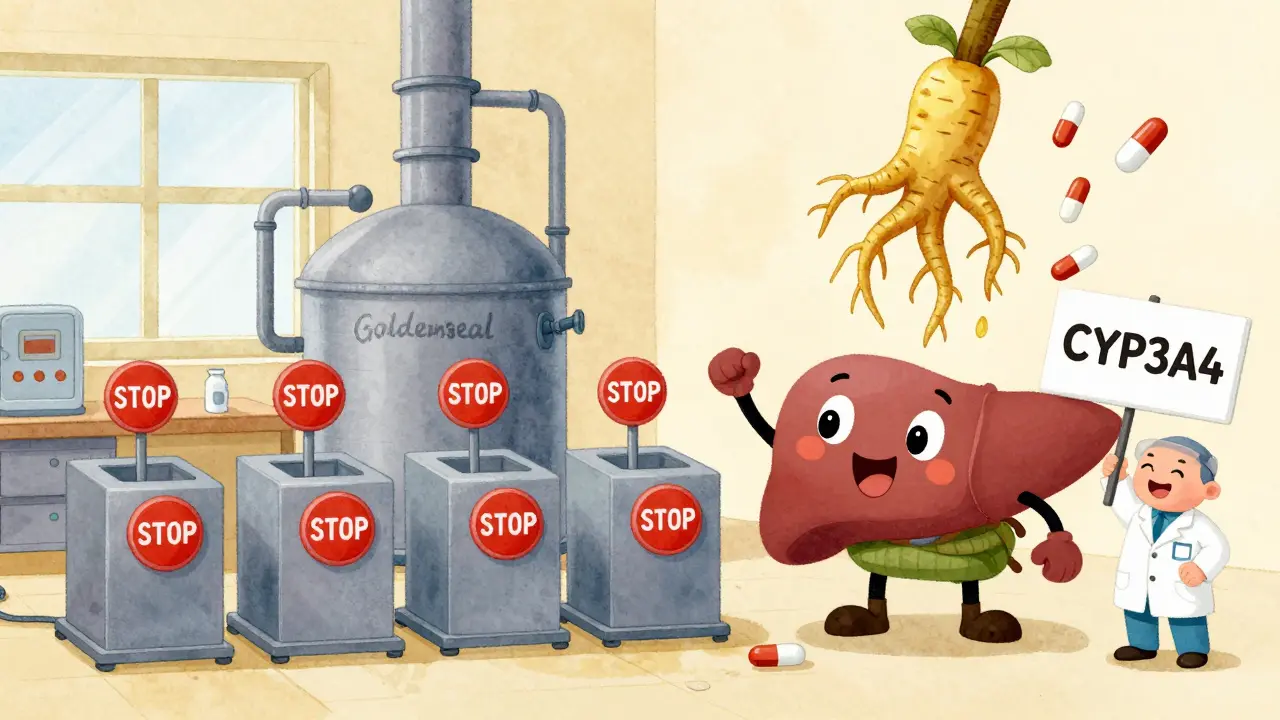
Your liver uses a family of enzymes called cytochrome P450 (CYP) to break down most medications. Think of them as workers in a factory that disassembles drugs so your body can get rid of them safely. Goldenseal doesn't just slow down one worker-it shuts down five of them at once.
The most important enzyme it blocks is CYP3A4 the enzyme that handles about half of all prescription drugs, including statins, blood pressure meds, and anti-anxiety drugs. It also strongly inhibits CYP2D6 which processes 25% of all prescriptions, like antidepressants and beta-blockers, and CYP2C9 used for blood thinners like warfarin. Even CYP1A2 involved in metabolizing caffeine and some antipsychotics and CYP2E1 which breaks down acetaminophen (Tylenol) are affected.
This isn't theoretical. A 2011 NIH study showed goldenseal extract reduced CYP2E1 activity by nearly 80% in animal models. In humans, studies confirm that taking goldenseal can raise blood levels of medications by 40% to 60%. That means if you're on a drug like metoprolol for high blood pressure, your body might be getting almost twice as much as it should. The result? Dizziness, fainting, or even a dangerous drop in blood pressure.
Real-World Risks: When Goldenseal Goes Wrong
People don't always realize they're in danger until something bad happens. On Reddit, a user named "HypertensionWarrior" reported passing out after taking goldenseal with lisinopril. Their blood pressure plummeted to 85/50-enough to land them in the ER. That case isn't rare.
One 2022 case in Pharmacy Times described a 68-year-old diabetic whose blood sugar spiked after taking goldenseal. Why? The supplement reduced metformin absorption by 25%, making his diabetes harder to control. His HbA1c jumped from 6.8% to 8.2% in just four weeks. Another patient on warfarin saw their INR (a measure of blood thinning) rise by 1.5 to 2.0 points after using goldenseal-putting them at risk of internal bleeding.
Even common OTC drugs can be affected. If you take Tylenol (acetaminophen) for a headache and also use goldenseal, your liver may not break down the painkiller properly. That raises the risk of liver damage, especially if you take more than recommended. The FDA added a specific warning about CYP2E1 inhibition in its 2023 update to the goldenseal monograph.
What Medications Are Most at Risk?
You don't need to guess whether your meds are affected. Here's a short list of common drugs that interact with goldenseal:
- Statins (atorvastatin, simvastatin) - higher risk of muscle damage
- Blood pressure drugs (lisinopril, metoprolol, amlodipine) - risk of dangerously low BP
- Antidepressants (fluoxetine, sertraline, venlafaxine) - increased side effects like nausea, dizziness
- Blood thinners (warfarin) - increased bleeding risk
- Diabetes drugs (metformin) - reduced effectiveness, leading to high blood sugar
- Immunosuppressants (cyclosporine, tacrolimus) - higher drug levels, risk of kidney damage
- Benzodiazepines (midazolam, triazolam) - prolonged sedation, risk of overdose
- Antifungals (ketoconazole) - increased toxicity
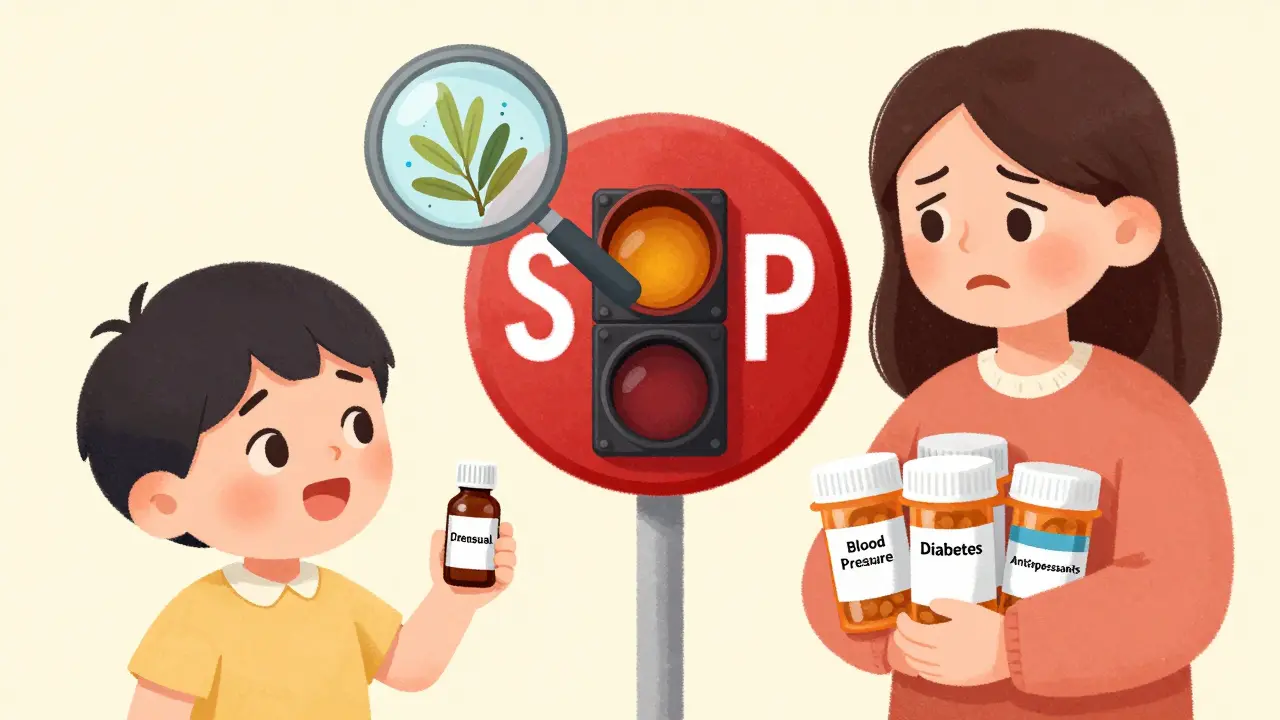
That’s not all. The American Society of Health-System Pharmacists tracks 147 specific medications with documented or possible interactions with goldenseal. If you're on any chronic medication, assume it's on the list unless proven otherwise.
Why Goldenseal Is Worse Than Other Herbs
Many herbs interact with drugs, but goldenseal stands out. St. John’s Wort, for example, mostly induces enzymes-making drugs less effective. Grapefruit juice only affects CYP3A4. Goldenseal? It hits multiple enzymes at once.
A 2020 review in Drug Metabolism Reviews ranked goldenseal as the third most dangerous herb for drug interactions, behind only St. John’s Wort and grapefruit juice. But unlike grapefruit juice, which you can avoid by skipping one glass of OJ, goldenseal is often taken daily for weeks. And unlike St. John’s Wort, which has a clearer warning label, goldenseal is sold as a "natural immune booster" with no clear interaction warnings on most bottles.
Even more troubling: a 2022 USP verification study found only 38% of goldenseal supplements contained berberine levels within 20% of what was listed on the label. That means you can't even trust the dose. One bottle might be safe; the next could be a hidden overdose.
What Should You Do?
If you're taking any prescription medication, the safest choice is to avoid goldenseal entirely. There's no proven benefit that outweighs the risk. Even if you're only using it for a few days to "fight a cold," the effects on your liver enzymes can last up to two weeks after you stop taking it.
Here’s what to do:
- Check every medication you take. Use the free CYP interaction checker from the American Society of Health-System Pharmacists-it’s updated quarterly and lists all 147 known interactions.
- Don’t assume "natural" means safe. Herbal supplements are not regulated like drugs. What’s on the label isn’t always what’s inside.
- If you’ve already taken goldenseal, wait at least two weeks before starting or adjusting any medication. Your liver needs time to clear it.
- Talk to your pharmacist. They see drug interactions daily. Ask them to review your full list of supplements and meds.
The American Academy of Family Physicians explicitly advises doctors to recommend against goldenseal use in patients taking any other medications. That’s not a suggestion-it’s a warning.
What About Short-Term Use?
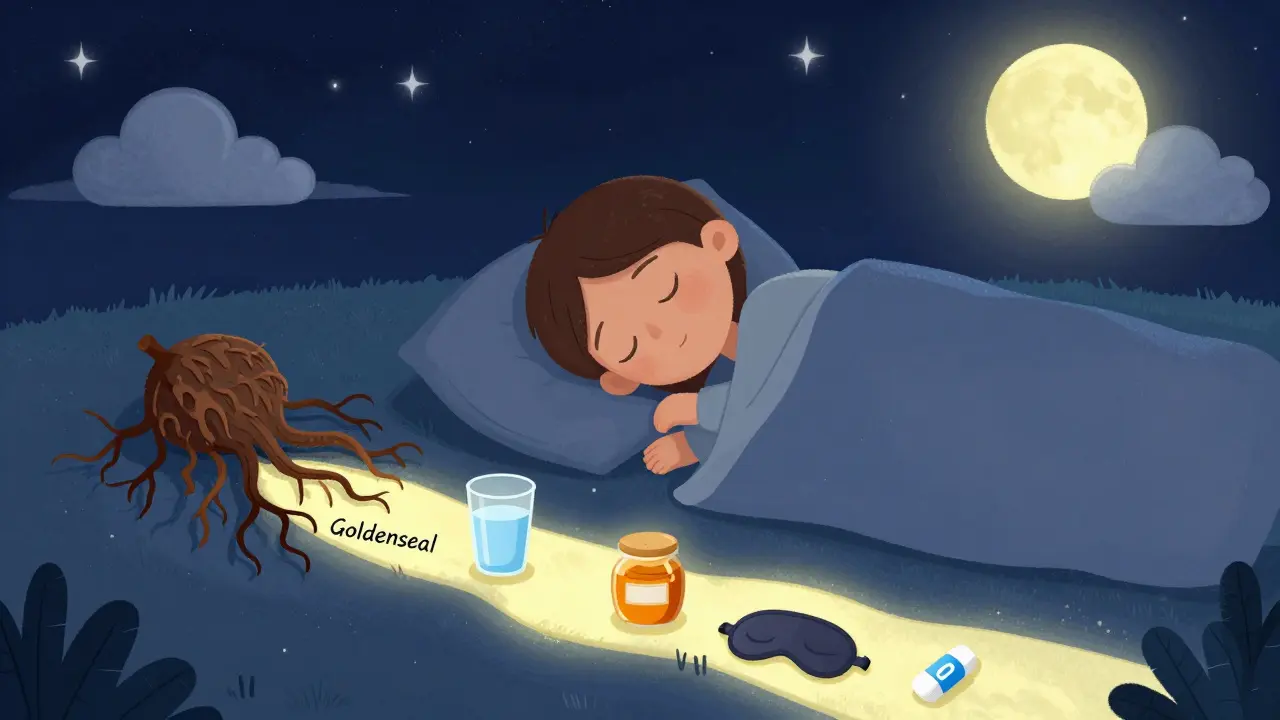
Some users swear by goldenseal for a three-day cold. And yes, 62% of positive Amazon reviews mention using it only "when not on any prescription meds." That’s the key. If you’re not taking anything else, short-term use is less risky. But if you're on even one medication-especially for blood pressure, diabetes, or mental health-there’s no safe window.
There’s also no evidence goldenseal works better than saltwater gargles, rest, or hydration for a cold. The idea that it "boosts immunity" is based on lab studies, not real human outcomes. The FDA has never approved it for any medical use.
What’s Coming Next?
The NIH is running a $2.3 million clinical trial (NCT05578231) that started in September 2023. It’s testing goldenseal’s interaction with 10 common medications in 120 volunteers. Results won’t be out until late 2025. Until then, we’re working with what we already know: the risks are real, the data is clear, and the consequences can be serious.
Meanwhile, the European Medicines Agency has banned goldenseal from medicinal products entirely. In the U.S., it’s still sold-but the number of adverse event reports to the FDA has climbed 37% since 2018. More people are getting hurt. More doctors are warning against it.
If you’re thinking of trying goldenseal, ask yourself: Is a slightly shorter cold worth the risk of a stroke, liver damage, or a trip to the ER? The answer, for most people on medication, is no.
Can I take goldenseal if I’m not on any medication?
If you’re not taking any prescription or over-the-counter drugs, short-term use (3-5 days) for an acute cold or sinus infection is unlikely to cause harm. But even then, there’s no strong evidence it works better than rest, fluids, or saltwater rinses. The lack of standardization in supplements means you still can’t be sure what you’re getting. Long-term use isn’t recommended for anyone.
How long does goldenseal stay in my system?
Goldenseal’s effects on liver enzymes can last 7 to 14 days after you stop taking it. That’s why experts recommend a two-week washout period before starting any new medication. Even if you feel fine, your body is still processing the compounds that inhibit drug metabolism.
Is there a safer alternative to goldenseal for immune support?
Yes. Zinc lozenges, vitamin C, and adequate sleep are backed by solid evidence for shortening colds. Echinacea has some support, though it also has mild interaction risks. Honey for coughs, saline nasal sprays, and steam inhalation are safe, effective, and don’t interfere with medications. Avoid supplements with unproven claims-stick to lifestyle basics.
Why don’t supplement labels warn about drug interactions?
Under U.S. law (DSHEA), dietary supplements aren’t required to prove safety or efficacy before sale. Manufacturers don’t have to list interactions unless the FDA forces them to. That’s why most goldenseal bottles say nothing about blood pressure meds or diabetes drugs. The burden is on you to research risks-no label will tell you.
Should I stop taking goldenseal if I start a new medication?
Yes. If you’re on any medication metabolized by CYP3A4, CYP2D6, CYP2C9, CYP1A2, or CYP2E1, stop goldenseal immediately. The interaction can happen within hours. Don’t wait for symptoms. Talk to your pharmacist or doctor before restarting any supplement after starting a new drug.


15 Comments
Donna Zurick
I took goldenseal for a cold last winter and felt fine, but then I started a new blood pressure med and almost passed out. Never again. Just say no to "natural" fixes when you're on meds.
Milad Jawabra
This is why I tell every client I work with: if you're on meds, don't touch goldenseal. I've seen too many ER visits from people who thought "it's just an herb." It's not. It's a silent killer with a cute label. 🚨
Tobias Mösl
The FDA doesn't regulate supplements because Big Pharma owns them. This is a controlled distraction. They want you to think herbs are dangerous so you keep buying pills. But the real danger? The fact that your doctor never warned you. This isn't science-it's corporate propaganda.
tatiana verdesoto
I used to take goldenseal every fall. Then I had a panic attack after mixing it with my antidepressant. Took me months to figure out why. Now I just drink tea and sleep. Life’s simpler that way. 🤍
Darren Torpey
Goldenseal is like that one friend who shows up uninvited, drinks all your beer, and then blames you for being a bad host. It doesn’t even work well-but it wrecks your whole system. Ditch it. Your liver will throw you a parade.
Jessica Chaloux
I cried reading this. My mom died after a "natural remedy" messed with her heart meds. I wish someone had told us. Please, if you're reading this-don’t wait until it’s too late. 💔
Divya Mallick
In India, we’ve used turmeric, ashwagandha, and neem for millennia. Why are Westerners so obsessed with this overhyped North American weed? It’s not even traditional medicine-it’s a capitalist scam wrapped in a "wellness" bow. 🇮🇳
Pankaj Gupta
The pharmacokinetic data is unequivocal: berberine is a potent inhibitor of CYP3A4, CYP2D6, and CYP2C9 with a half-life of approximately 72 hours. The clinical implications are significant, particularly for narrow-therapeutic-index drugs. Evidence-based practice mandates avoidance.
Alex Brad
Don't take it. Period.
Renee Jackson
As a licensed pharmacist with over 18 years of clinical experience, I must emphasize that the risk-benefit ratio of goldenseal in medicated populations is overwhelmingly negative. I routinely counsel patients to discontinue its use immediately upon initiation of any CYP-metabolized pharmaceutical agent.
Richard Elric5111
The metaphysical paradox here lies not in the herb itself, but in humanity’s eternal desire to transcend biological limits through ingestion. We seek control over nature, yet we are utterly dependent on its systems. Goldenseal, in its silent disruption of hepatic equilibrium, becomes a mirror to our hubris.
Dean Jones
Let’s be real: we live in a world where a 12-year-old can buy a bottle labeled "immune booster" with no ingredients listed beyond "herbal blend," while a prescription for a $200 drug requires 17 pages of fine print. The FDA doesn't protect you. Your pharmacist might. But most people don't even know they have one. This isn't about goldenseal-it's about how broken the entire supplement-industrial complex is. I've seen patients with INRs of 8.0 because they took "one capsule" for a sore throat. One. Capsule. And now they're in the ICU. The system is rigged. The labels are lies. And the people who profit? They're already on their third vacation home.
Betsy Silverman
I’m from a family of herbalists, but even I stopped using goldenseal after my cousin ended up in the hospital. We used to think "natural = safe," but that’s just marketing. Now I use ginger tea and steam inhalation. Simple. Safe. Effective. And no one has to go to the ER.
Ivan Viktor
So you’re telling me I can’t use this stuff to "boost" my immunity… but I can still buy 37 different protein powders with 14 unpronounceable ingredients? Yeah, I’ll stick with my cold brew and sarcasm, thanks.
Jeff Card
I took goldenseal for 5 days while on metformin. Didn’t think twice. My HbA1c jumped 0.9% in a month. My endocrinologist said it was likely the supplement. I’ve been off it for 6 months. My numbers are back to normal. Don’t be like me.