
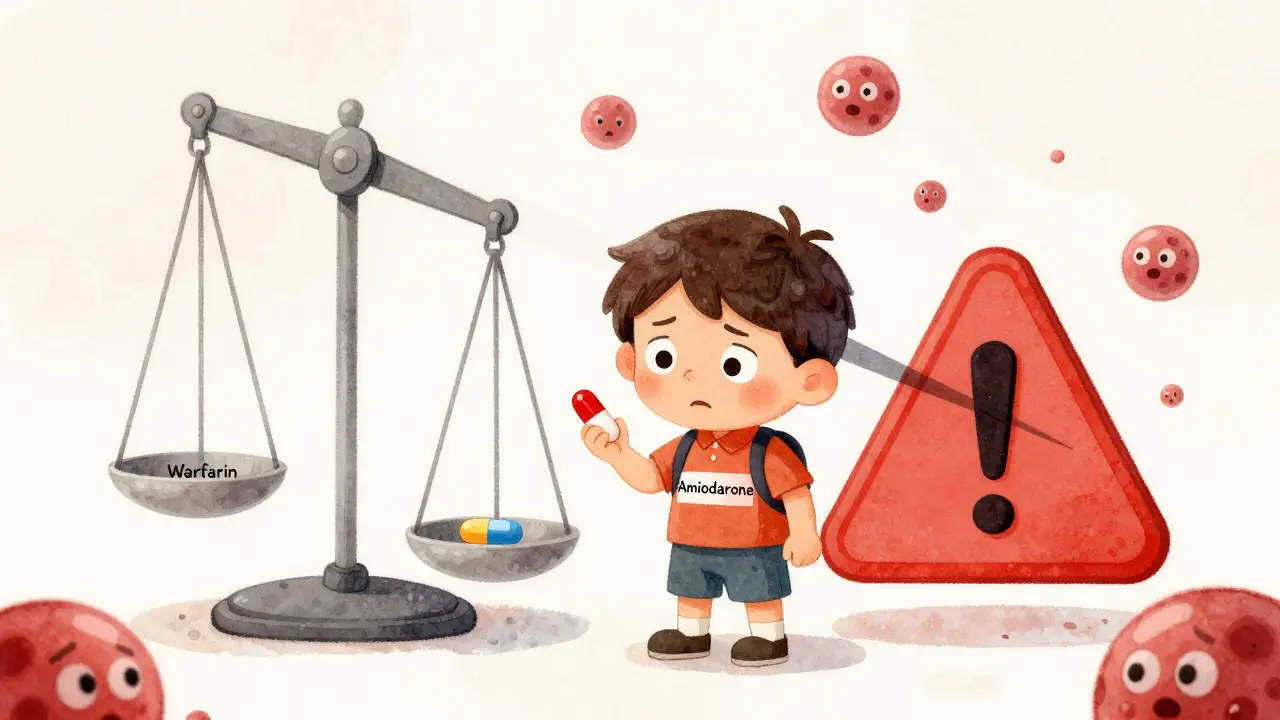
When you’re on a medication that can kill you if the dose is off by just a little, switching to a generic version isn’t just a cost-saving move-it’s a gamble. This is the reality for patients taking NTI drugs-narrow therapeutic index medications-especially when they’re part of a combination regimen. These drugs have almost no room for error. Too little, and the treatment fails. Too much, and you risk organ damage, bleeding, seizures, or death. Now imagine combining two of them in one pill. That’s where the system breaks down.
What Makes an NTI Drug So Dangerous?
| Characteristic | What It Means |
|---|---|
| Therapeutic Window | Less than a 2:1 ratio between effective and toxic blood levels |
| Examples | Warfarin, levothyroxine, lithium, digoxin, phenytoin, carbamazepine |
| Monitoring Required | Regular blood tests (INR, serum levels) every few weeks |
| Dose Adjustments | Often need tiny changes-0.25 mg, 5 mg, even 10 mcg |
| Within-Subject Variability | Low-your body reacts the same way each time, so small changes matter |
NTI drugs aren’t rare. They’re used to treat life-threatening conditions: blood clots, thyroid failure, epilepsy, heart rhythm disorders, and bipolar disorder. But they’re not like antibiotics or blood pressure pills. You can’t just swap one brand for another and expect the same result. The FDA says these drugs require special handling because even minor differences in how the body absorbs them can lead to disaster.
Why Combination NTI Drugs Are a Nightmare for Generics
Combination therapy makes sense on paper. Two drugs working together can be more effective, prevent resistance, or reduce pill burden. In tuberculosis, combining isoniazid with rifampin saves lives. In cancer, mixing methotrexate with other agents improves survival. But when both drugs are NTI, the math gets terrifying.
Let’s say Drug A has a 10% variation in absorption. Drug B also has a 10% variation. Together? That’s not 20%. It’s potentially a 21% swing in total drug exposure-enough to push a patient from safe to toxic. The FDA’s bioequivalence rules for regular generics allow 80-125% variation in how much drug gets into the bloodstream. For single NTI drugs, that tightens to 90-111% for peak levels and 90-112% for total exposure. But for a combination of two NTI drugs? There’s no approved standard yet. The FDA’s 2023 draft guidance proposes an even tighter window: 90-107.69% for peak levels. That’s a 7.7% range. Not 11%. Not 15%. 7.7%.
And here’s the kicker: no fixed-dose combination of two NTI drugs is approved as a generic in the U.S. Not one. While you can buy generic warfarin, generic levothyroxine, or generic lithium, there’s no pill that combines warfarin and amiodarone-both NTI-or lithium and valproate. The only options are separate pills, taken at different times, with strict monitoring. That’s expensive. That’s inconvenient. And that’s why many patients end up on the wrong dose.
The Real-World Cost of Generic Substitution
Patients don’t always know they’re being switched. Pharmacists in many states can substitute generics automatically unless the doctor writes "dispense as written." That’s fine for antibiotics. It’s dangerous for NTI combinations.
A 2020 JAMA Internal Medicine study found that patients on combination therapy with one NTI drug had a 27% higher risk of adverse events after switching to generic-compared to just 8% for non-NTI drugs. One patient in a Reddit thread described going from an INR of 2.5 to 6.8 in three days after a pharmacy switch. That’s a fivefold increase in bleeding risk. He ended up in the ER. Another patient on a lithium and carbamazepine combo had seizures after her generic lithium was changed.
Pharmacists are noticing it too. A 2023 ASHP survey of 856 pharmacists found 78.3% had seen treatment failure after generic substitution in NTI combinations. Over 40% reported serious adverse events-hospitalizations, ICU stays, even deaths.
Meanwhile, the cost of managing these cases is staggering. Patients on combination NTI therapy need blood tests every 2-4 weeks. Each test costs $100-$200. Add in doctor visits, dose adjustments, and potential ER trips, and the annual cost jumps to $1,200-$2,500 per patient. Compare that to $400-$800 for non-NTI combinations. The system isn’t saving money-it’s just shifting the cost from drug makers to patients and hospitals.

Who’s Saying No to Generic NTI Combinations?
The American Society of Health-System Pharmacists (ASHP) doesn’t mince words. Their 2021 position statement says automatic substitution of generic NTI drugs in combination regimens poses an "unacceptable risk." They recommend that prescribers explicitly block substitution on all NTI combination prescriptions.
Drug manufacturers like Teva and Sandoz argue that modern production can meet the tight standards. They point to Europe, where generic levothyroxine combinations have been used since 2015 with less than 2% adverse event rates. But here’s the catch: those combinations often involve one NTI and one non-NTI drug. The real challenge is two NTI drugs in one pill.
Even the FDA admits the science is behind the need. Dr. Janet Woodcock, former head of FDA’s drug center, said in 2022 that "combination products containing NTI drugs present even greater scientific challenges." Dr. Donald Berry, a biostatistician at MD Anderson, put it bluntly in Nature Reviews Drug Discovery: "The 90-111% window still allows 22% total variation. Combine two of those, and you’re in uncharted territory."
What’s Being Done-and What’s Not
The FDA is trying. Their 2023 draft guidance proposes tighter bioequivalence standards for combination NTI drugs. They’re also planning a 2024 pilot program using pharmacometric modeling to predict how combinations behave in real patients, rather than just measuring blood levels in 24 healthy volunteers.
But progress is slow. It takes an average of 4.7 years to get a combination NTI generic approved-more than double the time for non-NTI drugs. And even when approved, hospitals and insurers are reluctant to cover them. Enterprise health systems are 3.2 times more likely to block automatic substitution than community pharmacies.
Only 12 of 50 major U.S. academic medical centers have specialized clinics for NTI combination therapy. Most pharmacists haven’t had the 120+ hours of training needed to manage these regimens properly. Documentation for combination NTI products is worse than for single drugs-average clarity scores are 2.8 out of 5, compared to 4.2.

The Gap Is Growing
The global NTI drug market is worth nearly $50 billion and growing. But combination NTI products? They make up less than 0.3% of that market. That’s not because they’re not needed. It’s because we don’t know how to make them safely.
Patients with complex conditions-like those needing both anticoagulation and anti-seizure meds, or thyroid replacement and mood stabilizers-are stuck. They can’t get the convenience of a single pill. They can’t afford the cost of multiple branded drugs. And they’re forced to rely on a system that’s not built to handle their needs.
The truth is, we’ve solved the problem for most drugs. We’ve made generics safe, affordable, and widely available. But for NTI combinations, we’re still in the 1980s. We need better science, better standards, and better protection for patients. Until then, the gap won’t close. It’ll just keep widening.
Are there any generic combination NTI drugs available in the U.S.?
No. As of 2025, there are no FDA-approved fixed-dose combination products containing two or more narrow therapeutic index (NTI) drugs on the U.S. market. While single-agent NTI generics (like generic warfarin or levothyroxine) are widely available, combining two NTI drugs into one pill has not been successfully approved due to unmet bioequivalence standards.
Why can’t generic manufacturers just make combination NTI drugs?
The main barrier is bioequivalence. For a single NTI drug, generics must stay within 90-111% of the brand’s absorption levels. When two NTI drugs are combined, even tiny differences in each component multiply. A 10% variation in each drug could lead to a 20-22% total variation-enough to cause toxicity or treatment failure. Current testing methods can’t reliably prove safety at that level.
Can pharmacists switch my NTI combination to generics without telling me?
In many states, yes-if the prescription doesn’t say "dispense as written" or "no substitution." But for NTI combinations, this is risky. Many pharmacists avoid substitution out of caution, and major health systems often block it. Always check with your prescriber and pharmacist about whether your medications are being switched.
What should I do if I’m on a combination NTI therapy?
Ask your doctor to write "dispense as written" on your prescription. Keep a list of all your medications, including doses and brands. Never accept a switch without discussing it. If you notice new symptoms-fatigue, dizziness, unusual bruising, tremors-get your blood levels checked immediately. Regular monitoring is non-negotiable.
Is there hope for future generic combination NTI drugs?
Possibly. The FDA is testing new methods, like pharmacometric modeling, to predict how combinations behave in real patients-not just in healthy volunteers. If these methods prove reliable, they could lead to approval of combination NTI generics within the next 5-7 years. But until then, the safest option remains brand-name or carefully managed separate generics.
Next Steps for Patients and Providers
If you’re a patient: Don’t assume your pharmacy’s switch is safe. Ask if your meds are NTI. Demand clarity. Keep a medication journal. Track your symptoms and lab results.
If you’re a provider: Prescribe by brand name for NTI combinations. Use electronic prescriptions with substitution blocks. Educate your patients on the risks. Push for access to NTI therapy clinics if your hospital doesn’t have one.
If you’re a policymaker or pharmacist: Support training programs for NTI management. Advocate for tighter substitution rules. Don’t let cost savings override patient safety. The data is clear: when it comes to combination NTI drugs, the risks aren’t theoretical-they’re documented, measured, and deadly.


8 Comments
roger dalomba
So we’re telling patients to take three pills at different times, get blood drawn every three weeks, and pray the pharmacist doesn’t swap their lithium? Brilliant. Next they’ll make us sign a waiver before breathing.
Brittany Fuhs
It's unforgivable that American regulators allow this. In Germany, they have strict bioequivalence protocols for even single NTI drugs-let alone combinations. We’re letting corporate greed override clinical safety. This isn't innovation-it's negligence.
Sophia Daniels
Let me get this straight-pharmacists can swap your life-or-death meds like they’re trading baseball cards? 😭 I’ve seen people on warfarin + amiodarone go from ‘fine’ to ‘coding’ in 72 hours. This isn’t a policy gap. It’s a bloodbath with a spreadsheet. And the FDA’s ‘draft guidance’? That’s not a solution-it’s a napkin doodle with a stamp.
Meanwhile, Teva’s stock is up 12% because they’re selling single generics like candy. Meanwhile, Grandma’s INR is 8.2 and her husband’s filing for life insurance.
Nikki Brown
I’ve worked in pharmacy for 18 years. I’ve seen patients bleed out because someone swapped their generic levothyroxine. I’ve watched families cry because their mom had a seizure after a ‘cost-saving’ switch. This isn’t about money. It’s about morality. And if you’re okay with this, you’re not just complicit-you’re dangerous.
❤️🩹
Peter sullen
It is imperative, from a pharmacoeconomic and clinical governance standpoint, that regulatory frameworks be recalibrated to account for the multiplicative pharmacokinetic variance inherent in dual-NTI fixed-dose combinations. The current 90–111% bioequivalence paradigm is statistically untenable when applied to synergistic, narrow-therapeutic-index pharmacophores.
Moreover, the absence of pharmacometric modeling integration into FDA approval pathways represents a critical systemic deficit in risk stratification infrastructure.
Steven Destiny
Enough with the ‘draft guidance’ and ‘pilot programs.’ The FDA has known this for a decade. They’re not slow-they’re lazy. Let’s sue them. Let’s shut down every pharmacy that auto-substitutes without a doctor’s signature. We’re not talking about aspirin here-we’re talking about people dying because someone’s quarterly profit report says ‘save $0.20 per pill.’
Fabio Raphael
I’m a nurse on the psych unit. We have a patient on lithium + valproate-both NTI. She’s been on brand for 5 years. Last month, her insurance forced a switch to generics. She started tremoring, then had a mild seizure. We had to admit her. Her INR was off. Her lithium level was 1.8 instead of 0.8. She’s fine now, but she’s terrified to leave the hospital.
I don’t know who to blame. The insurer? The pharmacist? The FDA? But I know this: no one’s listening to the people who see the aftermath every day.
Rajni Jain
My uncle in India takes generic warfarin + carbamazepine together-no issues. Maybe we need to stop pretending the US is the only one with good science? We’re overcomplicating this. Just test real patients, not just 24 healthy guys in a lab.