
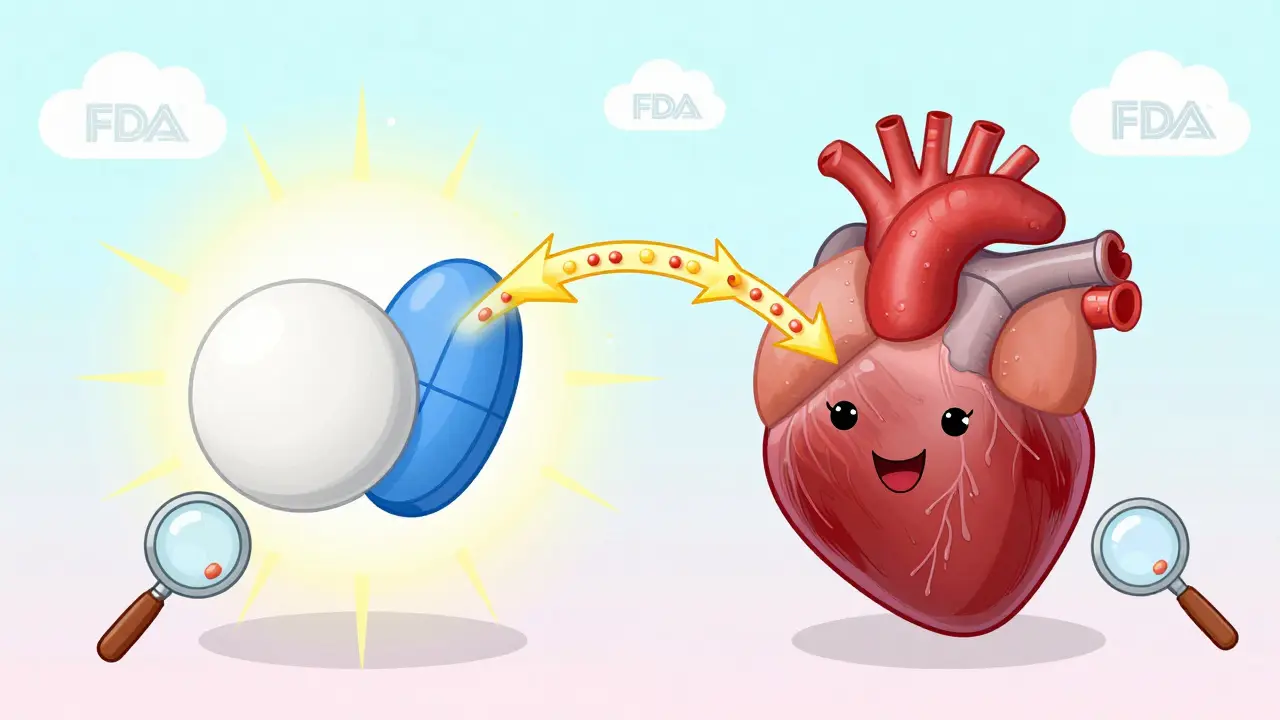
When you pick up a prescription at the pharmacy and see a different name on the bottle than what your doctor wrote, it’s natural to wonder: Is this the same thing? The answer lies in a term you’ve probably never heard before - bioequivalent. It’s not about branding, packaging, or price. It’s about what happens inside your body. And if you’re taking medication for anything from high blood pressure to epilepsy, understanding this term could mean the difference between feeling stable and experiencing unexpected side effects.
What bioequivalence actually means
Bioequivalence isn’t about two pills looking identical. It’s not even about having the exact same inactive ingredients like fillers or dyes. Two drugs can look totally different - one white, one blue, one round, one oval - and still be bioequivalent. What matters is how your body absorbs and uses the active ingredient. The U.S. Food and Drug Administration (FDA) defines bioequivalence as: no significant difference in the rate and extent to which the active ingredient becomes available at the site of action. In plain terms, if you take a generic version of a drug and a brand-name version, your bloodstream should see the same amount of medicine at the same speed. That’s it. This standard was created in 1984 under the Hatch-Waxman Act. Before that, generic manufacturers had to run full clinical trials - expensive, slow, and unnecessary if the active ingredient was already proven safe. The law changed that. It allowed generics to prove they worked the same way by measuring how the body handled the drug, not by retesting it on patients with the disease.How bioequivalence is tested
Bioequivalence isn’t guessed at. It’s measured. In a typical study, 24 to 36 healthy volunteers take both the brand-name drug and the generic version, usually in a random order, with a washout period in between. Blood samples are taken over several hours to track how much of the drug enters the bloodstream and how long it stays there. Three numbers matter most:- Cmax - the highest concentration of the drug in your blood
- tmax - how long it takes to reach that peak
- AUC - the total amount of drug your body is exposed to over time
Therapeutic equivalence: the real goal
Bioequivalence is just one piece of the puzzle. For a generic to be approved for substitution, it must also be pharmaceutically equivalent - meaning it has the same active ingredient, strength, dosage form, and route of administration as the brand-name drug. Put those two together - pharmaceutical equivalence + bioequivalence - and you get therapeutic equivalence. The FDA calls this the “AB” rating in its Orange Book. If a generic has an AB rating, it means you can swap it in without expecting any change in how it works. But not all generics are created equal. Some drugs, especially those with a narrow therapeutic index, need tighter controls. These are medications where a small change in blood level can mean the difference between treatment and toxicity. Think thyroid meds like levothyroxine, seizure drugs like phenytoin, or blood thinners like warfarin. For these, the FDA sometimes tightens the bioequivalence range to 90-111%. Pharmacists are often advised to stick with the same generic manufacturer once a patient is stabilized. That’s not because generics are unreliable - it’s because even tiny variations can add up in sensitive cases.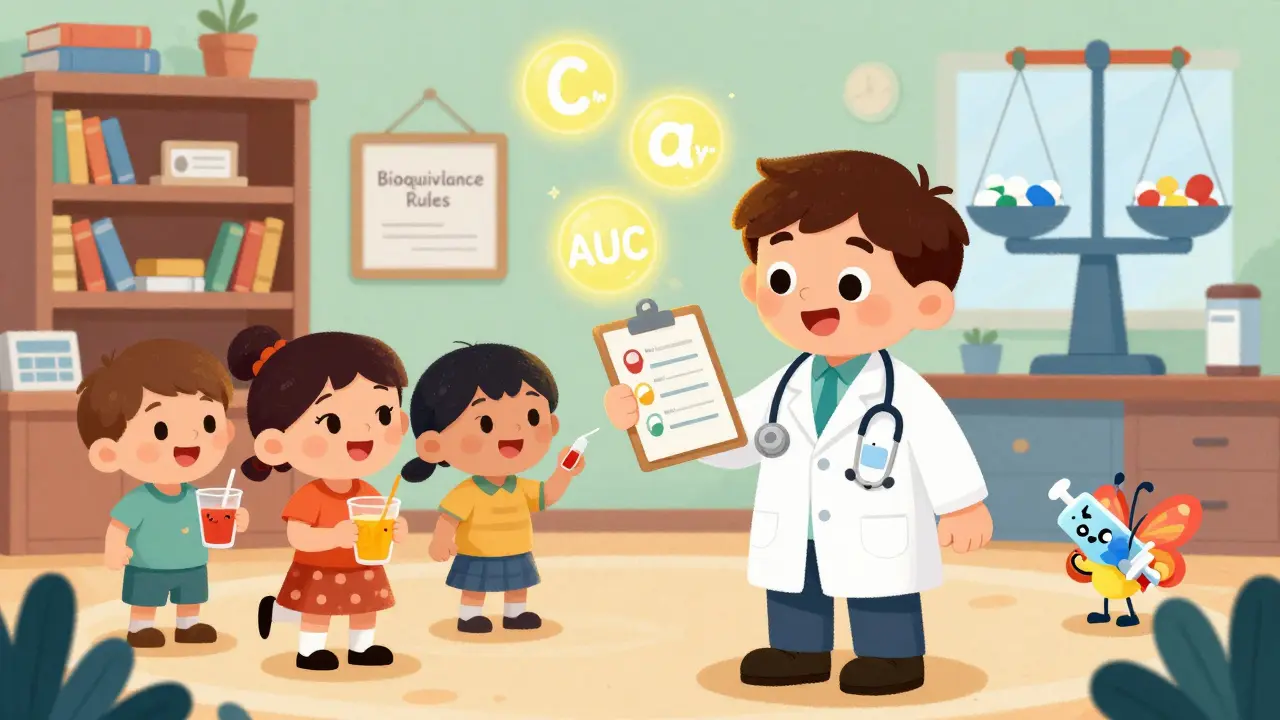
Are there real-world problems?
You’ve probably heard stories. Someone switched to a generic and had a seizure. Or their cholesterol spiked. Or they felt dizzy. These cases get attention - and they’re real. A 2021 study in JAMA Internal Medicine found that 0.8% of patients on generic antiepileptic drugs experienced breakthrough seizures after switching. That’s a small number, but for the families affected, it’s everything. Still, context matters. The FDA’s adverse event database (FAERS) shows that reports of problems with generic drugs make up only 0.3% of all medication-related reports - roughly proportional to their market share. And a 2022 survey of 1,245 independent pharmacists found that 87% reported no noticeable differences between brand and generic versions for most drugs. Consumer Reports’ 2023 survey of 3,421 people showed 78% were satisfied with generics, compared to 82% for brand-name drugs. The biggest gap? Antiepileptic drugs - where dissatisfaction jumped to 12 percentage points. That’s a red flag worth watching, but it doesn’t mean generics are unsafe. It means we need to be smarter about which ones we swap.Why the cost difference matters
The reason bioequivalence exists isn’t just science - it’s economics. Brand-name drugs can cost hundreds or even thousands of dollars per month. Generics? Often $10-$20. The average savings per prescription? $313, according to AARP. Over the past decade, generic drugs have saved the U.S. healthcare system an estimated $2.2 trillion. Developing a generic costs about $2.2 million - and roughly a third of that goes to bioequivalence studies. That’s a fraction of the $1-$2 billion it takes to bring a new brand-name drug to market. Without bioequivalence standards, generics wouldn’t exist. Or they’d be so expensive that only the wealthy could afford them. The system works because it’s built on data, not guesswork.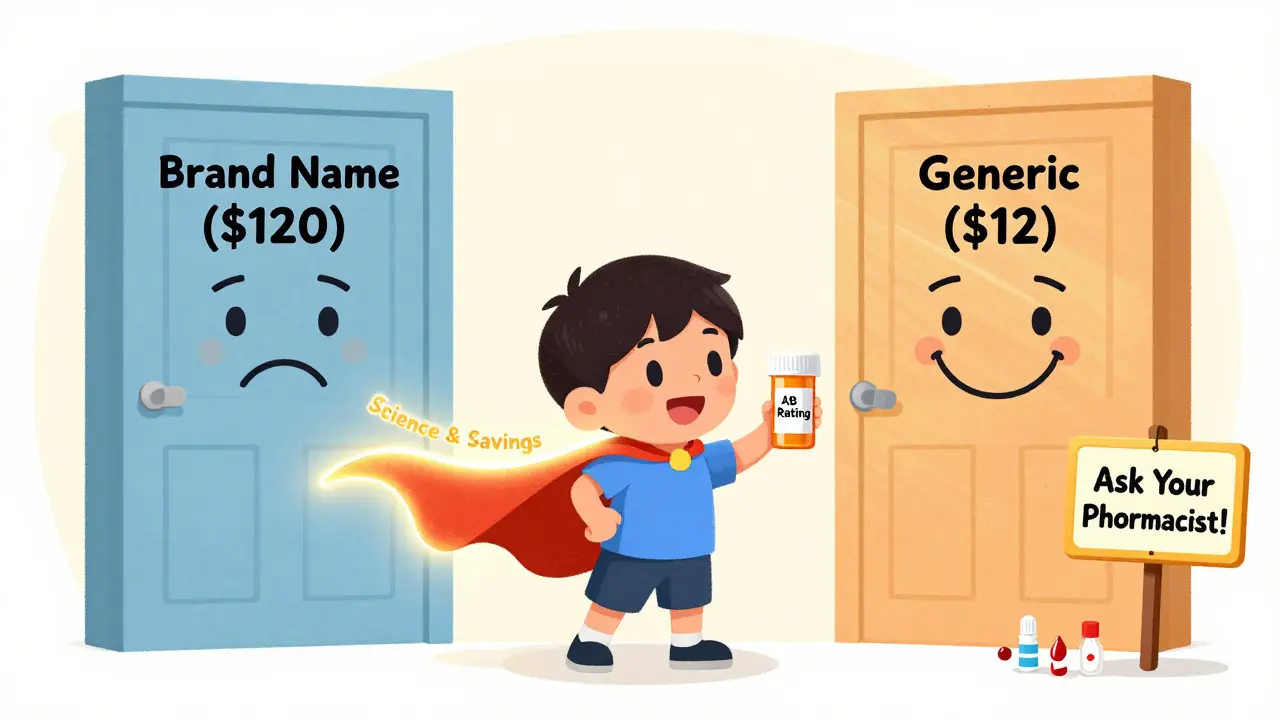
What you should do
If you’re taking a medication for a chronic condition - especially one with a narrow therapeutic index - here’s what to do:- Ask your pharmacist if your generic has an AB rating
- Don’t switch between different generic manufacturers unless your doctor says it’s safe
- Keep track of how you feel after a switch - write down symptoms, sleep, energy levels
- If something changes, tell your doctor immediately
The future of bioequivalence
The FDA is working on new ways to test bioequivalence for complex drugs - things like inhalers, injectables, and topical creams that don’t get absorbed into the bloodstream the same way pills do. They’ve issued 27 new guidance documents since 2020 to handle these cases. Some experts are pushing for personalized bioequivalence thresholds - using computer models to predict how a specific person will respond based on their genetics, age, or liver function. It’s promising, but still years away. For now, the 80-125% rule holds. And for good reason. It’s simple, proven, and has kept patients safe while making medicine affordable.What bioequivalence doesn’t mean
Let’s clear up a few myths:- It doesn’t mean identical - generics can have different fillers, colors, or shapes.
- It doesn’t mean cheaper = worse - the active ingredient is the same, and the testing is strict.
- It doesn’t mean you can switch freely - especially with thyroid, seizure, or blood thinner meds.
- It doesn’t mean all countries use the same rules - the EU, for example, sometimes requires testing in both fed and fasted states.
Are generic drugs as effective as brand-name drugs?
Yes, for the vast majority of medications. Generic drugs must meet the same strict standards as brand-name drugs. They contain the same active ingredient, in the same strength, and must prove they are absorbed by the body at the same rate and extent. The FDA requires bioequivalence testing before approving any generic. Studies show that 98% of generic drugs perform identically to their brand-name counterparts.
Why do some people say generics don’t work as well?
A small number of patients report differences when switching to generics - especially with drugs that have a narrow therapeutic index, like levothyroxine or phenytoin. These drugs require very precise blood levels. Even minor variations in absorption can cause symptoms. This doesn’t mean the generic is faulty - it means the system needs careful handling. Pharmacists often recommend sticking with the same generic manufacturer once a patient is stable to avoid fluctuations.
What does an AB rating mean on a generic drug?
An AB rating means the generic drug is both pharmaceutically equivalent and bioequivalent to the brand-name drug. The FDA assigns this rating in its Orange Book. It’s the gold standard for substitution - you can safely switch between the brand and the generic, or between different AB-rated generics, without expecting any change in effectiveness or safety.
Can I switch between different generic brands?
For most medications, yes. But for drugs with a narrow therapeutic index - such as those used for epilepsy, thyroid disorders, or blood thinning - it’s safer to stick with one manufacturer. Even though all AB-rated generics meet the same standards, small differences in inactive ingredients or manufacturing can affect absorption in sensitive patients. Talk to your doctor or pharmacist before switching between generics for these types of drugs.
Why are generic drugs so much cheaper?
Generic drug makers don’t have to repeat expensive clinical trials to prove the drug works. Instead, they only need to show bioequivalence - that their version behaves the same way in the body as the brand-name drug. This cuts development costs dramatically. The average cost to bring a generic to market is around $2.2 million, compared to over $1 billion for a new brand-name drug. These savings are passed on to consumers.
Do all countries use the same bioequivalence standards?
No. The U.S. FDA uses an 80-125% range for bioequivalence, but other agencies have different rules. The European Medicines Agency (EMA) allows wider ranges - up to 75-133% - for highly variable drugs. Some countries also require testing under both fed and fasted conditions, while the FDA typically requires only one. This can make it harder for global manufacturers to get approval everywhere, but the core goal remains the same: ensure the drug works the same way in the body.

11 Comments
Ben Kono
So let me get this straight you’re telling me I can swap my blood pressure med for a generic that’s 20% weaker and it’s still fine? My body isn’t a lab rat bro. I’ve seen people crash after switching and now you want me to just trust the numbers?
Konika Choudhury
India makes 60% of the world’s generics and you guys act like we’re some sketchy backroom operation. We follow WHO guidelines stricter than your FDA sometimes. Your fear is just brand loyalty dressed up as science.
Darryl Perry
The FDA’s 80-125% bioequivalence range is statistically sound and empirically validated. Any claim that generics are inferior is anecdotal and statistically insignificant. The data is clear: for 98% of medications, substitution poses no clinical risk. The remaining 2% require monitoring, not prohibition.
Windie Wilson
So let me get this straight - we’re saving $300 a month on meds… but if I feel weird after switching, it’s MY fault for not tracking my sleep and energy levels? Thanks for the journaling tip, Doctor. 🙃
Amanda Eichstaedt
I’ve been on levothyroxine for 12 years. Switched generics three times. Felt fine each time. But I know people who swear they had seizures or panic attacks after a switch. It’s not that the drug doesn’t work - it’s that our bodies are weird, fragile little machines. The system isn’t broken, it’s just not personalized yet. We’re treating humans like they’re all the same algorithm.
Maybe one day we’ll have genetic bioequivalence scores. Until then? Stick with one brand if it works. Don’t let cost be the only decision. Your body isn’t a spreadsheet.
jordan shiyangeni
It is a profound moral failing that we have normalized the substitution of pharmaceuticals based on statistical probability rather than individual physiological fidelity. The FDA’s 80–125% confidence interval is not a safety threshold - it is an act of institutionalized negligence masked as pragmatism. When a patient suffers an adverse event because their phenytoin level dipped 18% below the therapeutic window, who bears the responsibility? The pharmacist? The manufacturer? Or the regulatory body that deemed a 25% variance ‘acceptable’? The answer is: no one. And that is the true tragedy.
Furthermore, the assertion that generics have saved $2.2 trillion is not a triumph - it is a indictment of a system that prioritizes profit over precision. We have commodified human biology, and we call it progress. This is not science - it is capitalism with a white coat.
And let us not forget: the inactive ingredients - the dyes, the fillers, the binders - are not inert. They are pharmacologically active in ways we barely understand. Gluten in a tablet? Lactose intolerance? Corn-derived excipients in a population with high prevalence of corn allergies? These are not footnotes - they are ticking time bombs.
Until we require individualized bioequivalence testing - based on metabolic phenotype, gut microbiome, and epigenetic expression - we are not treating patients. We are conducting mass pharmacological experiments on the uninsured.
Abner San Diego
Yeah sure, the numbers look good - until you’re the one who had a seizure because your new generic didn’t absorb right. And don’t give me that ‘0.8%’ crap - that’s still 800 people a year who got screwed. We’re talking about brains here, not aspirin.
Also, why do you think the big pharma companies still push brand names? Because they know the difference matters. They’re just too rich to care if you’re one of the ones who crashes.
Eileen Reilly
Ok but like… why do generics always taste like chalk?? I swear my thyroid med has a different flavor every time I get it. My dog even sniffs it first now. 🤢
Also why do the pills change color every month? Is it to keep us on our toes? Or is Big Pharma just messing with us for fun?
Monica Puglia
I’m a nurse and I’ve seen this play out a thousand times. Someone switches to a generic, gets dizzy, blames the drug, then stops taking it - and ends up in the ER. But if you stick with one generic brand? Usually fine. The key isn’t brand vs generic - it’s consistency. Once you find one that works, don’t switch unless you have to. And if you do? Track your symptoms. Write them down. Your future self will thank you. 💙
steve ker
Why do Americans act like generics are some kind of scam? We make them better and cheaper. Your system is broken. Your prices are insane. Your fear is irrational.
Rebekah Cobbson
For anyone on thyroid meds, epilepsy drugs, or blood thinners - this is your gentle reminder: don’t switch manufacturers without talking to your doctor. Not because generics are bad - because your body is worth the extra step. You’ve already survived this far. Don’t let a pharmacy shuffle cost you your stability.