

When you start taking an antidepressant, you’re hoping for relief - not a medical emergency. But if you take too much, or mix it with another medication, your body can drown in serotonin. This isn’t just a bad reaction. It’s serotonin syndrome, a life-threatening condition that can hit fast, hard, and often without warning.
What Exactly Is Serotonin Syndrome?
Serotonin syndrome happens when your brain and body get flooded with too much serotonin. It’s not an allergy. It’s a chemical overload. The most common culprits are antidepressants like SSRIs (fluoxetine, sertraline) and SNRIs (venlafaxine, duloxetine). But it’s not just those. Pain meds like tramadol, migraine drugs like sumatriptan, even some cough syrups with dextromethorphan can push you over the edge - especially when combined.This isn’t rare. Between 2015 and 2022, reported cases in Australia and New Zealand rose by 38%. Most people who end up in the ER with this condition are on two or more serotonergic drugs. Many didn’t even know mixing them was dangerous.
The First Signs: Don’t Ignore the Shaking
The earliest warning sign? Tremors. Not just a little shiver. A noticeable, uncontrollable shaking in your hands, arms, or legs - like you’re cold, but you’re not. It’s often the first red flag doctors look for.Within an hour of taking a new drug or increasing a dose, 30% of people start showing symptoms. By six hours, that jumps to 60%. That’s how fast this can turn serious.
Other early signs include:
- Muscle twitching or jerking (not full seizures, but sudden, random spasms)
- Restlessness or feeling wired, anxious, or agitated for no reason
- Sweating more than usual - even if it’s cool outside
- Nausea, vomiting, or diarrhea
- Dilated pupils - your eyes look unusually wide open
These can feel like the flu, anxiety, or just side effects of the medication. That’s why so many people wait too long. But if you’re on an antidepressant and suddenly feel like your body is out of sync - listen to it.
The Red Flags: When It Gets Dangerous
If the early signs are ignored, serotonin syndrome escalates quickly. Here’s what happens when it moves into the danger zone:- High fever - over 38.5°C (101.3°F). This isn’t a normal fever. It’s a runaway temperature that won’t break.
- Heart rate over 100 beats per minute, or irregular heartbeat
- High blood pressure - systolic readings above 160 mmHg
- Severe muscle rigidity - your limbs feel locked, stiff, like a statue
- Clonus - this is the key sign. If you flex your foot upward and your toes keep twitching involuntarily, that’s clonus. It’s the most reliable indicator doctors use to confirm serotonin syndrome.
- Hyperreflexia - your knee-jerk reflex is way too strong. A light tap sends your leg flying.
- Confusion, hallucinations, or loss of consciousness
At this stage, you’re at risk of seizures, organ failure, or rhabdomyolysis - where muscles break down and flood your bloodstream with toxic proteins. That’s what can kill you.
How Doctors Diagnose It
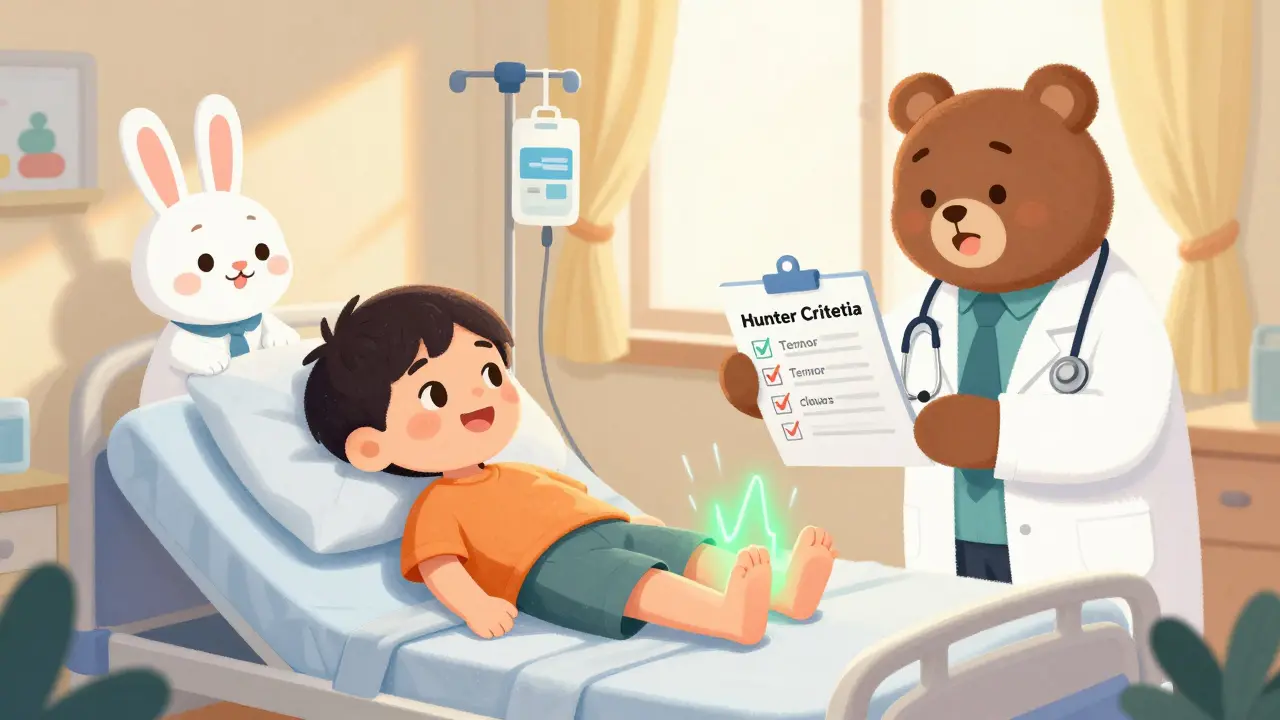
There’s no single blood test that confirms serotonin syndrome. You can’t measure serotonin levels in the brain. Instead, doctors use the Hunter Serotonin Toxicity Criteria. It’s simple: if you have one of these combinations, it’s serotonin syndrome:- Spontaneous clonus
- Inducible clonus + agitation or sweating
- Ocular clonus (eye twitching) + agitation or sweating
- Tremor + hyperreflexia
- Muscle rigidity + fever + ocular or inducible clonus
This tool is 84% accurate at spotting true cases and 97% good at ruling out false ones. That’s why it’s the gold standard. But here’s the problem - many ER doctors miss it. One study found nearly 1 in 4 cases are misdiagnosed as anxiety, the flu, or even a psychiatric crisis.
What It’s Not: Avoiding the Confusion
Serotonin syndrome gets confused with other conditions - and that’s deadly.Neuroleptic Malignant Syndrome (NMS) looks similar: high fever, stiff muscles, confusion. But NMS develops over days or weeks, not hours. It causes slow, rigid muscles - not twitching or clonus. It’s tied to antipsychotic drugs, not antidepressants.
Anticholinergic toxicity - from drugs like diphenhydramine or some older antidepressants - causes dry mouth, dry skin, urinary retention, and constipation. Serotonin syndrome does the opposite: you sweat, you have diarrhea, your pupils are wide.
Getting this wrong means giving the wrong treatment. And in serotonin syndrome, time is everything.
What to Do If You Suspect It
If you or someone you know is showing signs of serotonin syndrome - act now.- Stop the medication. Don’t wait. Don’t call your doctor first. If you’re having tremors, clonus, or fever, stop taking the drug immediately.
- Call emergency services. This is not a doctor’s office issue. It’s an ER emergency.
- Tell them exactly what you took. List every pill, supplement, or cough syrup. Include timing and doses.
While you wait for help:
- Stay cool - remove extra clothing, use fans or cool cloths.
- Drink water if you’re alert and not vomiting.
- Don’t try to “sleep it off.” This isn’t fatigue. It’s a chemical storm.
In the hospital, treatment is straightforward but urgent: benzodiazepines to calm muscle spasms and anxiety, IV fluids to prevent dehydration, and cooling measures to bring the fever down. In severe cases, they’ll give cyproheptadine - a specific antidote that blocks serotonin. Most people improve within 24 to 48 hours if treated early.
How to Prevent It
The best way to avoid serotonin syndrome? Don’t let it happen in the first place.- Never mix antidepressants without supervision. Especially avoid combining SSRIs or SNRIs with MAOIs. If you’re switching from an MAOI to an SSRI, you must wait at least 14 days. No exceptions.
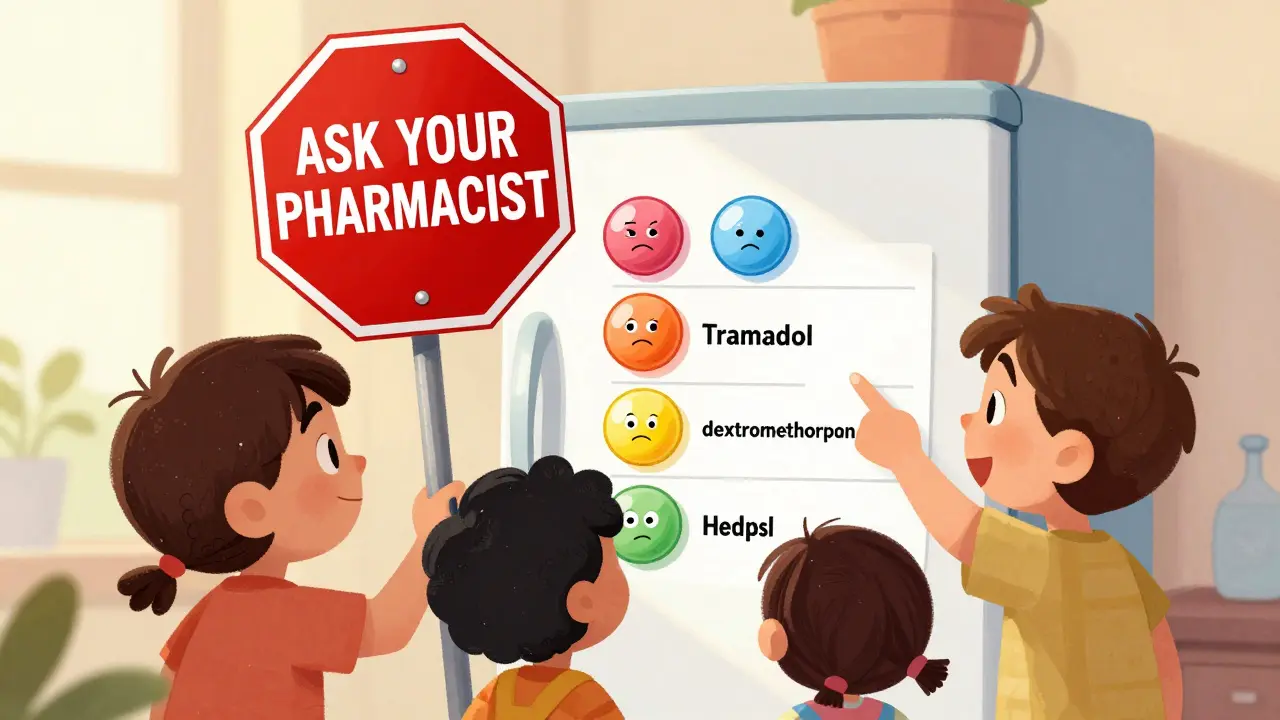
- Check every new prescription. Even if it’s for pain or migraines. Ask your pharmacist: “Could this interact with my antidepressant?”
- Keep a medication list. Write down everything you take - including OTC meds and supplements. Bring it to every appointment.
- Know your symptoms. If you’ve been on an antidepressant for months and suddenly feel off - tremors, sweating, agitation - don’t assume it’s just “adjusting.”
Studies show that when patients are educated about these risks, the number of cases drops by nearly half. Yet, 68% of people who’ve had serotonin syndrome say they were never warned about it when their antidepressant was prescribed.
Why This Is Getting Worse
More people are on antidepressants than ever. More are being prescribed multiple medications for anxiety, pain, and sleep. Polypharmacy is common - and dangerous if not monitored.Emergency visits for serotonin syndrome have increased 22% year over year. SSRIs are involved in 62% of cases. SNRIs in 24%. MAOIs, though less common, are the most dangerous when mixed.
This isn’t just about pills. It’s about awareness. Too many people think side effects mean “it’s working.” They don’t realize that shaking, sweating, and confusion aren’t part of recovery - they’re warning signs.
If you’re on an antidepressant, know the signs. If you’re caring for someone who is, learn them too. Serotonin syndrome doesn’t wait. Neither should you.
Can serotonin syndrome happen with just one antidepressant?
Yes. While it’s more common when combining medications, taking too much of a single SSRI or SNRI - especially in overdose - can trigger serotonin syndrome. Even normal doses can cause it in sensitive individuals or if kidney or liver function is impaired.
How long does serotonin syndrome last?
With prompt treatment, most people improve within 24 to 48 hours. Mild cases may resolve in 12 hours after stopping the drug. Severe cases with organ involvement can take days to weeks to fully recover, especially if complications like rhabdomyolysis occur.
Is serotonin syndrome fatal?
Yes, it can be. Mortality ranges from 0.5% to 12%, depending on how quickly treatment starts. Death usually comes from extreme hyperthermia (over 41.1°C), seizures, or muscle breakdown leading to kidney failure. Early recognition and emergency care dramatically reduce this risk.
Can I get serotonin syndrome from over-the-counter meds?
Absolutely. Cough syrups with dextromethorphan, certain herbal supplements like St. John’s Wort, and even some migraine treatments like triptans can trigger it - especially if taken with antidepressants. Always check labels and ask your pharmacist.
What should I do if I think I’ve had a mild case?
Even if symptoms fade, you still need medical evaluation. Mild cases can recur or worsen if you restart the medication too soon. Your doctor needs to adjust your treatment plan to prevent another episode. Don’t assume it’s over just because you feel better.

15 Comments
Ted Conerly
Just wanted to say this is one of the clearest, most urgent guides I’ve ever read on serotonin syndrome. I’ve seen people dismiss tremors as ‘just anxiety’ and it’s terrifying. If you’re on an SSRI and suddenly feel like your body’s glitching, don’t wait for a second opinion - call 911. This isn’t a ‘maybe’ situation.
Faith Edwards
It is both lamentable and profoundly disconcerting that the medical establishment continues to peddle psychopharmaceuticals with such cavalier disregard for their neurochemical volatility. One is left to wonder whether profit margins have supplanted the Hippocratic Oath in the modern pharmacopeia. The fact that patients are routinely prescribed polypharmaceutical regimens without adequate counseling speaks not to clinical diligence, but to systemic negligence.
Michael Marchio
Look, I get that people want to feel better, but the truth is most of these SSRIs are just chemical bandaids on emotional wounds that need therapy, not pharmacology. And now we’ve got a whole generation of people who think their brain chemistry is broken because they cried once in college. You don’t need to flood your system with serotonin to cope with a bad breakup - you need to talk to someone, not pop a pill and hope your tremors go away. And don’t even get me started on how people mix these with every OTC thing they find on Amazon.
Jake Kelly
This is the kind of post that saves lives. Thank you for taking the time to lay it out so clearly. I’ve been on sertraline for five years and never knew dextromethorphan could be dangerous with it. I’m printing this out and putting it in my medicine cabinet.
Ashlee Montgomery
If your body is shaking and you’re not cold, it’s not stress. It’s not caffeine. It’s not ‘just how you feel today.’ It’s your nervous system screaming for help. Why do we keep normalizing symptoms until they become crises?
neeraj maor
Did you know the FDA approved SSRIs without long-term neurotoxicity studies? Big Pharma knew this was coming. They’ve been burying case reports for decades. The 38% increase? That’s just what’s reported. The real number is hidden in death certificates labeled ‘cardiac arrest’ or ‘suicide.’ They don’t want you to know how many people vanish because their serotonin levels spiked and no one connected the dots.
Ritwik Bose
Thank you for this incredibly thoughtful and vital post. 🙏 I am from India, and here, many patients are prescribed antidepressants without any discussion of interactions. I’ve seen friends develop tremors after taking tramadol for back pain - and no one told them it could be deadly. This needs to be translated into Hindi and shared in every pharmacy and clinic. Safety should never be an afterthought.
Paul Bear
It’s worth noting that the Hunter Criteria, while 84% accurate, still has a 16% false-negative rate - meaning nearly 1 in 6 cases are missed. Clinicians who rely solely on clinical presentation without corroborating medication history are operating in a data vacuum. Furthermore, the term ‘clonus’ is frequently misused; inducible clonus requires active provocation, not passive observation. Misdiagnosis isn’t negligence - it’s epistemological laziness.
lisa Bajram
OMG I’m so glad someone finally wrote this. I had a friend who went to the ER with fever and shaking and they told her it was ‘just the flu’ - she ended up in ICU for 3 days. I’ve been on citalopram for 6 years and I keep this list taped to my pill bottle. If you’re on ANY antidepressant, memorize these signs. Your life might depend on it. Also - ST. JOHN’S WORT IS A SLEEPING BEAST. Don’t even think about it.
Jaqueline santos bau
I’ve been there. I took an extra dose of my SSRI because I was ‘feeling down’ and woke up three hours later shaking like a leaf, drenched in sweat, convinced I was dying. My boyfriend had to drag me to the hospital. They said it was serotonin syndrome. I cried for hours. And then my doctor just said ‘be more careful.’ That’s it? No follow-up? No warning? I’m still scared to take my meds. This isn’t just medical advice - it’s emotional survival.
Kunal Majumder
Bro, I used to take tramadol for back pain and sertraline. Never knew it was a combo that could kill you. I stopped the tramadol after reading this. Seriously, if you're on antidepressants, check every single thing you take - even that ‘natural’ supplement. Your body isn't a lab experiment.
Aurora Memo
This is exactly the kind of information that should be included in every antidepressant prescription packet. Not a footnote. Not a link. A clear, bold warning. I’m a therapist and I’ve had clients come in terrified after minor tremors, not knowing if they were safe. This post gives them language - and permission to act.
chandra tan
India has zero awareness about this. I told my cousin’s wife she shouldn’t take dextromethorphan with her fluoxetine - she laughed and said ‘it’s just cough syrup.’ Two weeks later she ended up in the hospital. This needs to be in local languages. People need to know - even if they don’t speak English.
Dwayne Dickson
How is it that we’ve managed to create a public health crisis rooted in the commodification of mental health, yet still expect patients to be their own pharmacists? The irony is almost poetic - we hand out life-altering neurochemicals like candy, then blame the patient when the system fails. And yet, here we are, discussing clonus like it’s a trivia question. The real tragedy isn’t the syndrome - it’s the indifference.
Jay Amparo
I’m so glad this exists. I’ve been on venlafaxine for three years. Last month I took a cold medicine with dextromethorphan and felt like my muscles were buzzing - I thought it was just anxiety. Now I know it was clonus. I stopped the med, called my doctor, and got lucky. But so many won’t. Let’s spread this like wildfire. Lives are on the line.