How Paragraph IV Patent Challenges Speed Up Generic Drug Entry
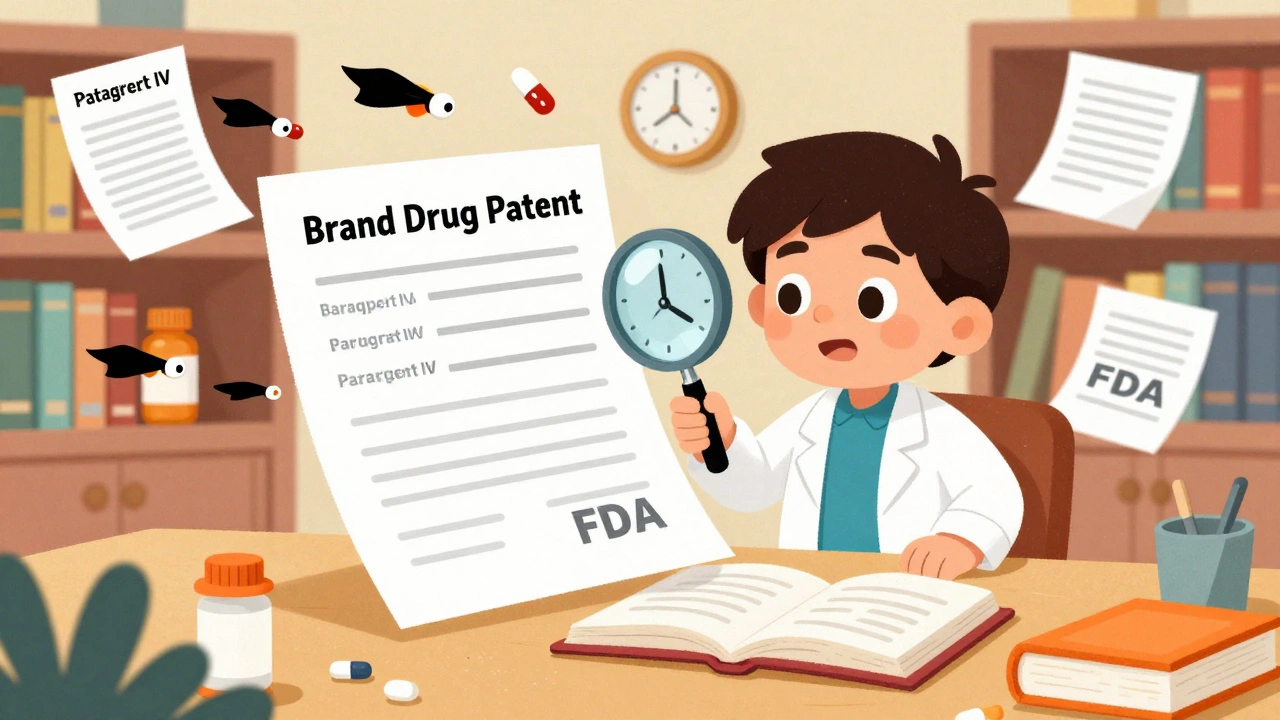
Paragraph IV certification lets generic drug makers challenge brand patents before they expire. If they win, cheaper generics hit the market faster-saving billions. Here’s how it works.

When you pick up a generic pill at the pharmacy, you might not realize it’s tied to a legal document called the Orange Book, the FDA’s official list of approved drug products with therapeutic equivalence evaluations. Also known as Approved Drug Products with Therapeutic Equivalence Evaluations, the Orange Book is the backbone of generic drug substitution in the U.S. It doesn’t just list drugs—it tells pharmacists and doctors which generics can safely replace brand-name versions, and which ones can’t. Without it, switching to cheaper meds would be risky guesswork.
The Orange Book patents, the exclusive rights granted to brand-name drugmakers to protect their formulations are what make this system work. These patents don’t just cover the active ingredient—they include methods of use, chemical structures, and even delivery systems. When a patent expires, generic makers can file for approval through the Abbreviated New Drug Application (ANDA), the streamlined FDA process that proves a generic drug works the same as the brand. But here’s the catch: not all generics are created equal. The Orange Book assigns each generic a code—like AB or B—to show if it’s truly interchangeable. An AB code means it’s bioequivalent and can be swapped without a doctor’s note. A B code? That’s a red flag. It means the generic might not work the same, especially for drugs with a narrow therapeutic index, like warfarin or thyroid meds. That’s why pharmacists check the Orange Book before substituting—it’s not just a formality, it’s a safety step.
Some of the most dangerous drug shortages happen because too many companies make the same generic, driving prices so low that no one can profit. When that happens, manufacturers quit, and the Orange Book keeps listing them as available—even when shelves are empty. Meanwhile, patent extensions and legal tricks can delay generics for years, keeping prices high. The system is meant to balance innovation with access, but it’s messy. That’s why you’ll find posts here about how pharmacists spot problem generics, why therapeutic equivalence codes matter for heart patients, and how TDM (therapeutic drug monitoring) saves lives when generics don’t behave the same. You’ll also see how the FDA’s label terms, like contraindication and precaution, tie into whether a generic is safe to use. This isn’t just about paperwork—it’s about whether you get the right dose, at the right price, without risking your health.
What follows is a collection of real-world stories and guides that show how Orange Book patents shape your prescriptions—from the pharmacy counter to your medicine cabinet. You’ll learn how to ask the right questions, spot unsafe substitutions, and understand why your generic might suddenly stop working. No jargon. No fluff. Just what you need to know to stay safe and save money.
 6 Dec 2025
Paragraph IV certification lets generic drug makers challenge brand patents before they expire. If they win, cheaper generics hit the market faster-saving billions. Here’s how it works.