Clopidogrel and PPI: Drug Interactions, Risks, and What You Need to Know
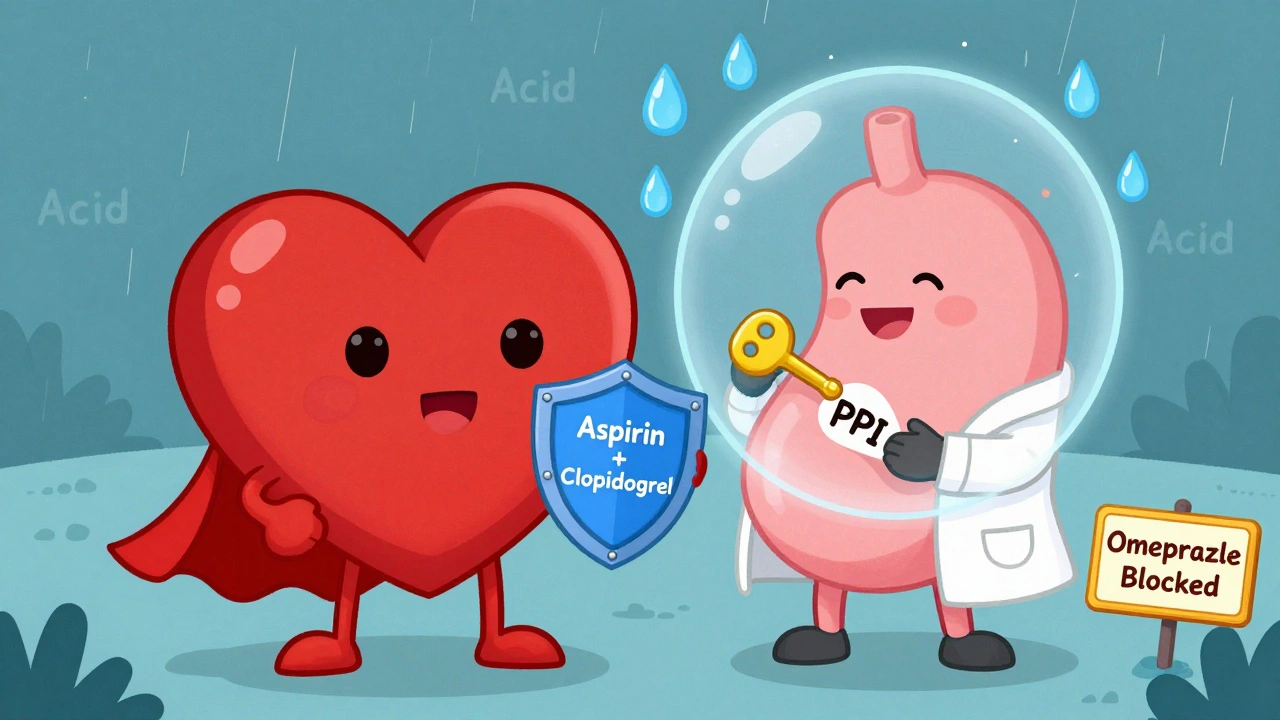
When you take clopidogrel, a blood thinner used to prevent clots after heart attacks or stents. Also known as Plavix, it works by stopping platelets from sticking together. But if you’re also taking a proton pump inhibitor, a medication that reduces stomach acid to treat ulcers or GERD. Common examples include omeprazole, esomeprazole, and pantoprazole., you might be unknowingly weakening clopidogrel’s effect. This isn’t just a theoretical concern—it’s backed by real studies showing higher rates of heart attacks and stent clots in people using certain PPIs with clopidogrel.
The problem isn’t all PPIs, and it’s not everyone. The issue centers on how some PPIs block an enzyme in your liver called CYP2C19. That’s the same enzyme clopidogrel needs to turn into its active form. If that enzyme is blocked, clopidogrel can’t do its job. Omeprazole and esomeprazole are the worst offenders here—they’re strong inhibitors. Pantoprazole and dexlansoprazole? Much safer choices. If you’re on clopidogrel and need acid control, your pharmacist or doctor should be checking this interaction before writing the prescription. It’s not about avoiding PPIs entirely—it’s about picking the right one.
People on clopidogrel after a stent or heart attack are especially vulnerable. Skipping the right PPI can lead to dangerous clots. But skipping acid protection entirely can lead to stomach bleeding—another serious risk. So it’s a tightrope walk. That’s why guidelines now recommend avoiding omeprazole and esomeprazole in these cases. H2 blockers like famotidine are sometimes used as alternatives, though they’re less potent. And if you’ve been on omeprazole for years with clopidogrel? Don’t stop either drug on your own. Talk to your provider. There are safer options.
What you’ll find below are real, practical posts that dig into these exact issues. You’ll see how clopidogrel and PPIs interact at the molecular level, which brands carry the highest risk, and what alternatives actually work. You’ll also find stories from people who’ve been through this—how they switched meds, what their doctors said, and how they managed side effects without risking their heart health. This isn’t theory. It’s what happens in clinics and pharmacies every day. And if you’re taking both, you need to know this.