

When a child accidentally swallows too much medicine, time isn’t just important-it’s life or death. Many parents assume they’ll know right away if something’s wrong. But that’s not always true. Some overdoses don’t show symptoms for hours. Others look like a bad cold, a stomach bug, or just a sleepy kid. By the time you notice something’s off, it might already be too late. That’s why knowing the signs of pediatric medication overdose and when to call Poison Control isn’t optional-it’s essential.
What Counts as a Pediatric Medication Overdose?
A pediatric medication overdose happens when a child takes more than the safe dose of any medicine-prescription, over-the-counter, or even herbal. It doesn’t have to be intentional. A child finds a bottle, a caregiver misreads the label, or two different medicines with the same active ingredient are given by accident. In fact, 70% of acetaminophen overdoses in kids happen because parents unknowingly give two products that both contain it-like a cold medicine and a pain reliever. Children under 6 are at the highest risk. According to the American Association of Poison Control Centers, nearly half of all medication exposures in the U.S. involve kids this young. And while child-resistant packaging helps, 20% of poisonings still happen because it wasn’t used properly-or the child figured out how to open it.Common Signs of Overdose by Medication Type
Not all overdoses look the same. The symptoms depend on what was taken. Here’s what to watch for, broken down by category.Opioids: Fentanyl, Oxycodone, Codeine
Opioids slow down breathing-and in kids, that can happen fast. The signs are often subtle at first, then sudden:- Pinpoint pupils (tiny, dark dots in the center of the eyes)
- Unresponsive to loud noises or shaking
- Slow, shallow, or stopped breathing
- Gurgling or choking sounds (like they’re drowning but awake)
- Limp body, cold and clammy skin
- Lips, fingernails, or skin turning blue, purple, or gray
Acetaminophen (Tylenol)
This is the most common single substance involved in pediatric poisonings. The problem? You might not see any symptoms for 24 hours. By then, liver damage is already happening. Early signs (within the first 24 hours) are mild and easy to miss:- Nausea or vomiting
- Loss of appetite
- Abdominal pain
- General tiredness
Stimulants: ADHD Medications (Adderall, Ritalin)
These drugs speed up the body. An overdose can turn a hyperactive child into someone in medical crisis:- Extreme irritability or panic
- Rapid or irregular heartbeat
- High blood pressure
- High body temperature (over 104°F)
- Seizures
- Confusion, hallucinations, or paranoia
- Blurred vision or loss of coordination
Cough and Cold Medicines
These are common culprits, especially in toddlers. Many contain antihistamines, decongestants, or cough suppressants that can be dangerous in high doses. Watch for:- Drowsiness or extreme sleepiness
- Fast heart rate
- Flushed skin
- Difficulty urinating
- Seizures or tremors
- Blurred vision or dilated pupils
When to Call Poison Control vs. 911
This is where confusion kills. You need to know the difference. Call Poison Control at 1-800-222-1222 if:- You suspect your child took medicine but they have no symptoms yet
- You’re unsure how much was taken
- You need advice on whether to go to the ER
- You’re dealing with a non-life-threatening exposure (like a small amount of ibuprofen)
- Lost consciousness or can’t be woken up
- Stopped breathing or is breathing very slowly
- Is having seizures or uncontrollable shaking
- Has blue or gray lips or skin
- Is having trouble swallowing or has facial swelling
- Is having a severe allergic reaction (hives, swelling of tongue or throat)

What to Do While Waiting for Help
If your child is unresponsive:- Check if they’re breathing. Look for chest movement. Listen and feel for air.
- If they’re not breathing, start rescue breaths. Tilt their head back slightly, pinch the nose, and give one breath every 3 seconds.
- If you have naloxone and suspect opioids, give one dose into the nose or muscle. Wait 2-3 minutes. If no response, give another.
- Stay with them. Keep them on their side if they’re breathing but unconscious. This keeps their airway open.
- Don’t try to make them vomit. Don’t give them water, milk, or anything else unless Poison Control says so.
Prevention: How to Keep Medications Out of Reach
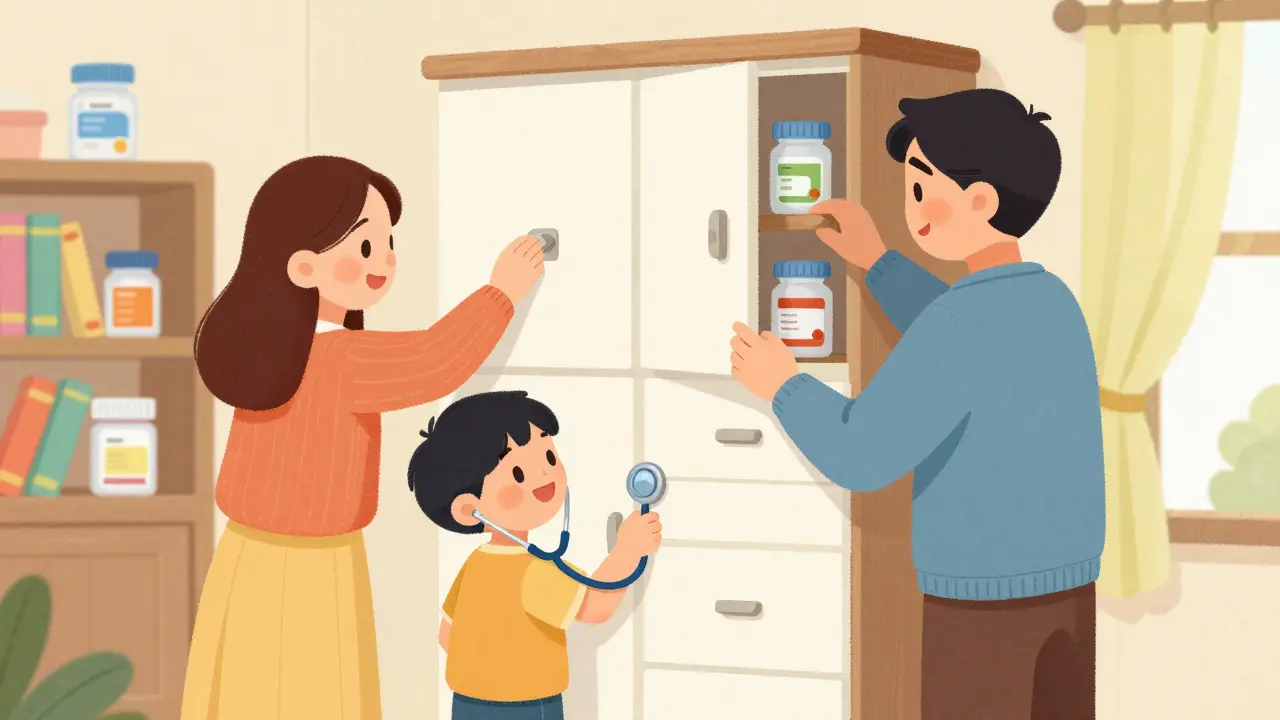
Most pediatric overdoses happen at home. Here’s how to stop them before they start:- Lock up all medicines-even vitamins and supplements-in a cabinet with a childproof lock. The CDC says 60% of poisonings happen in the child’s own home.
- Never call medicine “candy.” Kids remember words. If you say it’s candy, they’ll think it’s okay to eat.
- Use the measuring tool that comes with liquid medicine. A kitchen spoon is not accurate. A teaspoon can be 20% more or less than it should be.
- Keep a list of all medications in your home, including doses and times. This helps if you need to explain what was taken.
- Dispose of old or expired medicines properly. Many pharmacies have take-back bins. Don’t flush them or throw them in the trash.
- Be extra careful with visitors’ medications. A grandparent’s painkiller or aunt’s anxiety pill can be deadly in a child’s hands.
What’s Changed in Recent Years
The landscape of pediatric poisoning is shifting. Since 2020, the FDA required liquid acetaminophen to come with standardized measuring devices and clearer labeling. That’s helped reduce dosing errors by 19%. But new risks are rising. Medical marijuana products-edibles, oils, patches-have seen a 1,475% increase in pediatric exposures since 2017. In 2022 alone, over 4,500 children were exposed. Many of these products look like candy or juice boxes. And fentanyl is showing up in unexpected places. Illicit pills sold as oxycodone or Xanax may contain deadly doses of fentanyl. Even a tiny amount can kill a child. The good news? Poison Control’s online tool, webPOISONCONTROL®, launched in 2023, now handles over 120,000 cases a year. You can go online, answer a few questions, and get instant advice for non-emergencies. But if there’s any doubt-call the hotline. Or call 911.Final Reminder: When in Doubt, Call
You don’t need to be sure. You don’t need to wait for symptoms. You don’t need to be a doctor. If you think your child might have taken too much medicine-call Poison Control. Now. It’s not alarmist. It’s science. The window for treatment is narrow. The body doesn’t wait. And in pediatric medicine, seconds matter more than you think.What should I do if my child swallowed medicine but seems fine?
Call Poison Control at 1-800-222-1222 immediately. Many medications, like acetaminophen, cause silent damage that doesn’t show symptoms for hours. Even if your child is awake and acting normal, the harm may already be starting. Poison Control can tell you if it’s an emergency or if you need to monitor at home.
Can I wait to see if symptoms appear before calling?
No. Waiting can cost your child their life. With opioids, breathing can stop suddenly. With acetaminophen, liver damage begins within hours-even if your child is playing normally. There is no safe waiting period. If you suspect an overdose, call Poison Control right away. They’ll guide you based on what was taken and how much.
Is it safe to give my child syrup to make them vomit?
Never give syrup of ipecac or try to make your child vomit unless Poison Control or a doctor tells you to. Vomiting can cause choking, especially in unconscious children. It can also make some poisonings worse by damaging the throat or lungs. Always follow expert advice, not home remedies.
How do I know if I’m giving too much acetaminophen?
Check every medicine label. Acetaminophen is in over 600 products-pain relievers, cold medicines, sleep aids, and even some prescription drugs. Never combine two products that contain it. Use the weight-based dosing chart on the bottle, not age. And always use the measuring device that came with the medicine. A kitchen spoon can give 20% more than intended.
Does Poison Control charge for their services?
No. The Poison Control hotline (1-800-222-1222) is completely free and available 24/7 in every U.S. state. There are no hidden fees, no insurance requirements, and no questions asked. It’s a public health service funded by government and nonprofit grants. Use it without hesitation.
Should I keep naloxone at home if I have kids?
Yes-if you or anyone in your home uses opioids, or if you live in an area where fentanyl is common, keeping naloxone is a smart precaution. It’s safe, easy to use, and can reverse an opioid overdose in minutes. Many pharmacies sell it without a prescription. Learn how to use it through free online videos or local health clinics. It could save a life.
13 Comments
John Pope
Okay, but let’s be real-how many of us have left a bottle of Tylenol on the nightstand after giving it to the kid at 2 a.m.? I did. Twice. And I’m a ‘responsible adult.’ The truth is, we’re all one exhausted, caffeine-deprived moment away from a disaster. This post isn’t just informative-it’s a wake-up call wrapped in medical jargon that actually makes sense. 🤯
Priyanka Kumari
Thank you for this comprehensive guide. As a pediatric nurse in India, I’ve seen too many cases where parents waited because ‘they seemed fine.’ The silence before the crisis is the most dangerous part. Please share this with every parent, grandparent, babysitter, and relative who thinks ‘a little extra won’t hurt.’ Prevention is always better than emergency response.
Nelly Oruko
Acetaminophen is silent. Like a ghost. And ghosts don’t knock. They just… show up in your liver.
vishnu priyanka
Man, I remember when my cousin’s toddler ate half a bottle of cough syrup because it smelled like grape candy. Took 14 hours for symptoms to show. We thought it was just a bad day. Turns out, it was a near-death experience. This post? It’s the kind of thing you save and send to every family group chat. No shame in being paranoid when it comes to kids.
Angel Tiestos lopez
POISON CONTROL IS FREE?? 😱 I thought it was like a lawyer hotline. I’ve been scared to call for years thinking I’d get billed. This changes everything. Also, naloxone is now just… available? Like at CVS? I’m getting one for my house. 🙌
Alan Lin
This is not a suggestion. It is a biological imperative. If you are a caregiver, and you have not memorized the Poison Control number, you are not fit to be responsible for another human being. The margin for error is zero. The consequences are irreversible. Stop waiting. Stop hoping. Call. Now.
Trevor Whipple
Yeah but like… how many of these cases are just dumb parents who don’t read labels? I mean, come on. You give your kid two meds with the same ingredient? That’s not an overdose, that’s a parenting fail. We need to stop coddling people who can’t do basic math.
Lethabo Phalafala
I lost my nephew to this. He was 3. Took a ‘sleepy-time’ pill from his grandma’s purse. We thought he was just tired. He was already brain-dead by the time we got to the hospital. This post? It’s the reason I’m screaming this from rooftops now. Don’t wait. Don’t doubt. Call. Even if you think you’re wrong. You’re never wrong for being safe.
Lance Nickie
Wait, so you’re telling me I shouldn’t just give them water and wait? That’s not how it works in the movies.
Milla Masliy
As someone raised in a household where ‘medicine’ meant ‘whatever’s in the cabinet,’ this is both terrifying and oddly comforting. Turns out, I’m not the only one who thought ‘a little extra’ was fine. We need more of this-no fluff, no fearmongering, just facts. Thank you.
sam abas
Look, I get the urgency. But let’s not ignore the elephant in the room-pharmaceutical companies design these products to be confusing on purpose. Why does Advil have 12 different names? Why is Tylenol in every other bottle? Why is there no universal labeling standard? This isn’t about parents being careless-it’s about corporations profiting from chaos. The real solution isn’t calling Poison Control-it’s demanding systemic change. Until then, we’re just putting out fires with wet napkins.
Clay .Haeber
Oh wow, another ‘poison control is your best friend’ PSA. Next you’ll tell me to floss and wear sunscreen. I mean, sure, I’ll call them… after I finish this TikTok. 😏
Avneet Singh
While the intent is noble, this is a classic case of over-medicalization of parenting. The human body has evolved to handle minor exposures. The real issue is the hyper-vigilant culture that turns every dropped pill into a potential tragedy. Perhaps we should focus less on fear and more on resilience?