
Why Contact Lens Safety Isn’t Optional
Every year, about 1 in every 1,000 contact lens wearers ends up with a serious eye infection. That might sound rare, but if you’re one of them, it’s not. These infections don’t just cause redness and discomfort-they can lead to corneal ulcers, permanent vision loss, and treatment bills that average $7,500 per case. And the worst part? Most of these infections are completely preventable.
The problem isn’t the lenses themselves. It’s how they’re handled. Studies show that only 53% to 77% of people wash their hands properly before touching their lenses. Even more alarming: 40% to 50% sleep in lenses not meant for overnight wear, and 15% to 20% use tap water to clean their cases. This isn’t just carelessness-it’s a pattern that puts vision at risk.
Hand Hygiene: The #1 Rule You Can’t Skip
Your hands are covered in bacteria. Every time you touch your phone, open a door, or scratch your nose, you pick up germs. And if you then reach for your contact lenses without washing up, you’re transferring those germs straight to your eyes.
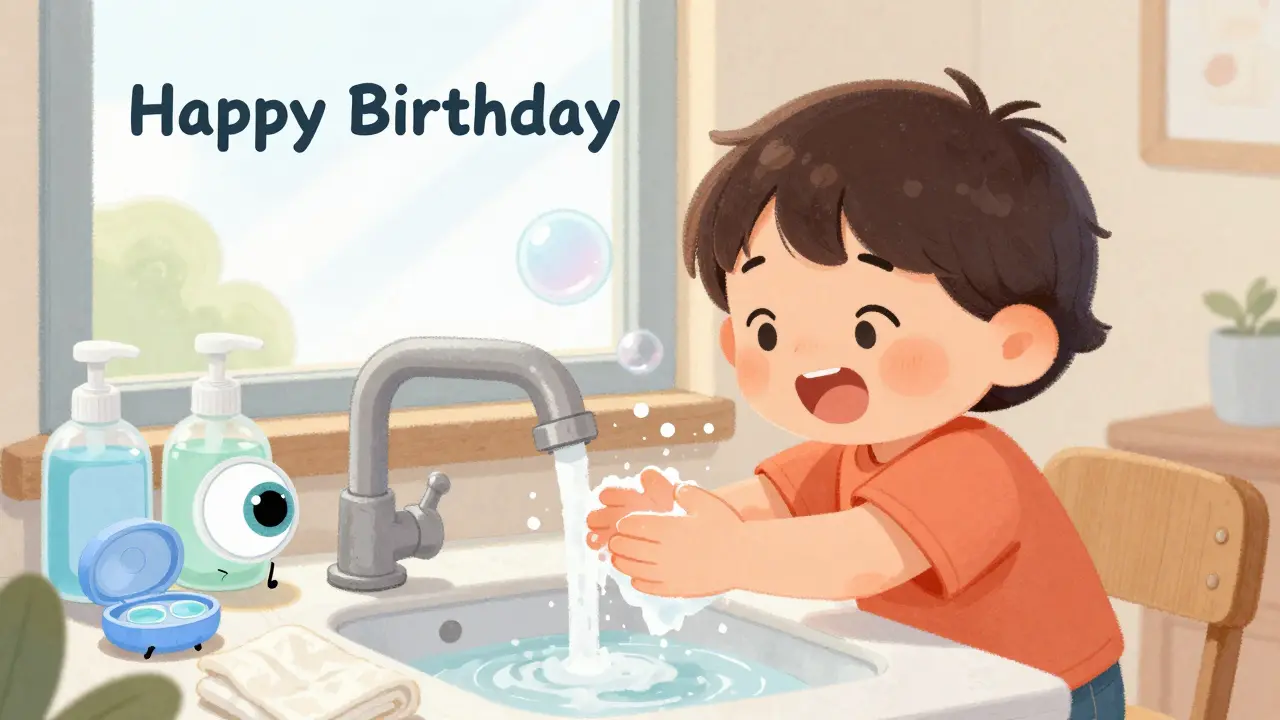
Washing your hands isn’t just a quick rinse. You need soap and water, and you need to scrub for at least 20 to 30 seconds. That’s about the time it takes to sing "Happy Birthday" twice. Don’t use hand sanitizer or alcohol wipes-they can leave residue that irritates your eyes and damages lenses. Dry your hands with a lint-free towel. Paper towels are fine. Avoid cloth towels-they collect bacteria over time.
Pro tip: Open your lens case before you wash your hands. That way, your clean fingers don’t touch the case lid after washing, which could recontaminate them. It sounds small, but it makes a difference.
What You Should-and Shouldn’t-Use in Your Lens Case
Not all solutions are created equal. Your eye care professional recommends a specific brand for a reason. Some lenses work only with certain disinfecting systems. Using the wrong solution can cause lens damage, eye irritation, or worse-failure to kill harmful microbes.
Saline solution and rewetting drops are not disinfectants. They’re meant to moisten your eyes or rinse lenses temporarily. Never use them to store lenses overnight. That’s like putting food in the fridge without cooking it first.
And never, ever top off old solution. Adding fresh solution to leftover solution in your case reduces disinfection power by 30% to 50%. That means bacteria you thought you killed are still alive and multiplying. Always empty the case, rinse it with fresh solution, then refill it completely.
Hydrogen peroxide systems are popular because they’re strong disinfectants, but they require extra care. You must wait 4 to 6 hours after disinfection before inserting lenses. And never rinse lenses directly with hydrogen peroxide-it causes chemical burns. Always use the neutralizing disc that comes with the system.
Your Lens Case Is a Bacteria Hotspot
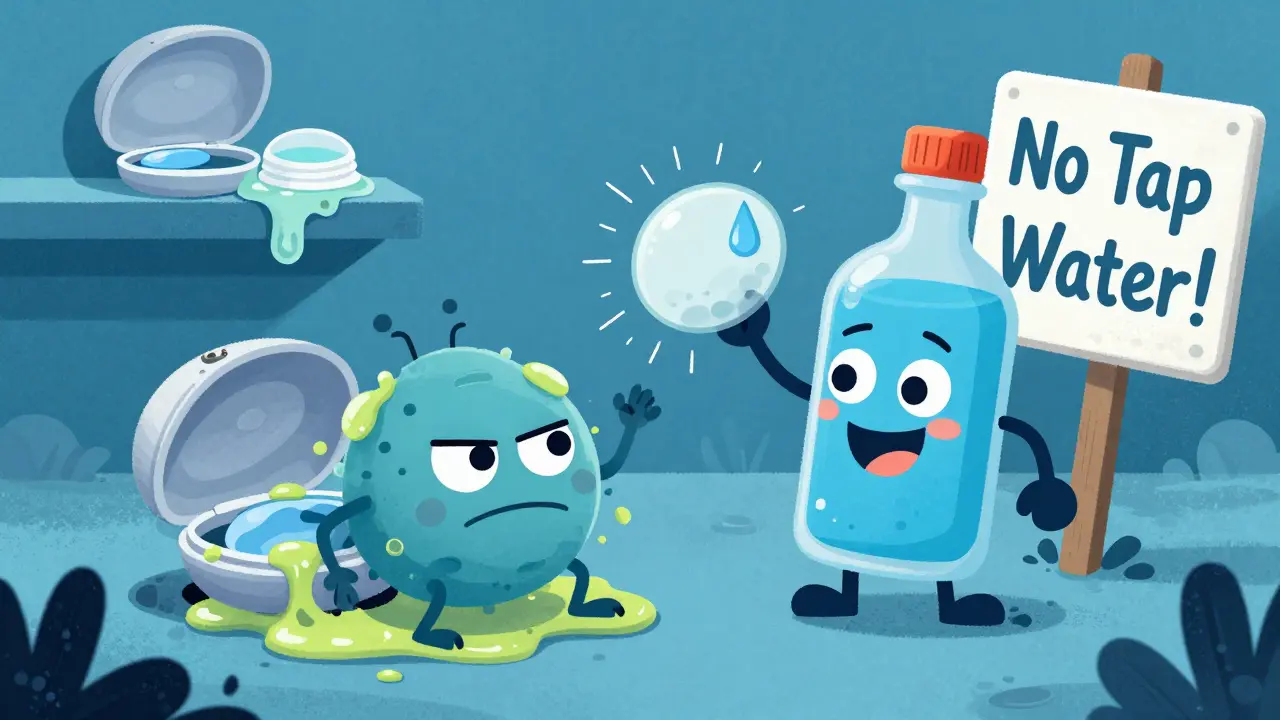
That little plastic case you’ve been using for a year? It’s probably crawling with microbes. The CDC and American Optometric Association agree: replace your lens case every three months. But here’s the thing-many people wait even longer. Some don’t replace it for a year.
Even if you clean it daily, biofilm builds up. That’s a slimy layer of bacteria that sticks to surfaces and resists disinfectants. Rinsing with water makes it worse. Tap water contains microbes, including Acanthamoeba, which can cause a rare but devastating infection called Acanthamoeba keratitis. This infection is hard to treat, often leads to vision loss, and costs an average of $7,500 per case.
After each use, empty the case, rinse it with fresh solution (not water), and leave it open to air dry upside down. This prevents moisture buildup. Store it away from the bathroom sink-humidity encourages bacterial growth. A clean case doesn’t guarantee safety, but a dirty one almost guarantees trouble.
Wear Time: Don’t Push Your Limits
Just because your lenses are labeled "daily wear" doesn’t mean you can wear them for 16 hours straight. Most lenses are designed for 8 to 12 hours of wear. Going longer increases the risk of dry eyes, irritation, and hypoxia-when your cornea doesn’t get enough oxygen.
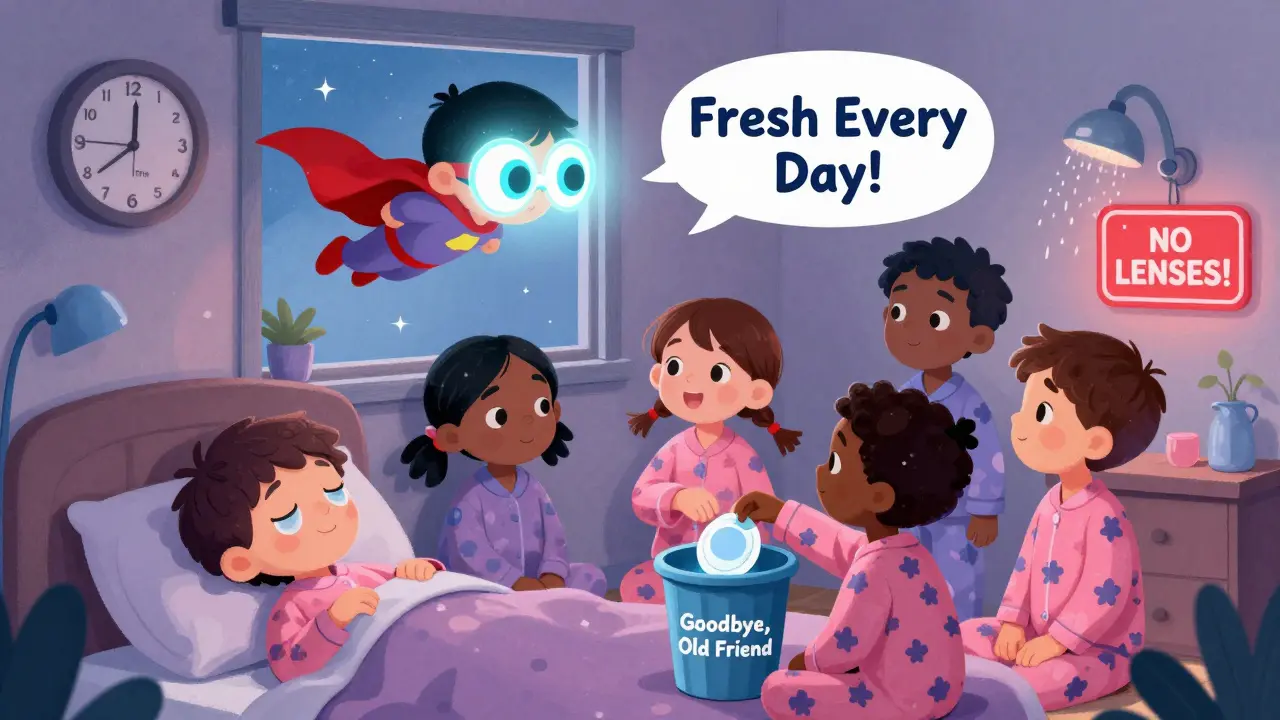
Sleeping in lenses is the biggest mistake people make. Unless your lenses are FDA-approved for extended wear (only 10% to 15% of all lenses), don’t sleep in them. Even if you feel fine, your eyes are vulnerable. The CDC says sleeping in lenses increases infection risk by 6 to 8 times.
And water? Never wear lenses in the shower, pool, or ocean. Chlorine, salt, and freshwater all carry microbes. Swimming with contacts increases infection risk by 10 to 15 times. If you get water in your eyes while wearing lenses, remove them immediately, clean them with fresh solution, and disinfect. If they’re daily disposables, toss them. No exceptions.
Daily Disposables: The Easiest Way to Stay Safe
If you’ve ever struggled with cleaning solutions, cases, or remembering when to replace your lenses, daily disposables might be your best option. They’ve gone from a niche product to the most popular choice in the U.S.-now making up 65% of the market.
With daily disposables, you open a fresh pair every morning and throw them away at night. No cleaning. No case. No solution. No risk of contamination from old lenses or dirty storage. That’s why users who switch to daily disposables often report zero infections for years.
They’re a bit more expensive per pair, but when you factor in the cost of one infection, they’re a bargain. Plus, they’re great for people with allergies or dry eyes-fresh lenses mean less buildup of proteins and debris.
Who’s Most at Risk-and Why
The FDA reports that 85% of contact lens complications happen in people aged 18 to 24. Why? Young adults are more likely to sleep in lenses, skip handwashing, or use water to clean them. They’re also more likely to wear lenses while swimming or showering.
Teens and college students often think they’re invincible. They’ve worn contacts for years without issues, so they assume they always will. But infections don’t care how long you’ve been wearing lenses. One bad habit, one contaminated case, one night of sleeping in lenses-can change everything.
There’s also a psychological factor: people forget they’re not wearing glasses. Lenses feel invisible, so people treat them like accessories, not medical devices. That mindset needs to change.
What to Do If Something Feels Off
Redness? Pain? Blurry vision? Sensitivity to light? Don’t wait. Don’t reach for rewetting drops. Don’t try to “sleep it off.” Remove your lenses immediately and call your eye care provider.
Eye infections can escalate fast. What starts as mild irritation can become a corneal ulcer in 24 to 48 hours. Early treatment saves vision. Delayed treatment can mean surgery, scarring, or permanent damage.
Keep your eye doctor’s number saved in your phone. Don’t wait for a regular appointment. If it’s after hours, go to an urgent care clinic that handles eye emergencies.
Final Thoughts: Safety Is a Habit, Not a Checklist
Contact lens safety isn’t about following rules because someone told you to. It’s about protecting your vision-the one thing you can’t replace. Every step matters: washing hands, using the right solution, replacing your case, removing lenses before water exposure, and never sleeping in them unless they’re approved for it.
It’s easy to fall into bad habits. Life gets busy. You’re tired. You think, "I’ll just wear them one more night." But that one night could cost you your sight.
Start small. Pick one habit to fix this week. Maybe it’s replacing your case. Or washing your hands every single time. Once that becomes routine, add another. Over time, these habits become second nature. And your eyes will thank you.
Can I use tap water to clean my contact lenses or case?
No. Tap water contains bacteria, fungi, and amoebas like Acanthamoeba, which can cause severe, sight-threatening infections. Even if the water looks clean, it’s not sterile. Always use fresh contact lens solution to clean lenses and rinse cases. Never use water-even distilled or bottled water-as a substitute.
Is it safe to sleep in contact lenses?
Only if your lenses are specifically designed and approved for overnight wear-and even then, it’s not risk-free. Most lenses are meant for daily wear only. Sleeping in them increases infection risk by 6 to 8 times. If you’re considering extended wear, talk to your eye care professional first. They’ll test your eye health and recommend the right type. Never assume your lenses are safe for sleep just because they feel comfortable.
What’s the difference between multipurpose solution and hydrogen peroxide solution?
Multipurpose solutions clean, rinse, disinfect, and store lenses in one step. Hydrogen peroxide solutions are stronger disinfectants but require a neutralizing system. They don’t contain preservatives, making them better for sensitive eyes. However, you must wait 4 to 6 hours after disinfection before wearing lenses, and you must never rinse lenses with hydrogen peroxide directly-it causes chemical burns. Always follow the instructions on the bottle.
How often should I replace my contact lens case?
Replace your lens case every three months, even if it looks clean. Biofilm-a slimy layer of bacteria-builds up over time and can’t be removed by rinsing. Some experts recommend replacing it every month for extra safety, especially if you’ve had an eye infection before. Always rinse your case with solution after each use, never water, and store it upside down with the cap off to dry.
Are daily disposable lenses safer than reusable ones?
Yes. Daily disposables eliminate the need for cleaning, storing, and handling lenses over multiple days, which removes the biggest sources of contamination. Studies show users of daily disposables have significantly fewer eye infections than those using monthly or biweekly lenses. They’re also better for people with allergies or dry eyes. While they cost more upfront, they reduce long-term risks and expenses tied to infections.
Can I wear contact lenses while swimming or showering?
No. Water from pools, showers, lakes, or even faucets carries harmful microbes that can stick to your lenses and cause infections. The FDA says swimming with contacts increases infection risk by 10 to 15 times. If you must swim with lenses, wear waterproof goggles. If water gets in your eyes, remove and disinfect your lenses immediately-or discard them if they’re daily disposables.
What should I do if my eyes feel irritated after wearing contacts?
Remove your lenses right away. Don’t reinsert them. Don’t use over-the-counter eye drops unless your doctor says it’s okay. Call your eye care provider immediately. Redness, pain, light sensitivity, or blurry vision could signal an infection. Early treatment is critical. Waiting even a day can make the problem worse and harder to treat.

12 Comments
Napoleon Huere
Man, I used to think contacts were just fancy glasses until I saw my buddy end up in the ER with a corneal ulcer. He swore he rinsed his case with tap water ‘because it’s just water.’ Turns out, water’s not just H2O-it’s a microbial buffet. Now he wears glasses and talks about hygiene like it’s scripture. Vision ain’t replaceable, folks.
James Nicoll
So let me get this straight-we’re all supposed to sing ‘Happy Birthday’ twice before touching our lenses, but it’s totally chill to swipe left on Tinder with the same hands? 🤦♂️ Also, why does the CDC sound like a mom yelling at a teenager? ‘NO, JASON, YOU CANNOT SWIM WITH YOUR LENSES!’
John Wippler
Let me tell you something-contact lens safety isn’t about being obsessive, it’s about being smart. I switched to daily disposables after my third eye infection in two years. No more cleaning solutions. No more cases that smell like a science experiment gone wrong. Just pop ‘em in, wear ‘em, toss ‘em. It’s like having a fresh pair of socks every day. And yeah, it costs more-but so does losing your vision. Your eyes don’t come with a warranty. Protect ‘em like your life depends on it-because it does.
Faisal Mohamed
IMO, the real issue is systemic negligence in ocular biofilm management paradigms. 🤓 We’re treating lenses like consumer goods when they’re Class II medical devices. Also, 🤢 tap water = Acanthamoeba gateway. The FDA’s guidelines are *technically* correct, but the compliance curve is exponentially negative among Gen Z. We need a cultural reset. 🧬💧
Josh josh
just stop using water period. its not that hard. i used to do it too then i got a weird red eye and now i just toss my dailies and move on. no drama. no case. no stress. just fresh lenses. life changed.
bella nash
It is imperative that individuals who utilize corrective ocular devices adhere to the stringent protocols established by optometric governing bodies. Failure to comply constitutes a profound disregard for ocular integrity and public health stewardship. One must not underestimate the microscopic peril inherent in substandard hygiene practices.
Curtis Younker
Okay, real talk-I used to sleep in my lenses because I was too lazy to take them out after Netflix. Then I woke up with my eye feeling like it had sandpaper in it. I thought it was dryness, so I put in rewetting drops. Big mistake. Turns out it was the start of an infection. I cried in the emergency room. I’ve been using dailies for two years now and I’ve never felt better. Seriously, if you’re reading this and you’re still cleaning a case from 2021… just stop. Buy a new pack. Your future self will hug you.
Allie Lehto
People are so careless. I saw a girl at the gym wipe her hands on her shirt and then touch her contacts. I wanted to scream. And don’t even get me started on people who shower with them. 😒 It’s not just about you-it’s about the bacteria you’re spreading. And yes, I’ve had a corneal ulcer. It’s not glamorous. It’s not ‘cool.’ It’s painful, expensive, and scary. Stop being a dumbass.
Henry Jenkins
I think there’s a deeper cultural issue here. We treat our eyes like afterthoughts-like they’re just tools for scrolling and streaming. But they’re the only sensory organs that can’t be replaced. The fact that 85% of complications happen to people under 24 tells me we’re not teaching this stuff early enough. Schools should have mandatory eye hygiene modules. Not just ‘wash your hands,’ but ‘here’s what happens when you don’t.’ Visuals of infected corneas. Real stories. This isn’t scare tactics-it’s survival education. And we’re failing a generation because we think it’s ‘too much.’
Nicholas Miter
Been wearing contacts for 12 years. Never had an issue. But I’ve seen friends go through hell. I don’t judge-I just share what worked for me: dailies, no water, case replaced every 3 months, and I always wash my hands before bed. No drama. No fuss. It’s just part of my routine now. Like brushing teeth. If you’re tired, just put the lenses in a cup with solution and sleep. No big deal. Your eyes will thank you tomorrow.
Suresh Kumar Govindan
Western medical institutions promote this narrative to sell disposable lenses. In my homeland, we use boiled water and salt solutions for decades. No infections. No problems. This is corporate fear-mongering disguised as science. The real threat is profit-driven consumerism, not Acanthamoeba.
George Rahn
Our country’s decline is visible in the way people treat their bodies. You can’t outsource responsibility to a plastic case and a bottle of solution. Americans are too lazy to wash their hands, too entitled to follow instructions, and too distracted to care about their own health. This isn’t a medical issue-it’s a moral failure. If you can’t follow simple hygiene rules, you don’t deserve to see clearly. And if you think daily disposables are expensive, try paying for a corneal transplant. That’s the price of American apathy.