
SAMe-Antidepressant Interaction Checker
Risk Assessment
Risk Assessment Result
What to Do
Serotonin Syndrome Symptoms
Seek emergency care immediately if you experience:
- High fever (over 104°F)
- Rapid heart rate
- Muscle rigidity
- Confusion or agitation
- Seizures
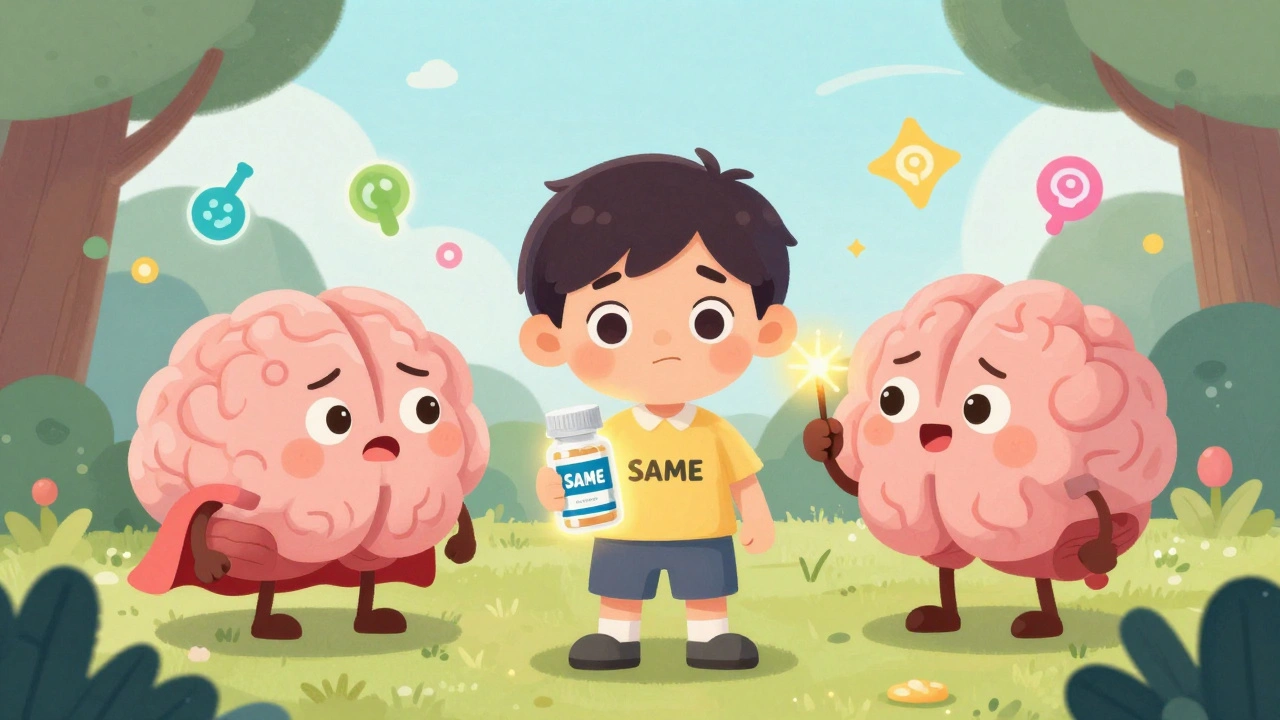
When you're struggling with depression and standard treatments aren't working, it's tempting to try anything that might help. That’s where SAMe comes in. Sold in health stores as a supplement, it’s marketed as a natural mood booster. But here’s the thing: mixing SAMe with antidepressants isn’t just risky-it can land you in the emergency room.
What SAMe Actually Does in Your Brain
SAMe, or S-adenosylmethionine, is a compound your body makes naturally. It’s not a drug. It’s a methyl donor-meaning it helps your brain produce key neurotransmitters like serotonin, dopamine, and norepinephrine. These are the same chemicals targeted by antidepressants. That’s why some people turn to SAMe when SSRIs or SNRIs don’t fully lift their mood.
Studies show SAMe can start working faster than traditional antidepressants-sometimes in 7 to 10 days instead of 4 weeks. In mild to moderate depression, about 35% to 50% of people see improvement. That’s not as strong as the 60% to 70% response rate you get with SSRIs, but for those who haven’t responded to meds, it can be a lifeline.
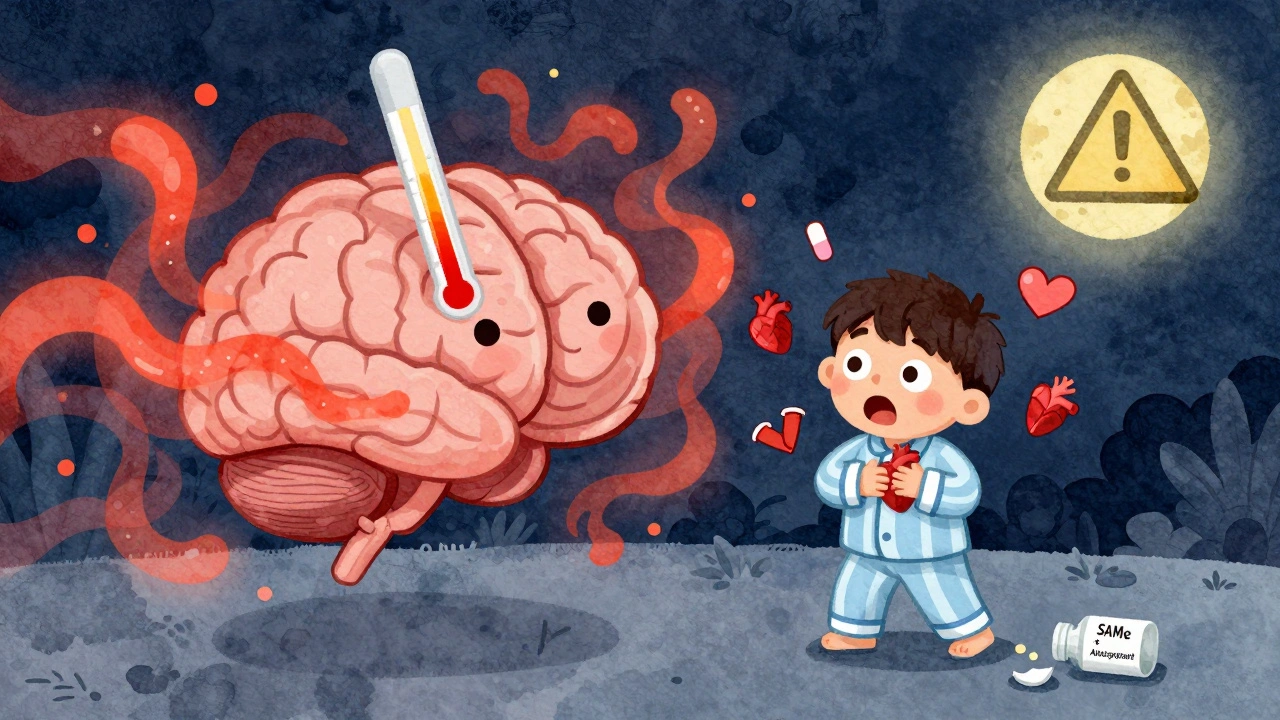
But here’s the catch: SAMe doesn’t just boost serotonin. It also blocks its reuptake, similar to how SSRIs work. That’s why combining it with antidepressants creates a dangerous overlap. Your brain gets flooded with serotonin. And when that happens, you risk serotonin syndrome.
Serotonin Syndrome: The Hidden Danger
Serotonin syndrome isn’t just a side effect-it’s a medical emergency. Symptoms include rapid heart rate, high blood pressure, muscle rigidity, confusion, sweating, tremors, and fever. In severe cases, it can lead to seizures, organ failure, or death.
Between 2000 and 2022, only about 12 published cases linked SAMe and antidepressants to serotonin syndrome. That sounds low, but real-world data tells a different story. The FDA’s adverse event database recorded 32 reports of SAMe-antidepressant interactions between 2018 and 2022, including 9 classified as serious. One Reddit user described racing heart, muscle stiffness, and confusion after adding 400mg of SAMe to their Prozac. They ended up in the ER.
Doctors at Mayo Clinic and Massachusetts General Hospital warn that the risk jumps by 35% when SAMe is taken with SSRIs. The Natural Medicines Database rates this interaction as “Major-Use Caution,” with a severity score of 7.3 out of 10. That’s higher than many known dangerous drug combos.
Who Should Avoid SAMe Altogether
SAMe isn’t for everyone. If you have severe depression-especially melancholic or psychotic types-it’s unlikely to help. One 2015 study found remission rates of only 18% with SAMe compared to 42% with venlafaxine. It also doesn’t work well for people with bipolar disorder. There are reports of SAMe triggering mania or rapid mood swings.
And if you’re already on multiple antidepressants, MAOIs, or even certain pain meds like tramadol or dextromethorphan, SAMe is a hard no. Even over-the-counter cough syrups can interact dangerously. The supplement industry doesn’t require proof of safety before selling these products. A 2021 JAMA Internal Medicine review found only 37% of SAMe labels included proper interaction warnings.
The Quality Problem
Not all SAMe supplements are created equal. ConsumerLab’s 2022 testing found that 32% of products contained 15% to 25% less active ingredient than advertised. Amazon reviews show 42% of users say it “didn’t work for depression.” That’s partly because low-dose or degraded products won’t have any effect. SAMe breaks down quickly if not stored properly-refrigeration is required. If your bottle sat on a warm shelf for months, it might be useless.
Brands like Doctor’s Best and NOW Foods are among the most trusted, but even they aren’t foolproof. The FDA issued warning letters to three manufacturers in 2023 for claiming SAMe treats depression-a claim that’s not approved. You’re buying a supplement, not a medicine. There’s no guarantee of strength, purity, or safety.
When SAMe Might Help-And How to Use It Safely
There’s one scenario where SAMe shows real promise: depression paired with chronic pain, like osteoarthritis. A 2018 study found SAMe added to duloxetine reduced pain 30% more than the antidepressant alone. For people with both conditions, it might be worth considering.
If you and your doctor decide to try it, here’s how to do it right:
- Start low: 200mg twice daily, not more.
- Wait at least 5-7 days before increasing the dose.
- Never start SAMe on your own if you’re already on an antidepressant.
- Monitor for symptoms: If you feel restless, shaky, sweaty, or your heart races-stop immediately and call your doctor.
- Take it with food to reduce nausea or stomach upset-this helps 65% of users.
- Avoid taking it late in the day. It can cause insomnia in 18% of people.
Some people report initial anxiety or irritability in the first week. That’s not unusual-it often clears up as your body adjusts. But if symptoms get worse, don’t push through. Get help.
The Bigger Picture
SAMe is part of a growing trend: people turning to supplements to fix mental health problems. In 2022, 4.7 million Americans used SAMe for depression. Two-thirds of them took it alongside prescription antidepressants. That’s a lot of people mixing unregulated substances with powerful drugs.
The science is still evolving. A major NIH-funded trial is underway to study SAMe combined with escitalopram, with results expected in mid-2024. Until then, guidelines from the American Psychiatric Association and the European College of Neuropsychopharmacology are clear: don’t combine SAMe with antidepressants outside of strict clinical supervision.
And while the global market for SAMe is growing-$120 million in the U.S. alone-it’s not because it’s proven safe. It’s because people are desperate. If you’re one of them, understand this: what feels like a natural solution can become a medical crisis.
What to Do Instead
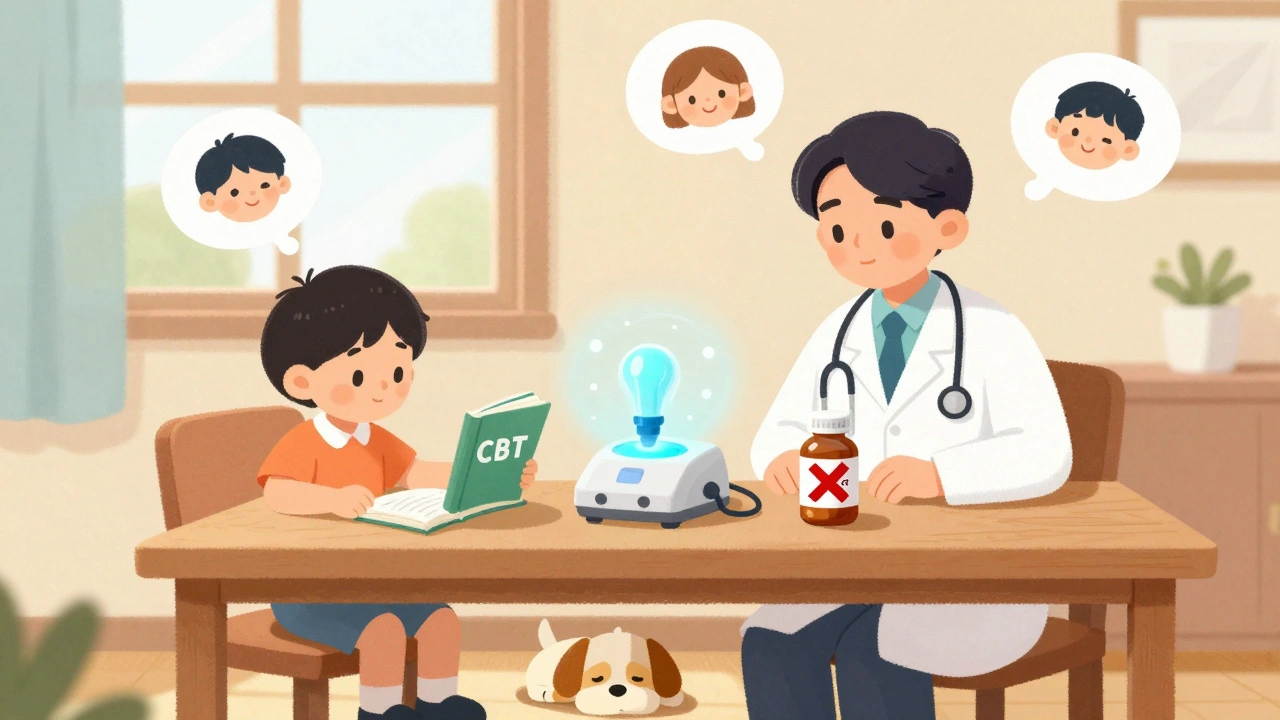
If your antidepressant isn’t working, talk to your doctor about evidence-based options: switching medications, adding therapy like CBT, trying transcranial magnetic stimulation (TMS), or adjusting your dose. These are proven, monitored, and regulated.
SAMe might sound appealing because it’s “natural.” But nature doesn’t care if you live or die. Your brain does. And when it comes to mood, the stakes are too high to guess.

10 Comments
Jim Schultz
SAMe? Please. You're telling me people are casually tossing methyl donors into their cocktail of SSRIs like it's a protein shake? The FDA database has 32 reports in four years-and that's just the ones that made it in? I'd bet the real number's 10x that. And don't get me started on the supplement industry's 'natural' loophole-no testing, no oversight, just a fancy bottle and a yoga instructor's endorsement. This isn't wellness-it's Russian roulette with your serotonin receptors.
Kidar Saleh
Let me be blunt: the idea that a supplement sold next to turmeric and probiotics can safely augment psychiatric medication is not just dangerous-it's a cultural failure. In the UK, we don't let people self-prescribe mood-altering substances without a pharmacist's review. Here, you can buy SAMe with a credit card and a Google search. No prescription. No counseling. No follow-up. We've turned mental health into a DIY project-and people are dying because of it.
Chloe Madison
I'm a clinical nutritionist, and I've seen this too many times. People come in saying, 'I read SAMe works better than Prozac'-and then they're terrified because their hands won't stop shaking. The truth? SAMe can help-but only if you're under supervision. Start at 200mg, monitor for 7 days, and never combine it with anything else without your psychiatrist's green light. And yes, refrigerate it. If your bottle's been on a shelf since January, it's probably just sugar dust with a fancy label. Your brain deserves better than expired supplements.
Vincent Soldja
SAMe dangerous with antidepressants. Avoid.
Makenzie Keely
Let’s be crystal clear: the fact that 4.7 million Americans are self-medicating with SAMe alongside SSRIs isn’t a testament to its efficacy-it’s a symptom of a broken mental healthcare system. People aren’t being heard. They’re being told to wait six weeks for a therapist, then told their insurance won’t cover TMS, then handed a bottle of unregulated powder and told to ‘try natural options.’ The science is nuanced, the risks are real, and the labeling is a joke. If your supplement doesn’t have a FDA-registered NDC number, it’s not medicine-it’s a gamble. And you’re not just gambling with your mood-you’re gambling with your life.
Francine Phillips
i took sam e for a month and nothing happened. probably because i bought the cheap one from walmart. also felt kinda jittery at first but it went away. not worth the hassle
Katherine Gianelli
Hey-I’ve been there. Felt like my brain was stuck in molasses. Tried everything. SAMe was the only thing that made me feel even a little brighter, but I only started it after my psychiatrist said it was okay. I started at 100mg, took it with breakfast, and kept a journal. No racing heart. No tremors. Just… a little more spark. It’s not magic. It’s not a cure. But for me, with duloxetine and weekly therapy? It helped. Just please, please talk to someone who knows what they’re doing before you toss something new into the mix. Your nervous system isn’t a lab experiment.
Joykrishna Banerjee
Let me correct the narrative: SAMe is not a 'natural mood booster'-it's a synthetic methyl donor with pharmacokinetics indistinguishable from SSRIs in terms of monoaminergic modulation. The 'natural' branding is a semantic fraud designed to circumvent regulatory scrutiny. Moreover, the cited 35-50% efficacy rate is derived from small, non-blinded trials with questionable controls. Meanwhile, the DSM-5-TR explicitly classifies serotonin syndrome as a neurotoxic emergency, yet the supplement industry continues to market SAMe as 'safe for adjunctive use'-a claim that is not merely unsupported, but actively reckless. The real issue isn't SAMe-it's the neoliberal commodification of mental health, where desperation is monetized by unlicensed vendors selling bioactive compounds as 'wellness.'
Myson Jones
I appreciate the thorough breakdown. Honestly, this is the kind of post that should be required reading for anyone considering supplements for mental health. The fact that so many people don’t realize SAMe acts like an SSRI on a molecular level is terrifying. And the quality control issue? That’s the silent killer. If your bottle’s not refrigerated, you’re not even getting the dose you think you are. I’ve seen patients take 800mg of degraded SAMe and wonder why they’re still depressed. It’s not the supplement’s fault-it’s the system’s. Thank you for being clear, factual, and not sensational.
parth pandya
i tried sam e after my doc said it was ok with my zoloft. i took 400mg for 3 days and got super sweaty and heart was pounding. i stopped. dont take it with anything. i was lucky