
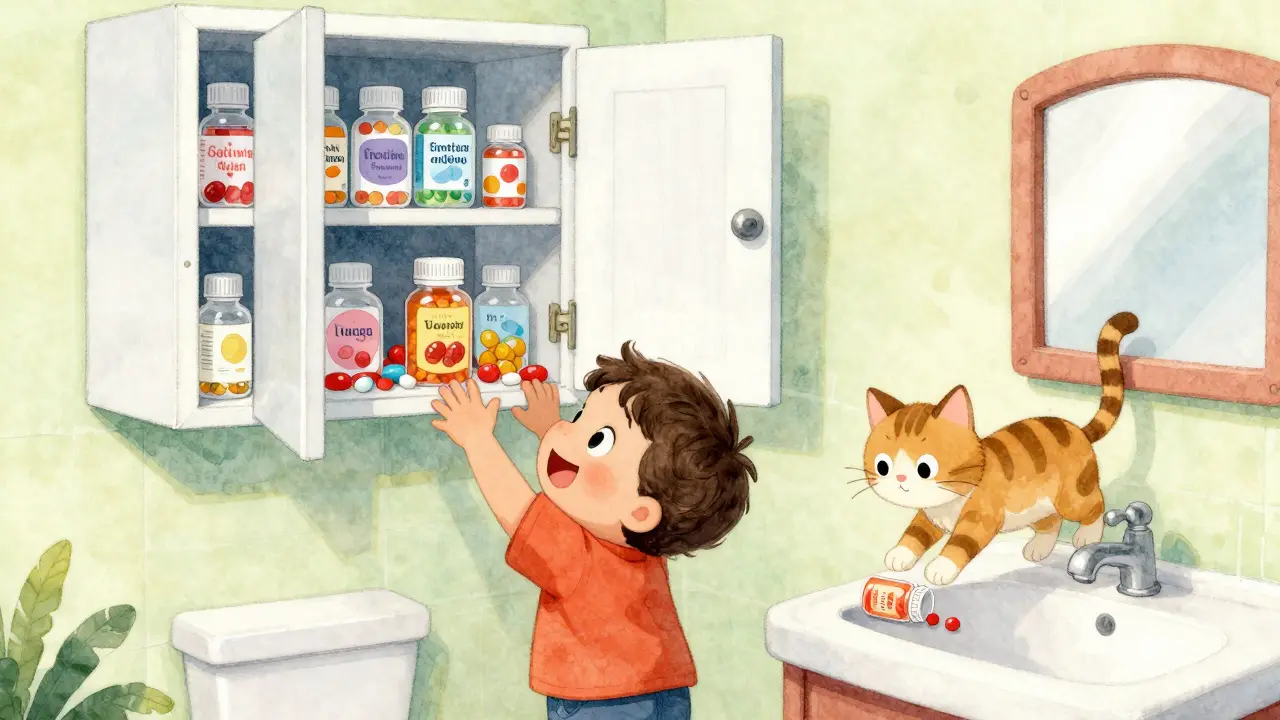
Every year, 60,000 children end up in emergency rooms because they swallowed medicine they shouldn’t have. And it’s not just kids - dogs, cats, and even ferrets are getting into pills left out in the open. Most of these incidents aren’t accidents caused by curiosity alone. They happen because medicine is stored in the wrong place - like the bathroom cabinet, the kitchen counter, or inside a purse on the floor.
It’s easy to think, "My child can’t reach that shelf," or "My dog wouldn’t eat that." But children climb. Pets sniff. And gummy vitamins? They look like candy to both. The truth is, child-resistant caps aren’t enough. Neither is putting medicine up high. You need layers of protection - and the right habits - to keep your family safe.
Where Not to Store Medications
The bathroom is the most common mistake. It’s convenient - you brush your teeth there, you take your pills there. But humidity from showers and baths can ruin pills, making them less effective or even dangerous. Studies show 40% of households store medicine in the bathroom, even though the moisture level can break down active ingredients.
The kitchen counter is another trap. You grab a pill while making coffee. You leave the bottle there for a minute. Then another. Before you know it, it’s been sitting there for hours. Kids climb on chairs. Dogs jump up on countertops. One study found that 78% of pediatric poisonings happened because medicine was left out temporarily during use.
And don’t forget purses, backpacks, or drawers in the living room. Children’s Mercy Hospital reports that 65% of accidental ingestions involve over-the-counter meds left in bags or unlocked cabinets. A single ibuprofen tablet can cause serious harm to a toddler. A single dose of blood pressure medicine can be deadly to a small dog.
Where to Store Medications - The Right Way
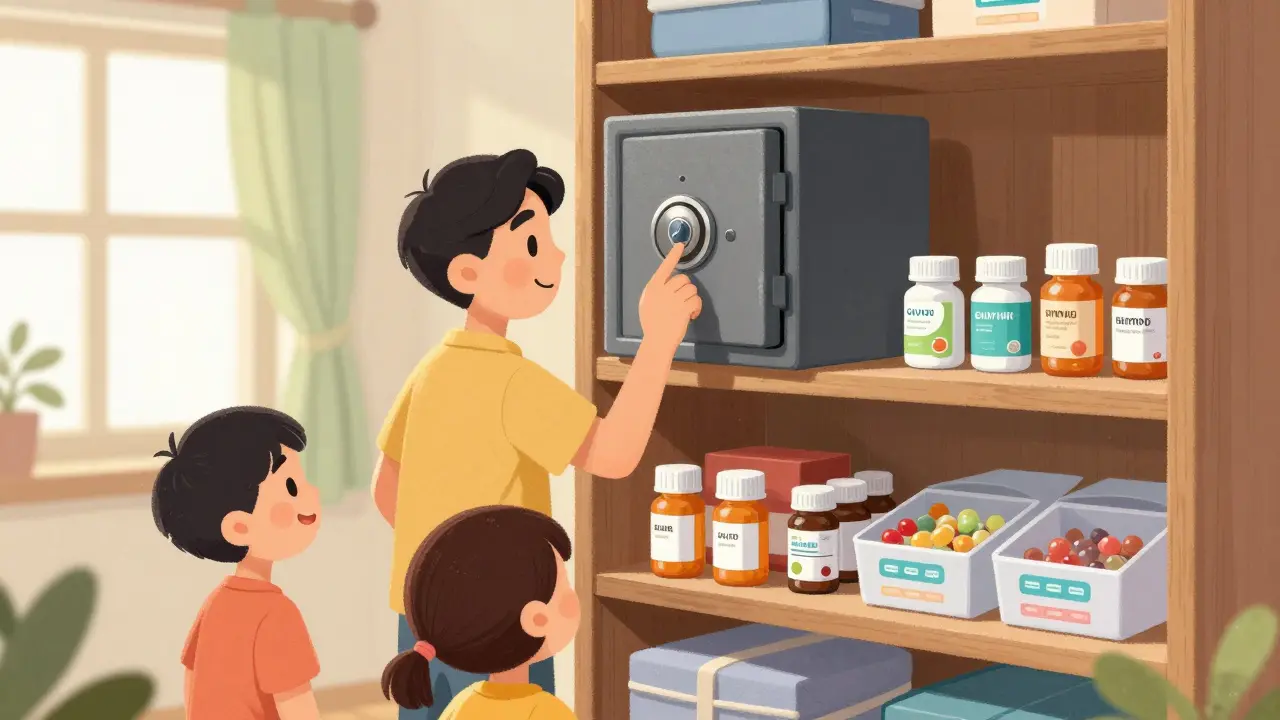
The best place? A locked cabinet, high up, in a dry, cool spot - like a bedroom closet or a high kitchen cabinet with a child lock. The goal is to make it unreachable and out of sight. Children can reach up to 4 feet. So aim for 5 feet or higher. And if you use a clear cabinet? Add a lock. Visibility doesn’t help safety - it invites temptation.
For pets, the rules are even stricter. Never store human and pet meds together. A dog’s arthritis pill might be safe for Rover, but it can cause kidney failure in a cat. And human heart meds? A single tablet can kill a small dog. The FDA says 25% of pet medication incidents happen because owners accidentally take their pet’s medicine - because they’re stored side by side.
Experts recommend a three-zone system:
- Zone 1: Immediate use - Only the current dose. Keep it on a flat surface, like a table, while giving it. Never on the floor or couch.
- Zone 2: Short-term storage - Locked container, at least 5 feet high. Use a combination lock box or biometric safe. These cost under $30 and are worth every penny.
- Zone 3: Long-term storage - Separate locked boxes for human meds, dog meds, and cat meds. Label them clearly. If you have horses or farm animals, keep their meds in a completely different room.
One parent on Reddit said their 3-year-old opened a "childproof" cabinet. Now they use a fingerprint lock. "It adds 10 seconds to my routine," they wrote. "But I sleep better."
Gummy Medicines and Supplements Are the Biggest Risk
They’re sweet. They’re colorful. They’re everywhere. Gummy vitamins, gummy melatonin, gummy probiotics - kids think they’re candy. Pets think they’re treats. The CDC says gummy supplements make up 30% of all childhood supplement ingestions, even though they’re only 15% of the market.
And here’s the kicker: 62% of parents believe gummies don’t need the same level of storage as pills. That’s dangerously wrong. A single gummy melatonin can knock a toddler out for hours. A gummy CBD treat can send a dog to the vet with tremors and vomiting.
Treat them like prescription drugs. Lock them up. Even if they’re labeled "natural" or "for kids."
How to Dispose of Old or Unused Medicine
Don’t flush it. Don’t toss it in the trash loose. Don’t pour it down the sink. Those methods pollute water, harm wildlife, and can be found by curious pets or kids.
The safest way? Mix it with something unappetizing. Use used coffee grounds, cat litter, or dirt. Pour it into a sealable plastic bag. Add water if it’s liquid. Then throw it in the trash. The EPA says this method is 92% effective at preventing reuse.
Some pharmacies and police stations offer take-back bins. Check with your local pharmacy - many now offer free disposal services. If you have a large amount of expired or unused meds, call your city’s household hazardous waste line. They’ll tell you where to drop it off.
Why Lockable Containers Work Better Than Child-Resistant Caps
Child-resistant caps are required by law. But they’re not childproof. A 2022 study showed that 40% of children under 5 can open them in under 5 minutes. Some do it in 10 seconds. And pets? They don’t care about caps. They’ll chew through plastic, knock over bottles, or knock over entire cabinets.
Lockable boxes - like the 11" x 6" VADIC Safe Storage Bag with combination lock - are designed for this exact problem. They’re cheap, easy to install, and effective. A biometric safe that opens with a fingerprint? Even better. It’s fast for you, impossible for them.
One vet clinic in Perth reported a 70% drop in pet poisonings after they gave out free lock boxes to clients during wellness visits. The difference isn’t the product. It’s the habit.
What to Do If Something Goes Wrong
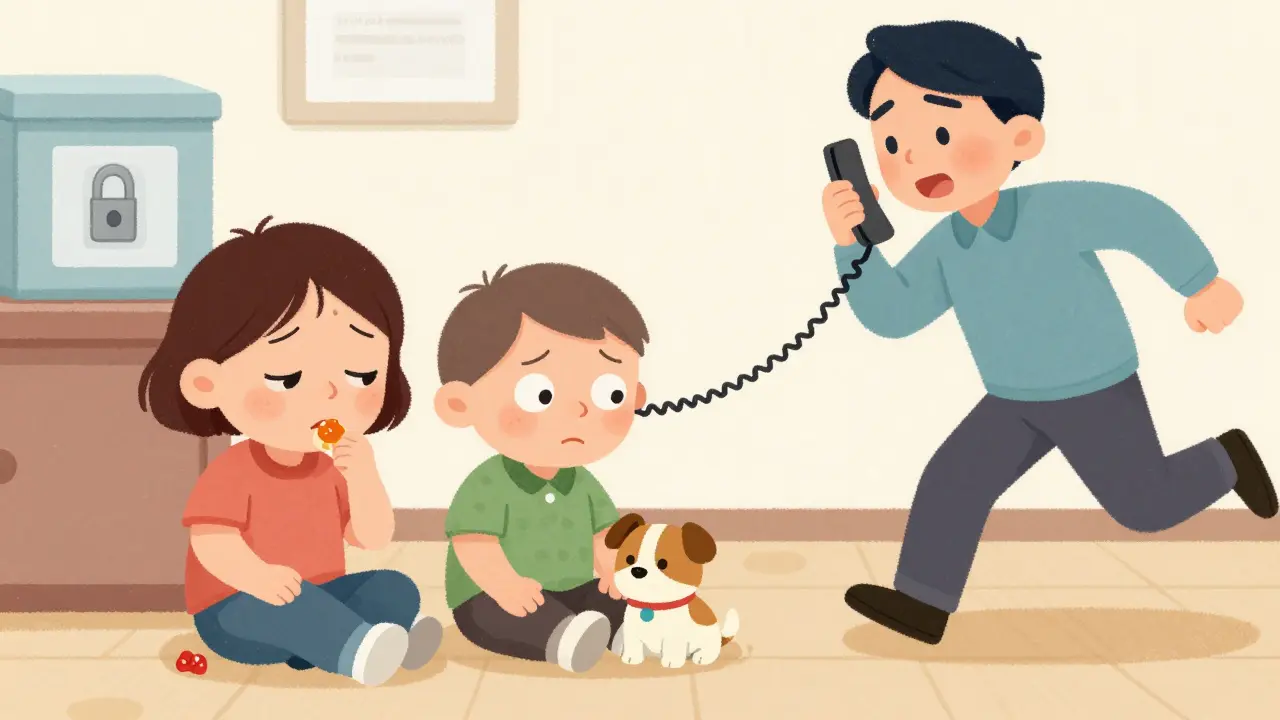
If your child swallows medicine - even one pill - call poison control immediately. In Australia, that’s 13 11 26. Don’t wait for symptoms. Don’t try to make them vomit. Just call.
If your pet ingests medicine, call your vet or the Animal Poison Control Center at 1300 869 738 (Australia). Have the pill bottle ready. Note the name, dose, and time. Even if your pet seems fine, internal damage can take hours to show up.
Keep these numbers saved in your phone. And post them on your fridge. You won’t remember them in a panic.
Make It a Habit - Not a Chore
The biggest barrier to safety? Convenience. People leave medicine out because it’s easier. But safety isn’t about effort - it’s about consistency.
Adopt the "two-minute rule": After every dose, put the medicine away. No exceptions. Even if you’re giving it again in 30 minutes. Put it back. Lock it. Walk away.
Set a weekly reminder on your phone: "Check medicine storage." Look for loose pills on the floor. Check that locks still work. Replace old bottles. Clean out expired meds.
Teach older kids: "This isn’t candy. This is medicine. Only grown-ups touch it." Make it part of your family rules - like not touching the stove.
It takes 15 minutes to set up a safe system. After that, each access takes 3 seconds. The peace of mind? Priceless.
What’s Changing in 2026
By the end of 2024, all new pet medication labels in Australia and the U.S. must include clear warnings: "Store separately from human medications." That’s new. And it’s a big step.
Bluetooth-enabled safes that send alerts to your phone when opened are starting to show up. They’re expensive, but for families with a history of accidents, they’re worth considering.
And in 2026, pediatricians are starting to ask about medicine storage during well-child visits. It’s becoming part of routine care - like checking for car seats or smoke alarms.
These aren’t just trends. They’re responses to real, preventable tragedies.
Can I just keep medicine in a high cabinet without a lock?
No. Children can climb, jump, and use furniture to reach things. Even if the cabinet is 6 feet high, a chair or stool makes it easy. Pets can knock things over. Locks are the only reliable barrier. A simple combination lock box costs less than a grocery run - and could save a life.
What if I have both kids and pets? Can I store all meds in one place?
Never. Human and pet medications have different ingredients, and what’s safe for one can be deadly for the other. A dog’s painkiller can cause kidney failure in a cat. A human blood pressure pill can kill a small dog. Store them in separate locked containers. Label them clearly. This isn’t optional - it’s critical.
Are gummy vitamins really dangerous?
Yes. Gummy vitamins look like candy, taste like candy, and are often mistaken for candy by both children and pets. One gummy melatonin can cause drowsiness, confusion, or vomiting in a child. In pets, it can lead to tremors, high blood pressure, or seizures. Treat them like prescription drugs - lock them up, even if they’re "natural."
How do I dispose of old or expired pills safely?
Mix pills with coffee grounds, cat litter, or dirt. Put them in a sealed plastic bag. Throw them in the trash. Don’t flush or pour them down the drain - that pollutes water and can harm wildlife. Many pharmacies now offer free take-back programs. Check with your local pharmacy or council for drop-off locations.
What should I do if my child or pet swallows medicine?
Call poison control immediately. In Australia, dial 13 11 26 for human poisonings. For pets, call the Animal Poison Control Center at 1300 869 738. Don’t wait for symptoms. Don’t try to make them vomit. Have the pill bottle ready when you call - name, dose, and time are critical.
Is it safe to store medicine in the fridge?
Only if the label says to. Some medicines, like insulin or certain antibiotics, require refrigeration. But never store them next to food. Use a locked container inside the fridge to prevent access by kids or pets. And always label it clearly: "MEDICATION - DO NOT EAT."
Final Thought: Safety Isn’t About Perfection - It’s About Consistency
You don’t need a fancy safe. You don’t need to be perfect. You just need to be consistent. Lock it. Put it up. Keep it separate. Dispose of it right. Do it every time.
Accidents happen in seconds. Prevention takes seconds too. Make it part of your routine - like locking the door or turning off the stove. Your family’s safety isn’t a one-time task. It’s a habit. And habits, once built, last a lifetime.

9 Comments
Linda O'neil
I used to keep all my meds in the bathroom until my nephew got into my melatonin gummies. He was out cold for six hours. Now everything’s in a lockbox on the top shelf of my bedroom closet. Best $25 I ever spent. No more nightmares.
James Dwyer
This is the kind of post that makes you realize how lazy you’ve been about safety. I left my wife’s blood pressure pills on the kitchen counter for weeks. Not anymore. Lockbox bought. Installed. Done.
jonathan soba
Let’s be honest - most of these ‘solutions’ are just expensive band-aids. You’re telling people to buy a $30 lockbox because they can’t be trusted to put a pill bottle away? The real problem is parental negligence, not poor storage design. And don’t get me started on gummy vitamins - if your kid thinks they’re candy, maybe stop calling them ‘gummy’ and start parenting.
Chris Urdilas
Wow. This is the most practical thing I’ve read all year. I used to think ‘childproof caps’ were enough. Then my dog ate a whole bottle of my CBD gummies. He was fine, but the vet bill wasn’t. Now I’ve got three lockboxes: one for me, one for the dog, one for the cat. And yes, the cat’s meds are in a different room. She’s a tiny demon with claws and zero respect for boundaries.
Also - gummy vitamins are literally candy with a vitamin label. Stop pretending they’re safe. Lock them. Like, right now. I’m not even mad. I’m just impressed I didn’t lose a kid over this.
Phil Davis
My sister swears she’s ‘too careful’ to need a lockbox. Then her 2-year-old got into her sister’s diabetes meds. Took three hours to get to the hospital. She still says, ‘I didn’t think he could reach it.’
He climbed on the couch. Then the chair. Then the counter. Kids are tiny ninjas. Pets are tiny tornadoes. Lock it. Or pay later.
Irebami Soyinka
Y’all in the West be actin’ like you just discovered fire. In Lagos, we’ve been lockin’ up pills since the 90s - no fancy biometrics, just a tin box nailed to the wall and a big sign: ‘DIE IF YOU TOUCH THIS.’
My cousin’s baby swallowed a gummy vitamin? He went to the hospital. Came back fine. Now that box is chained to the ceiling. No drama. No excuses. Just survival.
Stop treatin’ safety like a trend. It’s not ‘trendy’ to bury your child. It’s basic.
Kevin Kennett
Thank you for writing this. I’m a single dad of two, and I’ve been guilty of leaving pills on the nightstand because I was tired. This post didn’t shame me - it reminded me why I’m doing this. I bought a lockbox last week. I didn’t tell my kids. I just started using it. Now when they ask why the cabinet is locked, I say, ‘Because it’s not for you. And that’s okay.’
It’s not about control. It’s about care.
Jess Bevis
Lock it. Separate it. Dispose of it. Done.
Rose Palmer
As a registered nurse and mother of three, I cannot emphasize enough the importance of adhering to these protocols. The data presented is not anecdotal - it is epidemiologically validated and reflects a preventable public health crisis. I have personally witnessed the consequences of lax medication storage, including pediatric ICU admissions and irreversible organ damage in companion animals. I urge all caregivers to implement the three-zone system without delay. The cost of inaction is incalculable. This is not a suggestion. It is a clinical imperative.