
Quick Summary
- Herpes Simplex Virus (HSV) affects billions globally, with HSV-1 causing mostly oral infections and HSV-2 causing mostly genital infections, though both can infect either area.
- Symptoms range from mild tingling to painful blisters, with primary outbreaks being more severe than recurrent ones.
- Antiviral therapy like acyclovir and valacyclovir shortens healing time and reduces transmission risk significantly.
- Diagnosis is most accurate via PCR swabs during an outbreak or type-specific blood tests for antibodies.
- Suppressive therapy is recommended for frequent outbreaks or to protect uninfected partners, reducing transmission by up to 48%.
Imagine waking up with a burning sensation on your lip or feeling a strange itch in a private area. Within hours, painful blisters appear. This is the reality for millions of people living with the Herpes Simplex Virus, commonly known as HSV. It is one of the most widespread viral infections on the planet. According to recent World Health Organization data, roughly 67% of the global population under age 50 carries HSV-1. That means two out of three people you meet might be carrying the virus without even knowing it. While the stigma surrounding this condition is heavy, the medical reality is manageable. Understanding the types, recognizing the symptoms early, and knowing your treatment options can change a scary diagnosis into a routine health management plan.
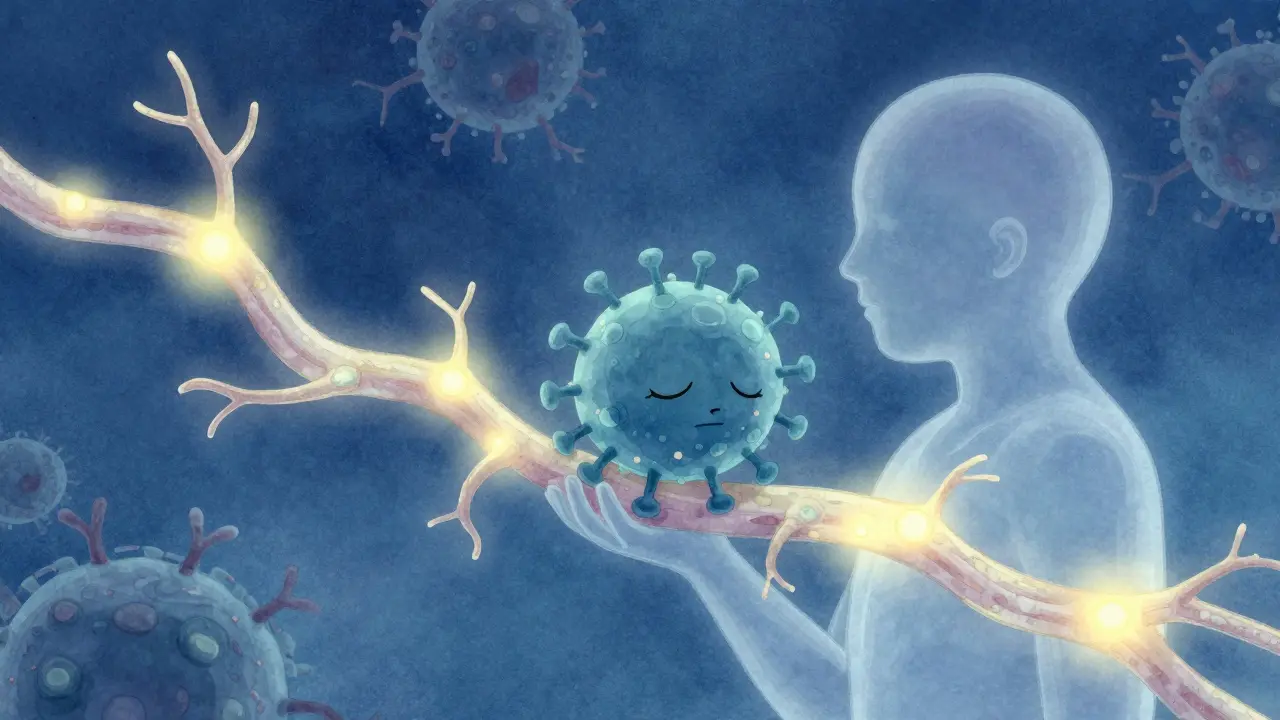
Many people think herpes is only a sexually transmitted infection, but that is only part of the story. The virus is incredibly adaptable. It establishes a lifelong home in your nerve cells, specifically in the sensory ganglia. For HSV-1, that's usually the trigeminal ganglion near your jaw. For HSV-2, it's the sacral ganglia near your spine. Once it settles there, it waits. It can stay dormant for years, waking up only when your immune system gets distracted by stress, illness, or fatigue. Knowing how this virus behaves is the first step in controlling it. You don't just treat the blisters; you manage the virus.
Understanding the Two Main Types
When doctors talk about herpes, they are usually referring to one of two specific viruses: HSV-1 and Herpes Simplex Virus Type 1, or HSV-2 and Herpes Simplex Virus Type 2. Historically, we taught that HSV-1 lives above the waist and HSV-2 lives below. That rule of thumb is becoming outdated. While HSV-1 is still the main cause of cold sores (90% of cases), it is now responsible for 30-50% of new genital herpes cases in many high-income countries. Conversely, HSV-2 remains the dominant cause of genital herpes, accounting for 70-80% of cases.
The distinction matters because the recurrence rates differ wildly. If you have genital HSV-1, you might only have an outbreak once or twice a year. If you have genital HSV-2, you could see four to five outbreaks annually without medication. This difference impacts your treatment plan. HSV-2 sheds the virus asymptomatically more often-on about 10-20% of days compared to 5-10% for genital HSV-1. This shedding is when the virus is active on the skin surface but you have no visible sores. It is the primary way the virus spreads to partners. Understanding which type you have helps you and your doctor decide if daily suppressive therapy is necessary.
| Feature | HSV-1 | HSV-2 |
|---|---|---|
| Primary Location | Oral (90%) | Genital (70-80%) |
| Global Prevalence | 67% (under age 50) | 13% (ages 15-49) |
| Genital Recurrence | Low (0.2-0.5 times/year) | High (4-5 times/year) |
| Asymptomatic Shedding | 5-10% of days | 10-20% of days |
| Neonatal Risk | Higher mortality (30%) | Lower mortality (20%) |
Recognizing Symptoms and Progression
Not everyone with HSV shows symptoms. In fact, many people have the virus and never develop a visible outbreak. However, for those who do, the progression is usually predictable. It starts with the prodrome. This is the warning phase. You might feel a localized burning, tingling, or itching sensation. For HSV-1, this often happens on the lips. For HSV-2, it's the genital or anal area. This phase lasts less than six hours in recurrent cases but can be longer during a primary infection. If you catch the virus here, you can start medication before the blisters even form, which is the golden window for treatment.
Next come the vesicles. These are clusters of small blisters, usually 0.5 to 1.5 cm in size, sitting on red, inflamed skin. They are fluid-filled and very tender. Over the next few days, these blisters pop, turning into shallow ulcers. They eventually crust over and heal. Without treatment, a primary outbreak can take 14 to 21 days to resolve. A recurrent outbreak usually heals in 7 to 10 days. Primary infections are often more severe. Children with primary oral HSV-1 might get a high fever up to 40°C and painful mouth ulcers that make swallowing difficult. Adults with primary genital HSV-2 often report painful urination and swollen lymph nodes in the groin.
There are serious complications to watch for, though they are rare. Herpes keratitis is an eye infection caused mostly by HSV-1. It can lead to corneal scarring and blindness if not treated immediately with topical antivirals. Neonatal herpes is another critical risk. If a mother has an active outbreak during delivery, the virus can pass to the baby. This happens in about 1 in 3,200 births in the US. It is dangerous, but manageable with C-sections and antiviral therapy during pregnancy. Encephalitis, an inflammation of the brain, is another severe complication, mostly linked to HSV-1. It causes fever, headache, and seizures. Recognizing these signs early saves lives.

Diagnosis: Getting the Right Test
Walking into a clinic with a sore doesn't always mean you get a diagnosis. The timing of the test matters. If you have an active sore, the best test is a PCR swab. You scrape the base of the ulcer with a swab, and the lab looks for the virus's DNA. This method has a sensitivity of 95-98%. Old viral culture tests are much less reliable, often missing the virus if the sample isn't perfect. PCR results usually come back in 24 to 72 hours. If you don't have a sore but want to know your status, you need a blood test.
Not all blood tests are created equal. You want a type-specific glycoprotein G (gG) assay. Older tests couldn't tell the difference between HSV-1 and HSV-2 antibodies. The new ones can. They check for IgG antibodies, which indicate a past infection. These tests are most accurate 16 weeks after exposure. Testing too soon can give a false negative because your body hasn't built up enough antibodies yet. The HerpeSelect ELISA was a standard for years, but with its discontinuation in 2022, labs now use alternatives like EUROIMMUN's recomLine HSV IgG test, which maintains high accuracy. Always ask your doctor which specific test they are ordering.
Antiviral Therapy Options
There is no cure for herpes, but there is excellent control. Antiviral therapy works by stopping the virus from replicating. It doesn't kill the virus hiding in your nerves, but it stops it from making new copies when it wakes up. The three main drugs are Acyclovir, Valacyclovir, and Famciclovir. Valacyclovir is essentially a prodrug of acyclovir, meaning your body converts it into acyclovir. The advantage is that you can take it less often because it absorbs better in the gut.
You have two ways to use these medications: episodic or suppressive. Episodic therapy means you take the pills only when you feel an outbreak coming or when you see a sore. For example, taking valacyclovir 500mg twice daily for 3 days can cut healing time in half. Suppressive therapy means taking a lower dose every day, like valacyclovir 500mg once daily. This prevents outbreaks from starting in the first place. It reduces the frequency of outbreaks by 70-80%. More importantly, it reduces the risk of transmitting the virus to a partner by about 48%. This is a game-changer for couples where one partner is positive and the other is negative.
Side effects are generally mild. Headaches and nausea are the most common, reported by about 22% and 15% of users respectively. However, in people with kidney issues, these drugs can cause crystal formation in the urine, so drinking plenty of water is crucial. For immunocompromised patients, like those with HIV or organ transplants, resistance can be an issue. About 10% of HSV isolates in patients with low CD4 counts show resistance to acyclovir. In these cases, doctors might prescribe foscarnet or the newer drug pritelivir, which was approved by the FDA in 2023 for resistant cases. Pritelivir showed an 87% reduction in viral shedding in trials, offering hope for those who don't respond to standard care.
Special Situations and Management
Pregnancy changes the game significantly. If you have a history of genital herpes, your obstetrician will likely start you on suppressive therapy at 36 weeks of pregnancy. This is to prevent an outbreak at the time of delivery. If you do have an outbreak when you go into labor, a C-section is usually recommended to protect the baby. The risk of neonatal herpes drops from 30-50% to 1-3% with proper management. For women with no history of herpes who acquire it late in pregnancy, the risk is highest, so immediate treatment and monitoring are vital.
Eye infections require immediate attention. If you experience redness, pain, or light sensitivity in your eye, go to an ophthalmologist, not just your GP. Herpes keratitis is treated with topical trifluridine drops, often hourly for a week. Oral antivirals alone aren't enough for the eye. Delaying treatment can lead to permanent vision loss. In the US alone, this causes 50,000 new cases of corneal blindness annually. It is a reminder that HSV is not just a skin condition; it can affect vital organs.
Living with the diagnosis also means managing the psychological impact. Stigma is real. Surveys show that 74% of people with HSV experience anxiety related to the stigma. Many delay telling partners for months. However, open communication and using medication to reduce transmission risk can help. Knowing that millions of people live normal, healthy lives with HSV can reduce the fear. Support groups and organizations like the American Sexual Health Association offer resources to help navigate relationships and disclosure.
Next Steps and Troubleshooting
If you suspect you have herpes, the first step is to see a healthcare provider for testing. Do not rely on home tests for diagnosis if you have active symptoms; a swab is more accurate. If you are diagnosed, ask your doctor about the difference between episodic and suppressive therapy. Consider suppressive therapy if you have more than six outbreaks a year, if outbreaks are severe, or if you have an uninfected partner. Keep a supply of medication at home and in your bag so you can start treatment within 24 hours of symptoms. This timing is critical for effectiveness.
Monitor your triggers. Stress, lack of sleep, sun exposure, and illness can all trigger an outbreak. Keeping a diary of your outbreaks can help you identify patterns. If you are on suppressive therapy and still get breakthrough outbreaks, talk to your doctor about adjusting the dose. If you experience severe side effects like kidney pain or confusion, seek medical help immediately. Remember, while the virus is lifelong, the burden of disease can be minimal with modern medicine. You are not defined by this virus.
Can you get rid of herpes completely?
No, there is currently no cure that eliminates the virus from your body. Once infected, the virus remains in your nerve cells for life. However, antiviral medications can effectively manage symptoms, reduce outbreaks, and lower transmission risk.
How long does it take to heal from an outbreak?
Without treatment, a primary outbreak can last 14 to 21 days. Recurrent outbreaks usually heal in 7 to 10 days. Starting antiviral medication within 24 hours of symptoms can reduce healing time by up to 50%.
Is it safe to have sex during an outbreak?
No, you should avoid sexual contact during an active outbreak, including the prodrome phase (tingling/itching) before sores appear. The risk of transmission is highest when lesions are visible. Even with medication, abstaining during outbreaks is the safest practice.
What is the difference between HSV-1 and HSV-2?
HSV-1 typically causes oral herpes (cold sores) but can cause genital herpes. HSV-2 typically causes genital herpes. HSV-2 recurs more frequently than HSV-1 in the genital area. Both can be transmitted to any body part through skin-to-skin contact.
Do I need to take medication every day?
Daily suppressive therapy is optional but recommended for people with frequent outbreaks or uninfected partners. Episodic therapy (taking meds only during outbreaks) is also effective for those with infrequent symptoms. Discuss the best option with your doctor.
Can herpes be passed without visible sores?
Yes, this is called asymptomatic shedding. The virus can be active on the skin surface without causing visible symptoms. This is why daily suppressive therapy and condoms are recommended to reduce transmission risk, even when you feel fine.
What should I do if I have eye pain and a history of cold sores?
Seek immediate care from an ophthalmologist. Herpes keratitis can cause permanent vision loss if not treated quickly with specific eye drops and oral antivirals. Do not wait for a primary care appointment.
Are there natural remedies that work for herpes?
Some supplements like lysine or essential oils may help soothe symptoms, but there is no scientific evidence they cure or prevent outbreaks as effectively as prescription antiviral medications. Rely on FDA-approved treatments for management.

Write a comment