
Warfarin Green Tea Safety Calculator
Check Your Green Tea Safety
Calculate if your green tea intake is safe while on warfarin based on medical guidelines. Results show your risk level and recommended actions.
Safe Consumption Level
Your intake is safe and stable. Continue consistent daily consumption. No immediate INR monitoring needed.
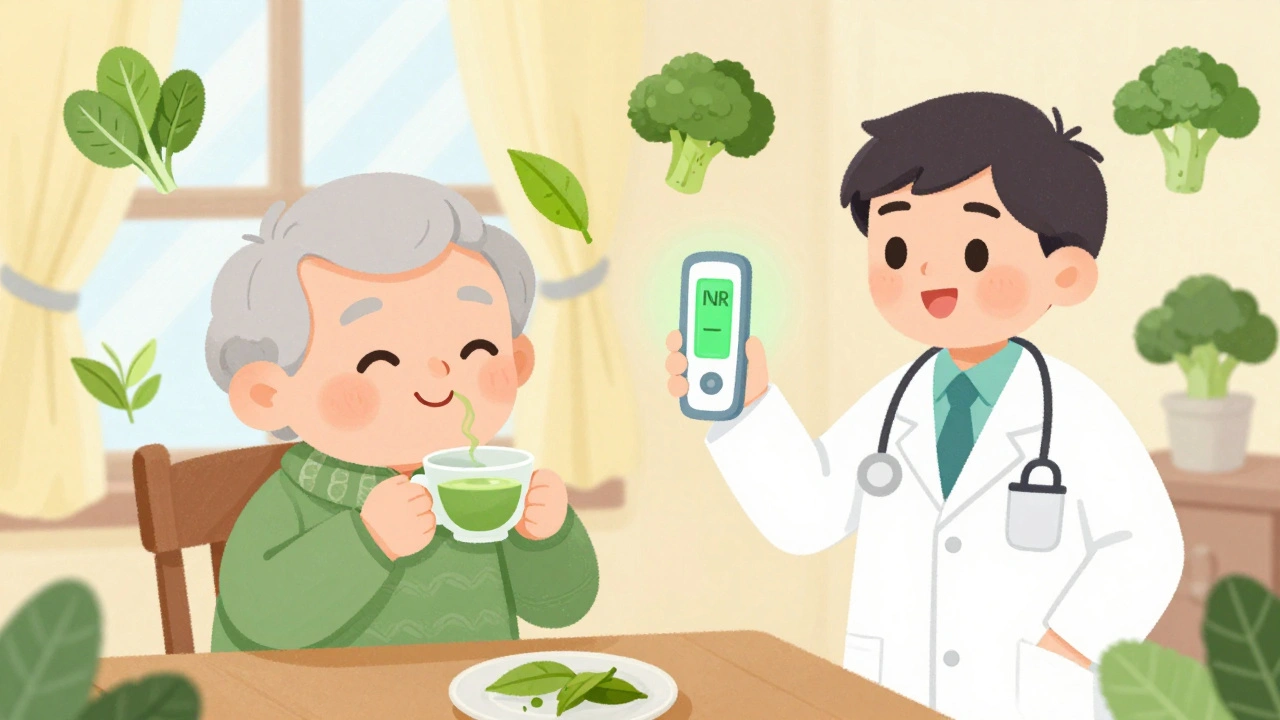
If you're taking warfarin to prevent blood clots, you might be wondering if your daily cup of green tea is safe. It’s a common question. Green tea is healthy, packed with antioxidants, and enjoyed by millions. But when you’re on a blood thinner like warfarin, even small changes in your diet can throw off your INR - and that’s not something to ignore.
How Warfarin Works - and Why Vitamin K Matters
Warfarin, sold under brand names like Coumadin and Jantoven, keeps your blood from clotting too easily. It does this by blocking vitamin K, which your body needs to make clotting factors. Without enough vitamin K, those factors can’t do their job - and that’s exactly what you want if you have atrial fibrillation, a mechanical heart valve, or a history of deep vein thrombosis.
But here’s the catch: vitamin K doesn’t just come from supplements. It’s in your food. And green tea? It has some. Not a lot in a regular cup - but enough to matter if you’re drinking gallons of it every day.
The key isn’t avoiding vitamin K entirely. It’s keeping your intake consistent. If you eat a salad with spinach one day and nothing green the next, your INR will swing. Same thing with green tea. Drink three cups daily for months, then suddenly switch to zero - your INR might jump. Drink six cups a day for a week, then cut back - your INR might drop.
The Green Tea Paradox: Too Much Vitamin K, Too Many Catechins
Green tea is tricky because it does two opposing things. On one hand, it contains vitamin K - which can make warfarin less effective. On the other, it has catechins, natural compounds that may actually thin your blood further by reducing platelet activity.
So why do some people see their INR drop when they drink green tea, while others don’t? It comes down to amount and type.
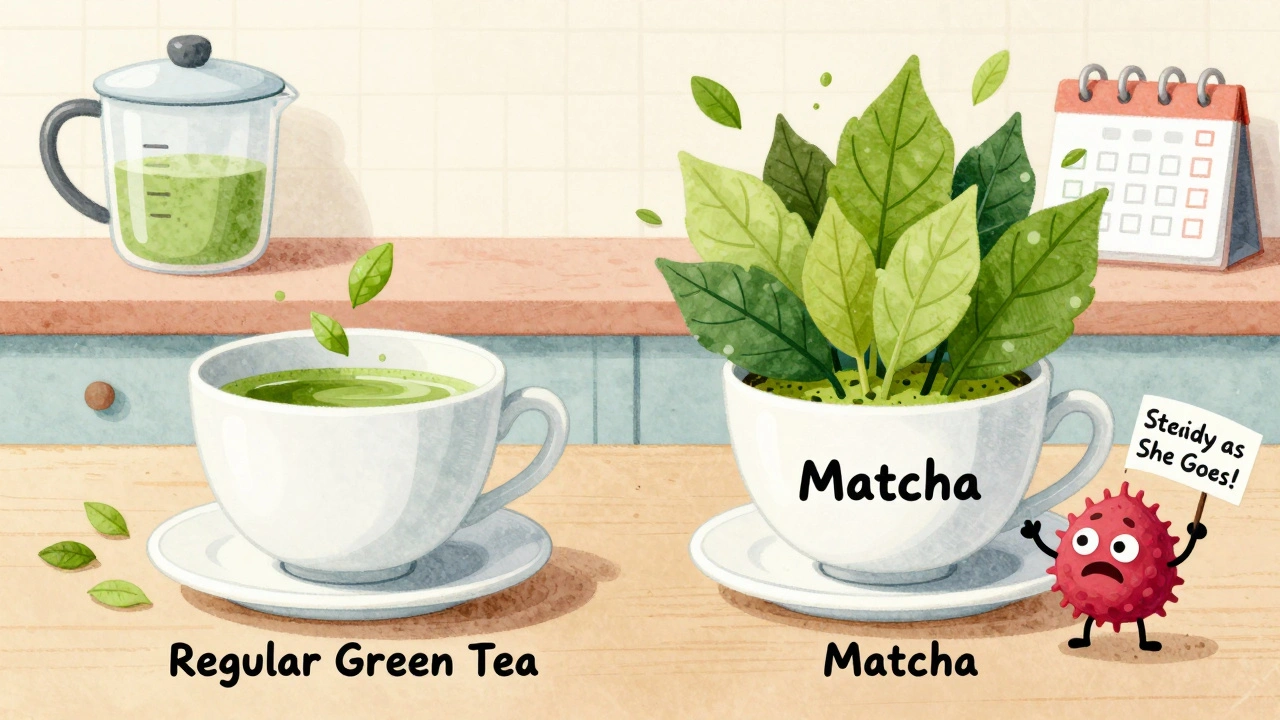
Regular brewed green tea has very little vitamin K - only about 0.03 micrograms per 100 grams. That’s less than 1% of what’s in spinach or broccoli. But matcha? That’s different. Matcha is made from ground whole tea leaves. You’re consuming the entire leaf, not just the steeped water. Matcha can have 10 to 20 times more vitamin K than regular green tea. One patient reported his INR dropped from 2.8 to 1.9 after drinking four cups of matcha daily for two weeks. His warfarin dose had to be increased by 15%.
And it’s not just the type - it’s the volume. Drinking 1 gallon (about 3.8 liters) of green tea a day? That’s been linked to dangerous drops in INR. In one documented case, a man’s INR fell from 3.79 to 1.37 after consuming half to a full gallon daily. That’s not just a cup or two - that’s the equivalent of 16 standard cups. At that level, the vitamin K adds up fast.
What’s Considered Safe? The Real Numbers
Let’s cut through the confusion. You don’t need to quit green tea. You just need to be smart about it.
According to the American Heart Association, 1 to 3 cups of regular green tea per day (about 240 to 720 mL) is considered safe for most people on warfarin - as long as you stick to that amount. No sudden changes. No weekend binges.
Here’s what experts say about different levels:
- 1-3 cups daily (≤720 mL): No dose adjustment needed. Keep drinking it like you always have.
- 4-6 cups daily (721-1,500 mL): Your doctor should check your INR every two weeks. You’re in the gray zone.
- More than 6 cups daily (>1,500 mL): This is risky. You’ll likely need a higher warfarin dose. Talk to your anticoagulation clinic before continuing.
And if you switch from regular green tea to matcha? Treat it like a new medication. Tell your doctor. Get an INR test within a week. Matcha isn’t just tea - it’s a concentrated source of vitamin K.
What About Other Teas and Herbal Drinks?
Not all teas are the same. Black tea? Similar to green tea - low vitamin K, safe in moderation. Herbal teas? That’s where things get messy.
Ginkgo biloba tea? It can increase bleeding risk by affecting platelets. Goji berry tea? One case report showed a woman on warfarin had a dangerous bleed after drinking 3-4 glasses daily. Cranberry juice? That’s a known problem - it can boost warfarin’s effect and raise your INR. Green tea doesn’t work like cranberry juice. It doesn’t interfere with how your body breaks down warfarin. It works through vitamin K - which is easier to manage if you’re consistent.
Alcohol? Also on the caution list. Too much can raise INR. But in small, regular amounts? Usually fine. The message isn’t “avoid everything.” It’s “know what you’re doing.”
Real People, Real Stories
Online patient forums are full of stories. On Reddit’s r/Warfarin, one user said: “I drank two cups of green tea every day for five years. My INR never budged.” Another said: “I started drinking matcha for energy. My INR dropped. I didn’t realize why until my doctor asked if I’d changed my tea.”
A survey by the National Blood Clot Alliance found that 62% of warfarin users didn’t even know green tea could affect their INR until they had a problem. Meanwhile, 38% stopped drinking it entirely - even though they loved it - because they were scared. That’s unnecessary. You don’t have to give up green tea. You just have to be consistent.
What You Should Do Right Now
If you’re on warfarin and drink green tea:
- Track your intake. How many cups? What kind? Regular? Matcha? Write it down for a week.
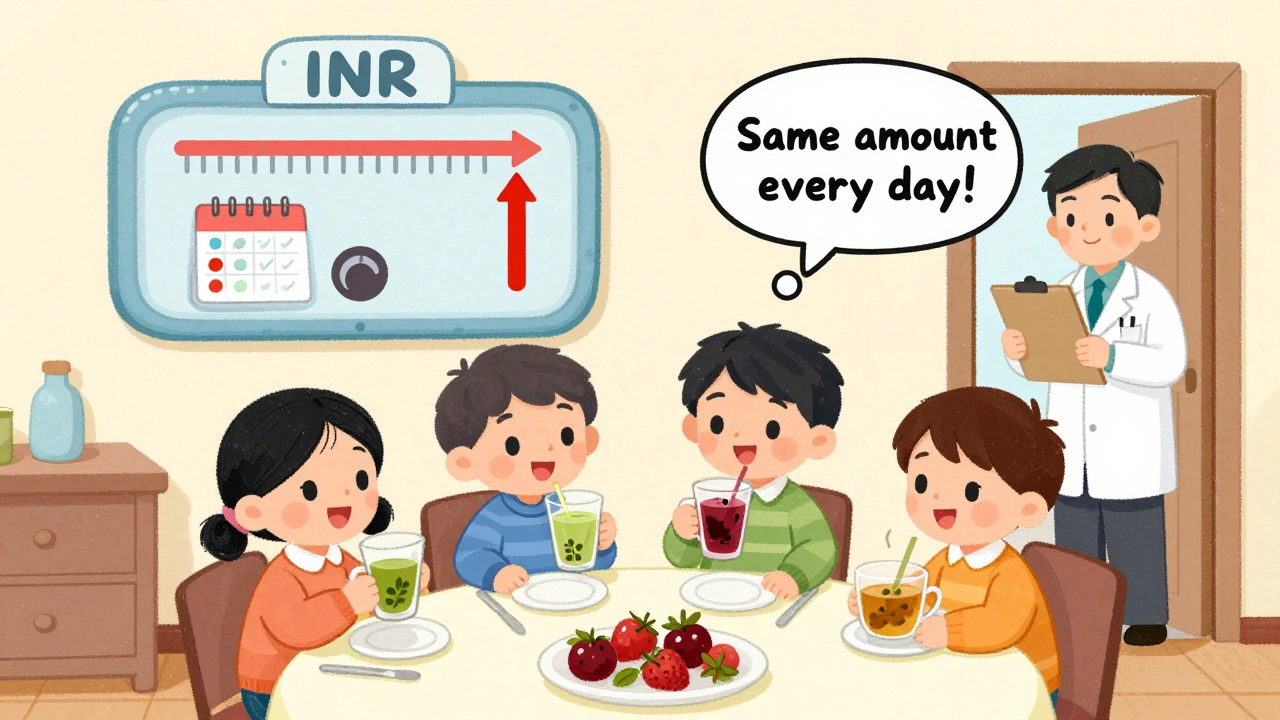
- Don’t change your routine. If you drink two cups daily, keep doing it. Don’t skip days or double up.
- Get your INR checked. If you’ve recently started drinking green tea - or changed how much you drink - ask your doctor to test your INR within 7-10 days.
- Know your cup size. A “cup” is 8 oz (240 mL). Don’t guess. Use a measuring cup.
- Speak up. Tell your pharmacist, nurse, or doctor you drink green tea. They need to know.
If you’ve been drinking more than 500 mL (about 2 cups) daily for weeks and your INR has been stable? Good. Keep going - but don’t suddenly stop. Stopping can cause your INR to rise, increasing bleeding risk. One woman stopped drinking black tea (similar to green) and her INR jumped from 1.7 to 5.0 in a week. That’s a medical emergency.
What’s New in 2025?
Research is moving fast. New apps like WarfarinWise now let you log your tea intake and get alerts if you go over 500 mL. In a pilot study, users who used the app had 22% fewer INR fluctuations.
Scientists are even working on genetically modified tea plants with lower vitamin K content. That’s still years away - but it shows how seriously this interaction is taken.
Meanwhile, newer blood thinners like apixaban and rivaroxaban don’t interact with vitamin K. If you’re struggling with dietary restrictions, talk to your doctor about switching. But if you have a mechanical heart valve or certain kidney issues, warfarin is still the best option - and that means green tea stays on the radar.
Bottom Line: You Can Still Drink Green Tea
You don’t have to give up green tea to stay safe on warfarin. You just need to treat it like part of your treatment plan - not just a beverage.
Stick to 1-3 cups of regular green tea a day. Avoid matcha unless you’re under close monitoring. Don’t suddenly change how much you drink. And always tell your care team what you’re consuming.
The goal isn’t perfection. It’s consistency. Your INR doesn’t care if you drink tea - it cares if you drink the same amount every day. Keep it steady, and you’ll stay in range - and keep your tea, too.
Can I drink green tea while taking warfarin?
Yes, you can - but only in moderation. One to three cups (240-720 mL) of regular brewed green tea per day is generally safe if you keep your intake consistent. Avoid sudden changes in amount or switching to matcha without checking your INR.
Does green tea lower or raise INR?
It usually lowers INR - meaning it makes warfarin less effective - when consumed in large amounts (over 1 liter daily) because of its vitamin K content. In rare cases, high catechin levels might slightly raise INR, but vitamin K is the dominant effect. The net result depends on how much you drink and whether it’s regular tea or matcha.
Is matcha tea safe with warfarin?
Matcha is riskier than regular green tea because it contains 10-20 times more vitamin K - you’re consuming the whole leaf. If you drink matcha regularly, your doctor may need to adjust your warfarin dose. Always inform your anticoagulation clinic if you start or stop matcha.
How much green tea is too much on warfarin?
More than 1.5 liters (about 6 cups) per day is considered high risk and may require a warfarin dose increase. If you regularly drink more than 500 mL (2 cups) daily, your INR should be checked every two weeks instead of monthly.
What should I do if I want to stop drinking green tea?
Don’t quit cold turkey. Stopping suddenly can cause your INR to rise, increasing bleeding risk. Talk to your doctor first. You may need to reduce your warfarin dose gradually and get an INR test within 72 hours after stopping.
Should I avoid all vitamin K if I’m on warfarin?
No. You need vitamin K for normal blood clotting. The goal isn’t to avoid it - it’s to keep your intake stable. Eat similar amounts of leafy greens and tea every day. Fluctuations in vitamin K are what cause INR swings, not the vitamin K itself.
If you’re unsure about your tea habits, write down what you drink for a week - type, amount, frequency - and bring it to your next appointment. Small changes in routine can make a big difference in your INR. Stay informed. Stay consistent. And keep enjoying your tea - safely.

13 Comments
val kendra
Just drank my third cup of green tea this morning and checked my INR last week - still in range. Consistency is king. Don’t overthink it, just keep it steady.
Karl Barrett
The vitamin K paradox in green tea is fascinating from a pharmacodynamic standpoint. The catechins’ antiplatelet effects create a bidirectional modulation of anticoagulation - not unlike how SSRIs can influence warfarin metabolism via CYP2C9 polymorphisms. The real clinical variable isn’t the tea - it’s the patient’s epigenetic expression of VKORC1. Most clinicians miss that nuance.
Isabelle Bujold
I’ve been on warfarin for 12 years and switched from black tea to green tea back in 2018. I drink about two cups a day, always at lunch, never more, never less. My INR has hovered between 2.3 and 2.7 since then. I don’t even think about it anymore. The key is routine - same time, same amount, same type. Your body likes predictability, even when you’re on blood thinners.
Matcha? No way. I’ve seen what happens when people treat it like a health supplement. It’s not. It’s a concentrated vitamin K bomb wrapped in a trendy powder. If you’re going to drink it, treat it like a new prescription - get tested before and after.
Also, don’t forget that brewing time matters. Steeped for 3 minutes vs. 7 minutes can change the catechin load by up to 40%. Most people don’t realize that. Use a timer. It’s not that hard.
And please, stop scrolling Reddit for anecdotes. One guy drank a gallon and his INR crashed - yeah, that’s a outlier. You’re not that guy. Just be consistent. That’s the whole damn point.
Oh, and if you’re worried about bleeding? Don’t stop drinking tea. Stopping cold turkey is way more dangerous than drinking it. I had a friend who quit after reading a scary post - her INR spiked to 5.1. Emergency room visit. She’s fine now, but she regrets it.
Bottom line: tea isn’t the enemy. Inconsistency is.
Emmanuel Peter
Bro just quit tea for 3 days and his INR went from 2.5 to 3.9. He thought he was being ‘healthy’ by cutting out ‘inflammatory’ stuff. Dude, tea isn’t inflammatory. Warfarin is. You’re not a biohacker. You’re on a drug that’s been around since WWII. Stop pretending you’re optimizing your life. Just take your pill and drink your tea like a normal person.
Ashley Elliott
Hey everyone - just wanted to say thank you for this thread. I was terrified of green tea after my last INR spike, but now I realize it’s not the tea, it’s the swing. I’ve been drinking 2 cups every day at 7 a.m. for two weeks now - no changes. My INR is stable. I’m not giving it up. I’m just being mindful. You’re not alone in this.
Also, if you’re new to warfarin: your care team is there to help. Don’t be embarrassed to say, ‘I drink tea - what should I do?’ They’ve heard it a thousand times. Seriously.
Chad Handy
Let’s be real - this whole green tea thing is a distraction. The real problem is that doctors don’t monitor INR often enough. I’ve been on warfarin for 8 years. I’ve had 12 INR spikes. Only two were dietary. The rest? Missed doses, antibiotics, dehydration, or just bad lab timing. Tea? It’s a scapegoat. Stop blaming your beverage and start asking your doctor why your monitoring schedule is so sloppy.
Also, why are we even talking about matcha? It’s overpriced, overhyped, and probably full of heavy metals. Drink water. It’s cheaper and doesn’t have vitamin K.
Augusta Barlow
Did you know the FDA has known about this interaction since 2007? But they didn’t mandate warning labels because the tea industry lobbied hard. Same thing happened with cranberry juice - they buried the studies. Big Pharma doesn’t want you to know that a $3 bag of tea can mess with your $500/month drug. They want you dependent. Matcha? That’s a corporate scam. It’s not tea - it’s a vitamin K Trojan horse disguised as wellness.
And don’t get me started on those ‘WarfarinWise’ apps. They’re tracking your tea intake? Who’s selling that data? Who’s profiling you? This isn’t healthcare - it’s surveillance capitalism with a stethoscope.
Stop drinking tea. Stop trusting apps. Stop trusting your doctor. Trust yourself. And get off the internet before they track your browsing history too.
Joe Lam
You people are missing the point. Warfarin isn’t a lifestyle drug - it’s a precision instrument. You don’t ‘drink tea’ and hope for the best. You track your vitamin K intake in micrograms. You use a food database. You log your INR trends in Excel. If you’re not doing that, you’re not managing - you’re gambling. And if you think ‘2 cups a day’ is safe without data? You’re not being careful - you’re being lazy.
Also, matcha? That’s for people who think ‘organic’ means ‘safe.’ It’s not. It’s a concentrated leaf powder. You’re eating 10x the vitamin K. If you’re going to do that, you need a hematologist, not a Reddit post.
Scott van Haastrecht
My INR went from 2.1 to 4.8 in 4 days because I switched from green tea to matcha. I thought it was ‘healthier.’ I was wrong. I almost bled out in the bathroom. My wife found me. I spent 3 days in the hospital. Now I drink black tea. Two cups. Every day. Same time. No exceptions. Don’t be me.
Bill Wolfe
Let’s be honest - if you’re drinking more than 2 cups of green tea a day, you’re probably also eating kale, spinach, and broccoli. So why are we focusing on tea? It’s not the tea - it’s the whole damn diet. You’re not ‘just drinking tea.’ You’re eating a vitamin K buffet. And if you’re not tracking your total daily K intake? You’re just guessing. And guessing with warfarin is how people end up in the ER with internal bleeding. 🤡
Also, matcha is for people who think they’re ‘biohackers’ but can’t even spell ‘pharmacokinetics.’
Ollie Newland
Been on warfarin since 2016. Drink 2-3 cups green tea daily. Never had an issue. My nurse says consistency is everything - and she’s right. I don’t even think about it anymore. It’s just part of my morning. Same as brushing my teeth. No drama. No panic. Just routine.
Also - if you’re scared of tea, try black tea. Same vibe, half the vitamin K. Or just drink water. Either way, don’t let fear take your tea away.
Rebecca Braatz
You got this. Seriously. I was terrified too - until I started writing down what I drank every day. Just a sticky note on my fridge: ‘Green tea: 2 cups.’ That’s it. No apps. No guilt. No panic. And guess what? My INR hasn’t budged in 14 months. You don’t need to be perfect. You just need to be consistent. One cup at a time.
Heidi Thomas
Green tea doesn't affect INR. That's a myth pushed by doctors who don't understand phytochemistry. Catechins are weak anticoagulants - way weaker than aspirin. Vitamin K in tea is negligible. If your INR changes with tea, your warfarin dose is wrong. Fix the dose, not your beverage. Also, matcha? Still just tea. Stop overcomplicating everything.