

Imagine your heart as a pump. For it to work, the muscle needs to be just the right thickness and elasticity to push blood to your toes and brain. When that muscle changes-either by stretching out, thickening too much, or becoming stiff-you're dealing with Cardiomyopathy is a primary disease of the heart muscle (myocardium) that impairs its ability to pump blood effectively, leading to cardiac dysfunction. It isn't caused by clogged arteries or high blood pressure, but by the structure of the heart muscle itself.
Getting the right diagnosis is everything because the treatment for a stretched-out heart is completely different from the treatment for a thickened one. While these conditions can sound intimidating, understanding which type you or a loved one is facing is the first step toward managing it. Whether it's a genetic trait or a result of lifestyle factors, modern medicine has moved toward "precision medicine," meaning treatments are now tailored to the specific genetic or structural blueprint of your heart.
The Stretched Heart: Dilated Cardiomyopathy
If you think of a balloon that has been blown up too many times, you have a good idea of Dilated Cardiomyopathy (DCM). In this version of the disease, the left ventricle-the heart's main pumping chamber-stretches and widens. Because the muscle walls become thin and weak, they can't squeeze hard enough to push blood out, which is why we see a drop in the ejection fraction (the percentage of blood leaving the heart with each beat) to below 40%.
Why does this happen? It's often a mix of things. About 25-35% of cases are familial, meaning they're passed down through genes like TTN or LMNA. However, it can also be acquired. For example, chronic heavy alcohol use (over 80g a day for five years) or certain chemotherapy drugs like doxorubicin can damage the muscle. Even a viral infection, such as coxsackievirus B3, can trigger an inflammatory response that leaves the heart dilated.
For people living with DCM, the goal is to keep the heart from failing further. Many patients find huge relief with guideline-directed medical therapy (GDMT). Drugs like sacubitril/valsartan have shown a 20% greater reduction in NT-proBNP levels-a marker of heart stress-compared to older medications. While it's a serious condition, 5-year survival rates for treated DCM patients are now around 70-80%.
The Thickened Heart: Hypertrophic Cardiomyopathy
Hypertrophic Cardiomyopathy (HCM) is the opposite of the dilated type. Instead of stretching, the heart muscle becomes abnormally thick. This usually happens in the septum (the wall between the two ventricles), which can create a physical blockage that stops blood from leaving the heart. This is known as obstructive HCM, and it affects about 70% of people with this condition.
HCM is heavily genetic. About 60% of cases involve mutations in sarcomere proteins (the tiny "engines" that make muscles contract), such as the MYH7 or MYBPC3 genes. Because it often goes undetected until a major event, it's a leading cause of sudden cardiac death in young athletes under 35. In fact, while it affects 1 in 500 people of European descent, it's even more common in Japanese populations, appearing in 1 in 200 people.
The struggle for HCM patients is often shortness of breath during exercise. While beta-blockers help many, some need more aggressive options. A procedure called septal reduction therapy-essentially thinning the thickened wall-has provided immediate symptom relief for 85% of patients in Cleveland Clinic surveys. More recently, the FDA approved mavacamten (Camzyos), a targeted therapy that helps reduce the blockage in the outflow tract.
The Stiff Heart: Restrictive Cardiomyopathy
The rarest of the three is Restrictive Cardiomyopathy (RCM). In this case, the heart muscle isn't necessarily too thin or too thick-it's just stiff. The walls lose their elasticity, meaning the heart can't relax enough to let blood fill the chambers. This creates a "restrictive" filling pattern, which pushes pressure back into the lungs and causes fluid buildup.
RCM is usually a side effect of another systemic disease. The most common culprit is Amyloidosis, where abnormal proteins build up in the heart tissue. Other causes include sarcoidosis or hemochromatosis (too much iron in the body). Because it's so rare (affecting about 1 in 10,000 people), many patients struggle to get an accurate diagnosis, often being misdiagnosed with other forms of heart failure.
Treatment for RCM is all about the root cause. If it's hemochromatosis, phlebotomy (removing blood to lower iron) is key. For amyloidosis, medications like tafamidis can help, though they are notoriously expensive. Because the heart's pump function (systolic function) often remains normal while the filling (diastolic function) fails, RCM can be tricky to spot without a cardiac MRI or a biopsy.
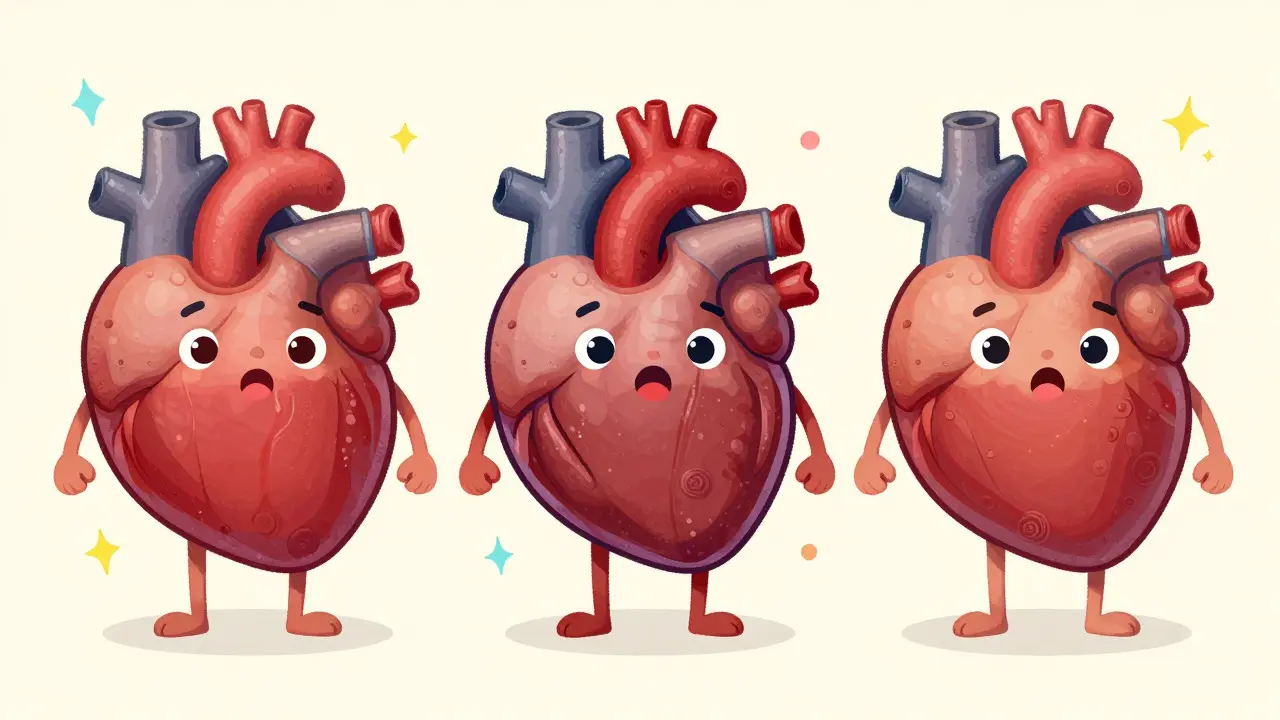
Comparing the Three Types of Cardiomyopathy
To make sense of these, it helps to see them side-by-side. They differ not just in how they look, but in who they affect and how they are treated.
| Feature | Dilated (DCM) | Hypertrophic (HCM) | Restrictive (RCM) |
|---|---|---|---|
| Heart Wall | Thin and stretched | Thickened (Hypertrophied) | Stiff (Rigid) |
| Main Issue | Poor pumping (Systolic) | Filling/Blockage (Diastolic) | Poor filling (Diastolic) |
| Prevalence | Most common (50-60%) | Common (30-40%) | Rare (2.5-5%) |
| Common Cause | Alcohol, Virus, Genetics | Genetic mutations (Sarcomere) | Amyloidosis, Sarcoidosis |
| Typical Treatment | GDMT, ACE inhibitors | Beta-blockers, Septal reduction | Treating underlying cause |
How Doctors Figure Out Which Type You Have
You can't tell the difference between these types with a simple stethoscope exam. Specialists use a tiered approach to narrow it down. First comes the Echocardiogram, which is an ultrasound of the heart. This shows if the walls are too thick (HCM), too thin (DCM), or if the chambers are enlarged (RCM).
If the ultrasound is unclear, a Cardiac MRI is the gold standard. It's incredibly sensitive-up to 95% for detecting fibrosis (scarring) in the heart. In the case of RCM, MRI can show "late gadolinium enhancement," which helps doctors see exactly where the abnormal proteins or inflammation are located. For those with a family history, genetic testing panels can now screen for 17 different genes to identify the exact mutation causing the disease.
In some rare cases, especially with restrictive cardiomyopathy, a doctor might perform an endomyocardial biopsy. This is where a tiny piece of heart tissue is removed and examined under a microscope. It's the only way to be 100% sure if amyloidosis is the cause, with a sensitivity rate of about 85%.

Managing the Road Ahead
Living with cardiomyopathy requires a shift in how you view your health. It's no longer about a one-time fix, but a long-term management strategy. For those with DCM, sticking to a low-sodium diet and taking SGLT2 inhibitors can significantly reduce the risk of hospitalization. For those with HCM, knowing your limits during exercise and keeping an eye on heart rhythm is vital.
The future is looking brighter thanks to gene editing. Research is currently entering Phase I trials for CRISPR-based therapies that target the MYBPC3 gene in HCM patients. We're moving toward a world where we won't just treat the symptoms, but actually "fix" the genetic error that causes the heart muscle to thicken or stretch in the first place.
Can cardiomyopathy be cured?
Most types of cardiomyopathy cannot be completely "cured" in the sense that the heart muscle returns to its original state. However, they can be managed very effectively. With GDMT, many DCM patients see a huge improvement in quality of life, and HCM patients can live full lives with the right medications or surgical interventions. In severe cases of DCM, a heart transplant is the only definitive "cure," though it comes with lifelong medication needs.
Is cardiomyopathy always genetic?
No, not always. While Hypertrophic Cardiomyopathy is predominantly genetic (around 60% of cases), Dilated Cardiomyopathy can be caused by acquired factors such as excessive alcohol consumption, viral myocarditis, or certain chemotherapy drugs like doxorubicin. Restrictive Cardiomyopathy is usually the result of another systemic disease, such as amyloidosis or sarcoidosis, rather than a primary genetic heart defect.
What are the warning signs I should look for?
Common symptoms across all types include shortness of breath (dyspnea), swelling in the legs and ankles (edema), and extreme fatigue. If you experience fainting or chest pain during exercise, this is a critical warning sign, especially for those with Hypertrophic Cardiomyopathy, and requires immediate medical attention.
How does restrictive cardiomyopathy differ from constrictive pericarditis?
This is one of the hardest distinctions for doctors to make. In restrictive cardiomyopathy, the problem is the heart muscle itself (myocardium) being stiff. In constrictive pericarditis, the heart muscle is fine, but the outer sac surrounding the heart (pericardium) has become rigid and is squeezing the heart. This is a crucial distinction because the treatments are entirely different; one requires systemic medical management, while the other may require a surgical procedure to remove the rigid sac.
Should my family get tested if I have cardiomyopathy?
Yes, especially if you have HCM or familial DCM. Because these often follow an autosomal dominant inheritance pattern, there is a significant chance that first-degree relatives may carry the same gene. Genetic counseling and screening via echocardiograms are strongly recommended to catch the condition early, which can prevent sudden cardiac events.
Next Steps and Troubleshooting
If you've just been diagnosed, your first priority should be finding a cardiologist who specializes in heart failure or cardiomyopathies. Not all heart doctors have the same experience with the rare types like RCM. Ask your doctor if a cardiac MRI is appropriate for your case to get a more definitive look at the heart tissue.
For those managing symptoms at home, keep a daily log of your weight and any swelling in your ankles. A sudden weight gain (2-3 pounds in a day) often means your heart is struggling to pump fluid, and you may need a medication adjustment before it becomes an emergency. If you're an athlete with a family history of HCM, prioritize a professional screening before starting any high-intensity training program.



1 Comments
Joshua Nicholson
man this is actually pretty helpful for a layman's guide