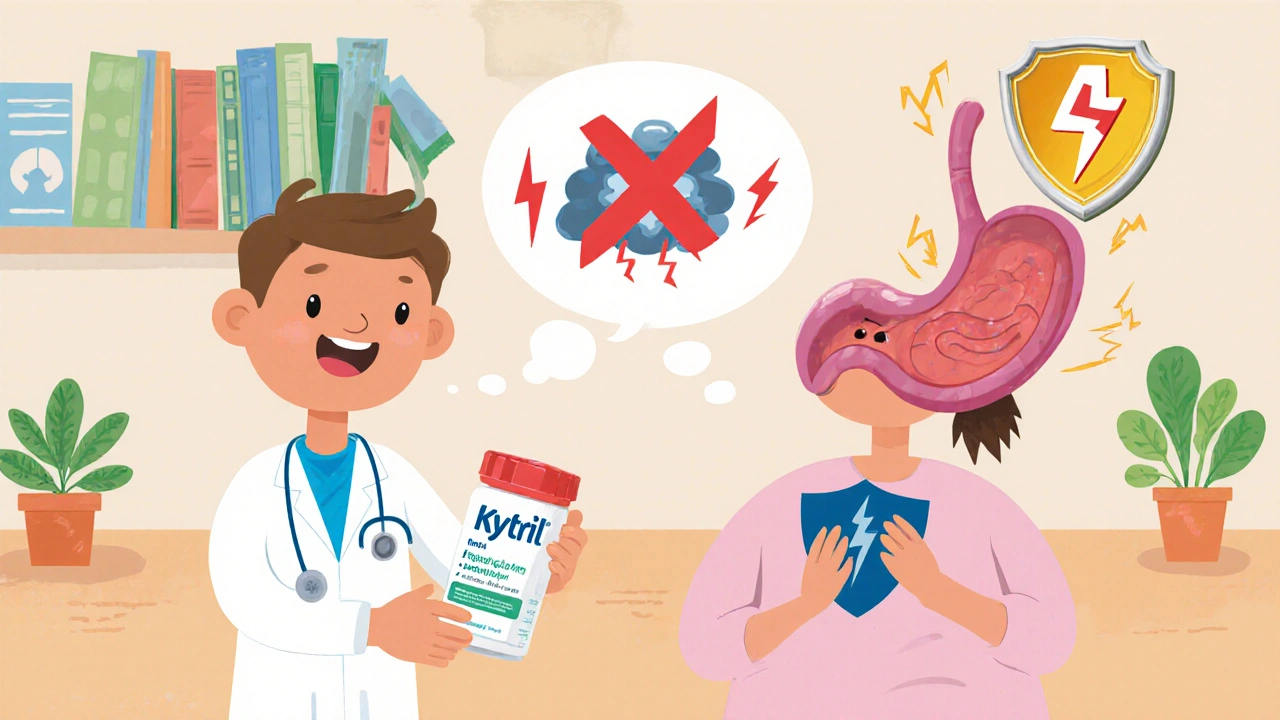
Antiemetic Drugs: What They Are, How They Work, and Which Ones Actually Help
When nausea hits hard—whether from chemo, motion, pregnancy, or a side effect of your daily pill—antiemetic drugs, medications designed to stop vomiting and reduce nausea. Also known as anti-nausea meds, they’re not just for hospital rooms; millions use them at home every day to keep food down and life moving. But not all antiemetics are the same. Some work fast, others take days. Some are safe for weeks, others carry risks of permanent movement problems if used too long.
Take metoclopramide, a common antiemetic that speeds up stomach emptying and blocks dopamine in the brain. Also known as Reglan, it’s cheap and effective—but long-term use can trigger tardive dyskinesia, a condition causing uncontrollable facial movements. That’s why pharmacists now watch for it closely, especially in older adults or people on it for more than 12 weeks. Then there’s the newer wave of drugs like GLP-1 agonists, weight-loss and diabetes drugs like Ozempic and Wegovy. Also known as semaglutide, they’re powerful—but up to 70% of users get nausea as a side effect, so doctors often pair them with low-dose antiemetics just to help people stick with the treatment. Even motion sickness has its own set: dimenhydrinate, meclizine, scopolamine patches. Each has different trade-offs between drowsiness, speed, and duration.
What ties these together? It’s not just about stopping vomiting. It’s about keeping people on their meds, eating normally, and not missing work or school. The right antiemetic can make the difference between giving up on a life-changing drug and sticking with it. That’s why the best choice isn’t always the strongest—it’s the one that fits your life, your risk factors, and your other medications.
Below, you’ll find real-world guides on how these drugs are used, misused, and monitored. From how pharmacists catch dangerous generics to how to manage nausea from weight-loss pills, these posts give you the straight facts—not marketing fluff. Whether you’re a patient, caregiver, or just trying to understand why your doctor picked one pill over another, you’ll find something that helps.