

Walking out of the hospital is supposed to feel like a victory. You have beaten the illness or surgery. But for many seniors, the real danger begins the moment they step through those automatic doors. It turns out that nearly 50% of all medication errors in primary care happen right here during that handover. Research published in the Journal of General Internal Medicine shows that one in five patients makes a mistake with their drugs within three weeks of leaving the hospital. This isn't just about forgetting a pill; it is often about getting the wrong dose, confusing similar-looking bottles, or stopping a critical heart medication that was prescribed years ago.
The gap between hospital records and home cabinets is wide. Hospitals run on complex digital systems, while your home run on memory and physical boxes. Bridging this gap requires a formal process known as Medication Reconciliation. This is not just a list of what you took yesterday. It is a structured audit designed to find the differences between what was ordered, what was given, and what you should be taking at home. Understanding this concept is the single most important thing you can do for your safety.
What Is Medication Reconciliation?
Medication reconciliation is the process of comparing a patient's current medication orders to all the medications they were previously taking. Think of it as a financial audit for your health. When you arrive at the hospital, the staff creates a list of what you are supposed to be on. When you leave, they create a new list. If those lists don't match perfectly, the system breaks. Medication Management, when done poorly, leads to confusion. Studies show that standard discharge programs achieve only 60-70% accuracy, whereas high-performing programs reach 95% accuracy.
This process is not optional for high-risk patients. It involves five specific steps that hospitals are legally required to follow under standards set by organizations like The Joint Commission. These steps act as checkpoints. If any checkpoint fails, the error rate spikes immediately. The goal is to ensure continuity of care so that your body does not experience withdrawal from necessary drugs or toxicity from duplicate ones.
The Five Critical Steps to Safety
To navigate this transition safely, you need to understand exactly how the verification happens. You cannot assume the doctors know everything you take at home. They rely on you to fill in the blanks. Here is how the professional process works and what you can ask them to do:
- Verification: This means collecting the most accurate history possible. Before the doctor leaves the room, ask them to confirm every name, dose, and frequency written on their paper matches what is in your bag. Do not guess.
- Clarification: Doctors sometimes write prescriptions that require interpretation. For example, "take one tablet daily" might look different on a new bottle versus your old one. This step ensures the dosage is appropriate for your kidneys or liver function.
- Reconciliation: This is the comparison phase. Admission meds vs. current hospital meds vs. discharge meds. A discrepancy found here could save a life. It catches things like a new blood thinner that clashes with an old painkiller.
- Communication: The reconciled list must be sent to your GP and pharmacist before you walk out the door. If this fax or electronic transfer gets lost, the cycle starts over. Confirm that your local pharmacy received the script.
- Education: This is where the Teach-Back Method comes in. Simply reading instructions isn't enough. You must explain back to the nurse what you are supposed to do. If you cannot explain it simply, you likely did not understand it.

Tools You Can Use at Home
You do not have to wait until discharge day to start managing this. There are practical tools that patients and families use to prevent slips. One of the most effective methods is the "Brown Bag Review."
Treat your medications like cash. Bring every single bottle, blister pack, supplement, and herbal remedy to every appointment. Put them in a brown bag and hand it to the pharmacist or doctor. Tell them, "This is exactly what I am taking, including vitamins." This physical inventory reveals errors that computer lists miss. Many seniors take over-the-counter painkillers that interact dangerously with prescription blood thinners. Without seeing the bottle, the doctor never knows it exists.
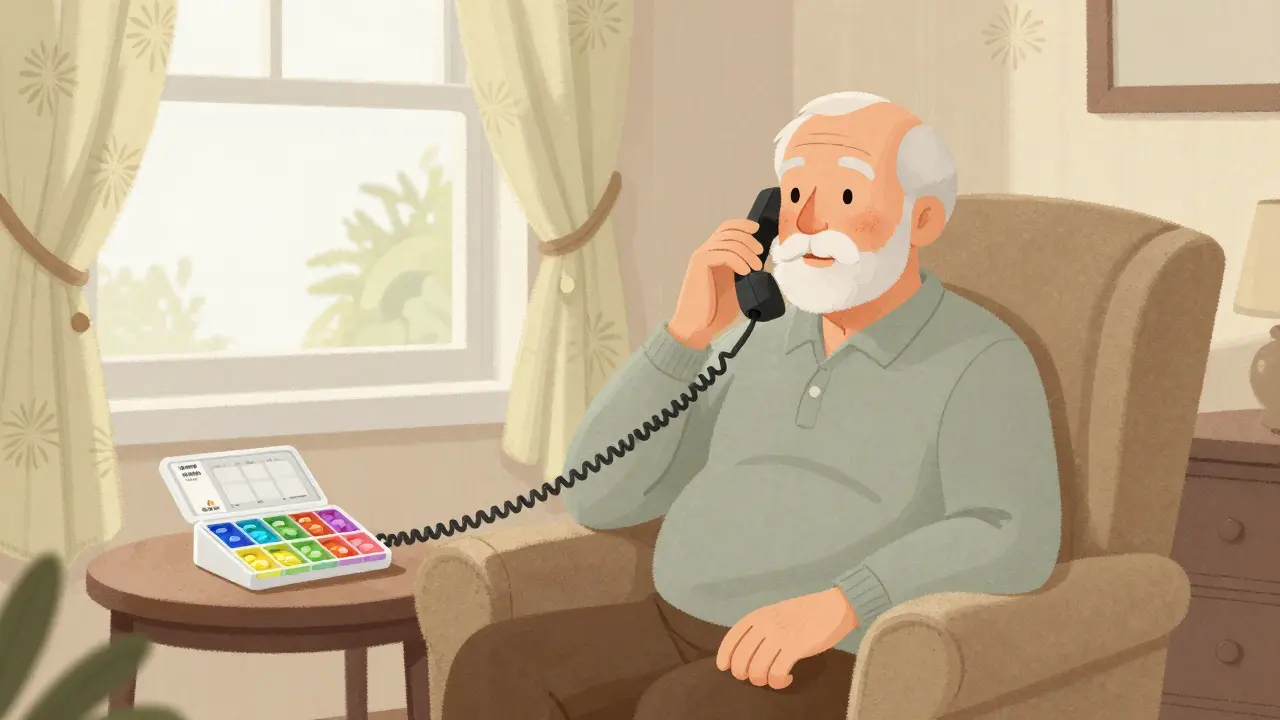
Another vital tool is visual confirmation. When the pharmacist gives you a new box, ask them to label it clearly with "For Breakfast" or "For Bedtime." A 2023 study showed that mobile apps providing visual schedules reduced errors by 41% in elderly patients. Even without an app, using a pill organizer labeled Monday through Sunday helps separate morning doses from evening doses.
Identifying High-Risk Medications
Not all drugs carry the same risk. While vitamins are generally safe, specific classes require extreme vigilance during transitions. The American Society of Health-System Pharmacists highlights several groups that cause trouble frequently.
- Anticoagulants: Blood thinners like warfarin or newer DOACs require strict monitoring. Missing a dose can lead to clots, but doubling it can cause internal bleeding. If you switch from an injectable heparin in the hospital to oral warfarin at home, the overlap timing must be precise.
- Insulin: Dosing changes rapidly based on food intake in a hospital versus variable eating habits at home. Miscalculation leads to hypoglycemia, which causes falls and confusion.
- Opioids: Pain management often shifts from IV morphine to oral tablets. Potency conversion is math-heavy. Taking the full strength prescribed for acute pain at home can cause respiratory depression.
- Antiplatelet Agents: Drugs like aspirin or clopidogrel affect clotting and must be coordinated with anticoagulants carefully.
If your regimen includes any of these, your discharge plan needs a specialized checklist. Ask specifically, "Am I continuing this at the same time as before?" Often, hospital doses are higher for short bursts and need to step down.
The Role of the Pharmacist
We often view doctors as the primary prescribers, but pharmacists are the gatekeepers of accuracy. Data from the University of Tennessee's SafeMed model demonstrates that a Pharmacist-Led Intervention reduces medication discrepancies by 67%. Dr. Sunil Kripalani, who led the study, notes that pharmacist involvement prevents roughly one in five adverse drug events.
Why does this work? Pharmacists spend hours studying drug interactions rather than disease symptoms. In many comprehensive programs, a dedicated pharmacist reviews every discharge order before the signature goes on the release form. In Australia, community pharmacists play an even bigger role in long-term care. Ensuring your local pharmacy is linked to your discharge summary allows them to flag conflicts before you pick up the bags.
| Model Name | Key Feature | Effectiveness Metric | Requirement |
|---|---|---|---|
| Coleman Model | Transition Coach | 38% Reduction in Readmissions | Dedicated personnel per 150 patients |
| SafeMed | Primary Care Team | 22.5% Reduction in Readmissions | Nurse & Pharmacist collaboration |
| Project BOOST | Standardized EMR | 10-15% Reduction in Readmissions | $50,000 per hospital setup |
| Bundled Approach | Reconciliation + Follow-up | 47% Error Reduction | Multi-step integration |
Planning Your Follow-Up Care
Leaving the hospital is not the end of the safety net. The highest risk period remains the first seven days. Research suggests that patients with conditions like heart failure or COPD require contact within this window. If you do not hear from anyone, call them. The cost of preventing a readmission is significantly lower than the cost of going back. CMS estimates that avoiding one readmission saves the system approximately $300-$500 per patient.
Set up appointments before you get home. Ask the discharge planner to book your post-op visit with your GP. If you are living alone, consider arranging for a family member to review the pills on Day 3 and Day 7. This provides a safety buffer while your new routine stabilizes.
What is the first thing I should do after leaving the hospital?
The immediate priority is to verify that your new medications match the discharge summary. Count your pills, check the names, and confirm the times. Call your GP or pharmacist if anything looks different from what you were told verbally.
Do I need to stop taking supplements?
Not necessarily, but you must declare them. Many herbs interact with hospital drugs. Your pharmacist can tell you which ones to pause temporarily and which can continue safely with the new regimen.
How do I handle side effects?
Do not ignore mild nausea or dizziness. Record when it happens relative to the dose. Report this to your doctor immediately; it may indicate a dosage mismatch rather than a problem with the drug itself.
Is the Teach-Back method mandatory?
It is highly recommended by major health bodies. It is not a legal requirement for patients to perform it, but it is the most effective way to prove you understand the instructions and reduce errors by 32%.
Who pays for the extra pharmacist visits?
In many regions, transition care management codes cover these services. Medicare and private insurers often cover a consultation within the first month post-discharge to prevent complications.
Medication safety is a team effort, but it relies heavily on your engagement. By treating the hospital stay as an active negotiation rather than a passive experience, you protect your future health. The numbers are clear: preparation prevents harm. Keep your list updated, use the Teach-Back method, and trust your pharmacist to be your partner in this journey.


8 Comments
Victor Ortiz
The concept of reconciliation sounds idealistic on paper but often fails in practice due to administrative bottlenecks. Patients rarely understand the gravity of discrepancies until they suffer consequences. Most hospitals prioritize throughput over actual accuracy checks during discharge hours. This creates a dangerous environment where speed overrides safety protocols entirely. Staff turnover further complicates the ability to maintain consistent verification standards across shifts. Relying on family members to catch errors places an unfair burden on those recovering from their own stresses. The data suggests that digital systems introduce new risks rather than eliminating legacy problems. Technology cannot replace the vigilance required for complex pharmacological regimens.
Amber Armstrong
My father struggled immensely with managing his pills right after his heart surgery. We discovered too late that he was mixing two similar-looking blood thinners together daily. The confusion started because the hospital gave him new brands without checking his supply. Nurses assumed he understood the change when they explained it quickly at noon. He nodded politely while sitting in a wheelchair that made him feel dizzy. Nobody verified his understanding before handing over the thick packet of instructions. We spent weeks trying to figure out why his bruises appeared on his legs unexpectedly. A local pharmacist finally spotted the interaction during a routine refill consultation session. She pulled up his records and showed us the conflict graphically on her computer screen. Realizing the mistake felt like a heavy weight lifting off our collective shoulders instantly. Now we keep a physical binder of every single prescription change for future reference. Writing down notes directly from the pharmacist helps prevent any verbal misunderstandings later. It feels empowering to control the narrative of your own medical history actively. Families must advocate for themselves because institutions view efficiency above individual care sometimes. Sharing these experiences publicly might encourage other relatives to stay vigilant at discharge times.
Calvin H
Most people treat medication labels like optional suggestions anyway.
Cameron Redic
Systemic issues persist regardless of what training materials say about proper protocols. The metrics presented ignore the chaotic reality of evening shift changes completely. Nothing changes unless leadership forces accountability directly.
Biraju Shah
Compliance requires strict adherence to written instructions without exception. Deviations lead to immediate complications that endanger vulnerable populations.
Marwood Construction
Transition protocols demand rigorous documentation practices to ensure continuity of care effectively. Clinical guidelines indicate that procedural gaps contribute significantly to adverse events nationally. Verification processes must remain paramount throughout the entire discharge timeline.
William Rhodes
Every challenge encountered in healthcare ultimately strengthens the bond between providers and families alike. Progress happens through shared responsibility and mutual trust rather than rigid fear tactics alone. Hope remains essential even when navigating complex medical bureaucracies daily.
Dan Stoof
This is such amazing advice!!! The teach-back method really works wonders!! You must try this approach!! It saves lives!!! Health is wealth!!! Stay safe out there!!