
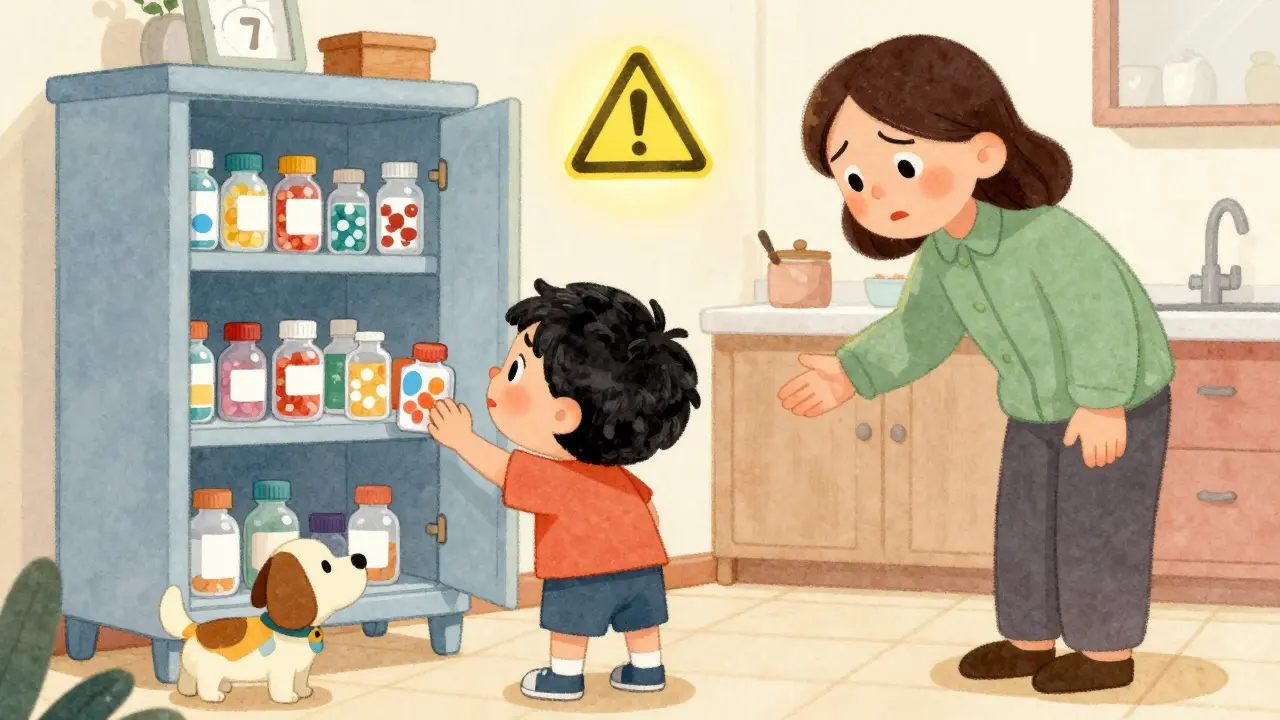
Keeping expired medications in your medicine cabinet isn’t just messy-it’s dangerous. A 2021 study by the Substance Abuse and Mental Health Services Administration found that nearly 9.9 million Americans misused prescription drugs, and many of those pills came from home medicine cabinets. Children, pets, and even visitors can accidentally ingest them. Worse, flushing them down the toilet or tossing them in the trash without precautions pollutes waterways. The U.S. Environmental Protection Agency estimates that 80% of U.S. streams contain traces of pharmaceuticals. The good news? You don’t need special equipment or a trip to the pharmacy to dispose of them safely. Here’s how to do it right, step by step.
Why Proper Disposal Matters
You might think, "It’s just one pill." But when millions of households do the same thing, the impact adds up. The FDA and DEA report that improper disposal contributes to 23% of diverted opioid prescriptions. That means a leftover painkiller in your drawer could end up in the hands of someone who shouldn’t have it. Meanwhile, medications that end up in landfills or sewers don’t disappear-they leach into soil and water. Studies from the U.S. Geological Survey show pharmaceutical compounds like antidepressants, antibiotics, and hormones are still detectable in rivers and lakes decades after disposal. Even low concentrations can affect fish reproduction and aquatic ecosystems. And if you’ve got kids or grandchildren visiting, an unsecured bottle of expired medicine is a serious risk. The CDC says over 60,000 emergency room visits each year are due to accidental ingestion by children under 6.Step-by-Step: Safe Home Disposal Method
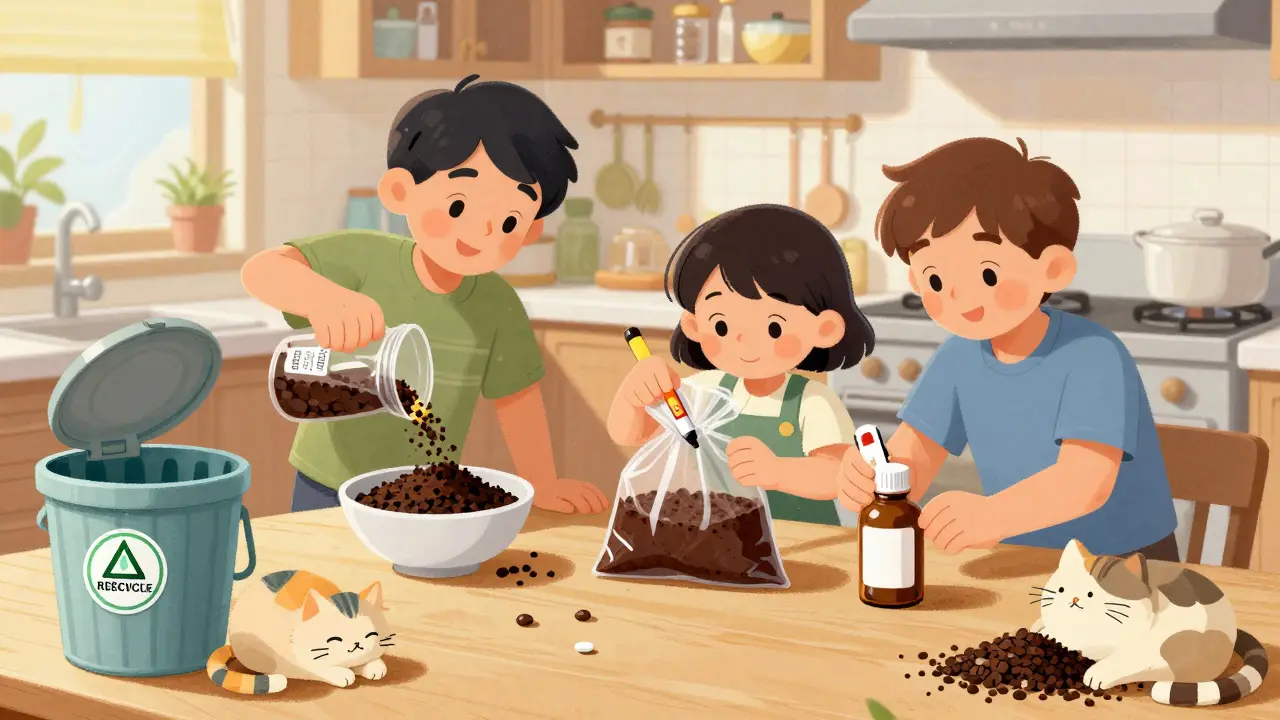
When you can’t get to a take-back program right away, the FDA and EPA recommend a simple, five-step process you can do with items you already have at home.- Remove pills from their original containers. Don’t just dump them out. Take the bottle apart-remove the cap and label. You’ll need to handle the pills directly.
- Mix them with something unappetizing. Use 1 cup (240ml) of used coffee grounds, cat litter, or dirt. The goal is to make the mixture look and smell disgusting. Don’t use sugar, candy, or anything that might attract someone. The FDA says this should be a 1:1 ratio by volume-so if you have a 30ml bottle of pills, use about 240ml of coffee grounds.
- Seal it in a leak-proof container. Put the mixture into a resealable plastic bag (at least 2-mil thick) or an empty margarine tub. Make sure it won’t leak if tipped over. If you’re disposing of liquid medications, pour them into the mixture slowly and stir well. Insulin and other temperature-sensitive liquids should be mixed immediately to avoid spills.
- Scratch out all personal info. Use a permanent marker to black out your name, prescription number, pharmacy, and dosage on the original bottle. Don’t just cover part of it-cover the whole label. This prevents someone from finding your medical history in the trash.
- Put it in the trash. Not the recycling bin. Not the compost. Just toss it in your regular household trash on collection day. If you’re worried about scavengers, put the sealed bag inside another trash bag before tossing it.
This method isn’t perfect, but it’s the best option when you can’t access a take-back program. It doesn’t guarantee 100% destruction of the drug, but it makes it extremely hard to recover or misuse.
What Not to Do
There are several common mistakes people make that make disposal worse, not better.- Don’t flush pills unless they’re on the FDA’s flush list. Only 15 medications are approved for flushing, mostly high-risk opioids like fentanyl patches and oxycodone. You can find the full list on the FDA’s website. Flushing anything else contributes to water pollution.
- Don’t crush pills. Crushing can release dangerous dust into the air, especially with time-release formulas. The only exception is if you’re using a special product like DisposeRx, which is designed for crushing.
- Don’t throw away sharps in regular trash. Needles, syringes, and lancets must go into a rigid plastic container like an empty laundry detergent bottle with a tight lid. Once full, seal it with heavy-duty tape and label it "SHARPS - DO NOT RECYCLE." Many pharmacies offer free sharps containers.
- Don’t put inhalers in the trash. They’re pressurized and can explode in garbage trucks. Take them to a medical waste facility or pharmacy that accepts them.
Take-Back Programs: The Gold Standard
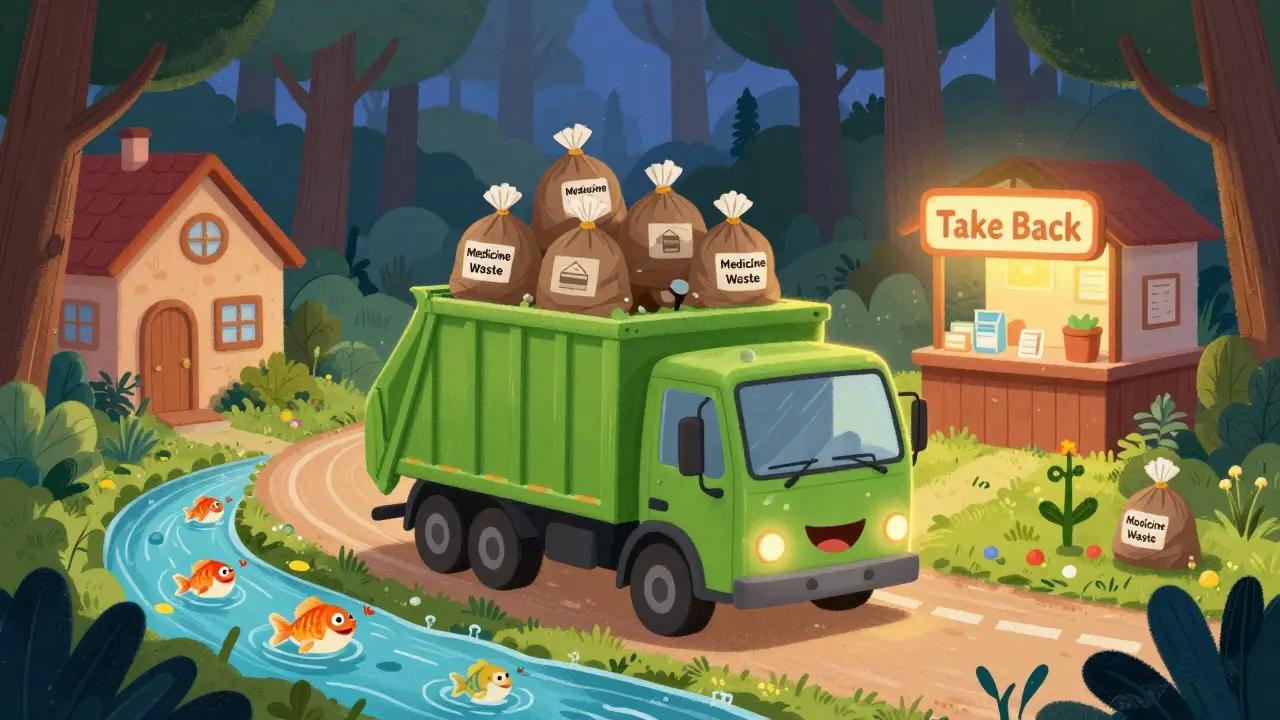
The safest way to dispose of medications is through a drug take-back program. These are run by the DEA, pharmacies, or local governments and destroy medications using high-temperature incineration. This method neutralizes 99.8% of the drugs, leaving no trace in the environment.In the U.S., National Prescription Drug Take Back Day happens twice a year-in April and October. In October 2022 alone, over 1 million pounds of medication were collected nationwide. But you don’t have to wait for those days. Many pharmacies now have permanent collection kiosks. CVS has over 3,900 locations with drop boxes. Walgreens has more than 1,400. These accept pills, patches, and creams-but not liquids, sharps, or inhalers.
If you live in a rural area, you might have to drive farther. A 2022 GAO report found urban areas have nearly four times as many take-back sites as rural ones. That’s why home disposal is still necessary for many people.
Special Cases: Liquids, Inhalers, and Sharps
Not all medications are the same. Here’s how to handle the trickier ones.- Liquid medications: Pour them into the coffee grounds or cat litter mix. Stir well. If they’re in a bottle, leave the cap off so it doesn’t leak during transport. Use a plastic funnel if you have one.
- Inhalers: These contain pressurized gas. Never puncture them or throw them in the trash. Take them to a local hazardous waste facility or ask your pharmacist. Some fire stations accept them.
- Sharps (needles, syringes): Use a rigid plastic container like a laundry detergent bottle. Tape the lid shut, label it clearly, and dispose of it in the trash. Many pharmacies give these containers out for free.
- Insulin and other refrigerated meds: Mix them immediately with absorbent material. Don’t let them sit in the fridge while you wait to dispose of them.
What Works Better? Mail-Back Kits vs. Home Disposal
Some companies sell prepaid mail-back envelopes like DisposeRx. You put your meds in, seal it, and mail it back. They claim 98.5% destruction efficiency. But they cost $2.50 to $5 per envelope. For most people, the coffee grounds method is just as effective and free.Mail-back kits are great if you’re uncomfortable handling meds, live far from a drop-off site, or have a lot of pills to dispose of. But if you’re just getting rid of a few expired bottles, the home method is faster and cheaper.
What to Keep on Hand
To make disposal easier, create a simple "medication disposal kit". Keep these items in a kitchen drawer or near your medicine cabinet:- A roll of permanent markers
- A box of used coffee grounds (save them from your daily brew)
- A few resealable 2-mil plastic bags
- An empty detergent bottle for sharps
A 2021 study by the National Association of Boards of Pharmacy found that people who kept a disposal kit on hand made 64% fewer mistakes when getting rid of meds.
What’s Changing in 2026?
New rules are coming. Starting in 2025, U.S. law will require all prescription bottles to include disposal instructions on the label. The FDA is also testing a mobile app that will show you the nearest take-back location in real time. By 2030, the EPA predicts 92% of U.S. households will have access to year-round disposal options.In the meantime, if you’re unsure about a specific medication, call the Poison Control hotline at 1-800-222-1222. They’re available 24/7 and can tell you exactly how to handle it.
Can I just throw expired pills in the recycling bin?
No. Recycling facilities aren’t designed to handle medications. Even if you think the pills are "clean," chemicals can leach into the recycling stream and contaminate other materials. Always put expired meds in the trash after mixing them with coffee grounds or cat litter.
What if I don’t have coffee grounds or cat litter?
Use dirt, sand, or even used paper towels. The key is to make the mixture unappealing and hard to recover. Avoid using food items like sugar or chocolate, which might attract people or animals. If you’re in a pinch, just mix the pills with water and pour them into a sealed bag with paper towels.
Is it okay to flush fentanyl patches?
Yes. Fentanyl patches are on the FDA’s official flush list because they’re extremely potent-even a small amount can be deadly if misused. If you have unused patches, flushing them is the safest option to prevent accidental exposure.
How do I know if a medication is expired?
Check the expiration date printed on the bottle or box. If there’s no date, most pills are safe for 1-2 years past the fill date, but effectiveness drops over time. Liquid antibiotics, insulin, and eye drops should be thrown out after their labeled expiration date-they can become harmful or ineffective.
Can I donate unused medications?
In most cases, no. U.S. federal law prohibits the donation of prescription medications due to safety and regulatory concerns. Some states have pilot programs for certain drugs, but they’re rare. If you’re unsure, call your pharmacy or local health department. Don’t assume a medication is safe to give away.
If you’re cleaning out your medicine cabinet, do it now. Don’t wait until you have a full bottle of old pills. A quick 10-minute job today can prevent a dangerous situation tomorrow.

8 Comments
Liam Crean
I’ve been using the coffee grounds method for years. It’s gross, yeah, but way better than tossing pills in the trash like they’re trash. My cat’s still alive, and my kid hasn’t found anything weird in the bin. Simple, cheap, and actually works.
Greg Scott
Honestly? I just throw everything in the trash. I don’t have time to mix stuff with cat litter. And no, I don’t have a cat.
madison winter
You know what’s wild? We’re told to treat medicine like toxic waste, but we’re also told to take it like it’s candy. Like, why do we even have so much of this stuff lying around? It’s capitalism. Pharma companies make billions off chronic conditions and then don’t care if you flush their pills. The system’s broken, not the disposal method.
Robert Shiu
Love this guide. Seriously, if you’ve got meds sitting around, do this today. No excuses. Set up a little kit-marker, bag, coffee grounds. Keep it by the sink. Do it while you brush your teeth. Ten minutes. One less thing to worry about tomorrow. You’re not just protecting the planet-you’re protecting your family. Do it.
Caleb Sciannella
The procedural clarity presented herein is commendable, particularly in its alignment with the regulatory frameworks established by the FDA and EPA. However, one must acknowledge the systemic inequities in access to take-back infrastructure, as referenced in the GAO report. Rural communities, particularly those in the Appalachian and Great Plains regions, are disproportionately burdened by the necessity of home disposal due to logistical and infrastructural deficits. A policy recommendation would be federal funding for mobile take-back units, analogous to the mobile vaccination clinics deployed during the pandemic. This would democratize safe disposal and reduce the burden on individual households.
Davis teo
I tried the coffee grounds method once. My dog dug it out of the trash. I had to take him to the vet. $800 later, I just flush everything now. Screw the environment. My dog’s alive. That’s what matters.
Michaela Jorstad
I love that you mentioned the disposal kit! I made one last month. I keep a permanent marker, three resealable bags, and an old detergent bottle right next to my medicine cabinet. It’s changed everything. I used to procrastinate for months. Now? I do it the day I notice something’s expired. I even labeled the bottle: "DO NOT IGNORE." It’s a small thing, but it’s made me feel so much more in control.
Chris Beeley
You Americans are so… quaint. In Lagos, we don’t have this problem because we don’t have this culture of over-prescribing. In Nigeria, you go to the clinic, get your pills, take them, and that’s it. No stockpiling. No expiration dates. No coffee grounds. No EPA. We don’t need a five-step guide because we don’t treat medicine like a hoarding hobby. You have a pill problem, not a disposal problem. Fix the prescribing culture first. Then we can talk about trash bags.