
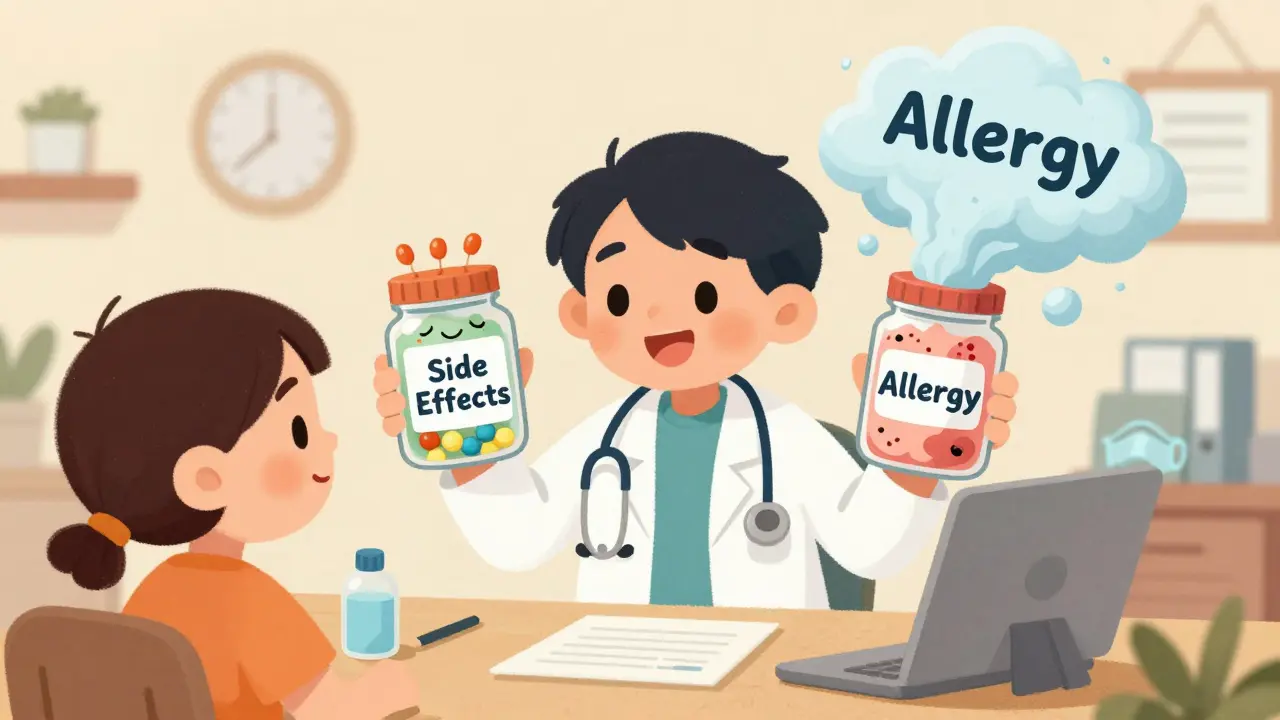
When you start a new medication, it’s normal to wonder: is this feeling just a side effect-or could it be something more serious, like an allergic reaction? Too many people mix up the two, and that can cost them better treatment options, more medications, or even higher health risks. You don’t need to be a doctor to tell the difference. You just need to know what to look for-and how to say it clearly to your care team.
Side Effects Aren’t Allergies-And That Matters
Side effects and allergic reactions are not the same thing. Side effects are predictable, common, and usually not dangerous. For example, if you take an antibiotic and get an upset stomach, that’s a side effect. It happens because the medicine affects your gut bacteria, not because your immune system is attacking it. About 15-30% of people on NSAIDs like ibuprofen report stomach issues. Half of those taking diphenhydramine (Benadryl) feel drowsy. These aren’t rare. They’re expected.
Allergic reactions, on the other hand, involve your immune system. Your body sees the drug as a threat and reacts. That can mean hives, swelling of the lips or throat, trouble breathing, or even anaphylaxis. These symptoms usually show up within minutes to hours after taking the medicine. They can happen at any dose-even if you’ve taken the drug before without problems.
Here’s the real problem: 70% of people who think they have a drug allergy actually don’t. They’re confusing a side effect, like a rash or nausea, with an allergy. That’s dangerous. If you’re labeled as allergic to penicillin, your doctor might give you a different, broader-spectrum antibiotic. Studies show those alternatives increase your risk of antibiotic resistance by 63%. And you might be missing out on a drug that’s actually the best fit for your condition.
How to Tell the Difference: Timing and Symptoms
Start by asking yourself two simple questions: When did the symptom start? and What does it feel like?
Side effects usually appear within hours or days of starting the medication. They often get better after a few weeks as your body adjusts. For example:
- Headache after starting blood pressure meds? That’s common-up to 20% of people get it.
- Nausea from statins? It happens in 10-15% of users, and often fades after a month.
- Dry mouth from antihistamines? That’s normal. It doesn’t mean you’re allergic.
Allergic reactions are different. They’re sudden. They’re intense. And they don’t fade with time. Look for:
- Rash that spreads quickly or turns into blisters
- Swelling in the face, tongue, or throat
- Wheezing or trouble breathing
- Dizziness or fainting
If you experience any of these, stop the medication and get help right away. These aren’t things to wait out. But if it’s just a mild rash, a little nausea, or feeling tired, it’s likely a side effect-and something you can manage with your provider.
What to Say at Your Appointment
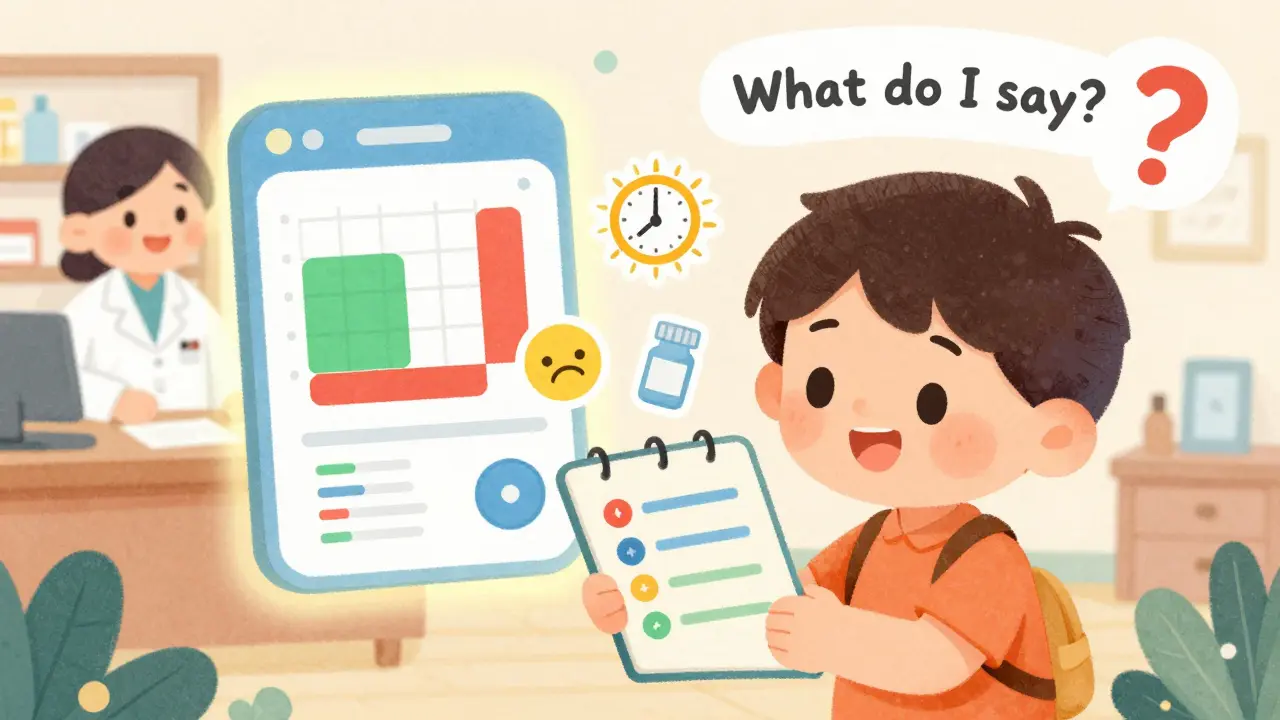
Most people say things like, “I think I’m allergic to this pill.” That’s vague. And it sticks. Instead, be specific. Use this framework:
- Which medication? Name it exactly. Don’t say “the blue pill.” Say “lisinopril 10 mg.”
- When did it start? “Three hours after I took the first dose.”
- What did it feel like? “My skin got red and itchy, but I didn’t swell or have trouble breathing.”
- Did it change? “It got worse the next day, but improved after I skipped a dose.”
- Did anything help? “I took antihistamine and it calmed down.”
That’s not just helpful-it’s powerful. Patients who describe symptoms this way get accurate diagnoses 89% of the time, according to Mayo Clinic data. Those who just say “I’m allergic”? Only 52% get it right.
Bring your symptom log. Write down:
- Medication name and dose
- Date and time symptoms started
- Severity (1-10 scale)
- How long it lasted
- What made it better or worse
People who do this are 3.2 times more likely to get the right advice. It’s not magic. It’s just clear communication.
Ask the Right Questions
Don’t wait for your provider to ask. Take charge. Use these exact questions:
- “Is this symptom a known side effect of this medication?”-Ask for the percentage of people who experience it. If it’s over 10%, it’s likely normal.
- “What symptoms would mean I’m having an allergic reaction?”-Get the list: swelling, breathing issues, hives, etc.
- “Could this be something else? Like an interaction or a different condition?”-Sometimes it’s not the drug at all.
- “Are there alternatives in a different drug class?”-If you’re worried, ask if another option avoids the issue entirely.
- “Should I get tested for a true allergy?”-Especially if you’ve been labeled allergic before. Up to 90% of people with penicillin allergy labels can safely take it after testing.
Harvard Health and the American Medical Association both recommend asking these questions. They’re not too much. They’re necessary.
Bring Your Medication Bottles
It sounds simple, but bringing your actual pill bottles to the appointment cuts communication errors by 28%. Why? Because names change. Doses change. You might say “the red pill,” but your doctor sees five red pills in your cabinet. Physical bottles remove guesswork. They also help catch duplicates or interactions you didn’t know about.
Use the S.O.A.P. method to organize your thoughts:
- Subjective: “I feel dizzy after taking this.”
- Objective: “I took 20 mg at 8 a.m. on Monday. Dizziness started at 9:30 a.m.”
- Assessment: “I think it’s a side effect, not an allergy.”
- Plan: “Can we try lowering the dose? Or switching?”
This isn’t medical jargon-it’s just clear thinking. And it works.
Why This Matters More Than You Think
Getting this wrong doesn’t just mean you’re stuck with a side effect. It affects your long-term health. Mislabeling a side effect as an allergy leads to:
- More expensive, less effective medications
- Higher risk of antibiotic resistance
- Unnecessary tests and hospital visits
- Increased healthcare costs-up to $2,500 per person per year
Hospitals now use electronic alerts to flag unclear allergy labels. Why? Because it’s a safety issue. And the CDC’s National Action Plan aims to cut communication errors by 30% by 2026. That’s not just policy-it’s personal.
There’s a mobile app called the Medication Reaction Tracker, launched in January 2023. It’s free, used by over 87,000 people, and walks you through exactly how to tell side effects from allergies. It’s built on the same science doctors use.
What to Do If You’re Still Unsure
If you’re not sure whether it’s a side effect or allergy, don’t guess. Don’t stop the medication without talking to someone. Instead:
- Call your pharmacist. They see hundreds of patients a week and know what’s normal.
- Use the CDC’s free symptom checker for medications (available online).
- Take a photo of the symptom if it’s visible-like a rash. Show it to your provider.
- Wait 48 hours. If it gets worse, seek help. If it improves, it’s likely a side effect.
Remember: you’re not being difficult. You’re being smart. You’re protecting your health.
Final Tip: Don’t Let a Label Stick
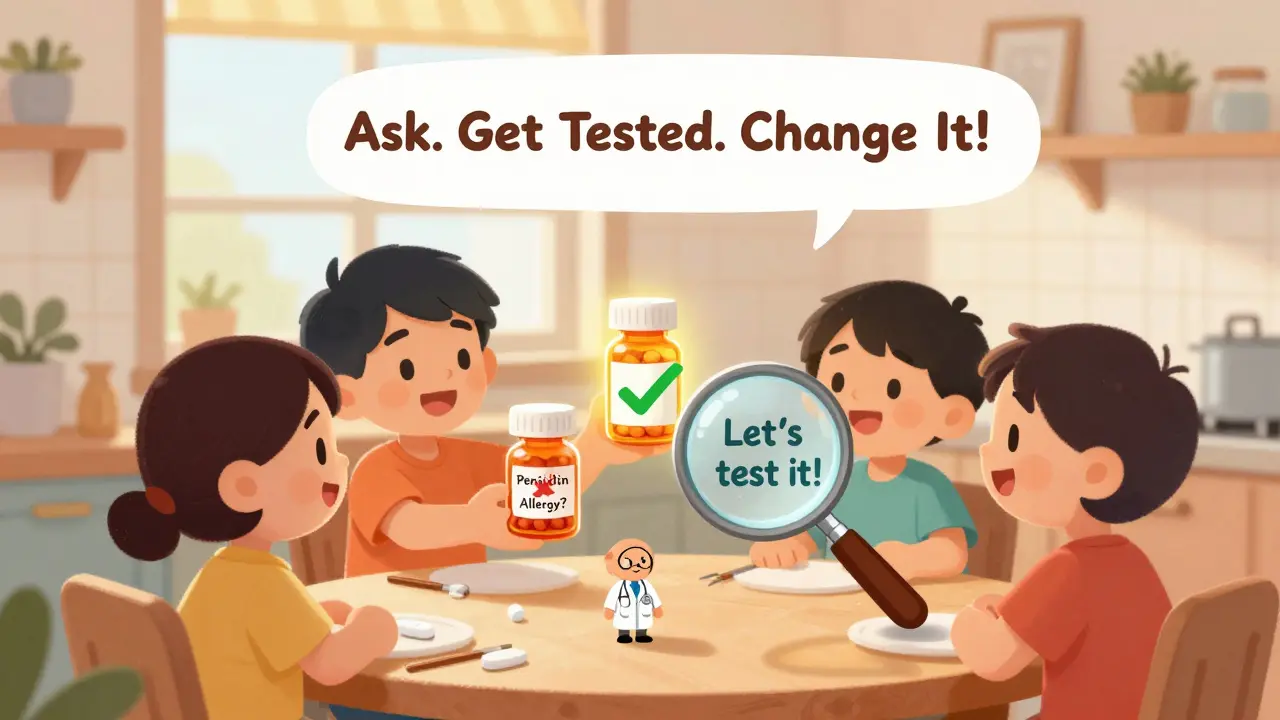
If you were told you’re allergic to penicillin-or any drug-years ago, ask: was that ever tested? Most people aren’t. You can get a simple skin test or oral challenge now. It’s safe. It’s quick. And it might open up better treatment options you didn’t even know you had.
Don’t assume your allergy label is permanent. Ask. Get tested. Change it if needed. It’s your body. Your health. Your right.
How do I know if my rash is a side effect or an allergic reaction?
A side effect rash usually appears gradually, doesn’t spread fast, and may itch mildly. It often shows up after several doses and can improve over time. An allergic rash comes on quickly, spreads rapidly, may blister or peel, and is often accompanied by swelling, trouble breathing, or dizziness. If you’re unsure, take a photo and show it to your provider. Don’t assume it’s an allergy-70% of rashes labeled as allergies aren’t.
Can I still take a medication if I had a side effect once?
Yes, often you can. Side effects like nausea, dizziness, or mild fatigue are common and usually go away as your body adjusts. If the symptom was mild and improved after skipping a dose, talk to your doctor about lowering the dose or taking it with food. You don’t need to avoid the drug unless it’s a true allergic reaction.
Why do doctors sometimes mislabel side effects as allergies?
Because patients often use the word “allergic” to describe any uncomfortable reaction. Doctors may not always ask for details, and once it’s in the record, it sticks. That’s why it’s so important to describe symptoms clearly: timing, severity, and what made it better or worse. Studies show patients who give specific details reduce mislabeling by 45%.
Should I get tested for a penicillin allergy if I was told I’m allergic years ago?
Yes, especially if you’ve never had a severe reaction. Up to 90% of people with a penicillin allergy label can safely take it after testing. Testing is simple-a skin prick or small oral dose under supervision. It’s covered by most insurance. Getting this right means you could avoid stronger antibiotics that increase resistance risk.
What’s the best way to track symptoms before my appointment?
Use a simple log: write down the medication name, dose, time taken, when symptoms started, what they felt like (on a 1-10 scale), how long they lasted, and if anything helped. Bring this to your appointment. Patients who do this are 3.2 times more likely to get the right advice. Apps like the Medication Reaction Tracker can help you build this log automatically.


8 Comments
Paul Ratliff
just took my first dose of amoxicillin yesterday and my stomach’s been weird. thought i was allergic but now i’m not so sure. maybe just a side effect? gonna wait a few days before panicking.
Linda Olsson
this is the kind of oversimplified garbage that makes people ignore real allergies. if your skin breaks out, you’re allergic. period. doctors don’t know jack and they’re too lazy to test. don’t trust this advice.
becca roberts
so let me get this straight - you’re telling me to stop calling a rash an allergy because maybe it’s just ‘a side effect’? brilliant. next you’ll tell me heart attacks are just ‘unpleasant chest sensations’ and we should wait and see. 😌
Ryan Voeltner
i appreciate the clarity here. many patients don’t realize how often side effects get mislabeled as allergies. i’ve seen it firsthand in clinic - patients avoid perfectly good meds because they said ‘i’m allergic’ to something they got mildly nauseated from 10 years ago. simple communication changes outcomes.
Andrew Muchmore
i’ve been labeled allergic to sulfa drugs since i was 12. never had a real reaction. just a rash that faded. last year i got tested. turned out i’m not allergic. switched to a better antibiotic. saved me $4k in unnecessary prescriptions. do the test. don’t guess.
SNEHA GUPTA
the real issue isn’t the medical terminology - it’s the systemic failure to prioritize patient narrative. we reduce complex physiological responses to binary labels because it’s convenient for the system. a rash isn’t ‘allergy’ or ‘side effect’ - it’s a signal. the question isn’t how to classify it, but why we stopped listening to the body before the chart.
Suchi G.
i had this happen to me last year. took a new blood pressure med, felt dizzy for three days. thought i was dying. called my doctor crying. she said ‘it’s a side effect, common with this class’. i was so relieved. but then i saw a friend who had a real allergic reaction - throat swelling, epi pen, hospital. i realized how dangerous it is to downplay symptoms. maybe it’s just a side effect… but what if it’s not? i still don’t trust my own body after that.
Gaurav Kumar
this article is good. but you know what’s better? indian doctors who actually listen. we don’t need american jargon like ‘SOAP method’. we need empathy. i took azithromycin, got diarrhea. doctor said ‘it’s normal, take probiotics’. no panic. no label. just care. why can’t everywhere be like this? 🇮🇳