
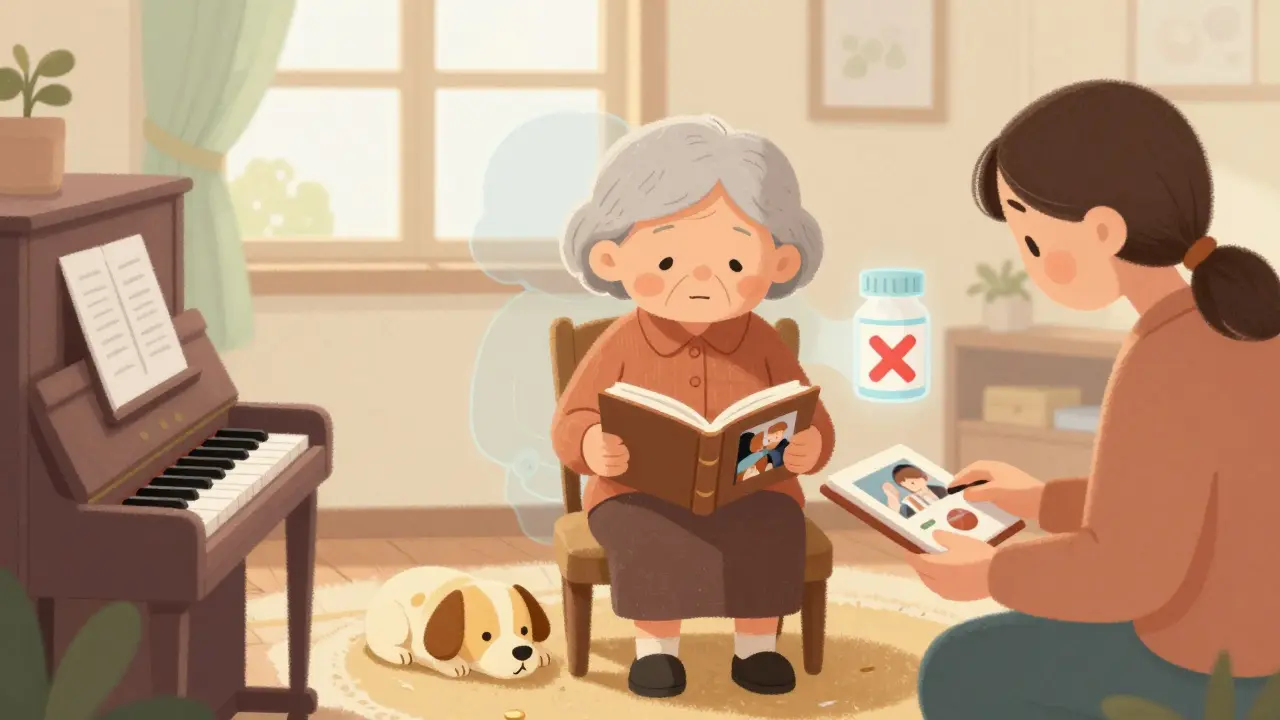
Every year, tens of thousands of seniors with dementia are given antipsychotic drugs to calm agitation, aggression, or hallucinations. It seems like a quick fix-until it isn’t. What most families don’t realize is that these medications aren’t just ineffective for long-term behavior management-they double the risk of stroke and increase the chance of death. And the warning has been out there since 2005.
Why Antipsychotics Are Prescribed for Dementia
Dementia doesn’t just steal memories. It changes behavior. A once-kind parent might start yelling, hitting, or wandering at night. Families and caregivers, overwhelmed and exhausted, often turn to doctors for help. Antipsychotics-drugs like risperidone, olanzapine, and haloperidol-are frequently offered as a solution. They’re not approved for this use, but they’re prescribed anyway. Why? Because there aren’t many other options… or so it seems.The truth is, these drugs were never meant for dementia patients. They were designed for schizophrenia and bipolar disorder in younger adults. But in nursing homes and even home care settings, they’re used as chemical restraints. A 2022 study found nearly 30% of nursing home residents with dementia were on antipsychotics, even though fewer than 10% had a prior diagnosis of psychosis.
The FDA Warning You Might Not Have Heard
In 2005, the U.S. Food and Drug Administration slapped a black box warning on every antipsychotic drug. That’s the strongest warning they can issue. It says clearly: “Elderly patients with dementia-related psychosis treated with atypical antipsychotic drugs are at an increased risk of death.” The data? Analysis of 17 clinical trials showed a 1.6 to 1.7 times higher risk of death compared to placebo.That’s not a small risk. That’s not a rare side effect. That’s a pattern. And it wasn’t just death. Stroke was the leading cause. The FDA didn’t wait for more studies. They acted because the evidence was overwhelming-and consistent across multiple drugs, both old and new.
How Antipsychotics Trigger Stroke
It’s not magic. It’s physiology. Antipsychotics mess with your brain’s blood flow in several ways:- Orthostatic hypotension: They drop your blood pressure when you stand up, which can cause fainting and reduce oxygen to the brain.
- Metabolic chaos: They spike blood sugar, increase belly fat, and raise cholesterol-classic stroke risk factors.
- Neurotransmitter overload: They block dopamine too aggressively, which can constrict blood vessels in the brain.
A 2012 study from the American Heart Association looked at over 100,000 Medicare patients. They found that even brief exposure to antipsychotics-just a few weeks-raised stroke risk by 80%. That shattered the old belief that only long-term use was dangerous. This isn’t about years of use. It’s about any use.
Typical vs. Atypical: Which Is Worse?
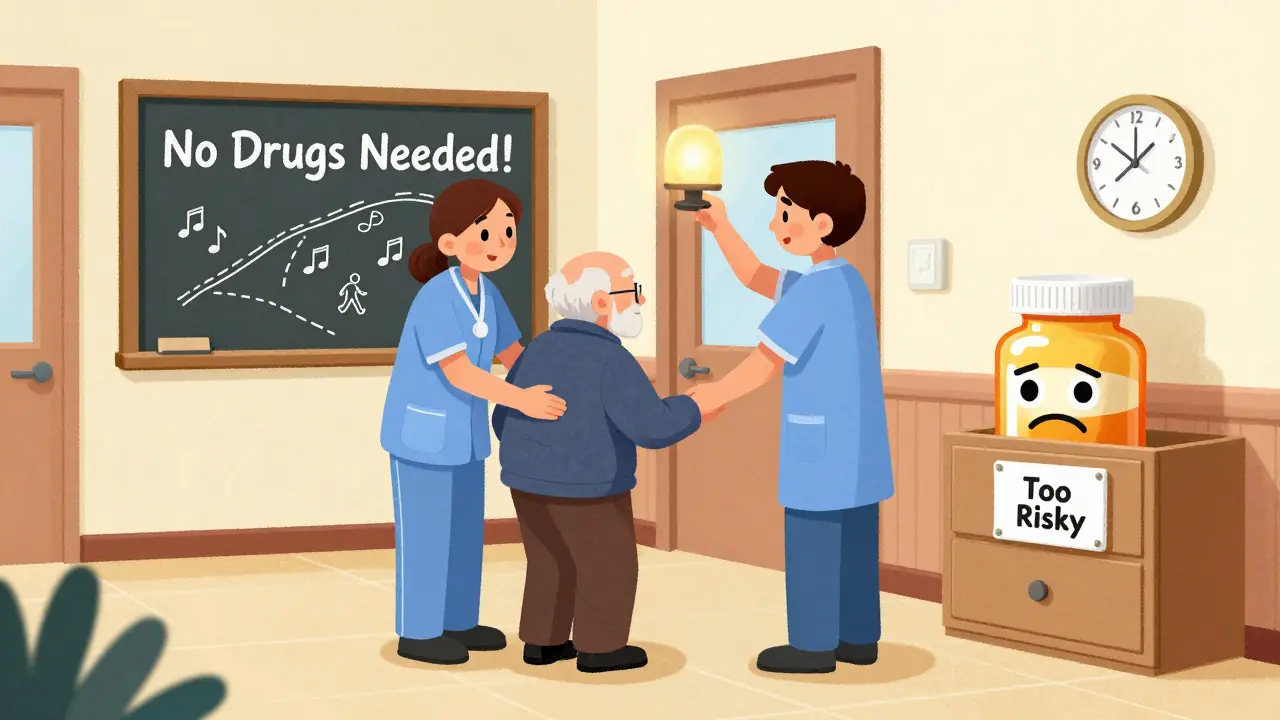
There are two main types of antipsychotics: typical (first-gen) like haloperidol, and atypical (second-gen) like risperidone and quetiapine. Many assume the newer ones are safer. They’re not.Atypical antipsychotics are often marketed as “safer,” but they carry their own dangers. They’re more likely to cause weight gain, diabetes, and metabolic syndrome-conditions that silently raise stroke risk over time. But here’s the twist: when it comes to immediate stroke risk, the older drugs may be worse.
A 2023 review in Neurology analyzed five major studies. Four of them found that long-term use (over 90 days) of typical antipsychotics led to higher rates of stroke than atypical ones. Why? Because typical antipsychotics cause more severe movement disorders and cardiovascular strain. But here’s the catch: both types are dangerous. One isn’t a safe alternative to the other. They’re both risky.
Why Do Doctors Keep Prescribing Them?
The American Geriatrics Society has said since 2015: “Avoid antipsychotics for dementia-related behavioral symptoms.” So why are they still being handed out?Because caregivers are desperate. Because nursing homes are understaffed. Because non-drug options take time, training, and patience.
Real-life examples: A woman with Alzheimer’s starts pulling at her IV line. The nurse doesn’t have time to sit with her, calm her, redirect her. So they call the doctor. A prescription is written. Within days, she’s on risperidone. Within weeks, she’s in the hospital with a stroke.
It’s not malpractice. It’s a system failure. The drugs are easy. The alternatives? Hard. But they exist.
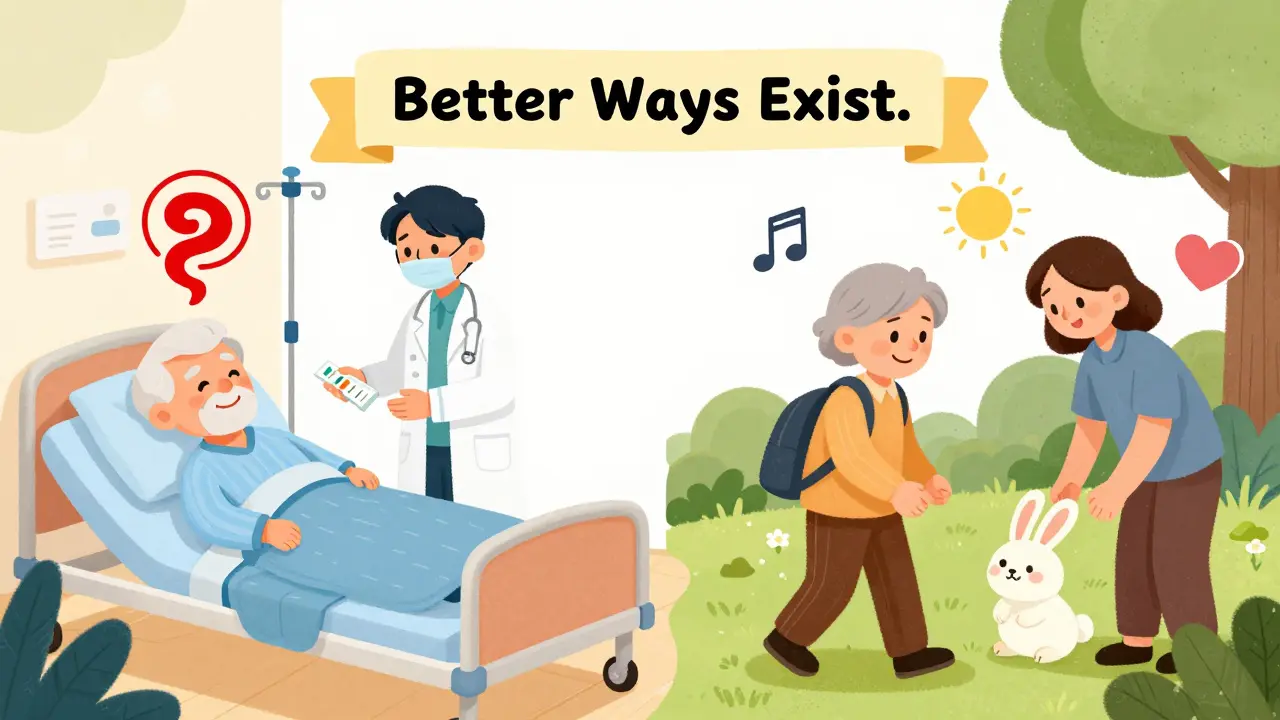
What Works Better Than Antipsychotics
There are proven, safer ways to manage behavioral symptoms in dementia:- Environmental changes: Reduce noise, improve lighting, remove mirrors that cause confusion.
- Structured routines: Consistent meal times, walks, and activities reduce anxiety.
- Person-centered care: Understanding the person’s history, preferences, and unmet needs-like hunger, pain, or loneliness-often stops outbursts before they start.
- Non-pharmacological therapies: Music therapy, pet therapy, and reminiscence therapy have been shown to reduce agitation better than drugs in multiple trials.
- Pain management: Many “aggressive” behaviors are just someone in pain they can’t explain.
A 2020 study in the Journal of the American Geriatrics Society showed that when staff were trained in non-drug approaches, antipsychotic use dropped by 42% in six months-with no increase in behavioral problems.
The Hidden Cost: More Than Stroke
The danger isn’t just stroke. It’s death. Multiple studies confirm that antipsychotic use in dementia patients leads to higher all-cause mortality-even in those without prior heart disease or stroke history.A 2020 analysis of over 100,000 older veterans found that those with dementia who took antipsychotics had a 30% higher risk of dying within a year compared to those who didn’t. That’s not a side effect. That’s a direct consequence.
And it’s not just the drugs. It’s the cascade: stroke → hospitalization → infection → decline → death. Many families don’t realize the drug they thought was helping was the first step in a downward spiral.
What Should Families Do?
If your loved one is on an antipsychotic:- Ask why. “Is this for psychosis, or just agitation?” If it’s the latter, the drug is off-label and dangerous.
- Ask for a plan. “What’s the timeline to reduce or stop this?”
- Request alternatives. Ask for a behavioral specialist, occupational therapist, or dementia care consultant.
- Don’t stop cold turkey. Tapering under medical supervision is critical.
- Track changes. Note mood, mobility, appetite, and alertness. These are early warning signs.
You have the right to question this. You have the right to demand safer care. You’re not being difficult-you’re being protective.
The Bottom Line
Antipsychotics for dementia aren’t treatment. They’re a shortcut. And shortcuts in medicine often lead to dead ends. The evidence is clear: these drugs increase stroke risk, raise death rates, and offer little lasting benefit. The FDA, the American Geriatrics Society, and leading research institutions all agree.There’s no magic pill for dementia. But there are better ways to care. They take time. They take training. They take heart. But they don’t take away your loved one’s life.
Are antipsychotics ever safe for seniors with dementia?
Antipsychotics are never first-line treatment for dementia-related behaviors. The FDA and American Geriatrics Society recommend avoiding them entirely. The only exception might be a very short trial-days, not weeks-if someone is in immediate danger of harming themselves or others, and all non-drug options have failed. Even then, the goal is to stop the drug as quickly as possible.
Do atypical antipsychotics have fewer side effects than typical ones?
Atypical antipsychotics cause fewer movement problems like tremors or rigidity, which is why they replaced older drugs. But they’re just as dangerous when it comes to stroke and death. In fact, they’re more likely to cause weight gain, diabetes, and heart problems-conditions that raise stroke risk over time. Neither class is safe.
How long does it take for antipsychotics to increase stroke risk?
It can happen in as little as a few weeks. A major 2012 study found stroke risk jumped 80% even after brief exposure. This contradicts the old idea that long-term use was the only danger. The risk starts early and grows with time.
Can antipsychotics make dementia symptoms worse?
Yes. Many patients become more confused, drowsy, or unsteady after starting antipsychotics. This can lead to falls, hospitalization, and faster cognitive decline. The drugs don’t treat the root cause-they mask symptoms while damaging the brain’s ability to function.
What should I do if my parent is already on an antipsychotic?
Don’t stop it suddenly. Talk to the doctor about tapering the dose slowly. Ask for a behavioral assessment. Request a non-drug care plan. Many nursing homes and home care agencies now offer training in dementia-specific behavioral strategies. These are safer and often more effective.

11 Comments
John Watts
My grandma was on risperidone for 'agitation' after her dementia diagnosis. Within three weeks, she had a stroke. The doctor said it was 'just a coincidence.' I called the FDA hotline. They confirmed: 1.7x higher risk. No one warned us. We thought we were helping.
Now I run a support group for families who lost loved ones to these drugs. If you're reading this, ask for a behavioral plan. Ask for a therapist. Ask for time. There are better ways. I promise.
Ritteka Goyal
OMG this is so true i live in india and my auntie who has dementia was given haloperidol by a private doc and she started drooling and couldnt walk for 2 weeks 😭 the nursing home said its normal but i googled it and found this post and i cried for hours
we took her off it and now we do music therapy and she sings old bhajans and smiles again its so much better than drugs lol
india needs more awareness about this i swear
Marie Fontaine
This is the most important thing I've read all year. Period.
Lyle Whyatt
I work in aged care in Australia and I’ve seen this firsthand. We had a resident named Frank-used to be a jazz drummer, loved telling stories, always had a grin. Then they put him on quetiapine because he kept trying to dance during meal times. Within a month, he was lethargic, unresponsive. We didn’t realize it was the drug until his daughter found this FDA warning and demanded a taper.
He came back. Slowly. But he’s back. He’s humming again. The staff didn’t know the risks. No one trained us. That’s the real tragedy here-not the drugs themselves, but the system that lets them be used as default.
We now have a non-pharm protocol. Music. Pet visits. Light therapy. And guess what? Aggression dropped 60%. No one died. No strokes. Just people being treated like humans again.
Tatiana Barbosa
As a geriatric nurse practitioner, I’ve seen this pattern too many times. The medical system is built for efficiency, not empathy. Antipsychotics are fast, cheap, and easy to document. Non-pharm interventions? Require staffing, training, time. And in a 1:15 nurse-to-patient ratio? Impossible.
But here’s the kicker: when facilities invest in dementia-trained staff, turnover drops, lawsuits drop, and families stay loyal. It’s not just ethical-it’s financially smarter.
There’s a reason the American Geriatrics Society calls this a public health crisis. We’re not talking about rare side effects. We’re talking about preventable deaths on an industrial scale.
And yes, atypicals aren’t safer. They’re just more expensive. Same outcome. Same risk. Same tragedy.
Brandon Osborne
Doctors are criminals. Not because they’re evil-but because they’re lazy. They don’t care. They just want the patient to shut up so they can move on to the next one.
I lost my dad to this. He was 82. Diagnosed with Alzheimer’s. Agitated at night. They gave him olanzapine. Two weeks later-he had a stroke. They said it was 'age-related.'
Age-related? My dad was walking 3 miles a day before the drugs. He was lucid. He remembered my mom’s name. Then they drugged him into a zombie. And then he died.
There are no 'accidents' here. This is negligence. This is murder by prescription. And the system protects them. They get paid. Families get grief. And the pharma companies? They get billions.
Monica Warnick
Okay but like… what about the ones who are violent? Like, I get it, drugs are bad-but what if your mom is swinging at people? Hitting nurses? Trying to climb out the window? What then?
Are we just supposed to let her hurt herself? Or someone else?
I’m not saying drugs are good. But sometimes… there’s no other option. And pretending there is? That’s just naive.
John Watts
@7566: There is always another option. It just takes more people. More training. More time.
My grandma used to punch people. We thought it was aggression. Turns out, she was in pain from a broken hip no one checked. She couldn’t say ‘my hip hurts.’ She just punched.
Once we gave her pain meds and a physical therapist? The hitting stopped. No drugs needed.
Violence isn’t dementia. It’s unmet need. And if your care team can’t figure that out? It’s not the patient’s fault. It’s theirs.
Ken Cooper
My uncle was on haloperidol for 11 months. They said he was 'noncompliant' because he refused to eat. Turned out the pill was crushing his throat. He couldn’t swallow. The staff didn’t notice. He lost 30 pounds. No one asked why.
When we switched him to a patch? He ate again. Smiled. Called me 'son' for the first time in a year.
These drugs aren't just dangerous-they're invisible. No one checks if the person can swallow. No one asks if they're in pain. It's all just 'behavior management.'
Stop calling it behavior. Call it suffering.
MANI V
How come no one talks about how these drugs are pushed by pharma reps? They give doctors free dinners, trips, gifts. And then the doctors prescribe them like candy. The FDA warning? It’s just a piece of paper. Pharma has lobbyists who make sure it stays that way.
And the nursing homes? They get paid more if the patient is sedated. Fewer fights. Fewer complaints. Fewer lawsuits. It’s a business model.
This isn’t medical negligence. It’s corporate greed dressed up as care.
Tatiana Barbosa
@7580: YES. This is why I refuse to accept pharma reps in my clinic. No lunches. No samples. No 'educational grants.'
We use only evidence-based, non-pharm approaches. And guess what? Our residents live longer. Are happier. And their families? They stay. They don’t sue. They thank us.
It’s not hard. It’s just not profitable. And that’s the real problem.