
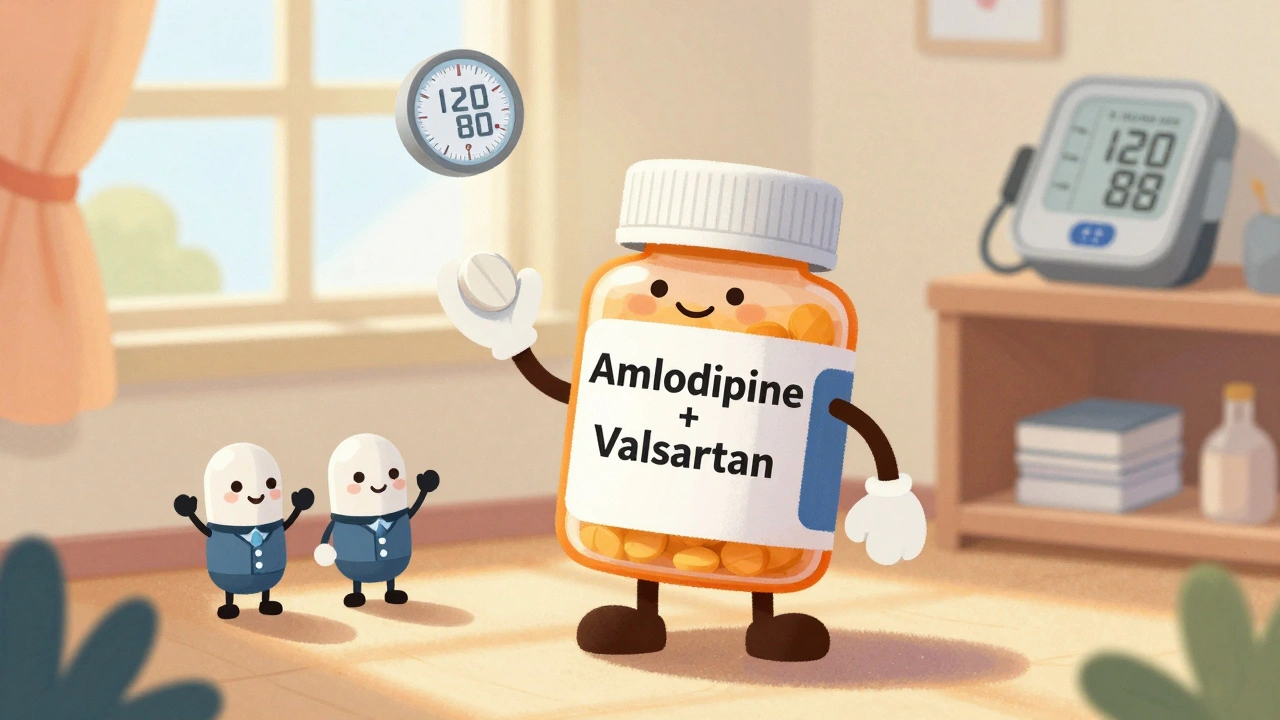
Most people with high blood pressure don’t need one pill. They need two. Or three. That’s the reality doctors have known for decades: about 70-80% of patients require more than one medication to get their blood pressure under control. But taking multiple pills every day is hard. You forget. You get confused. You stop. That’s where antihypertensive combination generics come in - single tablets that pack two or even three blood pressure drugs into one. They’re not new, but knowing what’s available, how much they cost, and whether your insurance will cover them? That’s where things get messy.
What Are Antihypertensive Combination Generics?
These are called Single-Pill Combinations (SPCs) or Fixed-Dose Combinations (FDCs). They combine two or three blood pressure medications into one tablet. Common pairs include:
- Amlodipine + benazepril (Lotrel)
- Losartan + hydrochlorothiazide (Hyzaar)
- Amlodipine + valsartan (Exforge)
- Lisinopril + hydrochlorothiazide (Zestoretic)
There are even triple-combination pills now, like amlodipine + valsartan + hydrochlorothiazide. These aren’t magic. They’re just smart packaging. The drugs inside are the same ones you’d get separately - just cheaper and easier to take.
The FDA requires these generics to match the brand-name versions in how they work in your body. They must be within 80-125% of the original drug’s absorption rate. That’s not a guess. It’s a strict test done on healthy volunteers. If it passes, it’s approved. That means your generic amlodipine/losartan tablet works just like the brand.
Why Do These Combinations Matter?
It’s not just about convenience. It’s about survival.
A 2018 study called STRIP showed that patients on combination pills were 68% likely to reach their target blood pressure. Those taking the same drugs separately? Only 45%. Why? Because people stick with one pill. Studies show adherence jumps 15-25% when you go from three pills to one.
Think about it: if you’re supposed to take three pills a day, you might forget one. Maybe you skip it because you’re in a rush. Or you think, “I took it yesterday, I’m fine.” But with one pill? You remember. You take it. Your blood pressure drops. Your risk of stroke, heart attack, or kidney failure goes down.
And it’s not just about sticking to the plan. It’s about cost. In 2023, generic Hyzaar (losartan/HCTZ) could cost as low as $10.60 a month at some pharmacies. Generic Lotrel (amlodipine/benazepril)? Around $17.55. That’s cheaper than most monthly gym memberships.
What’s Actually Available? The Real List
There are over 30 different combination generics on the market. But not all are easy to find. Here’s what’s widely available in the U.S. as of 2025:
| Combination | Typical Dosages | Brand Equivalent | Approx. Monthly Cost (Generic) |
|---|---|---|---|
| Amlodipine + Benazepril | 5/10mg, 5/20mg, 10/20mg | Lotrel | $15-$20 |
| Losartan + Hydrochlorothiazide | 50/12.5mg, 100/12.5mg | Hyzaar | $10-$15 |
| Amlodipine + Valsartan | 5/80mg, 10/160mg | Exforge | $18-$25 |
| Lisinopril + Hydrochlorothiazide | 10/12.5mg, 20/12.5mg | Zestoretic | $12-$18 |
| Olmesartan + Amlodipine | 5/20mg, 10/40mg | Azor | $20-$30 |
| Amlodipine + Valsartan + HCTZ | 5/160/12.5mg, 10/160/12.5mg | Triple Pill (no brand) | $25-$40 |
These prices come from GoodRx data collected in late 2023 and confirmed by pharmacy chains in early 2025. They’re for cash payers without insurance. If you have insurance, your cost could be $0, $5, or $45 - it’s a total lottery.
When Does the Combo Cost More Than the Parts?
Here’s the twist: sometimes, buying the pills separately is cheaper.
Back in 2013, combination pills were cheaper than buying two generics. But now? That’s flipped. Generic amlodipine costs about $4.50/month. Generic valsartan? $7.80/month. Together? $12.30. But the combo pill (Exforge generic)? $18.75. So why does the combo cost more?
Because insurance companies often set higher copays for combination pills. They assume you’re getting a “convenience premium.” But the pharmacy pays the same wholesale price for the combo as it does for the two separate pills. The markup is on you.
One Reddit user, HypertensionWarrior87, switched from three separate generics to a single SPC and saw their blood pressure drop from 150/90 to 120/80. “I stopped forgetting,” they wrote. But another user on PatientsLikeMe said: “My insurance covers the two pills for $5 each - $10 total. But the combo? $45. It makes no sense.”
Always check. Use GoodRx or SingleCare. Compare the combo price to the sum of the two individual generics. If the combo costs more, ask your doctor for a prescription for the separate pills. You can still take them together - just not in one tablet.
The Big Problem: Dosing Isn’t Flexible
Here’s the catch you won’t find on the pharmacy label: once you’re on a combo pill, you can’t easily adjust one drug without switching everything.
Take Azor (amlodipine + olmesartan). The standard doses are 5/20mg or 10/40mg. What if you need 2.5mg of amlodipine with 40mg of olmesartan? That exact combo doesn’t exist. You can’t split the pill and get the right dose. So you have to go back to two separate pills.
Same goes for triple combos. If you need amlodipine 5mg, valsartan 160mg, and HCTZ 25mg - but the only triple pill available is 5/160/12.5mg - you’re stuck. You’ll need to take the combo pill and a separate HCTZ tablet. That defeats the whole purpose.
Doctors need to plan ahead. If you’re likely to need dose changes - maybe because of kidney function, age, or side effects - starting with separate pills might be smarter. Save the combo for when your dose is stable.

Insurance and Access: The Hidden Hurdles
Even if the drug is available and cheap, you might not get it.
Insurance plans often have “formularies” - lists of drugs they cover. Some plans cover the individual generics but not the combo. Others cover the combo but not the individual pills. Some require you to try the separate pills first before approving the combo. That’s called “step therapy.”
And it’s not just U.S. problems. A 2021 global study found that in low- and middle-income countries, even when generic combinations were listed as “available,” they weren’t in pharmacies. In Ethiopia, Morocco, Afghanistan, and Turkey, researchers couldn’t find them despite searching everywhere.
In the U.S., if your plan won’t cover the combo, ask for a prior authorization. Your doctor can write a letter explaining why the combo improves your adherence. Sometimes, that works. Sometimes, you just have to pay cash.
What’s Changing in 2025?
The FDA released new guidance in September 2023 to make it easier to approve new generic combinations. That means more options are coming - especially triple combos.
Right now, triple pills are rare. But they’re growing fast. A 2022 study predicted that if triple combos became widely available in poor countries, they could cut the hypertension treatment gap by 35%. That’s huge. Right now, only 7% of people in low-income countries have their blood pressure under control. In the U.S., it’s over 50%.
Why? Because access to combination therapy is the difference between life and death.
What Should You Do?
If you’re on multiple blood pressure pills:
- Ask your doctor: “Is there a generic combination pill that matches my current doses?”
- Go to GoodRx.com and compare the cost of the combo vs. the separate pills.
- If the combo is cheaper or equal, ask for a prescription for the combination.
- If the combo costs more, ask for the individual pills. You can still take them at the same time.
- If your insurance denies the combo, have your doctor submit a prior authorization. Mention adherence and clinical guidelines.
If you’re just starting treatment and your blood pressure is above 140/90:
- Ask your doctor if starting with a combination pill is right for you. Clinical guidelines now say yes - for most people with stage 2 hypertension.
- Don’t assume the combo is always better. Make sure your dose is stable before committing.
There’s no one-size-fits-all. But knowing what’s out there - and how to get it - gives you real power. You’re not just taking pills. You’re managing your future.
Are generic antihypertensive combinations as effective as brand-name ones?
Yes. The FDA requires generic combination pills to be bioequivalent to the brand-name versions. That means they deliver the same amount of active ingredients into your bloodstream at the same rate. Studies show they lower blood pressure just as effectively. The only difference is the price - generics cost 80-90% less.
Can I split a combination pill to adjust the dose?
Only if the tablet is scored (has a line down the middle) and your doctor says it’s safe. Most combination pills aren’t designed to be split. Splitting can lead to uneven doses, especially with drugs that have narrow therapeutic windows. Always ask your pharmacist or doctor before splitting any pill.
Why does my insurance cover the individual pills but not the combo?
Insurance companies often treat combination pills as “brand-like” even when they’re generic. They assume you’re paying for convenience, not just medicine. This is a business decision, not a medical one. You can appeal by asking your doctor to submit a prior authorization that explains how the combo improves your adherence and reduces long-term health risks.
What if I need a dose that isn’t available in a combo pill?
Many combinations come in only a few fixed doses. If your needed dose isn’t available - like 2.5mg amlodipine with 160mg valsartan - you’ll need to take the two pills separately. This is common. It doesn’t mean you’re doing something wrong. It just means the pill manufacturers haven’t made that exact combo yet.
Are triple-combination generics widely available?
They’re available in the U.S., but not as widely as two-drug combos. The most common triple pill is amlodipine/valsartan/hydrochlorothiazide, sold under generic names. It’s usually more expensive than two-drug combos, but still cheaper than buying three separate pills. Availability is growing, especially as more manufacturers enter the market.

14 Comments
Evelyn Pastrana
I switched to a combo pill last year and my BP dropped like a rock. I used to forget one of my three pills every other day. Now? I just toss it in my coffee mug and forget about it. Life’s too short to play pill roulette.
Nikhil Pattni
Guys, you need to understand the pharmacokinetics here. Generic combinations are bioequivalent, sure, but the excipients vary between manufacturers! I checked the FDA’s Orange Book and found that Lotrel’s microcrystalline cellulose content differs from the Indian generic by 12%. That’s not trivial if you have IBS or renal impairment. Also, in India, we get these combos for ₹15/month - like, literally cheaper than chai. Why is the US so broken?
Elliot Barrett
Wow. Another article telling me I’m dumb for not taking my meds. Newsflash: I’m not lazy. I’m broke. My insurance covers the three pills for $5 each but charges $50 for the combo. That’s not a convenience. That’s a scam.
Andrea Beilstein
It’s funny how we treat medicine like a product you shop for instead of a tool for survival. We optimize for cost and convenience but forget that the body doesn’t care about formularies or pill counts. It just wants steady levels. One pill, one rhythm, one chance to outlive your fears. Maybe that’s the real combo we’re missing.
Sabrina Thurn
The adherence data is rock solid. SPCs increase persistence by 15-25% across all age groups, per JAMA 2021 meta-analysis. But the dosing inflexibility is a real clinical pain point. If you’re titrating ACEi/ARBs based on eGFR or potassium, combo pills can force you into suboptimal regimens. Best used for stable patients with stage 2 HTN. Always confirm with a pharmacist - they know the formulary loopholes better than your doctor.
Richard Eite
America’s healthcare system is a joke. You pay $45 for a pill that costs $12 to make. And they call it innovation. Meanwhile, in China, you get triple combos at the market for $3. We’re not sick. We’re being robbed.
Tim Tinh
i had no idea some of these combos were this cheap. i was paying $60 a month for my three pills until i found goodrx. switched to losartan+hctz generic for $11. my doc was like 'wait you can do that?' yeah dude, you can. just ask. and yeah i still take them at the same time. just not in one tablet. lol
Ryan Brady
I’ve been on a combo for 3 years. My BP is perfect. My doctor says I’m lucky. I say I’m smart. The system wants you to stay sick so they can keep selling you pills. I beat it with one tablet. 🏆
Raja Herbal
In India, we have these combos for less than a dollar. But the pharma companies don’t make them because they can’t profit enough. So we get the same drugs, but in separate blister packs. You take three pills. You think you’re saving money. You’re not. You’re just being exploited by the system. Same game, different country.
Lauren Dare
The FDA’s bioequivalence standards are laughable. 80-125%? That’s a 45% swing. If I took a drug that varied that much in effect, I’d be sued. And yet, we trust it for life-saving meds. The system isn’t broken. It’s designed this way.
Gilbert Lacasandile
I just wanted to say thank you for writing this. I’ve been on three pills for two years and felt guilty every time I missed one. Knowing there’s a cheaper, simpler option made me feel less like a failure. I’m going to talk to my doctor next week.
Lola Bchoudi
Triple combos are underutilized because prescribers fear dosing rigidity. But for elderly patients with polypharmacy, the cognitive load reduction alone justifies their use. A 2023 Lancet study showed a 31% drop in ER visits among seniors switched to triple SPCs. The key is starting with stable patients and monitoring electrolytes. Not magic. Just smart.
Morgan Tait
You ever notice how the same companies that make these combo pills also lobby against price caps? And how the FDA approves them but never checks if they’re actually in pharmacies? I think this whole thing is a controlled demolition. Big Pharma wants you to take three pills so they can upsell you supplements, blood tests, and 'lifestyle coaching'. The combo is just the shiny bait.
Katie Harrison
I’ve been a pharmacist for 22 years. I’ve seen patients cry because they can’t afford their meds. I’ve seen them skip doses because they’re confused. I’ve seen them die because their BP wasn’t controlled. This article? It’s not just information. It’s a lifeline. Thank you.